
DESIGNING PRODUCTS FOR STARTUPS BACKED BY
and more
investments raised by our clients
avg projects per client — most come back
on clutch — 40+ reviews
conversion lift — klickex case
We invested in a TMS platform, but dispatchers still toggle between four tabs to build a single route. It's costing us hours every shift.
Our customers keep calling to ask where their package is. The tracking page exists, but nobody trusts it because it updates too slowly and looks outdated.
We built an internal tool, but it cracks every time we add a new warehouse or delivery zone. Scaling means starting over.
Custom website layouts and UX/UI strategies to improve engagement and conversions.
Modernize your web presence with a digital product design agency that drives engagement and brand authority.
Custom web solutions, from complex platforms to interactive dashboards and scalable SaaS products, designed to boost functionality and drive growth.
Fast and cost-effective product development using no-code and low-code platforms.
Multi-stop route builders with traffic overlays, priority sorting, and driver-specific constraints.
Visual cargo loading with weight distribution, container fit logic, and capacity indicators.
Live fleet maps with vehicle status, geofencing alerts, and historical route playback by driver.
Drag-and-drop shift boards with driver availability, certification filters, and conflict flags.
One-handed mobile UX for proof-of-delivery, navigation, status updates, and document capture.
Customer-facing tracking with milestone events, ETA updates, and automated notifications.
Stock levels, pick-pack flows, and zone-based inventory views with reorder alerts and sync logs.
Hours-of-service dashboards with violation alerts, daily log summaries, and DOT-ready reports.
Dynamic pricing with zone rules, weight tiers, surcharges, and instant quote generation for leads.
BOL generation, photo proof-of-delivery capture, customs docs, and digital filing with audit trails.
Self-serve portals where shippers book, track, and manage shipments without calling your team.
On-time rates, cost per mile, fleet utilization, driver scorecards, and trend analysis by period.
Local data capture and background sync so driver entries survive tunnels and dead zones intact.
Language toggles, simplified navigation, and WCAG-compliant layouts for diverse driver workforces.
Charts, heatmaps, and trend views that turn raw shipment data into dispatch-ready decisions.
Demand forecasting, route optimization, and delivery window prediction. Our UI logistics layer translates ML outputs into dispatcher actions.
GPS, fuel, temperature, and engine diagnostics streaming into unified views. Our UX logistics approach turns raw telemetry into driver scores.
Cold chain monitors, dock door sensors, and warehouse scanners that feed operational dashboards with exception-based alerting and compliance logs.
Pickup-to-delivery records neither party can alter. Our supply chain logistics design turns blockchain traceability into something teams use daily.
Damage detection at loading docks, barcode and OCR document scanning, and container fill estimation. Logistics design and optimization via AI.
Carbon footprint dashboards, fuel scoring, and emissions tracking. Logistics app design turning fleet sustainability into auditable reports.
15%+ increase in user engagement
Significant increase in user interaction
40% reduction in bounce rate
Optimized delivery operations
Real-time visibility and control
Data-driven decision-making
Germany
Vite, React, Typescript, SCSS, Framer motion, React Router, Redux
5 month
Faster time-to-market
Built with scalability in mind
Deeper engagement
Craig Tortolani
CPO at Dekryption Labs

Ash Bryant
Founder of HormnThe design team is truly world-class, excelling in both user interface design and creating solutions optimized for conversion.

KlickEx Team

George Fry
Founder at NeapThe quality of the designs is fantastic. Phenomenon Studio works at speed and is extremely punctual with timelines. They deliver top-notch outcomes with exceptional designs.

Andre Guerra
Co-Owner at RADCAT Design

Kevin Alvarez
Founder & General Partner, PredictivePhenomenon Studio's ability to translate concepts and rough design mock-ups into high-fidelity assets, designs, and visuals was very impressive. The goal was to maintain simple elegance in the design aesthetic, and they did it very well.

Scalable systems, brand consistency, and smart UX that grows with your product.
We collaborate with your team, reuse existing elements, and stay involved until everything’s live.
Need a full product squad or one embedded designer? We match your workflow.
Our work balances compliance, usability, and scale to support safe, modern growth without added risk.
Custom web solutions, from complex platforms to interactive dashboards and scalable SaaS products, designed to boost functionality and drive growth.
Design logistics refers to the practice of creating digital interfaces and user experiences built specifically for transport, warehousing, and supply chain operations. It covers everything from dispatch dashboards and fleet tracking maps to driver mobile apps, customer-facing shipment portals, and internal warehouse tools.
What makes logistics design distinct from general product design is operational tempo. Dispatchers make hundreds of routing decisions per shift. Drivers interact with their screens while navigating traffic and loading docks. Warehouse teams scan, sort, and stage under constant time pressure. Each role demands an interface tuned to their specific pace, not a repurposed SaaS template.
In practice, strong UI logistics work means progressive disclosure for complex shipment data, smart defaults for repetitive dispatch actions, and role-based views that surface only what each user needs. A fleet manager reviewing weekly cost-per-mile trends and a courier confirming proof of delivery need entirely different screens, but the platform should connect them through shared data and consistent navigation patterns throughout.
The UX logistics side focuses on workflow mapping before any visual design begins. How does a dispatcher build a route? How does a driver confirm delivery? How does a warehouse lead prioritize pick orders? Answering these questions through direct observation and structured interviews – not assumptions – is what separates logistics platforms that get adopted from ones that get abandoned.
At Phenomenon, our design logistics methodology starts with this operational research. We embed with dispatch teams, shadow drivers, and study warehouse flows before opening Figma. The output is interfaces grounded in how your operation runs daily, not how a design agency imagines it should.
Building a logistics website starts with mapping who visits and what they need within seconds. Visitors typically split into three groups: shippers evaluating your services, carriers exploring partnerships, and existing customers tracking shipments or pulling documents.
The structure should mirror those paths. Strong web design for logistics opens with what you move, where you operate, and what differentiates your operation. Service pages need specificity — freight, warehousing, and last-mile each deserve dedicated pages with coverage maps, equipment details, and clear CTAs. A single overview page won’t convert buyers comparing three providers in parallel.
For SEO, web design logistics requires keyword-targeted service pages, location pages for regional operators, and a content layer of case studies and industry guides that builds domain authority. Technical performance matters: logistics buyers evaluate fast, and slow page loads cost you qualified leads before they read your pitch.
The best logistics companies website design also accounts for customer portals. If existing clients visit primarily to check shipment status, that tracking flow should be prominent and fast, not buried behind three navigation layers. Plan the portal as part of the initial scope, not as a phase-two addition.
Integration with your TMS, CRM, and quoting tools is where most website design for logistics companies stalls. Plan for real-time data feeds, form-to-system handoffs, and API connections that keep your site content, rates, and service availability current without someone manually updating pages every week.
At Phenomenon, we build logistics websites that connect marketing pages with operational backends, so the same platform that generates leads also serves customers post-sale. The key is planning these web design for logistics integrations during design, not bolting them on after launch.
Creating a transport website follows broader web design for logistics principles, with specific emphasis on fleet visibility, route coverage, and service differentiation. Transport companies need sites that build trust fast, explain capabilities clearly, and convert visitors into quote requests.
Start with the homepage: lead with what you transport – FTL, LTL, specialized freight, temperature-controlled – and where you operate. Use a coverage map or service area graphic. Transport buyers confirm geographic fit before reading anything else. Follow with client logos, certifications (SmartWay, FAST, C-TPAT), and fleet stats.
Service pages need depth. A temperature-controlled transport page should cover equipment specs, monitoring capabilities, compliance certifications, and route visuals. This is where thoughtful web design logistics industry expertise shows — generic templates can’t handle this level of service-specific detail effectively.
Consider whether your site needs a customer portal. If clients book loads, track shipments, or pull BOL documentation through your site, those features need dedicated UX planning. A logistics web design agency with transport experience will scope this as a parallel workstream during design, not an afterthought.
On the visual side, transport websites benefit from photography of your fleet, your team, and your facilities. Combined with clean typography and consistent web design across all pages, this builds operational credibility that templates can’t replicate.
At Phenomenon, we approach transport websites as two products in one: a marketing site that converts visitors, and an operational layer that serves existing customers. Planning both from the start prevents the expensive rework that happens when portals get added later.
Pricing for logistics company web design depends on the scope and complexity of your operation. A single-depot courier website and a multi-warehouse TMS platform with driver apps are fundamentally different projects, and pricing them the same would be misleading.
For a marketing-focused logistics website with service pages, a quote calculator, and basic tracking integration, budgets typically start in the $35K–$55K range. This covers research, UX design, visual design, development, and QA for a site that represents your brand and generates leads effectively.
For operational platforms, such as dispatch dashboards, fleet management tools, warehouse portals, the investment rises. A mid-complexity logistics platform with role-based access, real-time data feeds, and mobile apps for drivers typically falls in the $120K–$200K range. Enterprise-level system design for supply chain management and logistics coordination with multiple integrations, compliance modules, and multi-tenant architecture can exceed $250K.
What drives costs: integration depth (connecting to Samsara, KeepTruckin, ERP, TMS platforms), device coverage (desktop plus tablet plus native mobile), user role complexity (dispatchers, drivers, warehouse, customers), and supply chain logistics design requirements like cross-border documentation or cold chain validation.
At Phenomenon, we scope every logistics project individually. We start with a discovery phase that maps your workflows, users, and technical landscape — then provide a detailed estimate grounded in what your operation needs. This prevents the common pattern where website design for logistics companies gets underscoped at the proposal stage and overruns during development. Every estimate we provide ties back to specific deliverables, not vague phase descriptions.
The feature set depends on whether you’re building a marketing website, an operational platform, or both. Most logistics companies need elements from each category, and the logistics UI design decisions you make early determine how well they work together.
For marketing: a clear service overview with coverage maps, an instant quote calculator, client testimonials with measurable outcomes, and case studies showing how you’ve handled specific logistics challenges. These pages need to load fast, work on mobile, and guide visitors toward a quote request or contact form with minimal steps.
For operations: shipment tracking with milestone events and automated notifications, customer self-serve portals for booking and document access, and logistics app UI for internal teams, such as dispatch boards, driver assignment tools, and warehouse pick-list interfaces. The logistics UI for these features must prioritize speed and clarity, since users interact with them dozens of times per shift.
For mobile: driver-facing logistics app UI design needs one-handed navigation, large touch targets, offline data capture, and proof-of-delivery flows optimized for speed. Logistics mobile app UI design for couriers and delivery drivers is a distinct UX discipline — what works on a desktop dashboard fails completely in a truck cab.
For analytics: dashboards showing on-time delivery rates, cost per mile, fleet utilization, and customer satisfaction trends. The logistics ui design for these views should support both daily operational checks and monthly executive reporting.
At Phenomenon, we map your feature requirements during discovery. We interview dispatchers, drivers, warehouse staff, and management separately. Each role reveals feature needs the others wouldn’t mention, and this multi-perspective approach prevents gaps that surface after launch.
The difference between a logistics dashboard that dispatchers depend on and one they ignore comes down to how well the interface matches the rhythm of dispatch work. Dispatchers don’t browse dashboards. They scan them under pressure, make a decision, and move to the next task.
Strong logistics company web design for dispatch starts with understanding what information a dispatcher needs at each stage: route building, driver assignment, load confirmation, and exception handling. Each stage has different data requirements, and the dashboard should adapt — not dump everything onto one screen and hope the user filters mentally.
The UI logistics patterns we use at Phenomenon follow a progressive disclosure model. The default view shows active shipments, available drivers, and open exceptions. Drilling into a shipment reveals route details, load specs, and communication history. This layered approach keeps the surface clean while making depth available in one click.
From a UX logistics standpoint, we prototype dispatch dashboards early and test them with your team before development begins. We’ve found that dispatchers give the most honest feedback when they interact with clickable prototypes during an active shift.
Performance matters. A dashboard that takes three seconds to load during peak volume is a dashboard that gets bypassed for a phone call. We design and develop with web design logistics industry performance standards in mind — lazy loading for large datasets, optimized map rendering, and WebSocket connections for live updates.
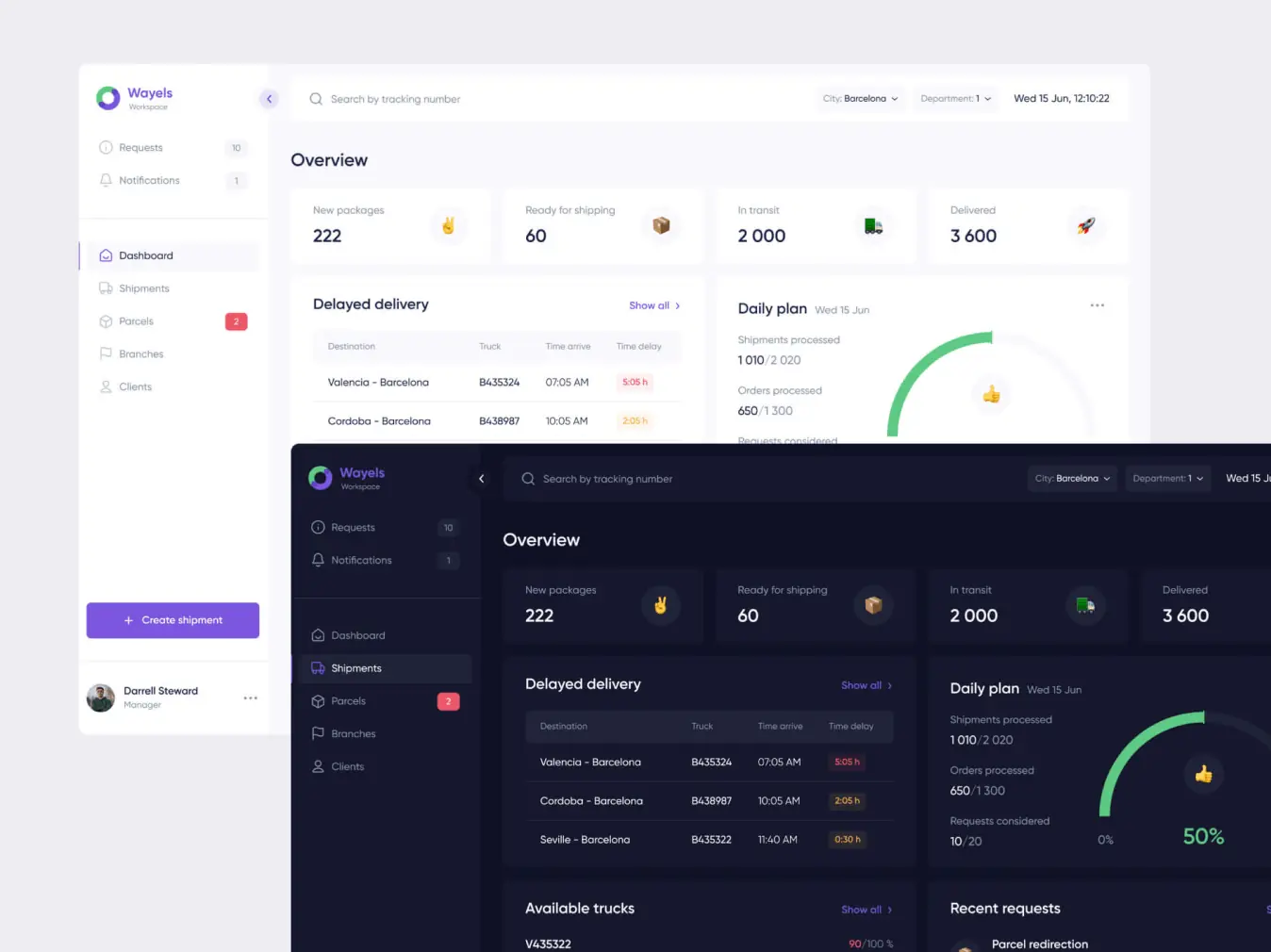
On Saifast and Wayels, we applied these exact principles. We consolidated fragmented views into single-screen dashboards that dispatchers and managers adopted within the first week. The pattern holds across every dispatch tool we’ve designed since.
A logistics brand identity needs to work harder than most. It appears on cab doors, shipping containers, uniforms, invoices, mobile apps, and websites. The logo must hold up across all of these, at every scale from a 12px favicon to a 6-foot container decal.
Start with versatility. The mark should be legible in one color, work on dark and light backgrounds, and remain clear at small sizes. Transport logistics logo design that relies on fine detail will break down on a truck door viewed from fifty meters at highway speed. Truck logistics logo design has additional constraints: reflective material compatibility, DOT number placement, and interaction with mandatory safety markings.
Logo design logistics also means thinking digital. Your mark needs to render cleanly as a mobile app icon, a website favicon, and a social media avatar. Logo logistics design that looks great on a business card but blurs at 32×32 pixels isn’t complete.
Beyond the mark itself, a full brand system covers color palette, typography, iconography, photography direction, and layout templates. Our work for SupplyLink included social media templates, shipping container branding, and a comprehensive style guide, so every team member applies the brand consistently without improvising.
At Phenomenon, our logistics logo design services span the full range — from transport logistics logo design for fleet carriers to truck logistics logo design for owner-operators and startups entering the market. We handle each logo design logistics engagement as part of a broader identity system, not an isolated deliverable. The result: a brand your team applies across every touchpoint – digital and physical – with total consistency.
Timeline depends on three factors: scope, integration complexity, and how many user roles the platform serves. A focused MVP with one core workflow takes a different path than a multi-role platform connecting dispatchers, drivers, warehouse staff, and customers.
For a marketing-focused logistics website (incl. service pages, quote calculator, basic tracking integration) plan for 8–12 weeks from discovery through launch. This includes research, UX design, logistics logo design services, visual design, frontend and backend development, QA, and deployment.
For an operational MVP (e.g. a dispatch dashboard or driver app with core features validated through prototyping) timelines typically run 12–16 weeks. This assumes a defined scope, one primary user role, and limited third-party integrations. If the project includes logistics graphic design work – brand identity, fleet livery, marketing collateral – add 2–3 weeks for research, concepts, and brand system documentation.
For a full-scale logistics platform with multiple dashboards, driver mobile apps, customer portals, and TMS or ERP integrations, expect 5–8 months. The added time covers architecture planning, integration development, multi-device testing, and iterative refinement based on user feedback from each sprint.
What accelerates timelines: clear requirements from discovery, an engaged product owner on your side, and a design system that standardizes components early. What slows them down: scope changes mid-build, delayed feedback cycles, and integration partners who don’t provide API documentation on schedule.
At Phenomenon, we delivered the Saifast freight management platform in 4 months and the Wayels courier dashboard in 3 months — both from research through production launch. AirlineSim’s MVP prototype was delivered in 1 month. These timelines reflect focused scope, embedded collaboration, and a delivery process tuned specifically for transport industry cadence and operational constraints.
Yes, logistics, transport, and fleet operations are a sector where we’ve delivered multiple projects, each involving different operational challenges and user types.
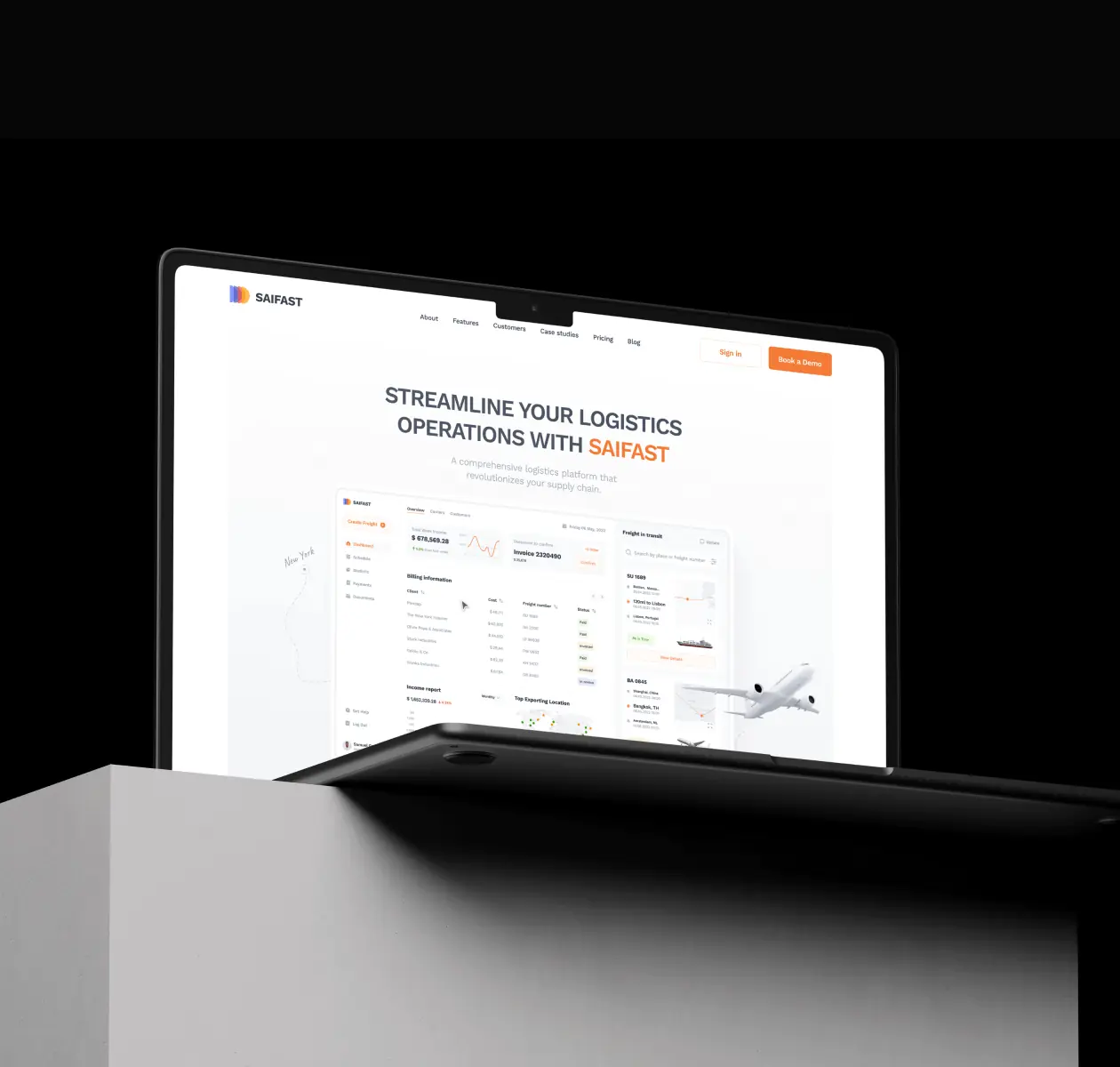
Saifast is a logistics company that delivers by land, sea, and air. We redesigned their internal freight management system, simplifying a multi-screen processing flow into three intuitive steps, unifying shipment tracking and analytics onto one dashboard, and introducing smart suggestions for containers and past routes. The result was a platform dispatchers adopted immediately because it matched how they worked.
Wayels is a courier services company. We built their admin dashboard from scratch, including interactive vehicle loading with automatic capacity calculation, GPS driver tracking with direct communication tools, and widget-based analytics that surface only the metrics managers need. Light and dark mode options responded directly to dispatchers working across different lighting conditions.
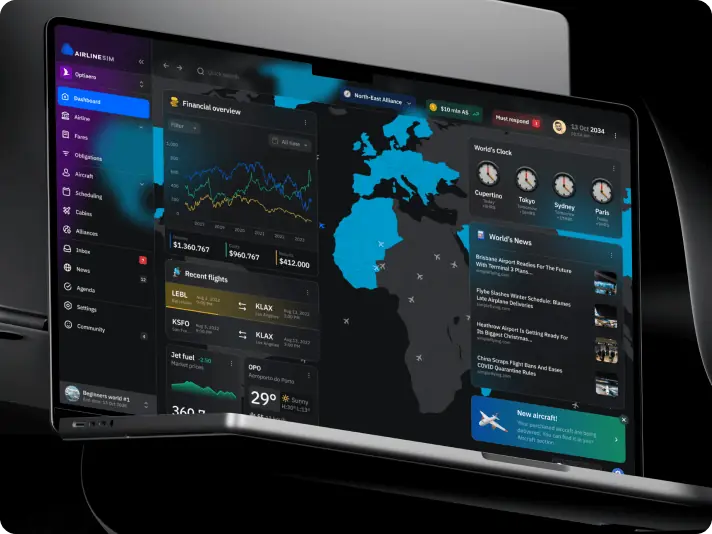
AirlineSim is a fleet simulation platform managing hundreds of operational variables. We redesigned the interface from a data-heavy spreadsheet layout into a modular, widget-based dashboard with customizable branding, map and radar views, and a notification system with urgency prioritization. The MVP prototype was delivered in one month.
SupplyLink is a logo design for logistics company project where we created a complete visual system – logo, colour palette, typography, social media templates, and shipping container branding. This logo design logistics engagement was scoped to convey precision and connectivity across digital and physical applications for a growing logistics platform.
Each project reinforced the same principle: logistics design works when it starts with operational observation. The patterns and components we’ve built across these engagements give every new logistics project a head start grounded in validated decisions.
General agencies design logistics platforms the way they design everything else: starting with wireframe templates and filling in your content. The problem is that logistics operations have constraints some designers never encounter: dispatch-speed interactions, multi-role dashboards, fleet-scale data, driver mobile UX in harsh conditions, and compliance requirements that shape information architecture.
At Phenomenon, our logistics design work starts with operational research. Before any design begins, we study how your dispatchers build routes, how your drivers confirm deliveries, how your warehouse teams prioritize tasks. This embedded observation reveals workflow patterns that no brief or requirements document can fully capture.
We’ve designed and built logistics platforms from research through production — Saifast, Wayels, AirlineSim, SupplyLink. Each required understanding domain-specific logic: freight tendering flows, vehicle loading constraints, compliance contexts, fleet simulation data models. Our logo logistics design work on SupplyLink demonstrated that we handle brand identity with the same operational rigor we bring to platform UX — and our logistics logo design services extend from fleet carriers to startups.
Our design logistics process is built for transport industry cadence. We deliver in focused sprints with bi-weekly demos, test prototypes with your dispatch team during active shifts, and optimize for the devices and conditions your crew faces daily.
The 30+ UI/UX design awards behind our work reflect a methodology validated across 120+ products, including multiple logistics and transport platforms. No matter it’s a quick logo design logistics project or an enterprise-grade warehouse management platform, you get a team that understands your operation’s pace, your users’ constraints, and the technical architecture your platform needs to perform under real dispatch pressure and peak-season volume.