



Apr 23, 2026
8 min read
summary
Discover why consistent branding matters more than ever. Learn how trust, recognition, and long-term growth depend on a cohesive brand experience — not just a great product.
Think about the last time you instinctively reached for a product — not because it was the cheapest, not because it was the most technically advanced, but because something about it just felt right. That feeling has a name. It’s called branding. And it is quietly, powerfully, the difference between a business that survives and one that thrives.
We live in a remarkable era. The barriers to building a good product have never been lower. Technology has democratised manufacturing. Digital platforms have levelled the playing field for distribution. Smart, determined founders can bring genuinely excellent products to market faster than ever before. And yet, the graveyard of great products is overflowing. Companies with real innovation, real value, and real heart — gone. Not because their product failed them. Because their brand did.
“Your brand is what people say about you when you’re not in the room.” – Jeff Bezos, Founder of Amazon.
What Branding Service Actually Means
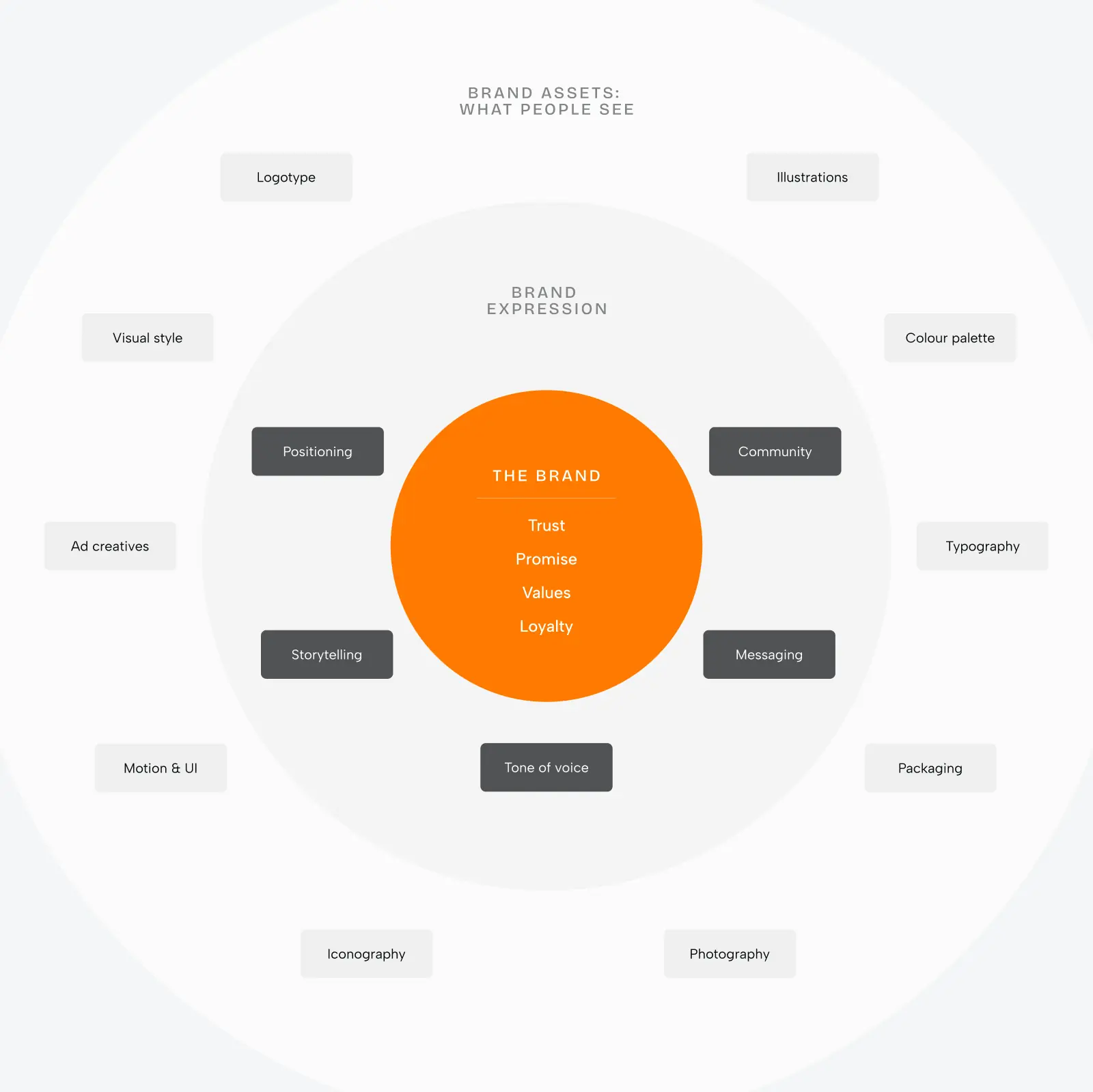
Let’s clear something up, because the word “branding” gets misused constantly. Branding is not your logo. It is not your colour palette or the font on your website. Those are brand assets — the clothing your brand wears. Your brand itself is something deeper. It is the total impression your business leaves on the world. It is what people say about you when you’re not in the room. It is the promise you make to every customer, every time, without saying a word.
Consistent branding means that promise never changes. Whether someone encounters you on Instagram at 7am, reads a case study on your website at lunchtime, or opens a package from you on a Tuesday afternoon — the experience, the feeling, the trust — should be identical. That consistency is not a cosmetic nicety. It is the foundation of something priceless: recognition.
And recognition is the precursor to revenue.
The Science of Trust
Human beings are pattern-recognition machines. Our brains are hardwired to trust what is familiar and feel uneasy about what is inconsistent. When your brand behaves predictably — same voice, same values, same visual identity, same standard of care — you are literally rewiring the brains of your audience to feel safe around you.
Studies have shown that consistent brand presentation across all platforms can increase revenue by as much as 23%. That number should stop you in your tracks. Not a new product feature. Not a bigger advertising budget. Simply showing up the same way, every time.
Think of the brands you love most. They probably didn’t win you over with a single interaction. They earned your loyalty through repetition — the steady accumulation of consistent, quality experiences that eventually made them indispensable to you. That is not an accident. That is strategy.
The Cost of Inconsistency
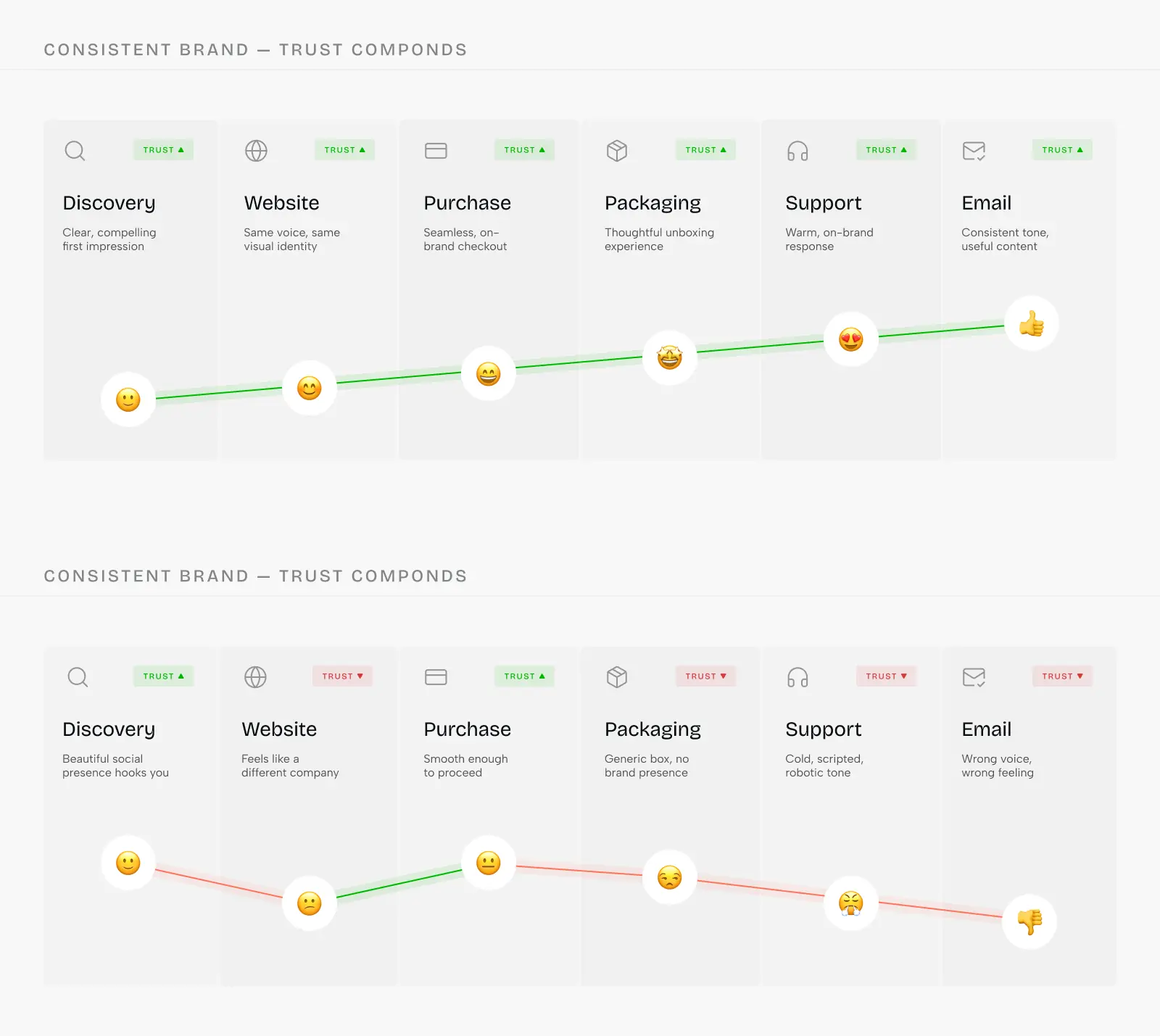
Now consider the opposite. You discover a company through a beautifully crafted Instagram presence — warm, aspirational, full of personality. You visit their website and it feels like a different business entirely. Cold. Corporate. The voice is formal where the social feed was playful. You place an order and the packaging is generic when the marketing promised premium. By the time you receive their follow-up email, written in yet another tone, your confidence has quietly eroded.
This is brand inconsistency. And it costs far more than most businesses realise.
Every inconsistency is a tiny withdrawal from your trust bank. Individually, they seem harmless. Collectively, they leave customers feeling like they don’t really know you — and we do not give our loyalty to companies we don’t know. We give it to companies that feel like old friends.
Inconsistency also damages your team. When your people don’t have a clear, consistent brand to represent, they make it up as they go. Customer service speaks differently from sales. Marketing promises things that operations can’t deliver. The internal culture fractures in ways that eventually show up in the product itself.
Consistency is a choice — made a hundred times a day
Branding decisions aren’t reserved for big campaigns or rebrand projects. They happen in the small moments: the email subject line, the packaging tape, the tone of a refund reply. Here’s what consistent branding looks like in practice — and what it doesn’t.
| Don’t | Do |
| Use a different logo version, colour, or typeface depending on what “looks better” for each individual asset. | Lock your visual rules in a brand guide and apply them without exception — same logo, same palette, same fonts, everywhere. |
| Let each team write in their own voice — sales formal, social playful, support robotic — so customers feel like they’re talking to three different companies. | Define three or four voice attributes and share them across every team, with real examples of on-brand and off-brand writing. |
| Promise a premium experience through polished marketing, then ship plain packaging with a generic printed receipt. | Extend your brand intentionally into every touchpoint — packaging, confirmation emails, invoices — so the experience matches the promise. |
| Chase every platform trend or cultural moment, abandoning your original brand voice each time something new takes off. | Adapt your tone slightly by channel — a little warmer on social, more precise in technical docs — while keeping your core personality constant. |
| Reach for a rebrand every time growth stalls, resetting the recognition and trust you’ve spent years building. | Evolve deliberately — refresh when your brand no longer reflects who you are, not when results disappoint. Keep the equity, update the expression. |
Building Consistency as a Culture, Not a Checklist
Here is where many businesses go wrong: they treat branding as a project to be completed rather than a discipline to be lived.
They hire a designer, build a brand guide, brief the team, and consider it done. Three months later, the brand guide is gathering digital dust and the business has drifted back into inconsistency — different voices on different channels, visual assets used out of context, messaging that no longer reflects who the company actually is.
Consistent branding is not a one-time deliverable. It is a daily practice. It lives in the decisions your team makes when no one is watching — the way a customer complaint is handled, the words chosen in a routine email, the care taken with a product photograph. Brand consistency is, at its core, a question of values: do we actually believe in the experience we say we provide?
The companies that get this right build their brand into the DNA of their culture. They hire for brand fit as much as skill fit. They train their team not just in what to do, but in why — because people who understand the why will make better brand decisions in a thousand situations no handbook could anticipate.
Your Brand as Your Most Durable Asset
Products can be copied. Pricing can be matched. Distribution channels can be replicated. But a brand — a genuinely distinctive, consistently expressed, emotionally resonant brand — cannot be stolen. It is yours. It is the accumulated result of every promise kept, every experience delivered, every impression made. It is the moat that no competitor can easily cross.
The most successful companies in the world understand this intuitively. Apple doesn’t just sell technology — it sells a feeling of creative possibility. Nike doesn’t just sell sportswear — it sells the belief that you are an athlete. Patagonia doesn’t just sell outdoor clothing — it sells a set of values. In each case, the product is excellent. But the brand is what makes customers evangelists.
How This Works in Practice: MIRA Systems
To see how consistent branding creates real impact, consider MIRA Systems — an AI R&D studio focused on human-centered, ethical technology.
Problem: MIRA lacked visual distinction in a crowded AI market dominated by cold, corporate aesthetics. Their core ideas — presence, consciousness, and human-first AI — weren’t clearly expressed, and the absence of a unified design system made it difficult to communicate both technical expertise and emotional depth consistently.
Solution: We built a cohesive brand identity combining an organic visual language, bold color system, and clear guidelines to ensure consistency across all touchpoints.
Result: MIRA gained a distinctive, recognizable presence that clearly reflects its philosophy and positioning. The new brand builds trust, communicates both credibility and warmth, and supports growth by attracting clients aligned with their vision.
Conclusion
You have something valuable to offer the world. You have poured time, energy, and probably significant money into making your product as good as it can be. Now honour that effort by giving it the brand it deserves.
Start with a question: if our brand were a person, would that person behave the same way in every room they walked into? If the answer is anything less than a confident yes, you have work to do.
That work is not glamorous. It is about discipline, repetition, and care. It is about showing up the same way on the worst day as on the best. It is about building something so consistent, so trustworthy, so unmistakably you, that your customers would miss you if you were gone.
Your product got you started. Your brand will take you the distance.
Now go build something unforgettable.
Share this article with friends



Sep 29, 2026
6 min read
B2B website redesign without losing traffic: A complete b2b website redesign guide covering UX audits, 301 redirect mapping, and metadata preservation. Partner with a top b2b website redesign agency that boosts conversions while protecting your organic rankings.

Sep 29, 2026
8 min read
Small business web design services that fit your budget. Get affordable small business website design from one of the best website design companies for small business — with transparent pricing and no hidden fees.
