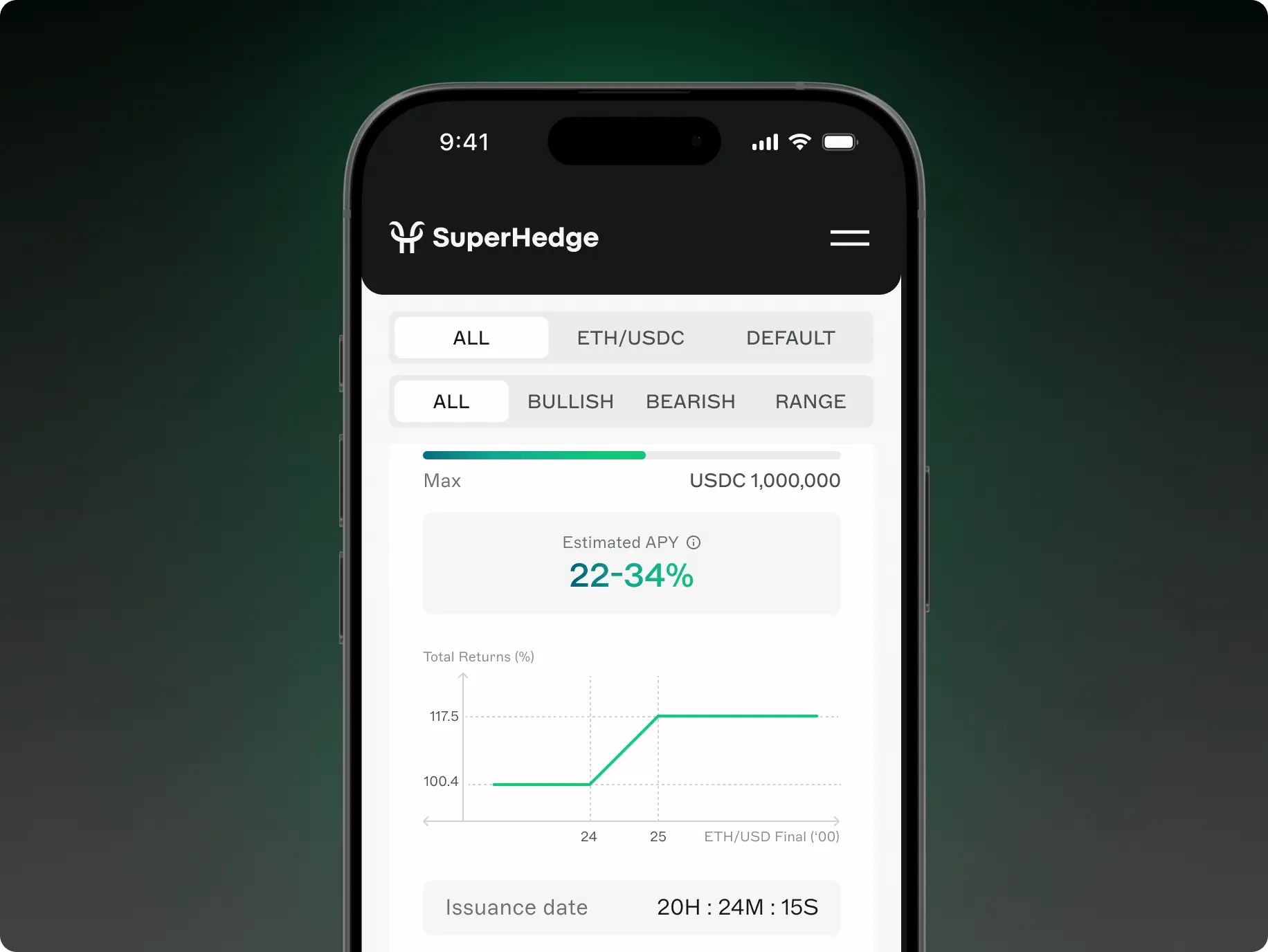
SuperHedge principal-protected DeFi structured vaults

SuperHedge – principal-protected DeFi structured vaults - Website Development - Photo 1
2x faster feature implementation

Running business analysis and UX design in parallel cut the time spent on feature decomposition and app mapping by 50%, getting the team to prototyping faster than a sequential process would have allowed.

User-first approach in a complex landscape

By making complex derivatives-based strategies easier to understand, we opened the door to investors who wouldn't have considered structured products before.

Strategic budget allocation for max impact

By cutting four non-essential features from the initial scope, we kept the budget focused on what mattered most — a solid MVP that delivered real value without overbuilding.

Overview
Smarter уarning with structured crypto products

SuperHedge is a protocol for crypto structured products, built to make it straightforward for users to earn enhanced yield on BTC, ETH, and USDC without putting their principal at risk. Each product is principal-protected — the original investment is returned at the end of every epoch regardless of market conditions.

Yield comes from verified blue chip protocols and leading staking solutions. The vault’s options-based strategies give users directional exposure and yield enhancement on top of that base. All deposits are self-custodied and represented as NFTs, tradable on the secondary marketplace.

Client
SuperHedge Image - fi_4628635USA
Business needs
Client request & business goals

SuperHedge set out to bridge traditional and decentralised finance — offering structured yield products with principal protection to investors who wouldn’t typically venture into DeFi.

The core challenge was making sophisticated derivatives-based strategies legible to a broader audience without stripping out what made them valuable. The client needed a platform that felt trustworthy and transparent, handled complex financial logic cleanly, and didn’t require a DeFi background to navigate. At the same time, the build had to stay cost-efficient — an MVP that covered the essentials without scope creeping into features that could come later.

Our role was to make sure the complexity of the financial products didn’t become the complexity of the user experience.
Project
Challenges & solutions
Challenge
Structured financial products are hard to grasp for most investors. Derivatives-based strategies sit behind enough jargon and complexity that the majority of people never engage with them at all.
Solution
We simplified the experience with clear visual breakdowns and guided flows, making structured products approachable for users who wouldn't normally engage with them.
Challenge
Having funds locked up for the duration of an epoch is a real friction point. Users want the option to exit early — and without it, some won't commit in the first place.
Solution
We added real-time asset tracking and controlled exit options so users could see what their funds were doing and get out early if they needed to — rather than waiting out an epoch with no visibility or flexibility.
Challenge
Traditional structured products typically require significant upfront capital, which puts them out of reach for newer or smaller investors before they've even looked at the terms.
Solution
We designed the investment model to support fractional participation, so users could start with smaller amounts and still access the same structured yield strategies as larger investors.
Icon - process-1
Wondering about the price? We’ll help you find the best solution!
Research
Shaping ideas through user understanding

Good design starts with understanding who you’re building for. That means research — user behaviour, market trends, the competitive landscape — before any design decisions get made. What comes out of that shapes the features, the functionality, and the overall structure of the app.

From there the ideas get translated into something tangible. Wireframes first, to work out the layout and user flow, then detailed mockups that bring in the visual design and branding. Neither stage is precious — both exist to be tested and revised.

User feedback runs through the whole process, not just at the end. It’s what turns a first attempt into something worth building.

Stages

  • Workshop with stakeholders
  • SWOT analysis
  • Information architecture & Userflows
SuperHedge – principal-protected DeFi structured vaults - Website Development - Photo 6
Stage 1
Workshop with stakeholders

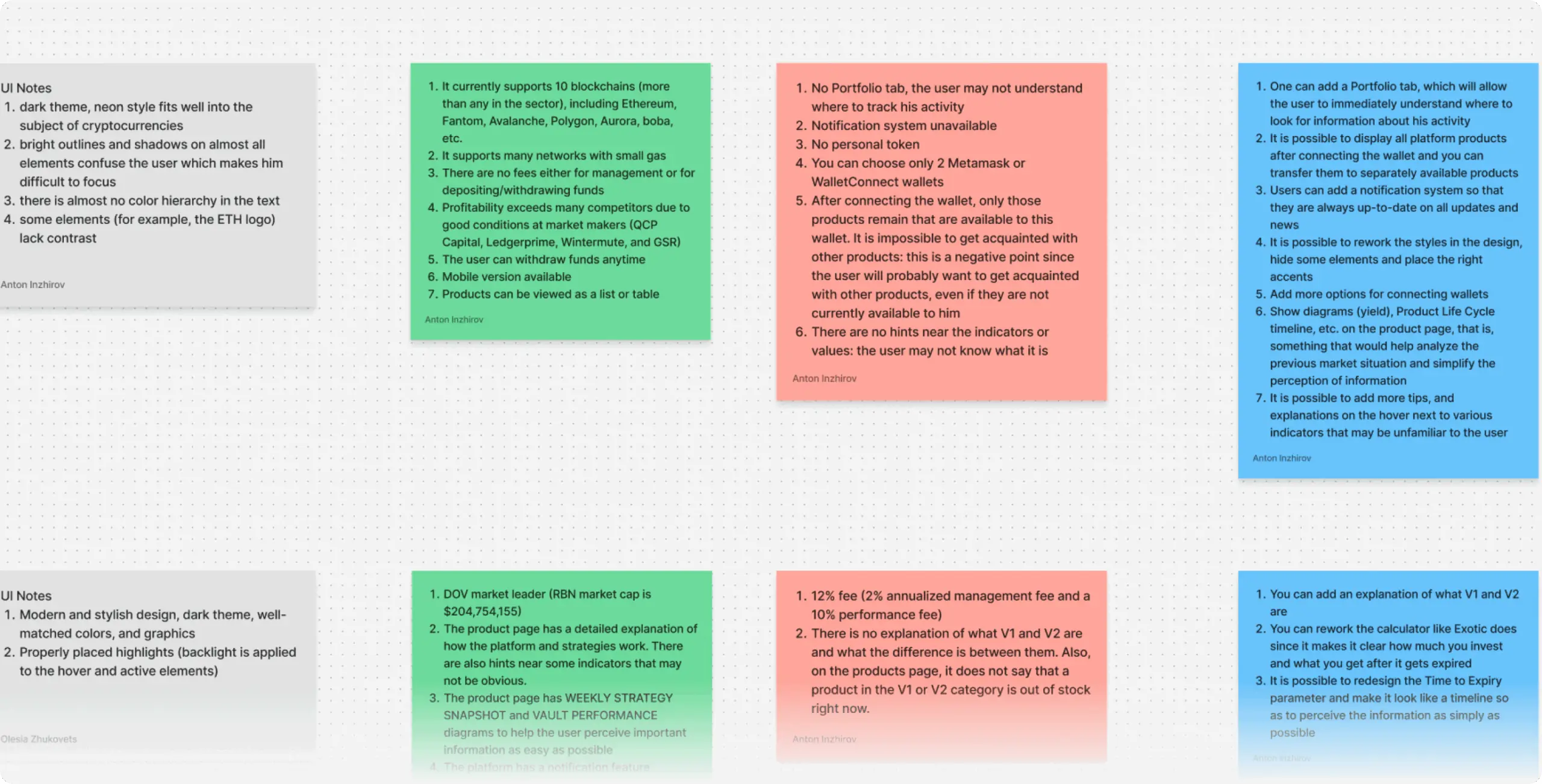
We started with stakeholder interviews, using a simplified Lean Canvas framework to get their perspective on the core user problems we’d need to design around.

With that initial input in hand, we moved into validation — looking at the market broadly and the competitive landscape in detail to test whether what we’d heard matched what was actually out there.

That combination of stakeholder insight and market reality gave us something solid to build from — a clear picture of the real problems and where there was room to do something better.
Stage 2
SWOT analysis

We ran user interviews and a competitor analysis to understand how people actually behaved, what they expected, and where things were breaking down. That surfaced the usability gaps clearly enough that the design opportunities became obvious rather than assumed. Everything that came after was shaped by what we found here.
SuperHedge – principal-protected DeFi structured vaults - Website Development - Photo 9
Stage 3
Information architecture & userflow

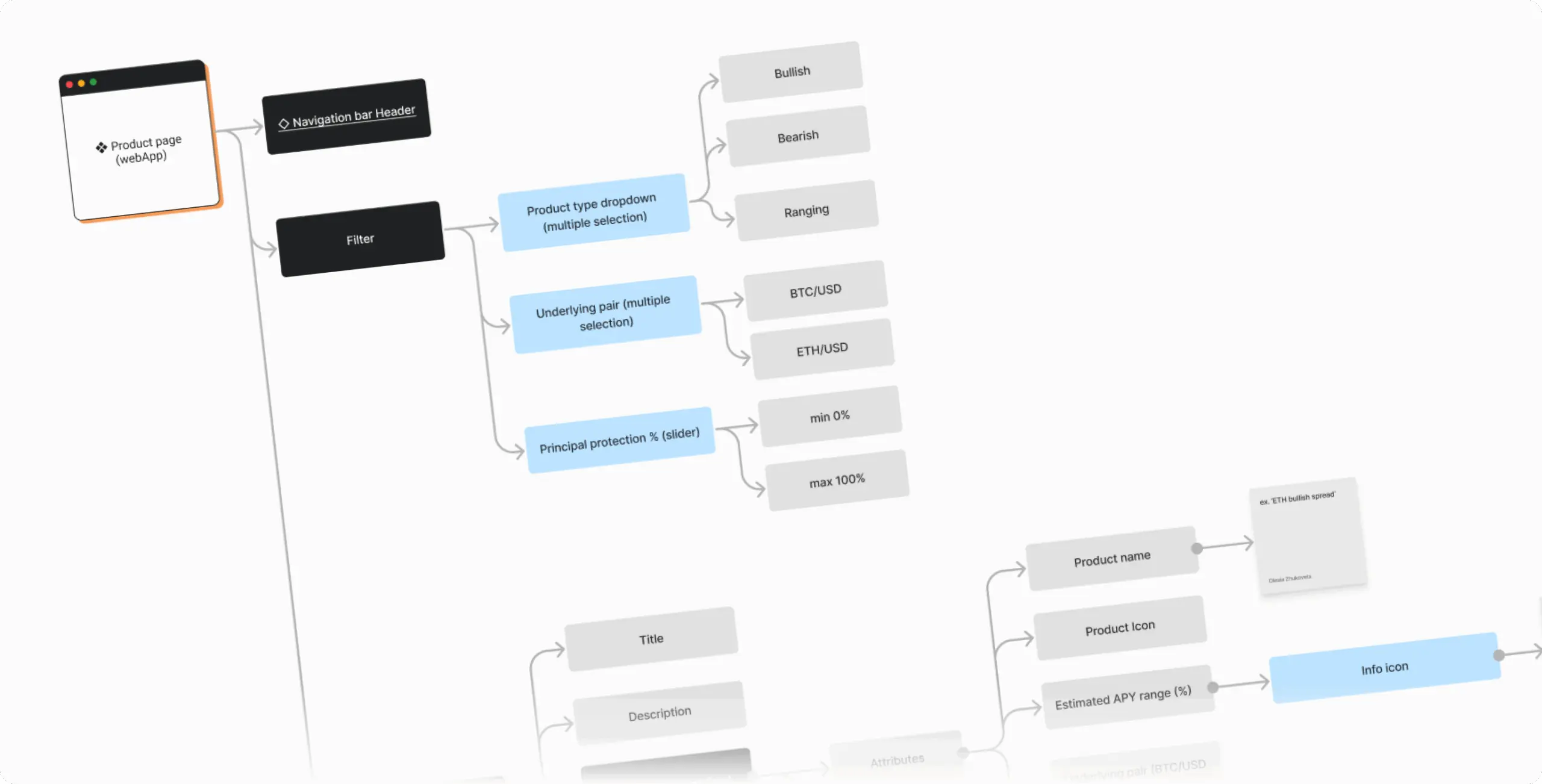
The BA’s main job at this stage was breaking down the product’s planned features into smaller, manageable components — getting a clear picture of what each feature actually required and how the pieces depended on each other. That process also surfaced a handful of non-essential features that could be pushed to a post-MVP release, keeping the initial build within budget.

Running in parallel, the UX designer mapped out the application structure. The feature set wasn’t large enough to warrant a heavyweight framework, so we used a hybrid of Information Architecture and User Flows — practical for the project’s scale and easier on the client’s budget.
SuperHedge – principal-protected DeFi structured vaults - Website Development - Photo 10
Design
Designing clarity for DeFi

Designing for a complex DeFi product meant keeping the process focused and the decisions deliberate.

We started with high-fidelity wireframes to nail down the key flows and user interactions before anything visual got decided. Moodboards and visual concepts followed, working out what SuperHedge should feel like — a platform that read as secure and forward-thinking without leaning on the tired visual clichés of crypto design.

The final UI brought it together — clean enough to reduce cognitive load, functional enough to support the kind of decisions users were making with real money on the line.

Stages

  • Wireframes
  • Design direction
  • UI Design
SuperHedge – principal-protected DeFi structured vaults - Website Development - Photo 11
Stage 1
Wireframes

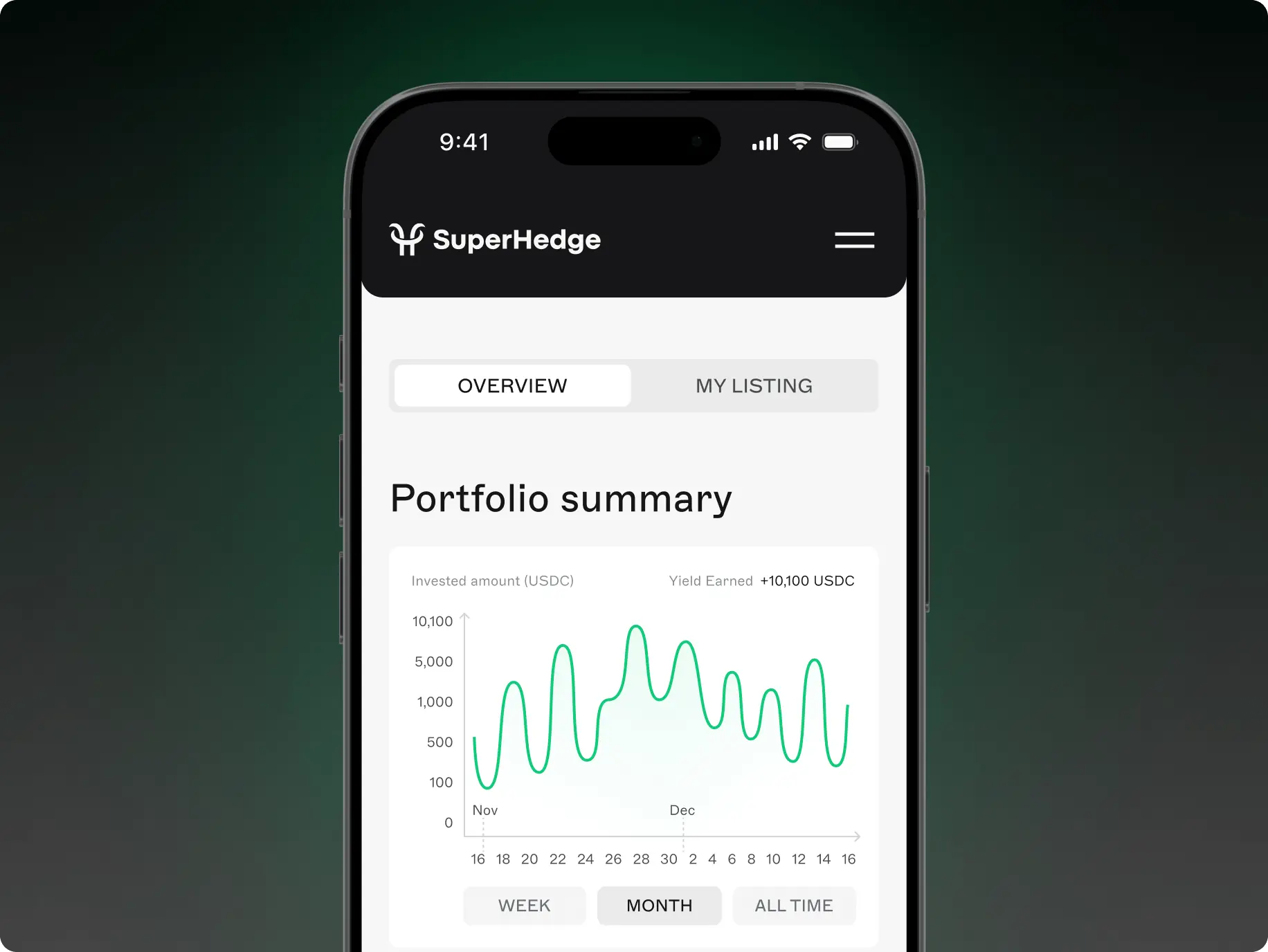
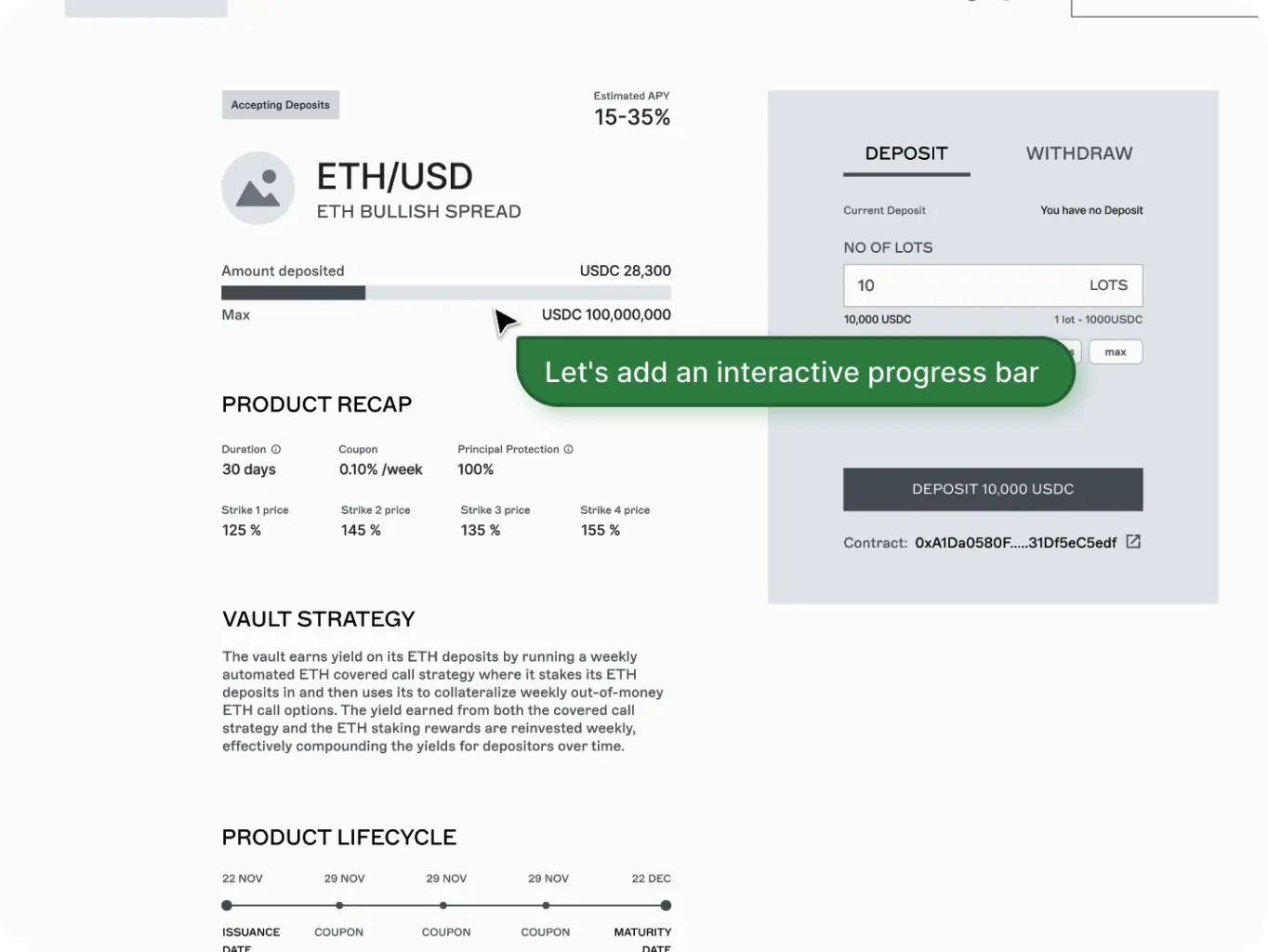
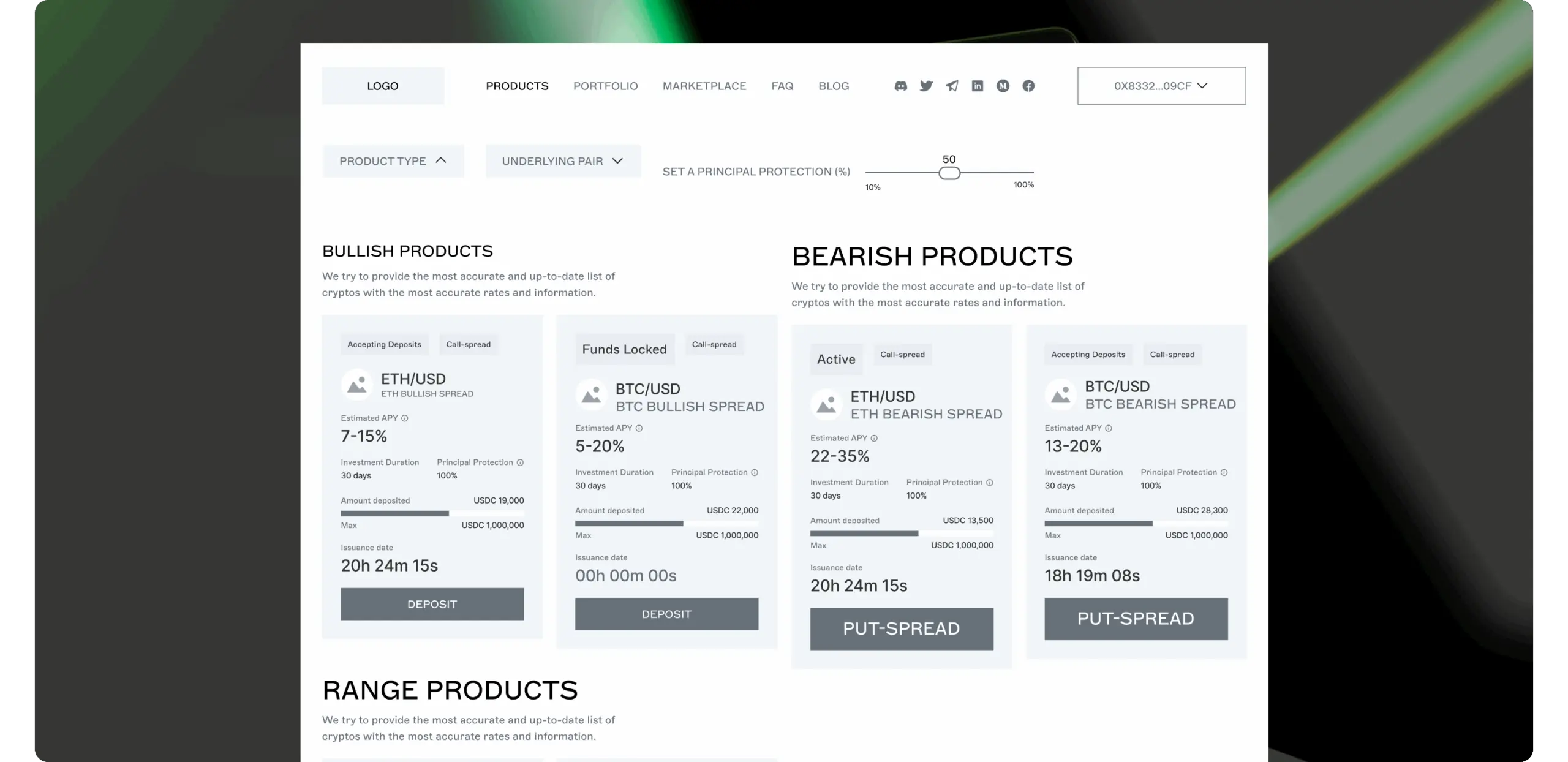
Wireframing was where the core user experience took shape. We mapped out all the key flows — selecting a vault, tracking earnings, navigating the NFT-based deposit system — and quickly ran into the central design problem: making principal protection and yield strategy selection legible to users without a DeFi background.

Several iterations later, we’d broken the complex actions into smaller steps and added contextual hints at the points where users were most likely to get lost. The flows became something a non-expert could move through without second-guessing every decision.

Those wireframes became the foundation the UI design built on.
SuperHedge – principal-protected DeFi structured vaults - Website Development - Photo 12
SuperHedge – principal-protected DeFi structured vaults - Website Development - Photo 13
Stage 2
Design direction

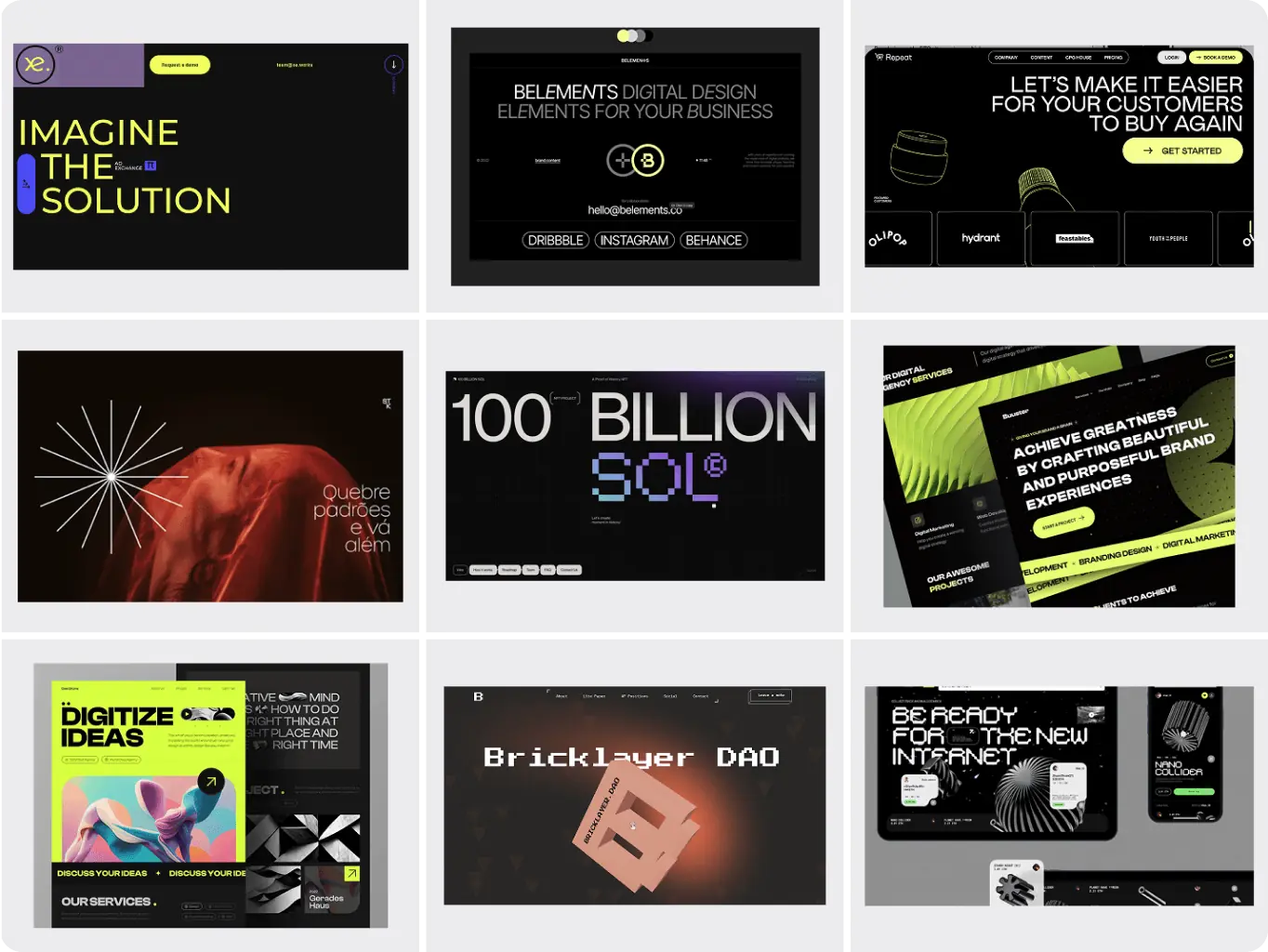
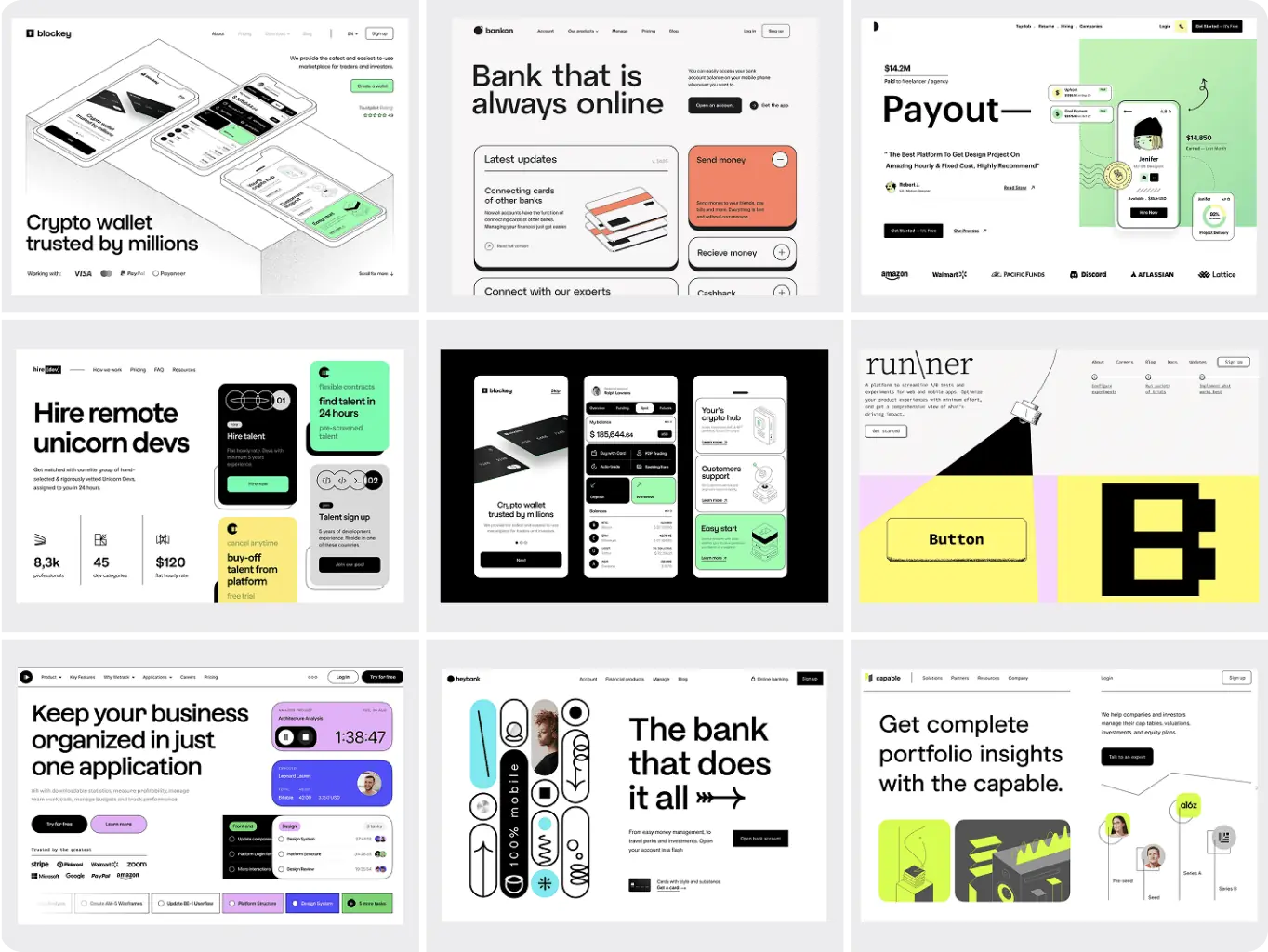
We explored two visual directions through moodboards before committing to one.

The first was light and clean — modern, minimal, geometric, with accent colours that drew the eye without overwhelming. The second went darker and more digital: bold, detailed, technical, with immersive 3D illustrations that leaned into the crypto aesthetic.

The client aligned around the light concept. For a product built on transparency and trust, a clean visual language made more sense than one that signalled complexity — especially for users already navigating unfamiliar financial territory.
Stage 3
UI design

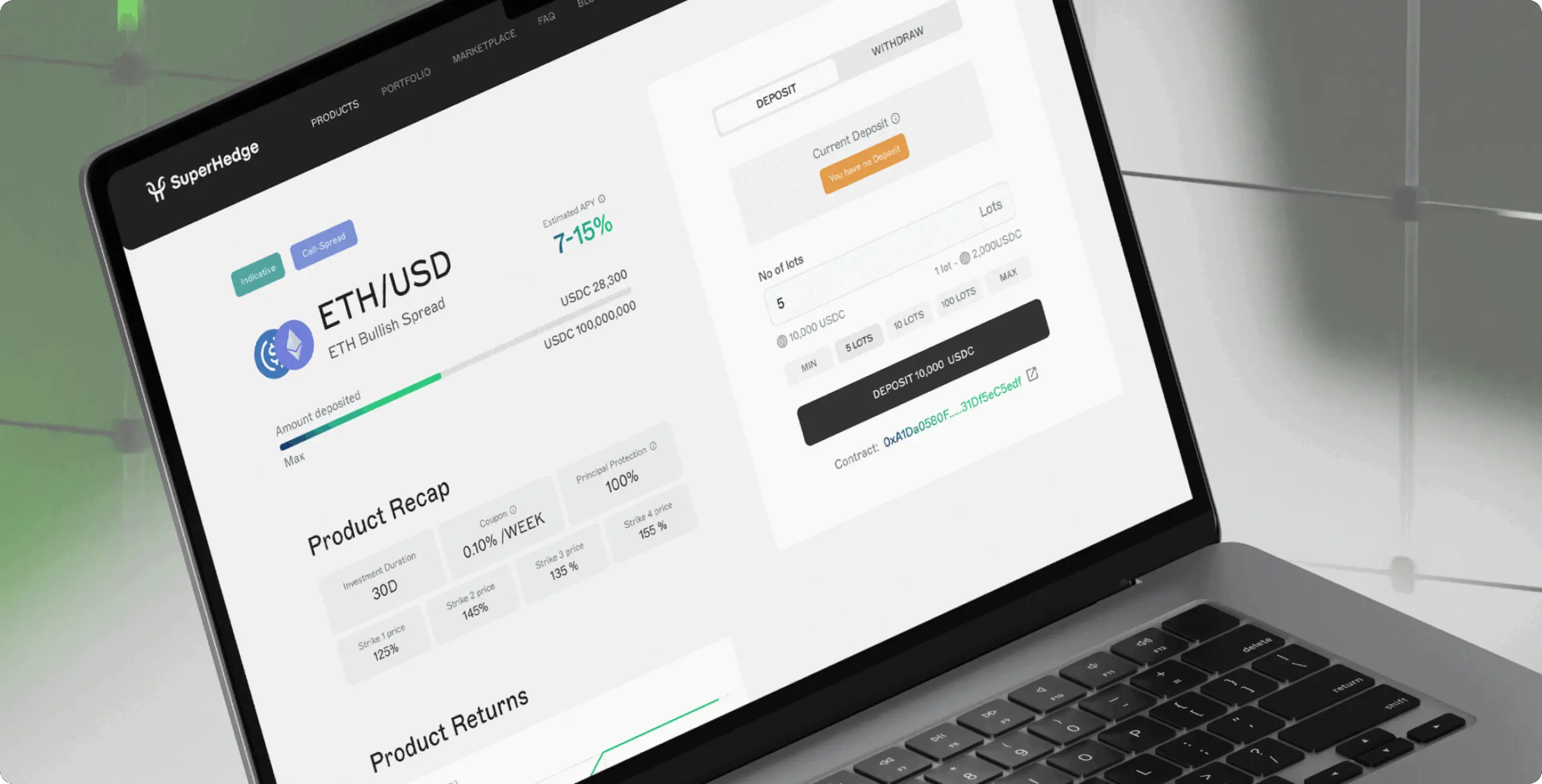
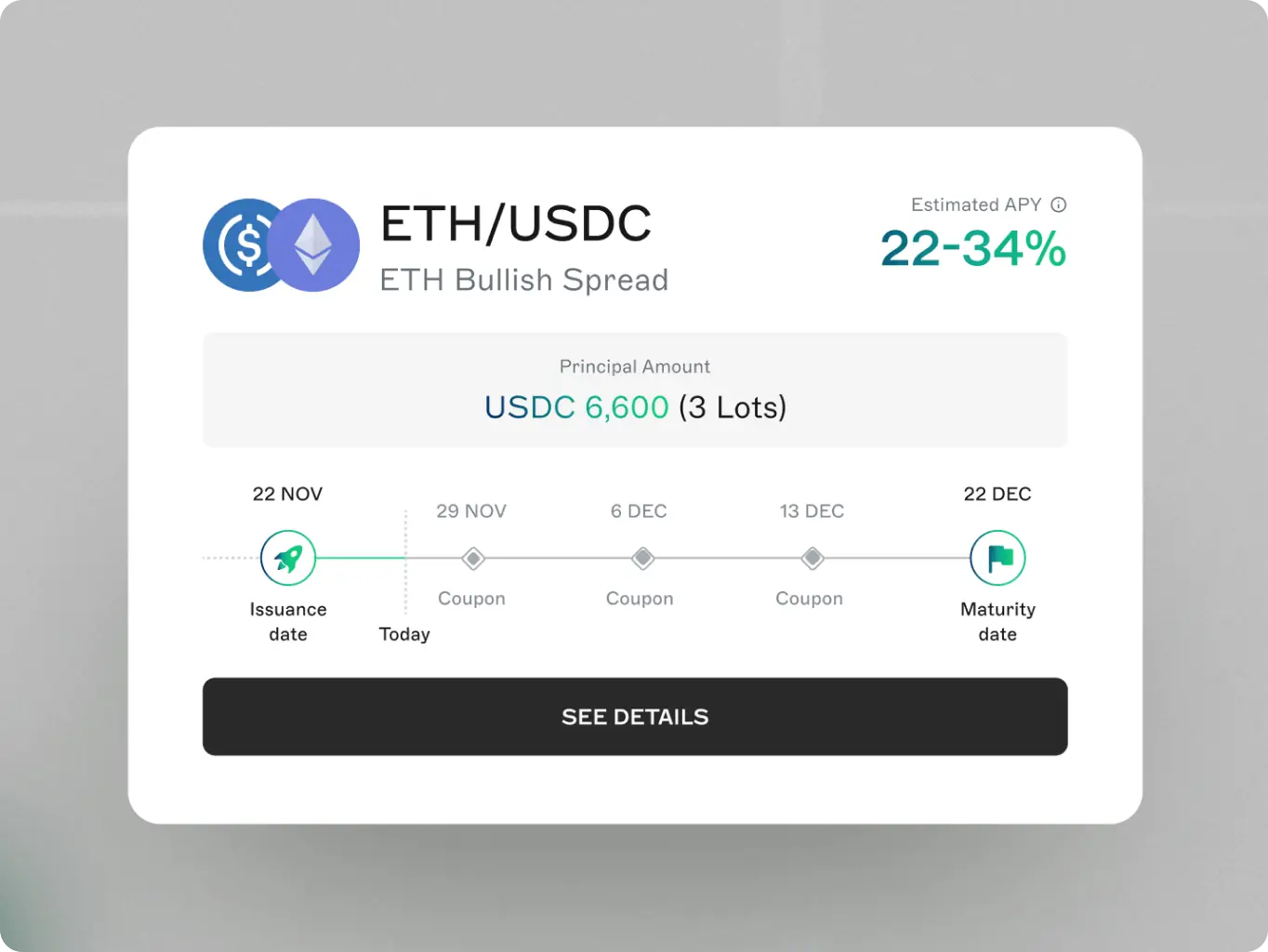
This was where the design came together. Building on the light and clean direction, we crafted an interface that felt credible without feeling intimidating — important for a DeFi product asking users to make real financial commitments.

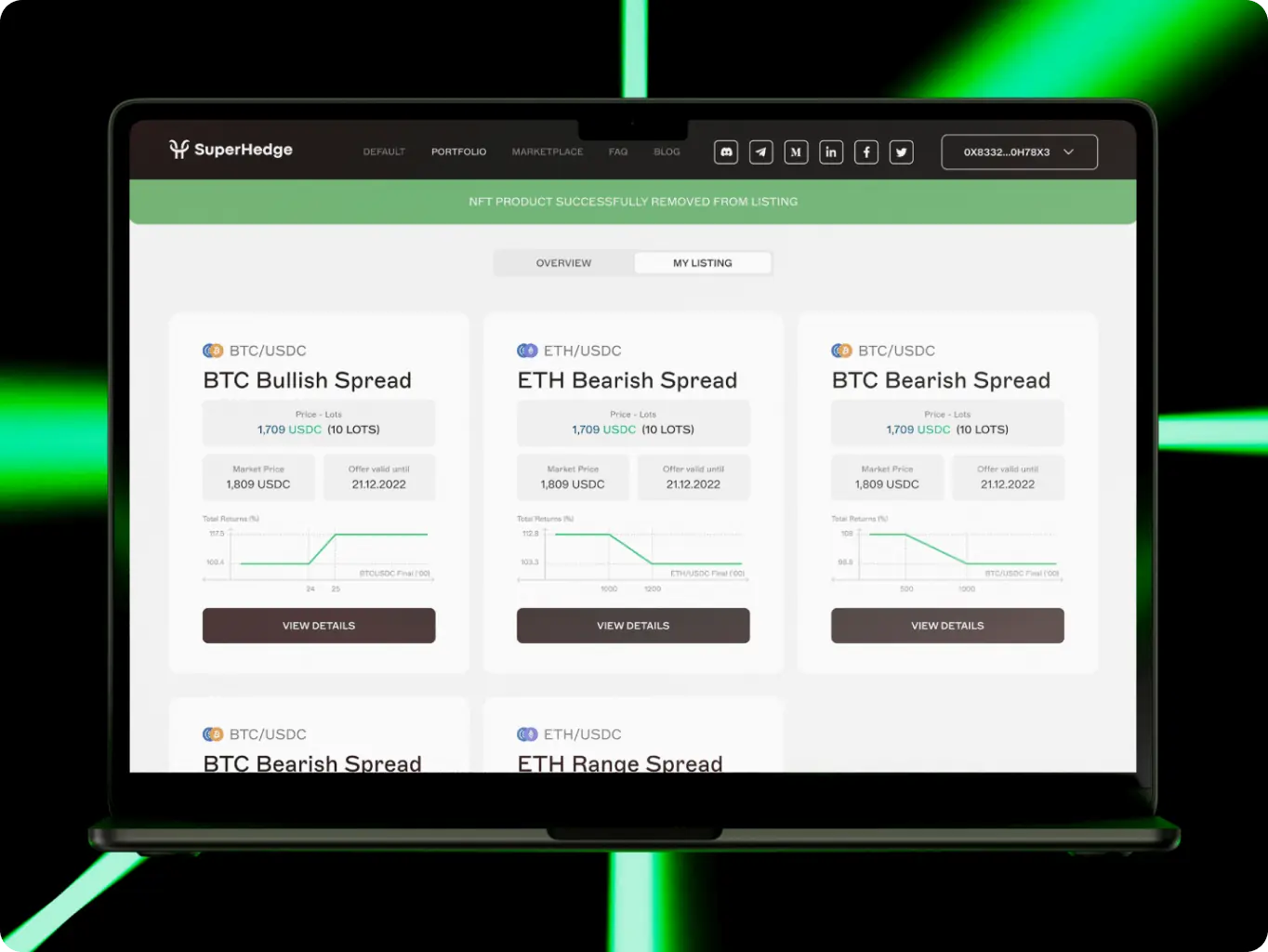
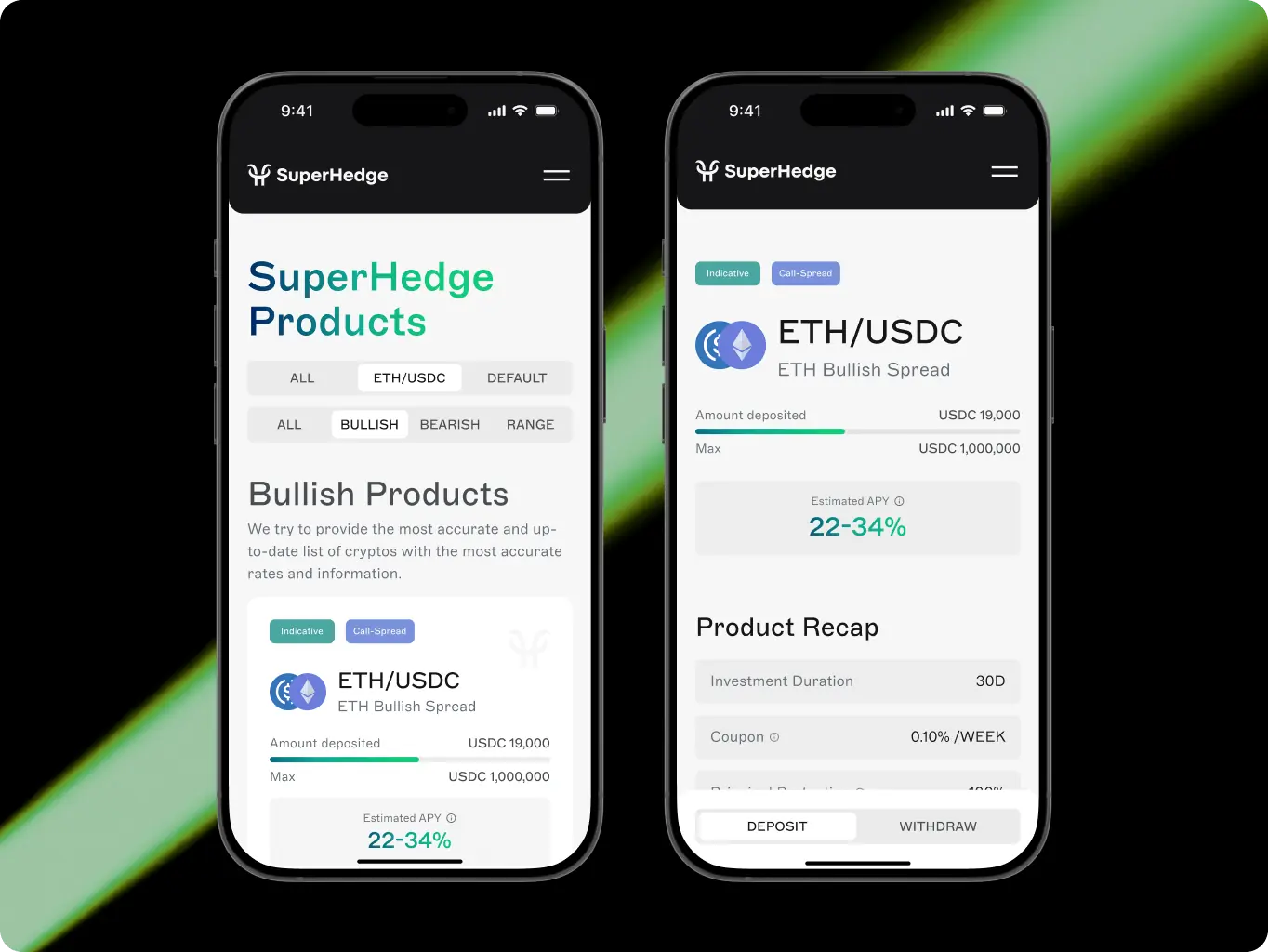
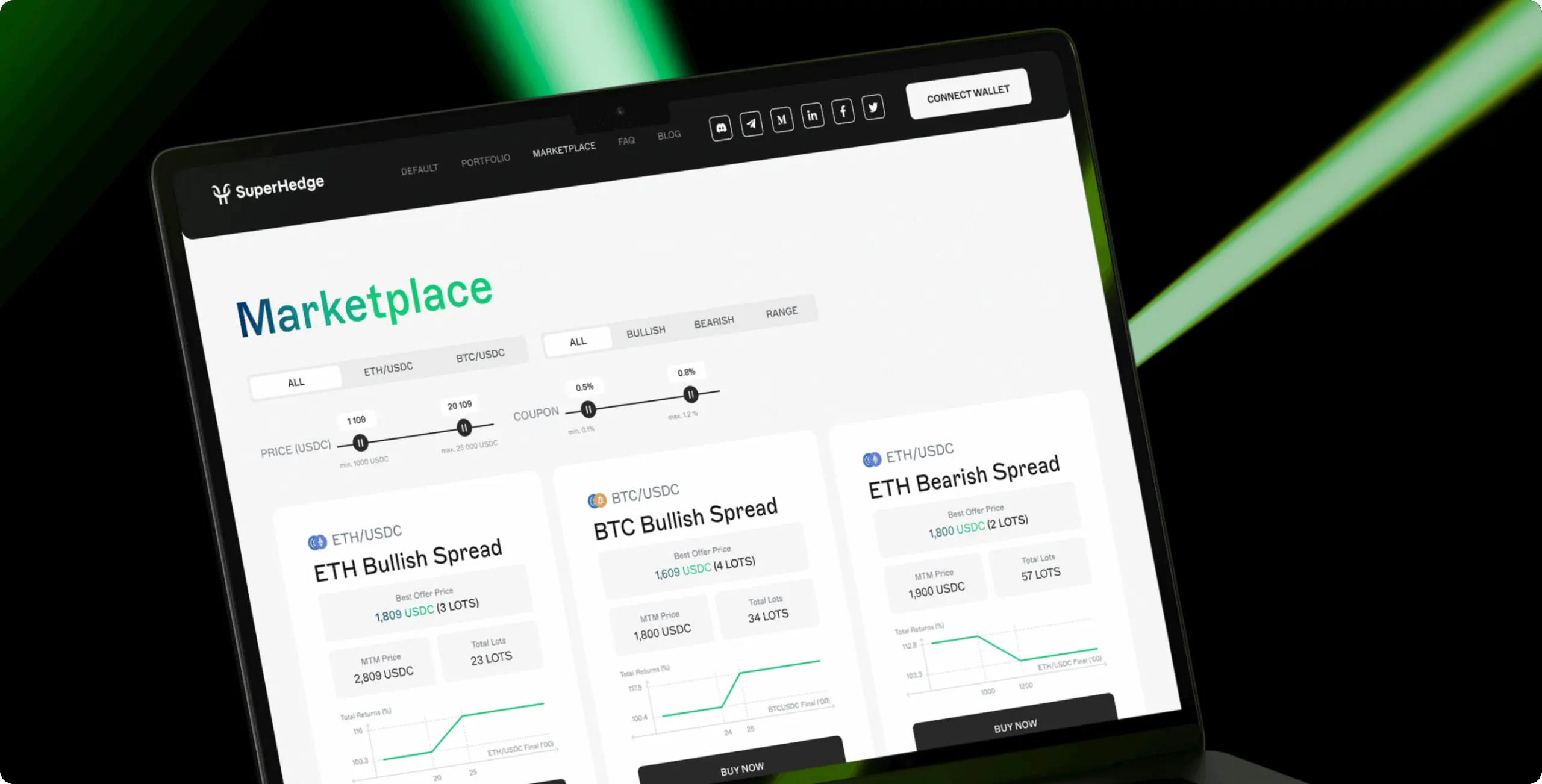
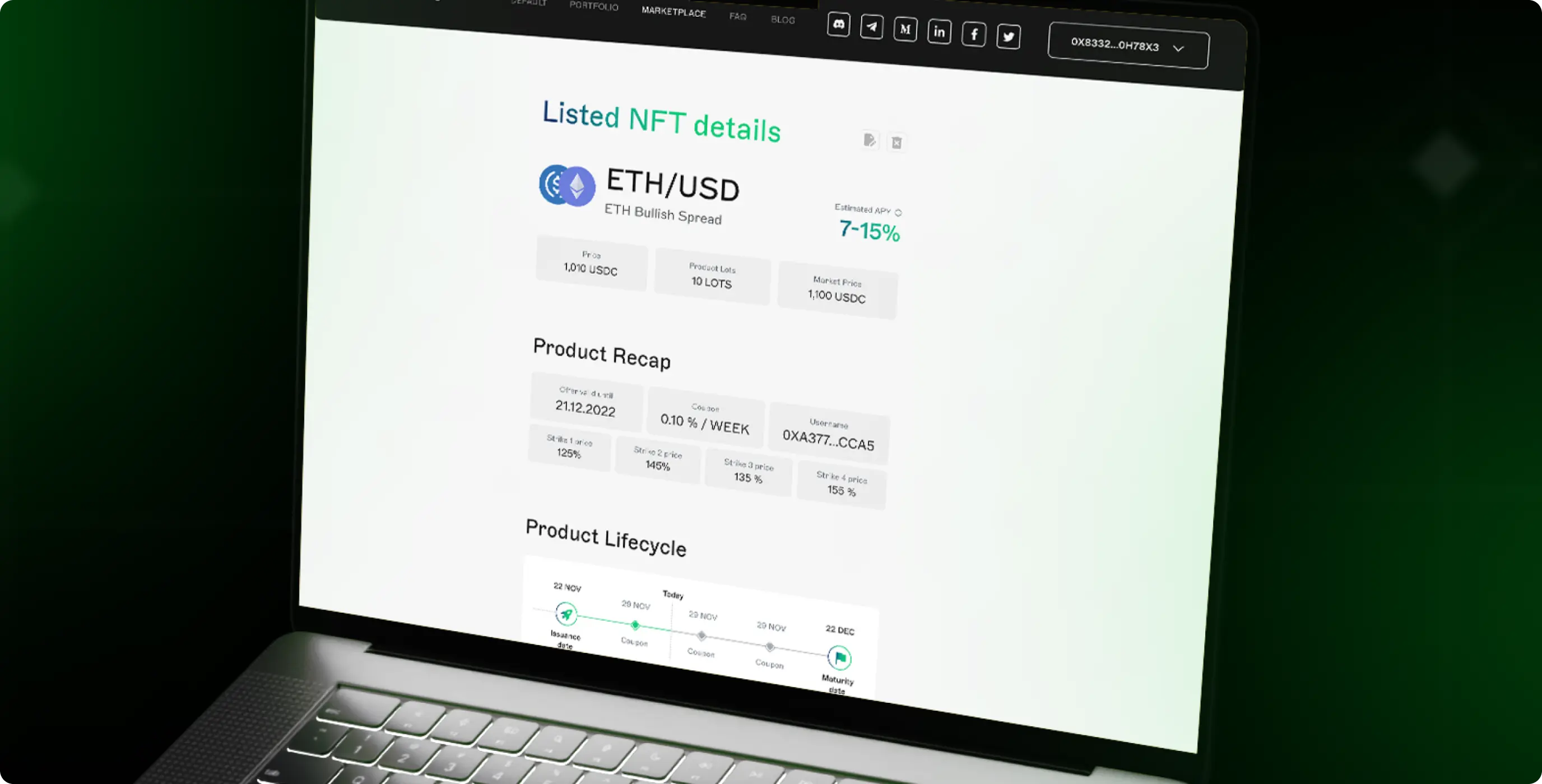
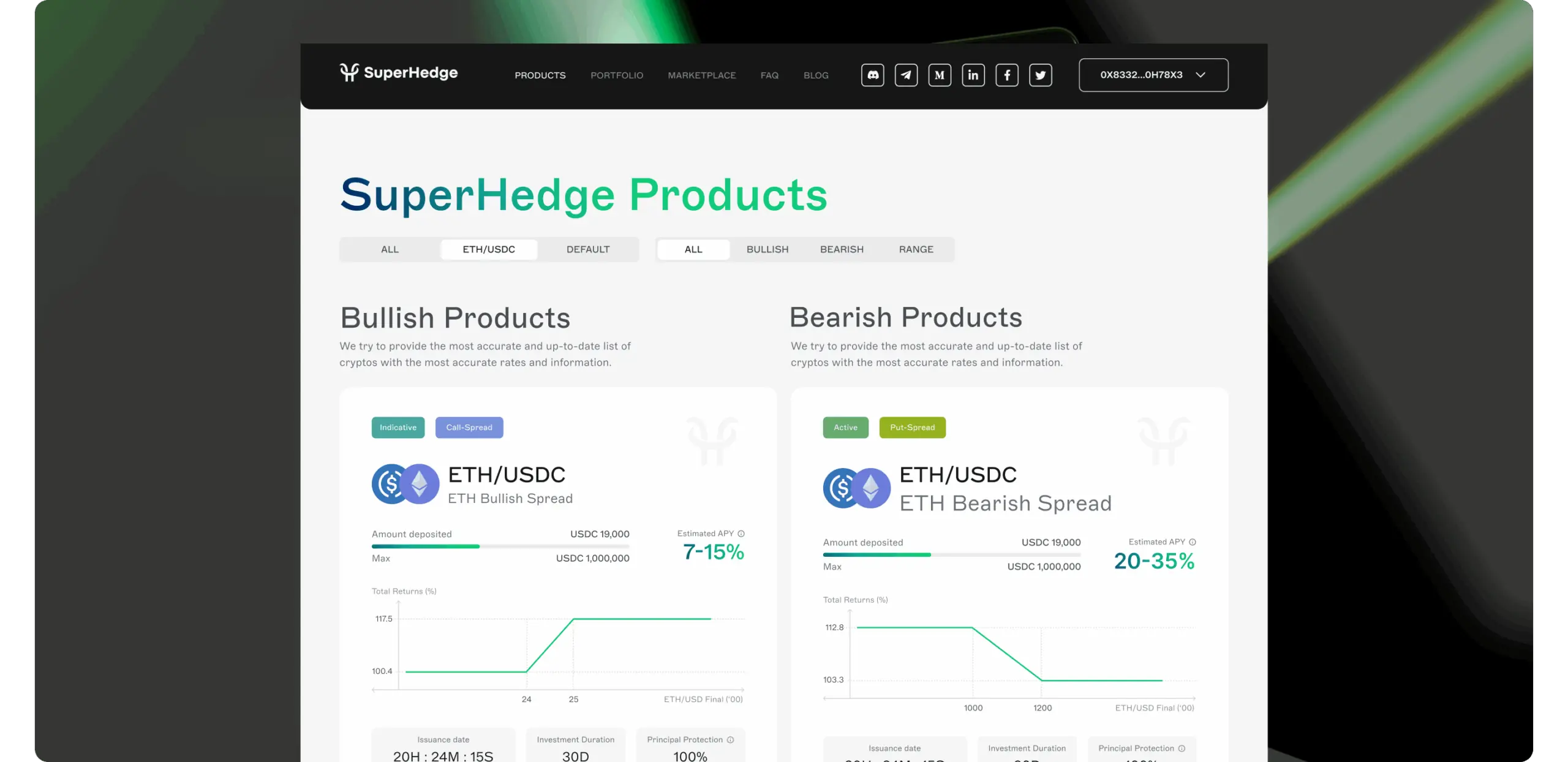
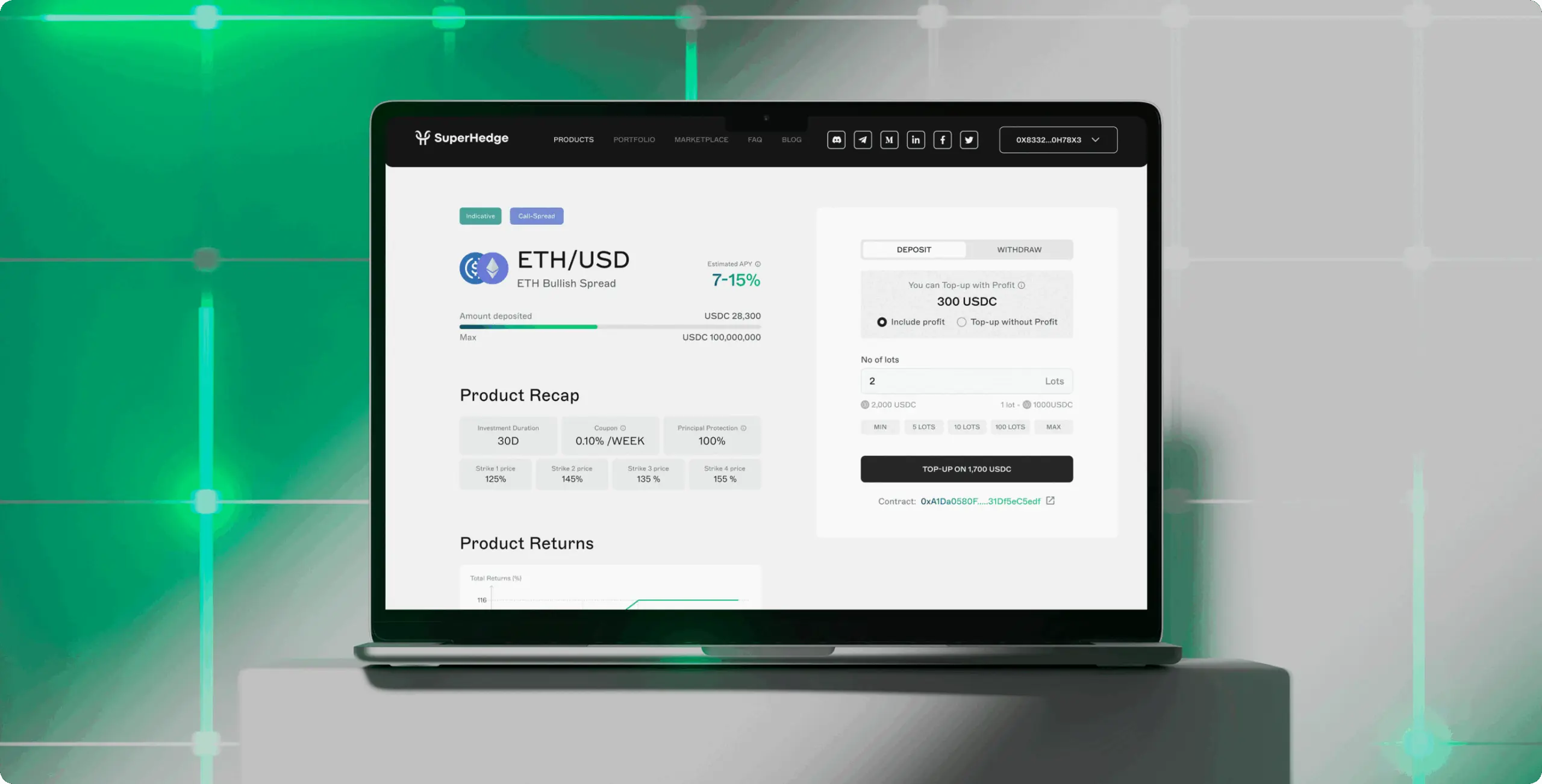
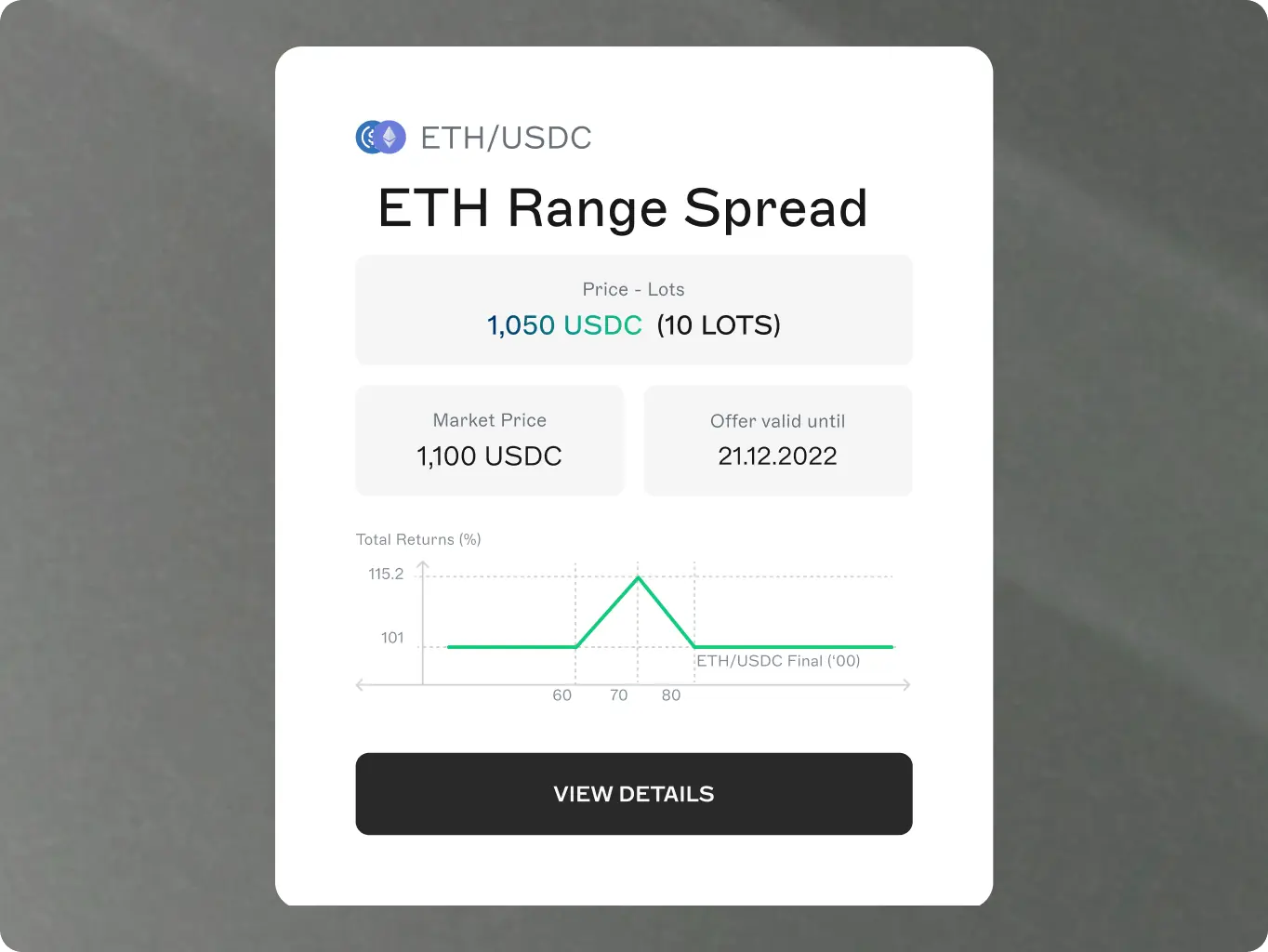
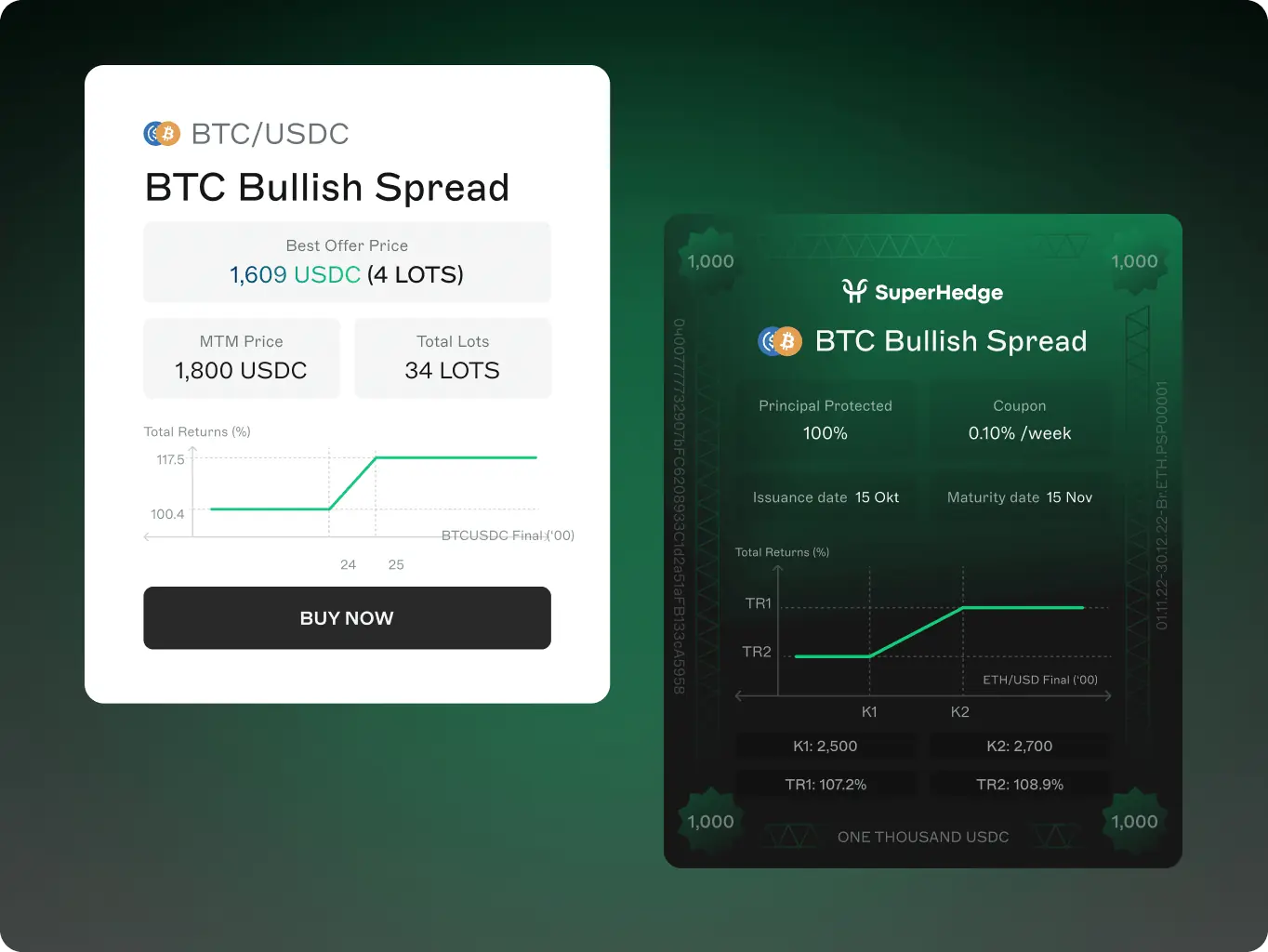
The hardest part was making complex financial strategies legible at a glance. Custom strategy cards with embedded tooltips, vault performance visuals, and clear CTAs gave users enough context to understand what they were choosing without needing to read a whitepaper first.

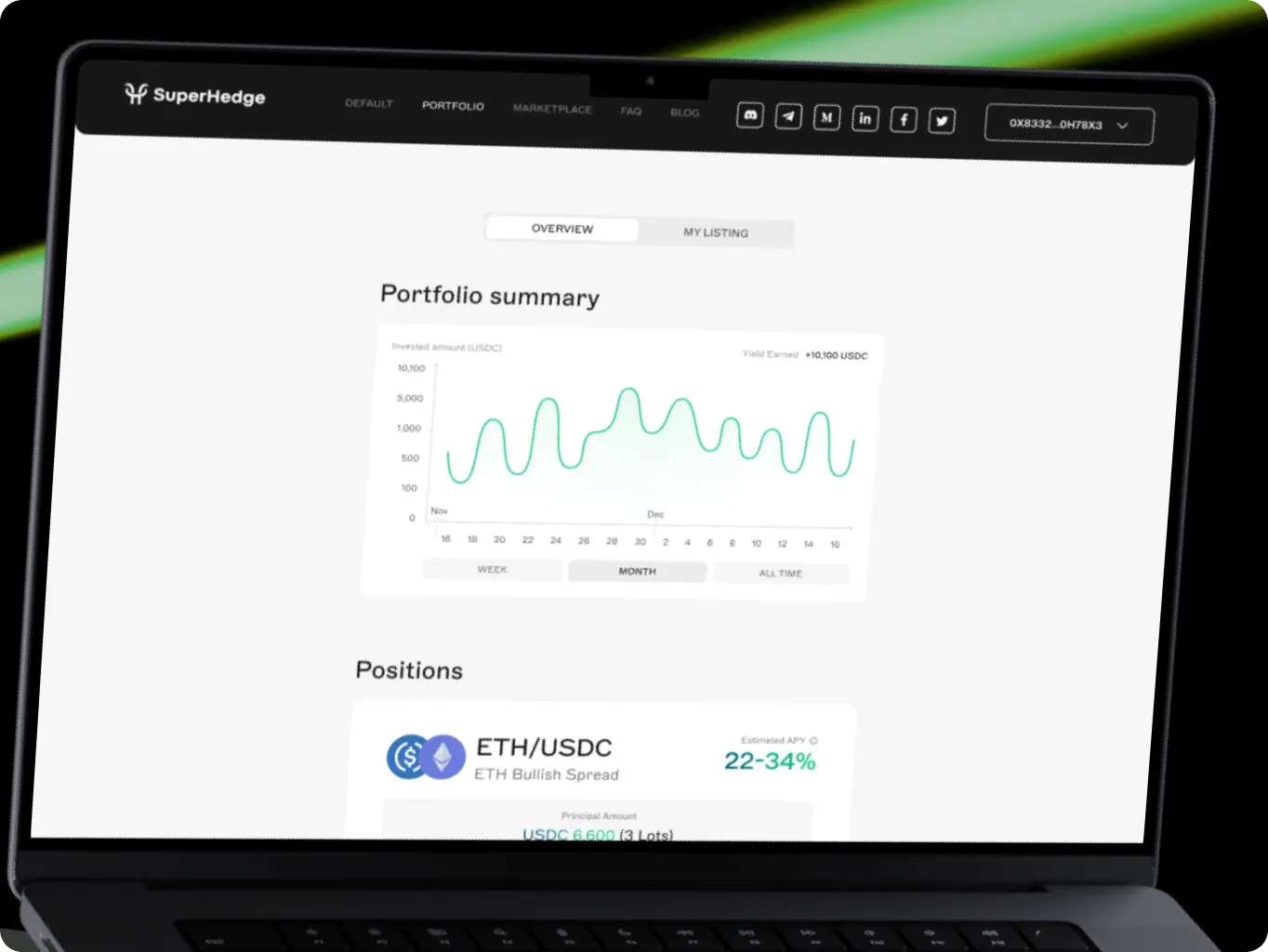
We also designed for the edge cases — upcoming vault epochs, sold-out pools, NFT redemption flows. The scenarios users hit less often are usually where trust breaks down, so getting those states right mattered as much as the main flows.
SuperHedge – principal-protected DeFi structured vaults - Website Development - Photo 16
Icon - process-1
Wondering about the price? We’ll help you find the best solution!
Features
Project’s core features
SuperHedge – principal-protected DeFi structured vaults - Website Development - Photo 19
SuperHedge – principal-protected DeFi structured vaults - Website Development - Photo 20
SuperHedge – principal-protected DeFi structured vaults - Website Development - Photo 21
SuperHedge – principal-protected DeFi structured vaults - Website Development - Photo 22
NFT-based vault deposits

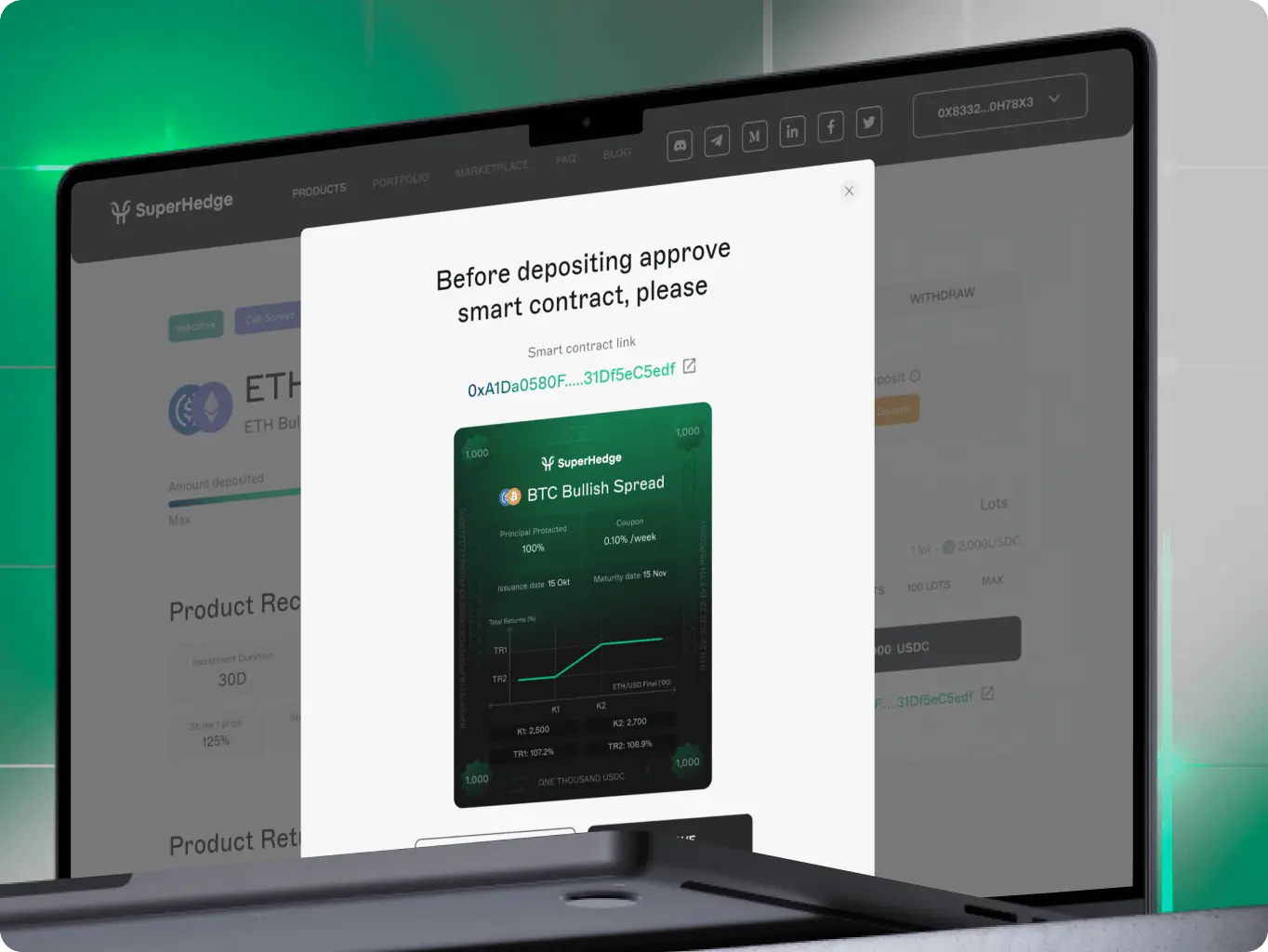
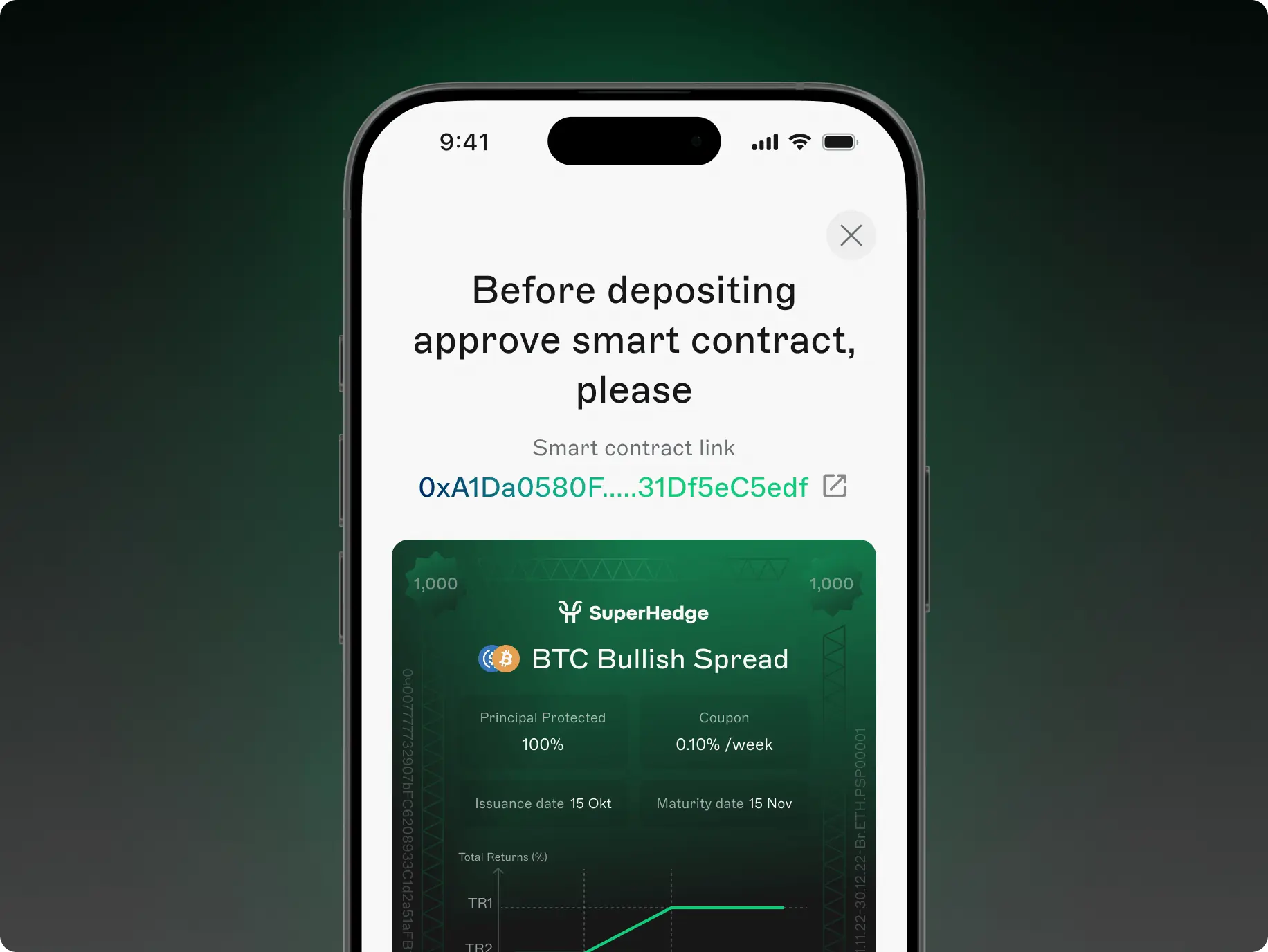
User deposits are represented as unique, tradable NFTs — keeping assets in self-custody and making ownership transparent. That also opens up secondary market activity, so users aren't locked in if their circumstances change.

SuperHedge – principal-protected DeFi structured vaults - Website Development - Photo 23
Principal protection mechanism

Every investment comes with principal protection — users get their original deposit back at the end of each epoch, regardless of what the market does in between. For risk-averse investors, that guarantee is often the difference between engaging with the product and walking away.

SuperHedge – principal-protected DeFi structured vaults - Website Development - Photo 24
Yield from trusted sources

SuperHedge sources yield exclusively from blue-chip protocols and proven staking strategies — keeping returns competitive without taking on the kind of risk that comes with newer, less established sources. For users stepping into structured DeFi products for the first time, that matters.
Conclusion
Results
2x faster feature delivery

Running business analysis and UX design in parallel cut the time spent on feature decomposition and app mapping by 50%, getting the team to prototyping faster than a sequential process would have allowed.

Reduced entry barrier

By making complex derivatives-based strategies easier to understand, we opened the door to investors who wouldn't have considered structured products before.

Focused MVP execution

By cutting four non-essential features from the initial scope, we kept the budget focused on what mattered most — a solid MVP that delivered real value without overbuilding.

The redesign gave SuperHedge a product that held up against current UX standards while feeling distinctly its own — not a generic DeFi interface dressed up with a logo.

Beyond the design, the platform successfully brought together the network it needed to operate: trusted yield-source partners, market makers, product specialists, and investors.

Our cases
We have dozens of products & hundreds of websites developed by our studio. We're happy to share the results with you!
#Website design #website development
From fragmented websites to a unified experience: improving clarity, trust, and conversion across 10 brands
EVERON Icon - fi_4628635USA
Results

Raising the market standard across 10 brands

Faster launch of new websites reduces time-to-market

One design system. Ten products. Lower maintenance cost

 #Website design #Website development
Krios simplifying infrastructure readiness for data centers, utilities, and governments
Philip Lewis Icon - fi_4628635Finland
Tech Stack

Webflow

Timeline

5 month

Results

Clearer positioning

Stronger trust signals

Simpler communication

#website design
Merchant Tech transforming merchant operations into a simpler, more transparent experience
Tyler Ussery Icon - fi_4628635 (6)USA
Results

Clear product positioning

Faster path to trust

Simpler decision making

Contact us

Have a project in mind?
Let's chat

Your Name

Enter your name *

Your Email

Enter your email *

Message

Tell us about your project

You can upload maximum 5 files
Some of your file not loaded, because maximum file size - 5 mb
Your budget for this project?

By clicking this button you accept Terms of Service and
Privacy Policy

Icon - circle-check-svgrepo-com 1
Thanks for taking time to reachout!
Stay connected with us by subscribing to our LinkedIn account. By following, you’l be the first to hear about our latest updates, news, and exciting development. We look forward to sharing our journey with you!
Icon - circle-check-svgrepo-com 1
Thanks for taking time to reachout!
We’d love to hear more about your project! Feel free to schedule a call using the link provided. This will help us better understand your vision and ensure we’re aligned on all the details.
Have a project to
discuss?
Image - ksenia
Kseniia Shalia
Account Executive
Have a partnership in
mind?
Image - polina
Polina Chebanova
Co-Founder & CPO