



Aug 19, 2025
6 min read
summary
Creative projects like branding, campaigns, or bold interface design don’t follow a straight line. Unlike product-focused projects, they require flexibility, open communication, and alignment with evolving client vision. Learn why traditional project management tactics fall short and what works instead.
When most people think about project management, they picture product-focused projects: building a website, developing an app, or releasing a feature. These are typically easier to track because the scope, deliverables, and success metrics are clearly defined. The path from idea to result often feels like a straight line – milestones, deadlines, tasks, outcomes.
But creative projects rarely follow a straight line.
Whether it’s shaping a brand identity, designing a campaign concept, or developing a visually bold interface, creative work plays by different rules. Success is harder to define. There is rarely just one right answer, and what feels spot-on to one client might completely miss the mark for another.
That’s why managing creative projects requires a different toolkit – one that emphasizes communication, flexibility, and alignment over rigid processes.
Why traditional tactics fall short
In product projects, success can often be reduced to numbers: Was it delivered on time? Was the original goal met? Were all the planned features released?
Creative projects, however, aren’t judged by deadlines alone. A logo isn’t “successful” simply because it shipped on schedule – it’s successful if it captures the essence of a brand and resonates with the audience. These softer, more subjective metrics can’t be managed with the same rigid frameworks product projects rely on.
A real-world example: DoMORE redesign
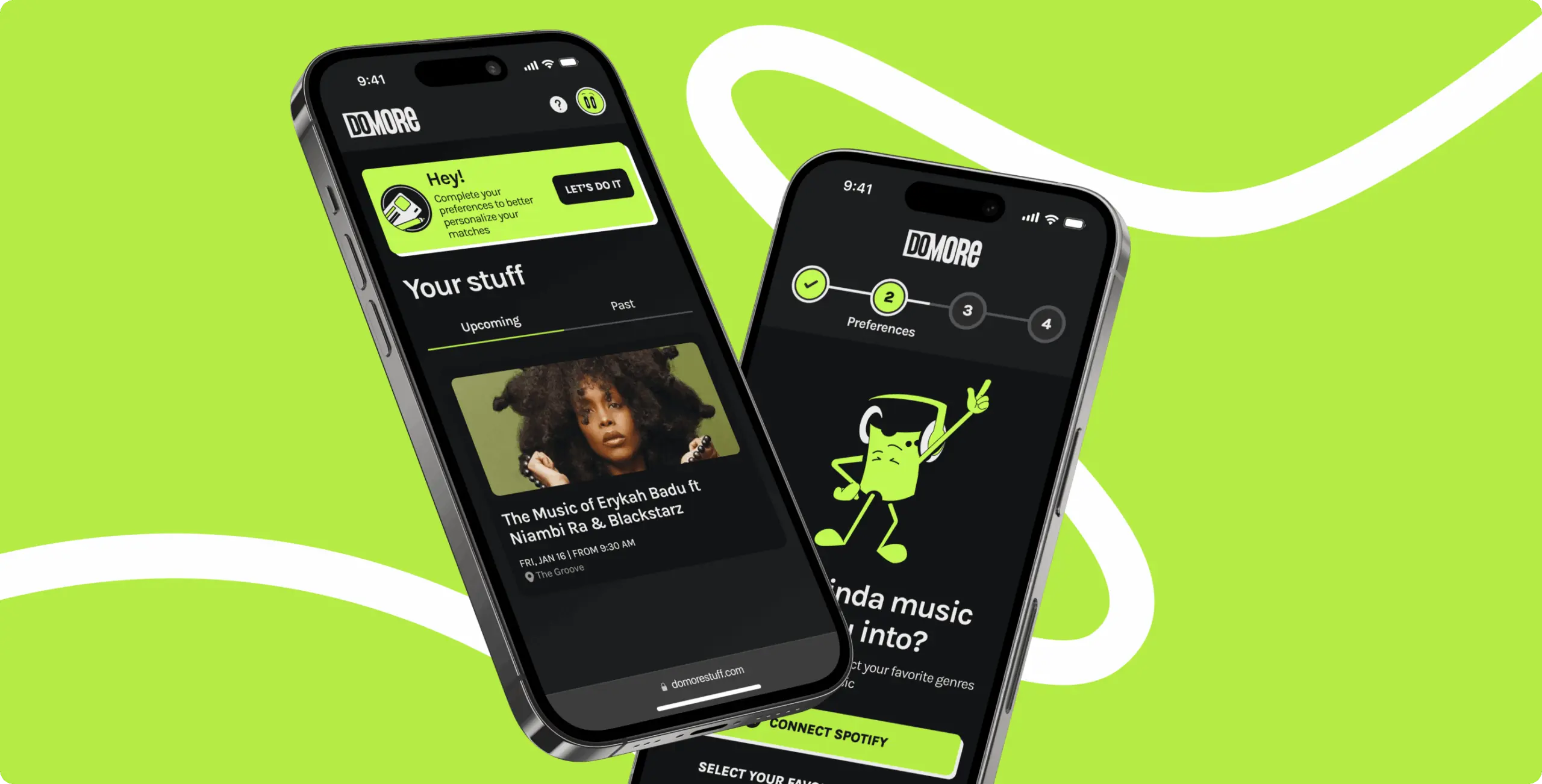
One of our projects, DoMORE — a subscription-based ticketing platform — perfectly illustrates why creative project management requires different tactics. The client came to us with a functioning product but an outdated design that no longer reflected their vision. Success wasn’t just about delivering “on time”; it meant creating an experience that boosted engagement and built an emotional connection with users.
Through research-driven redesign, we streamlined the onboarding flow, introduced personalized event suggestions, and crafted a playful brand identity with a custom character. The result? A 33% increase in mobile engagement, stronger user retention thanks to the “last-minute ticket” feature, and a more memorable, emotionally engaging brand presence. None of this could have been achieved by rigidly sticking to deadlines alone — it required flexibility, iteration, and continuous alignment with the client’s evolving vision.
What works in creative project management
So, how do we approach creative projects differently?
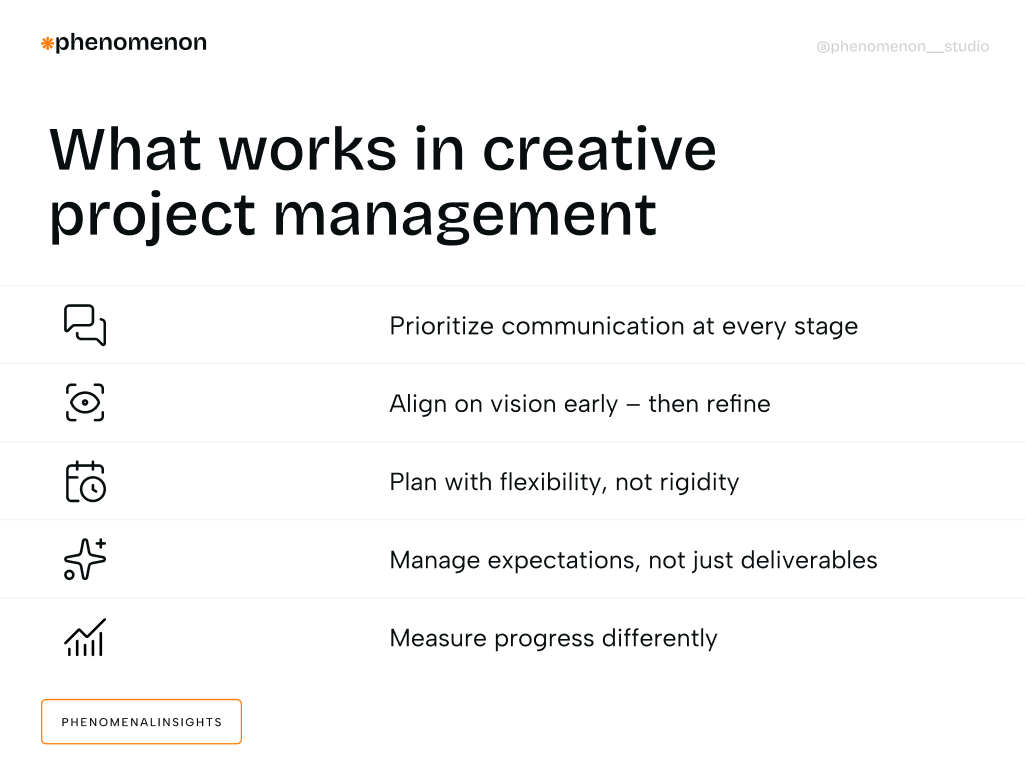
Prioritize communication at every stage
Creative work is subjective, so feedback matters. Instead of a single “big reveal,” build in checkpoints, reviews, and feedback loops. This ensures the project stays aligned with the client’s evolving vision.
Align on vision early – then refine
Clients don’t always know exactly what they want until they see it. Starting with mood boards, sketches, or references helps set direction, but revisiting and refining along the way is key.
Plan with flexibility, not rigidity
Revisions and pivots are part of the creative process, not signs of failure. Timelines should allow room for iteration so the team and client can explore ideas without unnecessary pressure.
Manage expectations, not just deliverables
Defining boundaries around revisions, timelines, and approvals helps prevent unnecessary changes and keeps the project moving forward. Clear expectation management creates space for creativity without chaos.
Measure progress differently
Instead of asking “Did we finish Feature X?”, focus on alignment: “Does this design reflect the vision?” or “Does this concept solve the problem we set out to address?” Progress in creative work is about resonance, not just task completion.
Conclusion
At first glance, creative projects may appear more challenging to manage. In reality, they simply follow a different rhythm; they require open dialogue, adaptability, and a shared vision between the team and the client.
Creative project management isn’t about controlling every step – it’s about creating the space where exploration can evolve into results that truly resonate. The best outcomes come when structure exists not to limit creativity but to support it: clear expectations, flexible timelines, and ongoing collaboration all provide the foundation for meaningful ideas to emerge.
When handled with the right mindset, creative projects can deliver more than just a finished design or campaign — they can create experiences that inspire, brands that stand out, and solutions that connect with people on a deeper level.
That’s what managing creative work is really about: guiding the process, protecting the space for creativity, and ensuring that vision turns into impact.
Share this article with friends



Sep 29, 2026
6 min read
B2B website redesign without losing traffic: A complete b2b website redesign guide covering UX audits, 301 redirect mapping, and metadata preservation. Partner with a top b2b website redesign agency that boosts conversions while protecting your organic rankings.

Sep 29, 2026
8 min read
Small business web design services that fit your budget. Get affordable small business website design from one of the best website design companies for small business — with transparent pricing and no hidden fees.
