



Apr 30, 2026
7 min read
summary
Learn how modernizing legacy interfaces drives product growth. ROI data, case studies, and proven strategies for incremental modernization.
Key Takeaways
- Legacy interfaces create technical, UX, and accessibility debt that hinder growth and user satisfaction.
- Product-led growth (PLG) puts the interface at the center of your sales funnel, making UX modernization essential for ROI.
- Incremental modernization provides safer outcomes with faster value compared to risky “Big Bang” rewrites.
- Design systems cut time-to-market and improve cohesion, enabling efficient, scalable interface updates.
By Anastasiia Morozova Product UI/UX Designer | April 2026
UX Design Services: Enhancing User Experience
Legacy systems erode gradually, stacking up technical debt, inconsistent design, and accessibility gaps. For fast-growing companies and those adopting product-led growth, these outdated interfaces slow conversions and make changes costly. Comprehensive ux design services and ux services are essential for addressing these challenges in digital products and existing product interfaces, ensuring user-centered improvements and seamless experiences.
At Phenomenon Studio, we’ve modernized interfaces for healthcare, finance, and leasing platforms. We’ve seen outdated UI patterns delay decisions by 40% and simple changes take weeks. A dedicated ux team and design team play a crucial role in delivering effective design solutions, and the right design system can cut development time in half and boost user satisfaction by 30%.
This article explains why and how to modernize old interfaces: understanding three forms of debt, comparing Big Bang and incremental approaches, and unlocking ROI through strategic design systems. Strong information architecture is also key to resolving inconsistent design and accessibility gaps, supporting better navigation and usability.
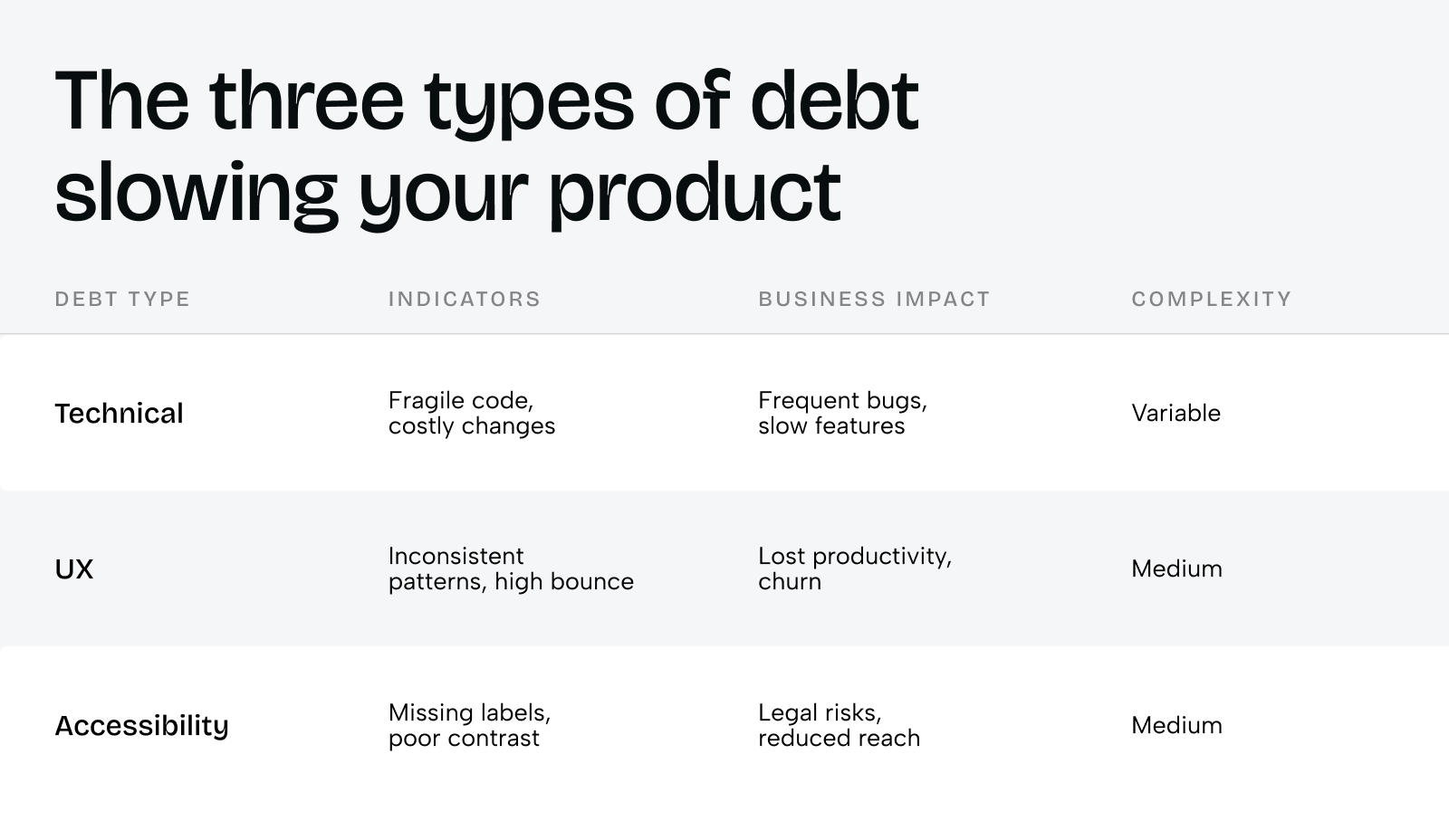
The Three Types of Debt Slowing Your Product
Interface debt isn’t just a design problem. It’s three interlocking problems that feed each other.
Technical debt builds when speed is prioritized over architecture. What starts as a quick fix becomes a pattern: duplicated components, deprecated libraries, and interdependencies that make changing one feature break another. The engineering cost of maintaining old stacks rises every year, and hiring becomes harder when the codebase relies on technologies developers have stopped using.
UX debt is what users experience directly. It shows up as inconsistent button behavior across screens, information buried under five clicks, form flows designed for a 2012 mental model. Mapping user flows and conducting user testing are essential for identifying pain points and improving user engagement, ensuring that usability remains the main focus of UX experts. Users don’t call it “UX debt”—they call it frustrating, and they leave. High bounce rates, workaround behaviors, and a flood of “how do I…” support tickets are all symptoms of accumulated UX debt. Effective usability testing can significantly reduce bounce rates and improve user satisfaction, leading to higher conversion rates.
Accessibility debt is the most underestimated of the three. Missing ARIA labels, broken keyboard navigation, and insufficient color contrast aren’t just ethical oversights—they’re legal risks. The later in the development cycle you address accessibility, the more expensive the remediation. Retrofitting accessible components into a poorly structured codebase is often three to five times more expensive than building them right the first time.
These three forms of debt compound. Technical fragility makes UX improvements harder to ship, which means accessibility fixes get deprioritized, which increases legal exposure—all while the product falls further behind user expectations.
High quality deliverables in UX design services focus on usability, ensuring that prototypes and final products are polished and production-ready. Usability encompasses key elements such as learnability, efficiency, memorability, and error management, all of which are crucial for enhancing user experience and driving user engagement.
Why Product-Led Growth Demands Modern Interfaces
In a product-led growth model, the interface is your sales team. There’s no enterprise sales rep walking a prospect through the product—the UI has to do that job on its own. This changes what “good enough” means for design. A strategic ux and user centric approach, informed by user persona development, ensures that user flows are optimized and user engagement is maximized from the very first interaction.
The core metric is Time-to-Value (TTV): the gap between when a user signs up and when they first experience the product’s core benefit. Streamlined onboarding, clear empty states, and well-structured progressive disclosure all shorten this window. We helped one client compress their TTV from 48 hours to under 10 minutes through focused onboarding improvements. Activation rates climbed 40% and retention improved by 25%—outcomes that would have required a significant sales team expansion to achieve through conventional growth.
The economics of UX investment are well-documented. Every $1 invested in UX has been shown to return $100 in value—a 9,900% ROI, according to Forrester research—through reduced development rework, lower acquisition costs, and higher retention. These aren’t theoretical figures. Salesforce’s transition to the Lightning interface delivered 475% ROI over three years and saved an estimated $3.4 million in productivity gains alone. Agencies leverage their ux ui design and ui design expertise to deliver these measurable business outcomes.
For companies investing in PLG, this is the business case in plain terms: the interface is the funnel. If it’s broken, the funnel leaks.
Example:We helped one client reduce TTV from 48 hours to under 10 minutes through improved onboarding, driving activation rates up 40% and retention by 25%.
| Metric | Formula | Significance |
| Activation Rate | (Activated Users / New Users) × 100 | Understanding core value |
| Time-to-Value (TTV) | Value Event Time – Signup Time | Correlates with retention |
| User Retention Rate | (Month 2 Actives / Month 1 Actives) × 100 | Product-market fit |
| Task Success Rate | (Successful / Attempted Tasks) × 100 | Direct UX measurement |
Many UX design agencies utilize data-driven insights and modern technologies to refine user flows, improve clarity, and boost conversion rates throughout the design process.
Redesign Psychology: Managing User Resistance
Most modernization challenges are human, not technical. Users form habits in old systems, so sudden changes can cause friction.
Mitigation steps:
- Share clear vision about the benefits.
- Involve users early to gather feedback, using direct communication and design thinking methodologies to foster trust and innovation.
- Conduct user research and user testing to gather actionable feedback, identify pain points, and reduce resistance by ensuring the redesign aligns with user needs.
- Roll out changes in phases to reduce disruption.
- Offer hands-on training for confidence.
- Enable a dual-version toggle for smoother transitions.
We used a dual-version toggle on a trading platform; after three months, 85% of users switched voluntarily, reducing support tickets by 40%.
| Strategy | Action | Outcome |
| Clear Communication | Explain benefits early | Build trust, reduce uncertainty |
| Employee Involvement | Gather input | Foster ownership |
| Phased Rollout | Incremental changes | Minimize disruption |
| Training | Role-specific sessions | Boost skill |
| Dual-Version Toggle | Switch between old and new UIs | Lower anxiety, prevent productivity loss |
Conducting user research is essential in the UX design process, as it informs design decisions by gathering and analyzing insights on user needs, behaviors, and motivations. Effective user research and user testing help identify pain points and preferences, significantly reducing the risk of product failure and improving user satisfaction and product usability.
User Research: The Foundation of Modernization
User research is the cornerstone of any successful UX modernization initiative. Before a single pixel is moved or a new feature is scoped, it’s essential to understand the real needs, behaviors, and motivations of your users. Conducting user research ensures that the design process is grounded in evidence, not assumptions, and that every design decision is aligned with both user expectations and business goals.
Leading user interface design companies rely on a mix of qualitative and quantitative research methods to uncover actionable insights. Interviews and surveys reveal user pain points and motivations, while usability testing exposes friction in real-world scenarios. Analytics provide a data-driven view of how users interact with your interface, highlighting drop-off points and opportunities for improvement.
By investing in user research, teams can tackle complex challenges with innovative solutions tailored to their target audience. This user-centered approach not only results in more intuitive and visually appealing designs, but also drives measurable business outcomes—higher conversion rates, increased retention, and improved user satisfaction. Ultimately, user research transforms the modernization process from a risky overhaul into a strategic, evidence-based evolution of your digital product.
Modernization: Big Bang or Incremental?
The debate between full platform replacement and incremental modernization is settled in practice, even if it remains theoretical in boardrooms.
A Big Bang approach—replacing the entire system at once—offers a clean slate, but it requires sustained downtime, front-loads enormous risk, and delivers no business value until the moment of launch. If something goes wrong (and in complex systems, something usually does), the cost of reversal is catastrophic. Budgets range from $500K to $2M upfront, and timelines of 6–18 months mean committing to a bet with delayed feedback.
Incremental modernization, sometimes called the Strangler Fig pattern, works differently: you replace the system module by module while keeping the product live. Teams ship value every few months, learn from real user behavior, and course-correct before investing further. By leveraging real time data and project management tools like Asana, Trello, or Jira, teams can monitor progress and adapt quickly to changing requirements. Service design principles and a dedicated design team play a crucial role in supporting ongoing improvements to the existing product, ensuring that user experience evolves strategically and consistently. The timeline is longer—typically 12–24 months for a full platform—but the risk profile is fundamentally different. You’re never more than one sprint away from a working system.
For most companies, especially those with live products and paying customers who can’t tolerate downtime, incremental modernization isn’t just the safer choice—it’s the only responsible one. The exception is systems so architecturally compromised that incremental work would require rebuilding the foundation anyway. In those cases, the conversation isn’t “Big Bang vs. Incremental” but rather “what’s the minimum viable foundation we can build quickly enough to migrate to?”
Team Collaboration in UX Modernization
Seamless team collaboration is vital for delivering high-quality UX modernization projects. When designers, developers, and stakeholders work together effectively, they can manage projects efficiently, share expertise, and ensure that everyone is on the same page throughout the design process. This collaborative environment is the foundation for creating user experiences that drive user satisfaction and engagement.
Modern UI/UX design services leverage project management tools and communication platforms to streamline workflows and keep teams aligned. Regular check-ins, transparent feedback loops, and shared documentation help teams anticipate challenges early and adapt quickly. By fostering open communication and a shared vision, teams can identify potential design flaws before they become costly issues, ensuring that the final product not only meets but exceeds user expectations.
Collaboration also empowers teams to deliver innovative solutions that reflect a deep understanding of both user needs and business objectives. When everyone—from UX strategists to UI designers to developers—contributes their unique perspective, the result is a cohesive, user-centered product that stands out in a crowded digital landscape. In short, effective team collaboration is the engine that drives project success and delivers high-quality, engaging user experiences.
Scalable Design Systems: Your Foundation for Scale
A design system is a living library of reusable components, interaction patterns, and documented standards that your entire product team builds against. Done well, it eliminates the most wasteful parts of the design and development process—the time spent recreating the same button for the fifth time, resolving conflicting component behavior across screens, or onboarding a new engineer who has to reverse-engineer undocumented patterns. Design quality is maintained through consistent visual identity and brand identity, ensuring cohesive experiences across web design, web development, and mobile app development projects.
The Shopify Polaris system is the clearest public benchmark. Before Polaris, Shopify’s admin experience was fragmented across dozens of teams. After adoption, component coverage reached 86.6% of the UI. System adoption among teams climbed from 40% to 89%. A major redesign that would previously have taken months was delivered in 10 weeks, across more than 50 teams. The mechanism was simple: when everyone builds from the same library with design tokens that can be globally updated, consistency becomes the default rather than an achievement. High fidelity prototypes are used to demonstrate final design and functionality before development, and selecting the right tech stack is crucial for scalable, maintainable solutions.
At Phenomenon Studio, we build custom design systems in one to two months. That investment typically returns 30–50% faster design and development cycles on subsequent product work—meaning the system pays for itself within one release cycle, and continues compounding value as the team grows. UX design agencies typically offer a full spectrum of experience-focused services, from user research and wireframing to prototyping and final interface designs, ensuring usability and alignment with your brand.
| Metric | Polaris Result | How |
| System Adoption | 40% → 89% | Dashboards, heatmaps |
| Redesign Speed | Months → 10 weeks | Infra & tokens |
| Coverage | 86.6% UI | Web Components |
| UX Consistency | Unified admin | Linting tools |
ROI, User Satisfaction, and Case Studies
Our case studies demonstrate how our company excels by leveraging technical expertise, comprehensive UX research, and an innovative approach to deliver high-impact design solutions. This commitment ensures measurable ROI and superior user experiences across diverse industries.
Salesforce Lightning: Forrester found a 475% ROI over 3 years after switching to the Lightning interface, saving $3.4 million through improved productivity and reduced turnover.
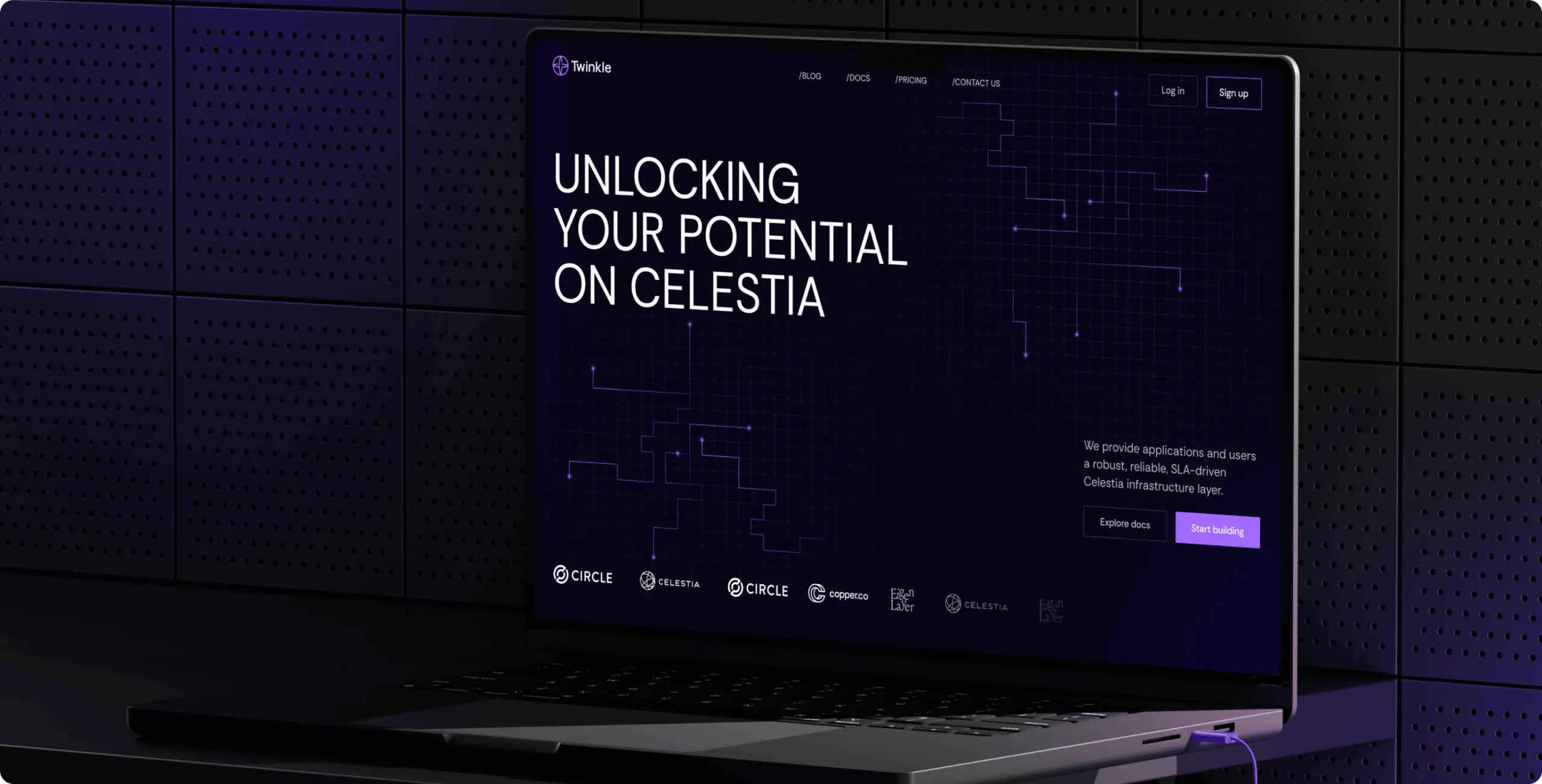
Phenomenon Studio Projects: Twinkle powering reliable Celestia infrastructure
Problem:
Twinkle lacked a clear visual direction and structured website experience to communicate its SLA-driven Celestia infrastructure offering. Complex messaging, generic Web3 patterns, and unclear information architecture made it difficult for users to quickly understand the product’s value, leading to confusion and early drop-offs.
Feature:
We delivered a full website and brand redesign based on UX research and competitor analysis. The work included restructured information architecture, simplified messaging, a clear user journey, and a scalable geometric design system with reusable components and implementation-ready documentation.
Result:
The redesign improved first-session product understanding by an estimated 30–40%, reduced early drop-offs by 25%+, and increased engagement across key pages by 35%+. Users now navigate the experience more intuitively, explore more sections per session, and reach core value points faster—positioning Twinkle as a clear and reliable infrastructure provider within the modular blockchain ecosystem.
Next: AI and Experience-Led Growth
AI is transforming interface modernization, powering adaptive user journeys and automating support. Examples like Intercom’s “Fin” and Coupa Navi show that AI can boost revenue and reduce onboarding time.
A human centered design and strategic UX approach enables companies to adapt to emerging technologies with innovative solutions, ensuring that user needs remain at the forefront while leveraging advancements like AI. Digital minimalism and “Calm Design” are addressing user fatigue by reducing visual clutter. Modern interfaces now connect smoothly across phones, wearables, and AR/VR.
Usability Testing: Common Mistakes to Avoid
- Ignoring user resistance—always communicate and train.
- Chasing feature parity—focus only on what adds value.
- Underestimating Big Bang risks—prefer incremental updates.
- Skipping a design system—leads to fragmented experiences.
- Neglecting accessibility—retrofits are costly.
The most common is underestimating user resistance—launching a redesign with no communication plan, no training, and no transition period. The second is feature parity thinking: rebuilding every feature of the old system regardless of whether users actually used it. A modernization project that aims to replicate the old interface exactly misses the entire point.
Third is choosing a Big Bang approach for the wrong reasons—usually speed or organizational politics—and discovering six months in that the project is over budget and the team has lost confidence. Fourth is skipping the design system investment and treating the modernization as a one-time event rather than a foundation for ongoing development. And fifth, consistently, is leaving accessibility until “phase two”—which never comes, and which turns a manageable investment into an expensive retrofit.
When selecting UX design services, it’s essential to look for agencies that offer transparent pricing, so you understand exactly what you’re paying for. Review the agency’s portfolio to ensure they have relevant experience in your industry and with similar products. Evaluate the quality of their proposals—these should be detailed, tailored to your business needs, and reflect prior discussions. UX agencies typically use three main pricing models: time-based (flexible and scalable, with hourly rates from $50 to $150), fixed-price (predictable budgets for defined scopes, usually $10,000 to $50,000 per project), and value-based or retainer agreements (ongoing fees, often €500 to €1,000 per month for small-scale support, scaling with complexity). Assess the agency’s design process to ensure it is standardized, includes stages like personas, wireframing, prototyping, testing, and iterations, and values your input throughout.
How We Help You Modernize
Phenomenon Studio approaches modernization as a business problem first—and a design problem second. Our process begins with stakeholder interviews to uncover where real friction exists: not only in the interface, but in the business goals it’s meant to support. From there, we conduct a structured audit to identify and prioritize technical, UX, and accessibility debt—ensuring every improvement ties back to measurable impact.
We deliver value in three-to-six month incremental cycles, so you see tangible outcomes early—long before the full engagement is complete. Each phase builds toward long-term scalability, and every project concludes with clear documentation and team training for a true handoff. Your team doesn’t just receive a better product—you gain the capability to evolve it independently.
Proven impact, not promises
Our work consistently drives measurable business results:
- $500M+ raised by products we’ve helped design and build
- 35%+ increase in conversion rates (CRO)
- Up to 2× faster workflows
- 40%+ higher user engagement
- 50% shorter time to market
Recognized by Clutch as a top design and development company, our team of 70+ mid-to-senior in-house experts delivers outcomes that match—and often exceed—industry benchmarks.
Share this article with friends



Sep 29, 2026
6 min read
B2B website redesign without losing traffic: A complete b2b website redesign guide covering UX audits, 301 redirect mapping, and metadata preservation. Partner with a top b2b website redesign agency that boosts conversions while protecting your organic rankings.

Sep 29, 2026
8 min read
Small business web design services that fit your budget. Get affordable small business website design from one of the best website design companies for small business — with transparent pricing and no hidden fees.
