



Oct 9, 2025
6 min read
summary
Learn how to select web development partners using proven frameworks, avoid costly red flags, and structure agreements that protect your long-term interests.
Finding the right web development partner can make or break your digital project. With thousands of agencies, freelancers, and development companies competing for your business, how do you separate the strategic partners from the simple code writers?
The difference between success and failure often comes down to one critical decision: choosing a partner who understands your business goals, not just your technical requirements. This guide walks you through a proven framework for evaluating web development services, from initial research to long-term partnership management.
You’ll learn how to create an objective selection process, identify red flags that signal trouble ahead, and structure contracts that protect your interests while fostering collaboration.
Understanding Your Partnership Needs with Web Development Services Near Me
Before you start evaluating potential partners, you need clarity on what type of relationship will serve your business best. Web development services cater to a wide range of businesses, from start ups to established enterprises, providing tailored solutions that address unique needs and growth stages.
Partner vs. Vendor
A partner takes strategic responsibility for your business goals, not just the technical execution. They demonstrate deep understanding of your industry and target audience, focusing on measurable results like conversions rather than just aesthetics. A digital agency brings expertise in technology consulting and digital transformation, offering comprehensive solutions beyond basic web development.
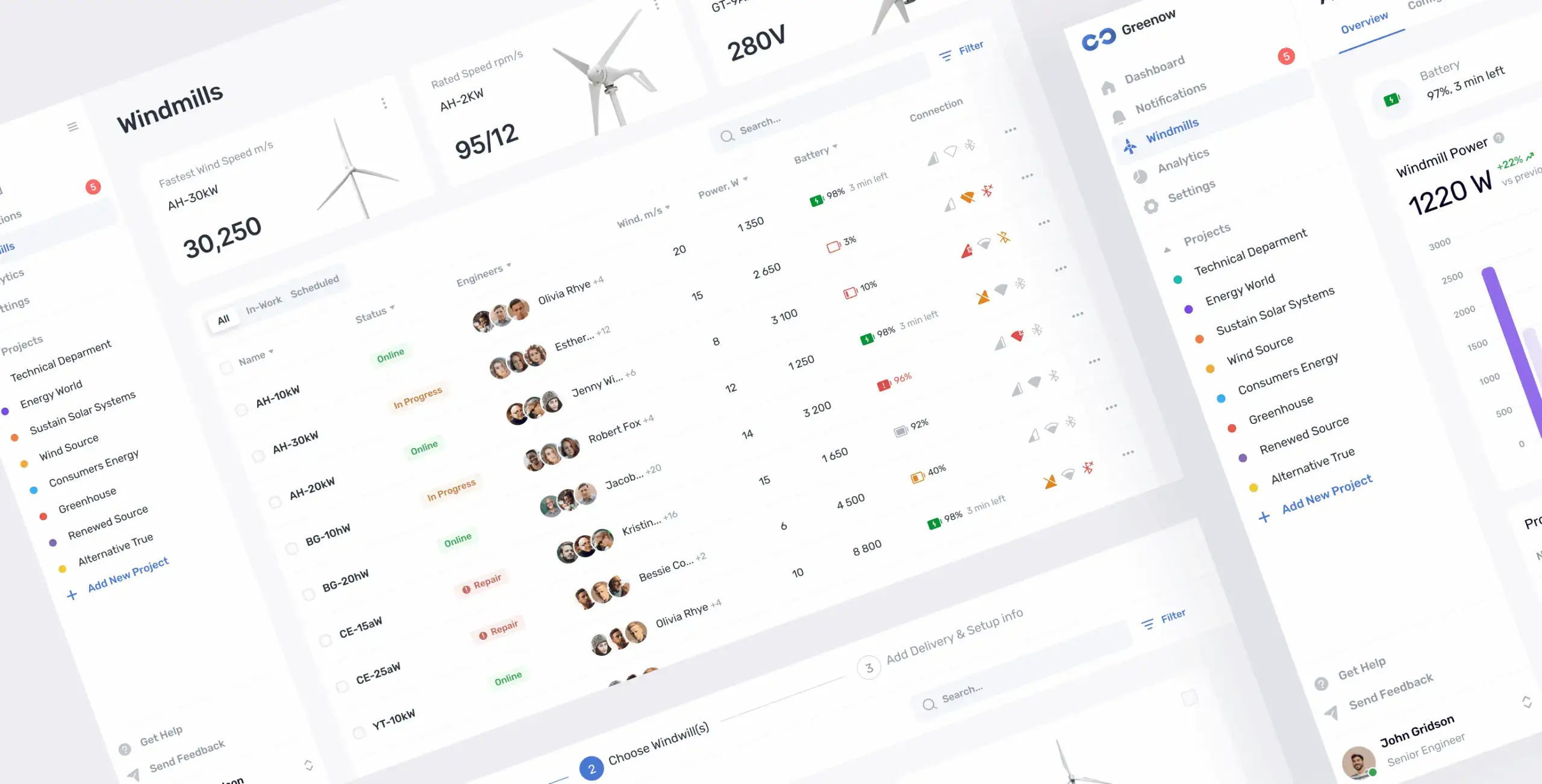
For instance, our collaboration with Greenow – wind energy made simple perfectly illustrates the difference between a partner and a vendor. Acting as a strategic partner, we helped Greenow rapidly validate its business idea by developing a fully functional Proof of Concept using a no-code platform. This approach not only accelerated time-to-market but also secured investor confidence and validated key market assumptions. Instead of simply “building a website,” we guided the client through product strategy, UX design, and technical execution — turning their vision into a tangible, testable business asset.
Partner vs. Vendor: What’s the Difference?
The most important distinction lies between a Vendor and a Partner. Understanding this difference shapes every aspect of your selection process.
A Vendor focuses strictly on technical delivery. They build exactly what you specify, compete primarily on price, and consider the job complete once the code is delivered and the site launches. If you have a clear technical specification and internal strategic expertise, a vendor relationship might work.
A Partner challenges your assumptions and recommends better approaches based on your business goals. They demonstrate deep understanding of your industry and target audience, focusing on measurable results like conversions rather than just aesthetics. Most importantly, they extend support beyond launch with ongoing optimization and strategic guidance.
Here’s the reality: when you hire a vendor, all strategic responsibility falls on your shoulders. If the technically perfect site fails to drive conversions or meet marketing objectives, that’s a strategic failure that could have been avoided with the right partner.
Defining Your Project Requirements
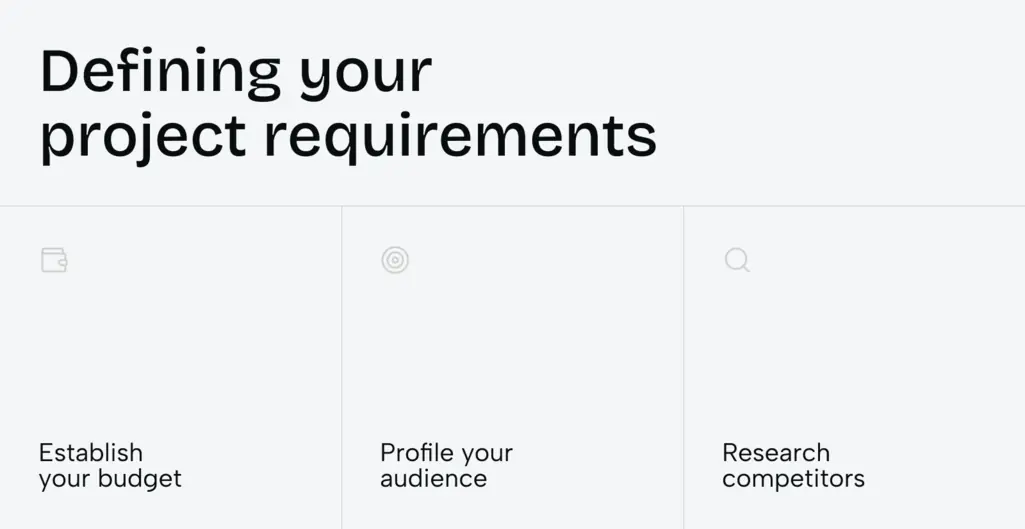
Start by establishing a comprehensive strategic mandate before reaching out to any potential partners.
Aligning with Business Objectives
In today’s fast-paced digital landscape, aligning your web development strategy with your core business objectives is essential for driving growth and staying ahead of the competition. As a leading web development company, we recognize that every business—whether a start-up or an established enterprise—has unique goals, challenges, and opportunities. That’s why our web development services are designed to deliver customized solutions that not only meet your immediate needs but also support your long-term vision.
Our approach begins with a deep dive into your business processes, target audience, and project goals. By working closely with you, our development team ensures that every aspect of your web development project—from initial concept to final launch—reflects your brand identity and business priorities. We leverage our expertise in full stack development, combining robust backend development with intuitive frontend development, to create web applications and websites that are both visually appealing and highly functional.
We understand that a successful web application must do more than look good; it must deliver a smooth user experience, drive user engagement, and generate leads. Our web development process is built around these principles, utilizing the latest technologies and innovative solutions to ensure your web apps are scalable, secure, and optimized for performance. Whether you need a custom website design, a complex web application, or seamless integration with other systems, our development team has the technical know-how to deliver results.
To maximize your digital presence, we also offer comprehensive digital marketing and search engine optimization services. By integrating SEO best practices and performance optimization into every project, we help your business attract more visitors, improve search rankings, and convert traffic into loyal customers.
Our proven track record spans diverse industries, including e-commerce, healthcare, finance, and education. We understand the unique requirements of each sector and tailor our web development solutions accordingly. From resource allocation to stack development, we ensure that your project receives the attention and expertise it deserves.
Ongoing support and maintenance services are a cornerstone of our commitment to your success. We proactively monitor your web applications, fix bugs, implement updates, and provide technical support to keep your site running smoothly and up to date. Clear communication is at the heart of our client relationships, ensuring you are informed and involved at every stage of the development process.
By choosing our web development company, you gain a partner dedicated to helping you achieve your business goals through high-quality, user-friendly, and innovative web solutions. Let us help you create a digital presence that drives growth, enhances user engagement, and positions your business for long-term success. Contact us today to discover how our web development services can transform your vision into reality.
Choosing Your Service Model
Your choice between agencies, freelancers, or dedicated teams directly impacts resource access, project stability, and management overhead.
Agencies and Development Companies provide structured development with full teams of specialists. They offer clear workflows, stability, and consistent resource availability. Web development companies bring extensive experience in managing complex projects and assembling skilled web development teams. This model works best for complex projects requiring diverse expertise.
Freelancers offer flexibility and potentially lower costs, but you can only hire one person at a time. For large or long-term projects, freelancers introduce scalability and continuity risks. If your primary developer becomes unavailable, the entire project stops while you find, vet, and onboard a replacement.
Dedicated Teams function as an extension of your internal staff, working exclusively on your project with monthly team-based pricing. This model provides maximum control and adaptability for large, ongoing engagements.
Creating an Objective Selection Process
Subjective decision-making leads to poor partner choices. Here’s how to implement a structured, quantitative approach. This process is essential for evaluating web development projects of varying complexity and scope.
The Request for Proposal (RFP) Framework
A formal RFP ensures all candidates respond to identical criteria, eliminating guesswork and enabling fair comparison.
Your RFP document should include:
- Clear project scope and objectives
- Specific technical requirements (be sure to address technical aspects such as SEO, page speed, and security protocols)
- Budget parameters
- Timeline expectations
- Submission instructions and required documents
- Evaluation timeline with key dates
Get input from marketing, sales, operations, and IT teams to ensure comprehensive requirements coverage.
Implementing the Weighted Vendor Selection Matrix
Transform subjective assessments into quantitative, auditable decisions using a weighted scoring system.
Here’s how it works:
- Assign Weights: Rate each evaluation criterion (technical capabilities, experience, cost, communication) on a 1-5 scale based on importance to your project
- Score Vendors: Rate each candidate on the same 1-5 scale for how well they meet each criterion
- Calculate Weighted Scores: Multiply raw scores by criterion weights, then total for each vendor
This approach removes bias and creates transparency. Consider anonymizing vendor responses during initial scoring to focus purely on substance rather than brand recognition.
Evaluating Technical Capabilities
Technical skill assessment must go beyond portfolio reviews to validate real-world competency. Evaluating expertise in web app and website development, as well as web application development, is crucial.
Tech Stack Alignment
Misaligned technology stacks create long-term problems including poor performance, security vulnerabilities, and complex maintenance issues.
Verify comprehensive proficiency in your required programming languages, frameworks, and CMS platforms. Whether you need WordPress for ease of use, Drupal for security and customization, or another platform for scalability, ensure deep expertise exists.
Effective Vetting Methods:
- Real-world coding assessments that reflect actual project work
- Peer technical interviews led by your senior technical staff
- Scenario-based discussions about problem-solving approaches
Look for adaptability across multiple tech stacks and demonstrated commitment to staying current with technological evolution.
Matching Technology Stack to Partner Expertise
Not every partner covers every stack equally well, and that gap often only surfaces mid-project. A partner offering strong custom web development services in React or Next.js may still be a weak fit if your existing infrastructure runs on Java web development services or a legacy ASP.NET codebase. Verify stack-specific depth before signing, not after the first sprint reveals the gap.
For teams running on open-source CMS platforms, drupal web development services and custom WordPress web development services require genuinely different skill sets, despite both falling under the general label of CMS work. A partner strong in cms web development services broadly may still lack the Drupal-specific module expertise your project needs, or vice versa. The same applies to backend frameworks: django web development services and Angular web development services demand different hiring pools entirely, so a generalist agency’s “full stack” claim deserves scrutiny.
Frontend web development services deserve particular attention during vetting, since this is where most user-facing bugs originate. Ask specifically about javascript web development services depth beyond framework familiarity, state management patterns, performance profiling, accessibility compliance are where frontend web development services teams differentiate from each other. A partner offering angularjs web development services on a legacy codebase should also demonstrate a realistic migration path, since AngularJS itself is long past active support.
Custom PHP web development services and custom ecommerce web development services often overlap in practice, particularly for WordPress-based storefronts, but the two skill sets aren’t interchangeable. A team strong in ecommerce checkout flows and payment integration may still lack deep PHP performance-tuning experience, and the reverse is just as common.
Cloud-based web development services add another evaluation layer entirely. Cloud based web development services covering AWS deployment differ meaningfully from a partner whose cloud based web development services experience centers on Azure or GCP, so confirm which cloud ecosystem your infrastructure actually runs on before assuming compatibility. This distinction matters even more for cloud based web development services tied to serverless architecture, where the operational patterns diverge sharply from traditional VM-hosted deployments.
Security and Performance Standards
Leading partners must guarantee adherence to globally recognized standards that protect your reputation and search visibility.
Web Application Security (OWASP Top 10): Your partner must explicitly articulate mitigation strategies for critical vulnerabilities including Broken Access Control, Injection flaws, Cryptographic Failures, and Insecure Design.
Core Web Vitals Optimization: Google uses these metrics in its ranking algorithm. Verify deep understanding of optimizing Largest Contentful Paint (loading speed), First Input Delay (interactivity), and Cumulative Layout Shift (visual stability).
Internal Security Practices: Assess the partner’s security maturity including encryption standards, Multi-Factor Authentication implementation, patch management processes, and role-based access controls for their development environment.
Operational Maturity Assessment
Technical skill alone doesn’t ensure project success. Evaluate communication capabilities and project management maturity.
Communication Standards: High-quality partners explain complex technical concepts clearly to non-technical stakeholders. Vague communication, poor response times, or resistance to clear timelines introduce project delays and increased costs.
Project Management Methodology: Understand whether they use Agile, Waterfall, or hybrid approaches. Verify they provide proactive updates and defined revision processes.
Collaboration Tools: Confirm proficiency with tools like Jira, Trello, or Git, which provides evidence of operational tempo and team coordination capabilities.
Structuring the Partnership Agreement
Your contract defines the working relationship and allocates risk. When selecting a web development firm, exercise caution and be aware of potential red flags that may indicate poor quality or reliability. Choose engagement models and handle intellectual property carefully.
Selecting the Right Engagement Model
Match your engagement model to project characteristics and financial needs.
Fixed Price: Offers cost predictability but low flexibility. Best for short-term projects with absolutely clear, unchanging requirements.
Time and Materials: Provides high flexibility and control with low cost predictability. Ideal for long-term projects with evolving needs or when speed-to-market is critical.
Dedicated Team: Integrates an external team exclusively on your project with monthly team salaries. Best for large, complex, long-term engagements requiring continuous effort and maximum adaptability.
Pricing structure often reveals as much as the technical proposal itself. Cheap web development services frequently signal a fixed-price, template-heavy approach with minimal customization, while customized web development services command a premium precisely because they involve discovery, architecture decisions, and ongoing collaboration rather than a pre-built theme. That said, cheap web development services aren’t inherently a red flag for a simple five-page marketing site with no complex logic; the risk appears when a project genuinely needs customized web development services but gets quoted and delivered like a template job.
Location factors into pricing comparisons too. Teams comparing custom web development services in USA against offshore alternatives should expect a meaningful rate difference, though custom web development services USA quotes sometimes bundle in-person availability and same-timezone communication that offshore teams price separately. The best web development services provider, regardless of location, will walk through this pricing logic transparently rather than presenting a single number without context. Customized web development services built around your specific business logic, rather than a customized web development services package assembled from stock components, is usually what justifies the premium in the first place.
Securing Intellectual Property Rights
IP ownership clarity is a crucial legal requirement that affects long-term flexibility and vendor independence.
Full Transfer of IP Rights (Work-for-Hire status) grants complete ownership of source code, design, and content. This requires legally binding, written copyright assignment and ensures freedom to make future changes or hire alternative developers without conflicts.
Licensing Models allow developers to retain ownership while granting usage licenses under predefined terms. This creates significant vendor lock-in risk since you’re restricted when engaging competing firms for maintenance or modifications.
Always insist on Work-for-Hire status and full IP transfer to maintain long-term agility and control costs.
Essential Legal Protections
Include robust safeguards in your contract including NDAs and fair termination clauses.
Non-Disclosure Agreements: Protect proprietary information by clearly defining confidential information, specifying obligation duration, outlining permissible disclosures, and detailing breach consequences.
Termination Clauses: Define specific grounds for termination such as substandard work, missed deadlines, or confidentiality breaches. Ensure you only pay for completed work, never the full price for unfinished projects.
Avoiding Critical Red Flags
Watch for warning signs that signal unreliable or strategically deficient partners.
Financial Red Flags: Vague communication, unclear contracts, absence of detailed budget breakdowns, hidden costs, or unrealistically low prices that signal quality compromises.
Strategic Red Flags: Partners who fail to ask diagnostic questions about your industry, competitors, target audience, or unique value proposition during initial engagement. Also watch for vague timelines, lack of clear methodology, and dismissing critical factors like UX or technical SEO.
Operational Red Flags: Poor response times, high developer turnover indicating internal instability, or resistance to aligning with your project management tools and workflows.
Planning for Long-Term Success
Web development is a continuous lifecycle requiring ongoing investment, not a one-time delivery. Strategic web development supports business growth and digital transformation by creating scalable, flexible solutions that adapt to evolving needs. By leveraging ongoing improvements, businesses can drive growth and ensure future readiness in a rapidly changing digital landscape.
Post-Launch Support Structure
Formal maintenance contracts must clarify specific obligations including support duration, fault definitions, response times, and charging methods.
Budget for three essential support categories:
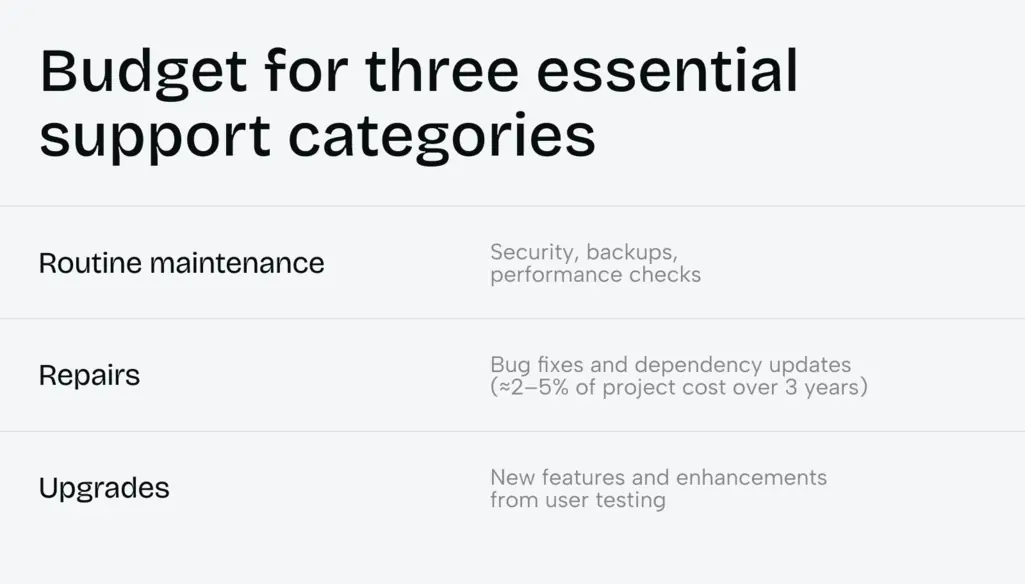
Plan to invest approximately 20% of your original project cost annually in strategic upgrades to maintain competitiveness and delay expensive full revamps.
Building Collaborative Relationships
Sustainable partnerships require structured communication and continuous improvement processes.
Establish regular check-ins, encourage open feedback, and maintain accountability from both sides. Use brainstorming sessions with “no criticism” phases during creative stages to boost innovation without inhibiting idea flow.
Keep continuous user feedback loops active to ensure your digital product remains aligned with evolving user expectations while maintaining flexibility and firm resolution of partnership issues when they arise.
Take Action on Your Web Development Project
Choosing the right web development partner requires strategic thinking, structured evaluation, and contractual diligence. Success depends equally on technical competency, operational maturity, and strategic alignment with your business goals.
Use the weighted vendor selection matrix to make objective decisions. Verify compliance with OWASP Top 10 and Core Web Vitals standards. Secure full IP rights through Work-for-Hire contracts. Budget for ongoing support and annual upgrades to maintain long-term competitiveness.
Ready to find your ideal web development partner? Start by defining your strategic mandate using the framework outlined above, then begin your structured evaluation process. The investment in proper partner selection will pay dividends throughout your project lifecycle and beyond.
Share this article with friends



Sep 29, 2026
6 min read
B2B website redesign without losing traffic: A complete b2b website redesign guide covering UX audits, 301 redirect mapping, and metadata preservation. Partner with a top b2b website redesign agency that boosts conversions while protecting your organic rankings.

Sep 29, 2026
8 min read
Small business web design services that fit your budget. Get affordable small business website design from one of the best website design companies for small business — with transparent pricing and no hidden fees.
