PREMIER UX DESIGN AGENCY

More than wireframes. We use UX audit to design how your product thinks, responds, and converts
Our 35%+ conversion lifts don't come from visual polish. They come from behavioural research, eliminated drop-offs, and rebuilt flows. Our UX design services have helped clients raise $500M+ across SaaS, fintech, and healthcare.
Your next growth stage starts with the

top UX agencies

expertise — at launch, or at scale

DESIGNING PRODUCTS FOR STARTUPS BACKED BY

phenomenon studio IN NUMBERS
98%

customer satisfaction rate

35%+

boost in conversions after redesign

70+

top-tier designers and developers on board

500M+

investments raised by our clients

WHEN HIRING UX COMPANIES

What founders say before hiring, and what our UX design firm delivers in practice
If your product works but users keep dropping off, churning after onboarding, or complaining about workflows that "don't make sense", you're likely facing a UX problem. As a top UX design agency, we hear the same concerns repeatedly. Here's how we address them.

We built the product fast, but users can't figure out how to complete key tasks. Our activation rate is stuck at 18%, and support tickets keep climbing.

We start with a behavioural audit: we map where users get stuck, which screens generate the most support load, and test against Nielsen's heuristics. Then we redesign the critical paths: onboarding, core actions, and upgrade triggers. One of our usability audit engagements for a developer-built GRC platform doubled user efficiency and earned a UX Design Awards nomination in 2024. Fewer support tickets, higher activation, faster time-to-value for your users.

Our product has grown, but the UI is a patchwork. Every feature was designed by a different person. Users feel lost, and internal teams waste hours debating spacing and components.

As a UX design consulting firm, we catalogue every screen, pattern, and interaction across your product. We flag inconsistencies, then build a unified design system: one source of truth for product, development, and marketing teams. For one edtech platform, we restructured the architecture across four user roles and delivered a system that cut handoff time by weeks. Your team ships faster, and your product feels like one coherent experience.

We're expanding into enterprise, and our current UX feels like a consumer app. Decision-makers don't trust it. We need to look serious without losing usability."

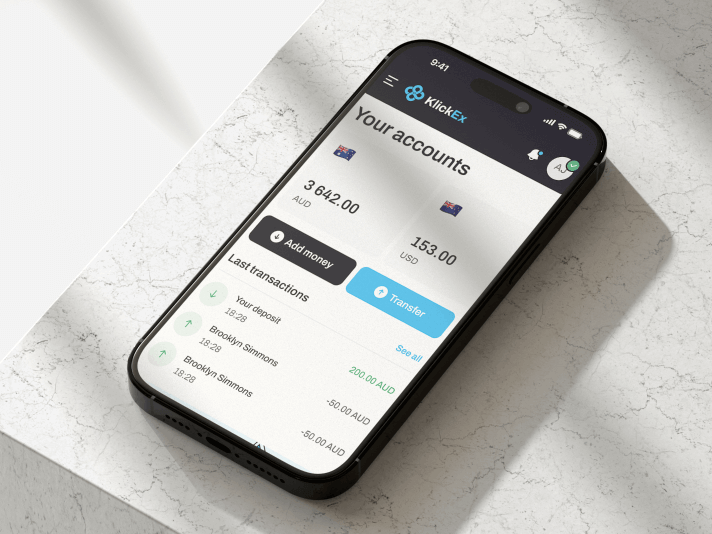
Market repositioning is one of the strongest triggers for enterprise UX design. We profile the new buyer, rework information density, navigation depth, role-based access patterns, and data visualization to match enterprise expectations. For a cross-border payment platform, this approach lifted the "Add Money" flow conversion by 35.3%. You enter the enterprise market with an interface that decision-makers trust on the first demo.

OUR UX DESIGN SERVICES

Aligning UX design logo identity, interface patterns, and interaction systems to support product growth
The UX services we deliver break down into three layers: research & audit, interface design, and product redesign. Each layer feeds the next: research sharpens design decisions, design systems accelerate development, and the full cycle compounds your ROI.
Turning behavioral data into design decisions, led by our senior

UX consultants

UX audit & heuristics
Evaluate flows against usability heuristics to surface conversion blockers and accessibility gaps.
User research & testing
Test with target users - moderated and unmoderated - to validate assumptions and rank pain points.
Information architecture
Restructure navigation and content hierarchy so users find what they need in fewer steps.
Competitor benchmarking
Analyze how competing products handle key workflows and identify patterns users already expect.
Behaviour analytics
Map click paths, heatmaps, and session recordings to pinpoint where users drop off or succeed.
Building scalable

UX design web

and product interfaces for cross-functional teams
Wireframing & prototyping
Build low- and high-fidelity prototypes to test interactions before code, cutting rework costs.
UI design & visual systems
Design screen layouts that balance clarity, brand alignment, and conversion across all devices.
Design systems
Create reusable component libraries with tokens, guidelines, and Storybook for engineering teams.
Responsive design
Adapt layouts for desktop, tablet, and mobile with device-specific patterns and touch targets.
Interaction & micro-animation
Define hover states, transitions, loaders, and feedback animations that guide users through tasks.
Premier UX redesign for teams evolving, pivoting, or entering new markets
Full UX overhaul
Rebuild the full experience: architecture, navigation, and interaction logic for current goals.
Onboarding redesign
Redesign first-run flows, setup wizards, and activation sequences to lift trial-to-paid rates.
Conversion optimization
Optimize signup, checkout, upgrade, and key action funnels using behavioural data and A/B testing.
Dashboard & data UX
Simplify complex data views with structured layouts, smart defaults, and progressive disclosure.
Accessibility compliance
Audit and fix WCAG 2.1 AA issues - contrast, keyboard nav, screen readers - to widen your market.

TYPES OF UX DESIGN PROJECTS WE DELIVER

Business-tailored UX services built for startups, scale-ups, and product-led teams
Whether you're validating a concept or overhauling a live product, our UX design company structures engagements to match the core growth stages of modern software companies.
01
Usability audit for existing products
Evidence-based evaluation of your current product: heuristic review, behavioural analysis, and prioritized recommendations to fix what's broken.
Usability audit for existing products

Perfect for teams with a live product that underperforms on retention, activation, or task completion metrics.

Let's discuss

Perfect for teams with a live product that underperforms on retention, activation, or task completion metrics.

Let's discuss
02
Full UX design for new products
End-to-end UX design from research through high-fidelity prototypes and design systems, built for products launching to market.
Full UX design for new products

Ideal for seed-funded startups, pre-launch product teams, and founders building MVPs with investor pressure.

Let's discuss

Ideal for seed-funded startups, pre-launch product teams, and founders building MVPs with investor pressure.

Let's discuss
03
Product redesign for growth-stage teams
Comprehensive UX overhaul - restructured architecture, redesigned flows, and updated visuals - for products that have outgrown their first design.
Product redesign for growth-stage teams

Great for Series A+ companies, SaaS platforms, and fintech products expanding into new user segments.

Let's discuss

Great for Series A+ companies, SaaS platforms, and fintech products expanding into new user segments.

Let's discuss
04
Enterprise UX transformation
Redesign complex, multi-role enterprise platforms - permission structures, workflow automation, and data-heavy dashboards - built to reduce training time and increase adoption.
Enterprise UX transformation

Ideal for B2B SaaS, GRC platforms, healthcare systems, and tools managing 10+ user roles with different workflows.

Let's discuss

Ideal for B2B SaaS, GRC platforms, healthcare systems, and tools managing 10+ user roles with different workflows.

Let's discuss
05
UX consulting & strategy
Strategic advisory for product teams: research frameworks, design maturity assessments, and roadmap prioritization from experienced UX consultants.
UX consulting & strategy

Perfect for founders and CPOs who need a UX design consulting firm to align UX strategy with business KPIs.
Let's discuss

Perfect for founders and CPOs who need a UX design consulting firm to align UX strategy with business KPIs.

Let's discuss

OUR UX DESIGN EXPERTISE

A closer look at how we approach UX differently across the industries we know best
Different industries demand different UX strategies. Here's how Phenomenon, one of the leading UX design agencies, adapts to specific product models, user behaviours, and go-to-market needs, with examples from our work.
Workflow-first UX systems that scale with your product and user base, built by one of the

top UX design firms

.
Where UX breaks:
  • Feature bloat hides core value
  • Onboarding takes too many steps
  • Dashboards overwhelm instead of inform
  • Design inconsistency across modules
How we fix it:
  • Progressive disclosure for clarity
  • Activation-focused onboarding
  • Role-specific dashboard layouts
  • Unified Storybook design systems
Image - original-8e3d5294874474e2de7580339e7e4fb6
Patient-centered UX design web systems built for regulatory clarity and clinical workflows
Where UX breaks:
  • Generic interfaces erode patient trust
  • Compliance requirements complicate flows
  • Data density overwhelms clinicians
  • Accessibility standards are unmet
How we fix it:
  • Visual hierarchies for clinical vs. patient views
  • HIPAA-aligned workflow design
  • Progressive data disclosure for complex records
  • WCAG 2.1 AA–compliant interface patterns
Learner-first UX that drives engagement and builds educator trust - from a

top UX design agency

Where UX breaks:
  • Course navigation is unintuitive
  • Multi-role platforms feel generic
  • Assessment tools lack feedback loops
  • Mobile experience is an afterthought
How we fix it:
  • Role-tailored interfaces
  • Gamified progress and achievement systems
  • Annotation-rich assessment workflows
  • Mobile-optimized learning flows
Trust-driven fintech UX design that turns complex financial products into clear, compliant interfaces
Where UX breaks:
  • KYC flows cause a massive drop-off
  • Transaction states confuse users
  • Fee structures lack transparency
  • Desktop-only limits accessibility
How we fix it:
  • Progressive KYC with clear progress indicators
  • Transaction status with plain-language updates
  • Upfront fee calculators with multi-currency support
  • Mobile-first responsive dashboards
Translating decentralized complexity into interfaces that communities trust through our UX design firm's expertise
Where development breaks:
  • Wallet connection confuses new users
  • Transaction states are unclear
  • Tokenomics lacks visual clarity
  • Trust signals are missing
How we fix it:
  • Step-by-step wallet onboarding
  • Transaction state indicators with clear feedback
  • Data visualization for token flows
  • Trust-building UI patterns and social proof
Image - IMG_7877
Need to design one of these?
Book a call with Anastasia Danylenko, our business development team lead, to discuss what UX audit services your product needs next.

WHAT MAKES A UX DESIGN PROJECT COMPLETE

The components behind every UX design service engagement we deliver
A wireframe and a style guide cover roughly 20% of your product's UX needs. The

best UX design agency

engagement covers the other 80%: user research, information architecture, interaction design, design systems, accessibility, and handoff documentation. Here are the key UX design deliverables:
Icon - asterisk-svgrepo-com 2-9
Heuristic evaluation
Expert review against Nielsen's 10 heuristics with severity ratings and improvement priorities.
Icon - asterisk-svgrepo-com 2-8
Competitor benchmark
Side-by-side analysis of competitor interfaces: navigation, onboarding flows, and discoverability.
Icon - asterisk-svgrepo-com 2-7
Research synthesis
Findings from interviews, surveys, and usability tests, distilled into personas and journey maps.
Icon - asterisk-svgrepo-com 2-6
UX metrics
Defined KPIs - task success rate, time-on-task, error rate, NPS - with baselines and targets.
Icon - asterisk-svgrepo-com 2-7
Information architecture
Site maps, navigation models, and content hierarchies that shape how users discover and act.
Icon - asterisk-svgrepo-com 2-2
Wireframes & flows
Low- and mid-fidelity layouts mapping every screen, decision point, and edge case in core flows.
Icon - asterisk-svgrepo-com 2-6
Prototypes
Clickable Figma prototypes simulating the full experience, validated with users before development.
Icon - asterisk-svgrepo-com 2-2
Usability testing
Session recordings, task completion metrics, and actionable findings from moderated testing rounds.
Icon - asterisk-svgrepo-com 2-10
Design system
Typography, colour, spacing, and component rules, documented as a living system with dev tokens.
Icon - asterisk-svgrepo-com 2-3
Component library
Responsive UI components - buttons, forms, modals, tables, cards - in Figma and mirrored in Storybook.
Icon - asterisk-svgrepo-com 2-10
Interaction specs
Hover states, transitions, loading behaviours, error handling, and micro-animations - all documented.
Icon - asterisk-svgrepo-com 2-8
Accessibility audit
WCAG 2.1 AA review covering contrast, keyboard navigation, screen readers, and touch target sizing.
Icon - asterisk-svgrepo-com 2-9
Responsive layouts
Device-specific layouts for desktop, tablet, and mobile with adaptive component behaviors per size.
Icon - asterisk-svgrepo-com 2-11
Developer handoff
Annotated screens, interaction specs, asset exports, and design tokens organized for engineering.
Icon - asterisk-svgrepo-com 2-9
Post-launch monitoring
Analytics setup, heatmap configuration, and session recording integration to track UX after launch.

INSIDE OUR UX DESIGN PROCESS

How our top UX design agency builds clarity, structure, and long-term value for your product
The top UX design firms don't treat user experience as something applied at the end. Our structured, collaborative process is no different. This is what separates us from a typical UX studio: we operate as your embedded UX partner from research to post-launch optimization.

Stakeholder interview

01

Aligning UX consultants and your team on goals and product context

Our UX design services begin by understanding your business model, product roadmap, and UX challenges directly from your team. This sets the strategic foundation for the entire engagement.

Key steps

  • Internal team interviews
  • Current UX pain point mapping
  • Business and product goals alignment
  • Key user segment identification

Deliverables

Stakeholder brief goal alignment summary project scope

Research & audit

02

Uncovering UX audit services opportunities through data and behavioral analysis

As part of our UX services, we audit your current product, study competitors, analyze user behavior data, and evaluate your interface against Nielsen’s heuristics, shaping a strategy grounded in evidence.

Key steps

  • Heuristic evaluation
  • Competitor UX benchmarking
  • User behaviour analysis
  • Accessibility compliance review

Deliverables

UX audit report competitive benchmark usability findings recommendation roadmap

Information architecture

03

Defining the right structure through a UX design firm’s expertise

Before designing any interface, we restructure navigation, content hierarchy, and user flows, so the product architecture supports how people think and work rather than mirroring the database schema.

Key steps

  • Navigation and content hierarchy mapping
  • User flow optimization
  • Card sorting and tree testing
  • Sitemap and wireflow documentation

Deliverables

Information architecture document user flow diagrams revised sitemap

Wireframing & prototyping

04

Creating testable blueprints through our UX design company process

We build low- and high-fidelity prototypes that let your team and users validate every interaction before a single line of code is written, reducing rework and accelerating development.

Key steps

  • Low-fidelity layout exploration
  • High-fidelity interactive prototypes
  • Edge case and error state mapping
  • Usability testing with target users

Deliverables

Clickable Figma prototype usability test results iteration log

UI design

05

Visual systems built to production standards – best UX design agency caliber

We design every screen, state, and component – then package it all as a scalable design system your engineering team can build against confidently.

Key steps

  • Screen-by-screen UI design
  • Design token definition (color, type, spacing)
  • Component library in Figma
  • Storybook documentation (optional)

Deliverables

Complete UI kit design system documentation developer handoff package

Handoff & post-launch

06

The handoff documentation top UX design agencies are known for – built for long-term use

Our UX design firm provides full documentation, annotated screens, and ongoing UX support to keep your product improving after launch.

Key steps

  • Developer handoff with specs and assets
  • UX metrics setup (analytics, heatmaps)
  • Post-launch usability monitoring
  • Iterative improvement recommendations

Deliverables

Annotated design files handoff documentation analytics dashboard setup UX monitoring plan
Icon - process-1
See what it’s like to work with us
One week. Test our UX design services with a pilot sprint: audit your core flows and prototype improvements before investing in a full engagement.

FEATURED CASES

UX redesigns that lifted conversions, cut support load, and earned industry recognition
What makes clients call us their best UX design agency is the results that speak for themselves. See how we turned complex products into high-converting experiences across SaaS, fintech UX design, and enterprise categories
#Product redesign #Mobile app development
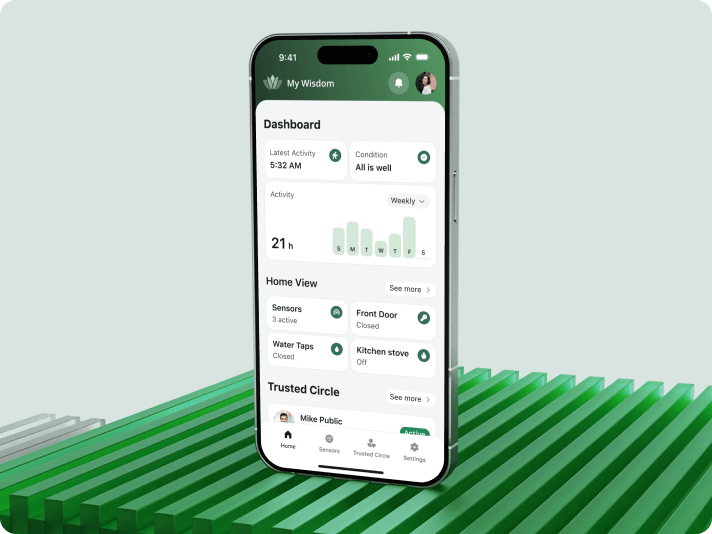
MyWisdom — a digital platform for safer, more connected aging
MyWisdom Icon - fi_4628635USA
Tech Stack

Flutter, Java, Spring Boot, Python, WebSocket, Computer Vision, AWS, PostgreSQL, Redis, Docker, Swagger, Liquibase

Timeline

5 month

Results

$1.3M raised in pre-seed funding

Strategic partnership with Samsung

UX Design Award nomination

#UX audit #Product redesign #web development
KlickEx – frictionless cross-border payments for the Pacific Island communities
Nomupay Icon - Clip path groupNew Zealand
Tech Stack

Next.js, TypeScript, React Redux

Timeline

6 months

Results

+35% "Add Money" conversion rate

+30% "Money Transfer" completion rate

Raised $1M in additional funding within 6 months

Image - Case preview

Izek Lal

Country manager

We have seen a significant improvement in terms of mobile friendliness and the general flow of the system. I believe this has contributed significantly to the growth of our business. Many thanks, Phenomenon.
#UX Audit #Product redesign #Web development #Team extention
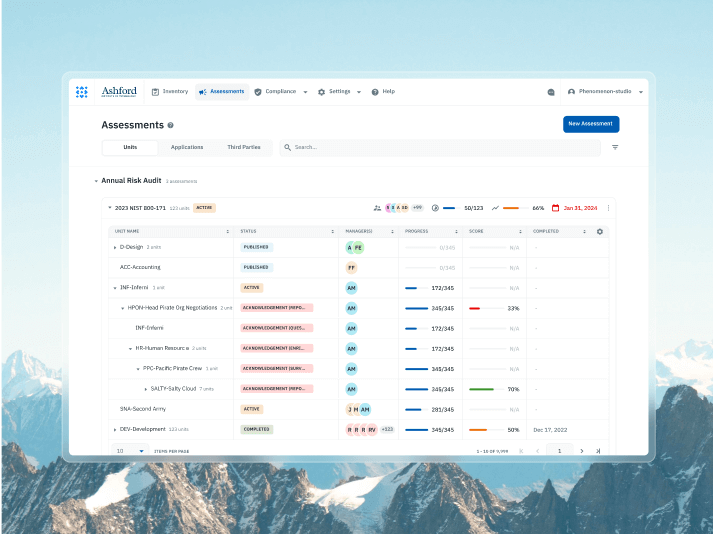
Isora – optimizing governance, risk & compliance for top institutions
SaltyCloud Icon - fi_4628635Texas, USA
Tech Stack

React, Python, AWS

Timeline

12 months, ongoing

Results

2x faster user workflows

50% shorter time-to-market

Nominated for UX Design Award 2024

What Our Clients Say

5.0 is our average
on clutch & designrush

Image - Craig Tortolani

Craig Tortolani

CPO at Dekryption Labs
Image - Alex Friedman

Alex Friedman

CEO at Open Path

Not only is the team extremely communicative, their work is exceptional. I have never worked with a team so talented while also being competitively priced and communicative.

Image - KlickEx

KlickEx Team

Image - George Fry

George Fry

Founder at Neap

The quality of the designs is fantastic. Phenomenon Studio works at speed and is extremely punctual with timelines. They deliver top-notch outcomes with exceptional designs.

Image - Andre Guerra

Andre Guerra

Co-Owner at RADCAT Design

Image - Kevin Alvarez

Kevin Alvarez

Founder & General Partner, Predictive

Phenomenon Studio's ability to translate concepts and rough design mock-ups into high-fidelity assets, designs, and visuals was very impressive. The goal was to maintain simple elegance in the design aesthetic, and they did it very well.

UX DESIGN SERVICES COST: FACTORS TO CONSIDER

What affects your UX overhaul cost, and how to scope it right

Your UX design services investment depends on where your product stands today and how deep the engagement needs to go. Some teams need a targeted UX site audit with prioritized fixes; others need full UX design – from research and architecture to prototypes and design systems.

What influences your UX design services cost?
01
Current product state
No product yet, early-stage MVP, or live platform with existing users?
02
Research depth
Heuristic review only, or full user research with testing rounds?
03
Design scope
Core flow redesign, or full product UX across all screens and states?
04
Team needs
How many roles and devices need to be covered in the design system?
05
Technical integration
Design tokens for existing codebase, or greenfield component library?
06
Timeline
Standard delivery or accelerated for launch, fundraise, or market entry?
Icon - process-1

Get a custom UX design services estimate

Every product is different - and so is your scope. Book a free consultation to get a tailored quote for your UX overhaul, product redesign, or full UI/UX design engagement.

ENGAGEMENT MODELS

How to work with our top UX design agency in a way that fits your workflow
Partner with a full-cycle product design company
We work as your long-term product design and development partner, owning strategy, discovery, design, dev, QA, and scaling iterations. This is not a “project”— it’s your full product team.
Best for
  • Founders who want a senior team thinking beyond sprints
  • Startups scaling beyond MVP and needing deep product ownership
What you get
  • Expert team aligned with your roadmap, KPIs, and business goals
  • Strategic discovery, UX systems
Hire a full-stack dedicated team
We deliver your product from idea to launch—fast and lean. You get execution-ready design and development support with a clear project scope and delivery timeline.
Best for
  • MVPs or feature builds with a defined goal and launch window
  • Pre-seed and seed startups that need to ship without building an in-house team
What you get
  • UI/UX, development, QA, and PM in one dedicated team
  • Clear scope, fixed timeline, efficient delivery
Augment your existing team
We provide developers, designers, and QA engineers to integrate with your team, helping you scale fast while keeping full control over execution.
Best for
  • Startups needing specialized expertise without long-term hiring
  • Seed & Series A+ startups looking to accelerate development
What you get
  • Embedded designers, developers, or product managers to fill skill gaps
  • Faster product delivery without the hiring delays & overhead costs

WHY CHOOSE PHENOMENON AMONG OTHER UX COMPANIES?

Your success is our priority
Design that meets regulation
HIPAA- and GDPR-certified expertise for Healthcare and beyond.

Since 2019, we’ve gained HIPAA and GDPR certifications and industry recognition, delivering hundreds of products in Healthcare, SaaS, FinTech, and EdTech — where compliance and UX go hand in hand.

Design that lasts beyond trends
We don’t chase fads. We build digital products that stay relevant.

Our work looks sharp today and stays usable tomorrow — designed around long-term value, not short-term gimmicks. Scalable systems, brand consistency, and smart UX that grows with your product.

Design that’s developer-ready
We design for implementation, not handoff.

Every component is built with devs in mind: design tokens, accessibility, reusability, and real-world constraints. We collaborate with your team, reuse existing elements, and stay involved until everything’s live.

Local presence. Global delivery
Work directly with the doers — not a chain of account managers.

Collaborate with UX strategists in North America, while our senior design and development teams in Europe deliver fast, consistent results. We integrate into your tools and workflow, working as part of your team — from a single embedded designer to a full product squad.

Among award-winning product design firms

Wins that inspire us forward
Icon - clutch

Top product design company 2024

Icon - Dribbble

One of Dribbble’s top rated design agencies

Icon - webflow

Professional partner by Webflow

Icon - design

Nominee 2024
Isora - GRC Platform

Icon - Awwwards

Site of the Day & honorable mentions

32+
others

Related Services

Services that pair well with your UX design services engagement
Web app design

Design responsive, user-focused web platforms with strong UX/UI logic.

Product redesign

Upgrade legacy interfaces with scalable, business-driven UX and Ul from a top-notch design agency.

UX audit

Identify usability bottlenecks, improve engagement, and optimize for conversions.

FAQs

Questions already
answered
01
What does a UX design agency do?

The best UX design agency focuses on how a product works for its users – the structure, behaviour, and logic behind every screen, flow, and interaction. A UI design studio, by contrast, focuses primarily on the visual layer: colours, typography, iconography, and layout aesthetics. The distinction matters because a beautiful interface built on broken logic still fails.

At a practical level, these UX design agencies run research, conduct usability testing, map information architectures, build interactive prototypes, and validate design decisions with behavioral data. 

When Phenomenon was brought in to redesign KlickEx’s cross-border payment platform, the core issue wasn’t aesthetics – it was complexity. Pacific Island migrant workers, many with limited digital banking experience, struggled with multi-step transfer flows. Our team ran a comprehensive heuristic review, mapped user interaction patterns, and identified critical usability barriers. We rebuilt the architecture, simplified form fields, and reorganized navigation to shorten paths to frequent actions. The “Add Money” flow improved by 35.3%, and the “Money Transfer” flow by 30.7%.

The full-cycle nature of such an agency means you get strategy, research, architecture, prototyping, testing, and design systems – a complete agency UX engagement, where every deliverable connects to the next. The deeper the UX work, the fewer surprises downstream. Engineering teams spend less time interpreting ambiguous designs, QA catches fewer interaction bugs, and users complete tasks with fewer support requests.

If you’re evaluating agencies, ask what their process includes beyond visual design. Look for research methodology, testing protocols, and design system documentation. The best firms show you how they arrived at a solution – the reasoning behind every design decision matters as much as the final screen. Among top UX companies, the ones worth hiring demonstrate UX impact with metrics beyond awards alone.

02
How much do agencies charge for UX design?

UX design pricing depends on three variables: project scope, research depth, and deliverable volume. There is no universal rate, but there are clear ranges that help you budget accurately.

A focused UX site audit – heuristic evaluation, behavioral analysis, and a prioritized recommendations report – typically runs $5,000–$12,000. This works for teams that have a live product and want an expert assessment of what’s broken and what to fix first.

A full UX design engagement – research, architecture, wireframes, prototyping, UI design, and design system – ranges from $15,000 to $50,000 for most SaaS and fintech products. 

This is the most common scope at Phenomenon. When we designed the full UX for Isora GRC, the engagement spanned 12 months and covered usability audit, information architecture, product UI design, a comprehensive design system with Storybook integration, and frontend development. The result: a 2× increase in user efficiency and a UX Design Awards nomination.

For enterprise-scale projects with multiple user roles, complex permissions, and regulatory requirements, budgets range from $40,000–$100,000+. These engagements typically involve deeper research phases, more testing rounds, and extensive documentation for large engineering teams.

What drives price variation between UX consulting firms? Team seniority, research rigor, and system depth. A junior-led team delivering wireframes costs less than a senior-led team delivering validated prototypes with a production-grade design system – but the junior team’s output often creates rework downstream.

The most common mistake is underscoping research. Investing $3,000 in wireframes without user testing means rebuilding those wireframes when the first usability study reveals the flows don’t work. A top UX design agency scopes research against your product’s complexity and growth stage, so your investment compounds rather than evaporates.

At Phenomenon, we share pricing context during the initial consultation and deliver a fixed-price proposal with a clear timeline, team composition, and deliverable list. We believe transparent scoping is the foundation of a productive engagement. Unlike many UX consulting firms that require paid discovery before sharing ballpark figures, we give you pricing context on the first call.

03
How long does a typical UX design engagement take?
Most

UX agencies

run projects from 6 weeks to 6 months, depending on scope, product complexity, and decision-making speed on the client side. A standalone usability review – heuristic evaluation, behavioral analysis, competitive benchmark, and recommendations – takes 2–4 weeks. This works for teams that need quick, actionable findings to prioritize their next design sprint. When selecting among top UX agencies, ask for their audit turnaround time and the deliverable format – these vary significantly. A full UX design project – research, architecture, wireframes, prototyping, usability testing, UI design, and design system – takes 2–4 months. This is the most common timeline for UX projects at Phenomenon. Our work with KlickEx followed a 6-month timeline that included a usability audit, competitor analysis, information architecture, wireframing, design direction, and full UI design with a multi-currency, multi-language design system. Enterprise-scale redesigns with multiple user roles, compliance requirements, and phased rollouts take 4–8 months. The Isora GRC project has been ongoing for 12+ months, with continuous design system expansion and new feature design running in parallel with frontend development. The biggest timeline risk is internal bottlenecks. When stakeholder feedback takes two weeks instead of three days, a 6-week project stretches to 12. Agencies that run agile sprints – with structured review windows and clear decision points – keep things on track. At Phenomenon, we set review deadlines at kickoff and assign a dedicated project manager. Most of our projects deliver on schedule within the original scope. When evaluating any agency, ask how they handle feedback cycles – it’s the best predictor of on-time delivery.
04
What is a UX audit, and when does your product need a UX assessment?

A usability audit is a systematic evaluation of your product’s interface against usability standards, behavioural data, and competitive benchmarks. It identifies where users struggle, where they drop off, and which design decisions are costing you conversions, retention, or support overhead.

You need professional audit services when you see symptoms: declining activation rates, rising support tickets, poor task completion metrics, or user complaints about “not finding things.” These are signals that your product’s UX has diverged from how users think and behave.

A professional usability audit typically includes four layers. First, a heuristic evaluation: experts assess every screen and flow against Nielsen’s 10 usability principles, flagging severity levels for each issue. Second, behavioral analysis: heatmaps, session recordings, and analytics data reveal where users click, scroll, hesitate, and abandon. Third, competitive benchmarking: we analyze how similar products handle the same workflows, identifying patterns your users already expect. Fourth, an accessibility review: WCAG 2.1 AA compliance checks across contrast, keyboard navigation, and screen reader support.

When Phenomenon audited Isora GRC’s platform, the product had been built primarily by developers, without dedicated UX expertise. We evaluated every user flow against industry-standard patterns and client-reported pain points. The audit uncovered that non-technical users found the interface cluttered and unintuitive, particularly for complex assessment workflows involving multiple roles. This became the foundation for a complete redesign that doubled user efficiency.

The output of a usability audit is a prioritized recommendations report – typically organized by severity (critical, major, minor) and effort (quick wins vs. structural changes). Strong audit teams also include implementation guidance so your engineering team can act on findings without another round of interpretation.

Most products benefit from a usability audit every 12–18 months, or whenever significant changes occur: new user segments, market expansion, platform migration, or post-funding growth acceleration.

05
How do I choose between the best UX agencies and freelance UX designers?

Choosing between the best UX agencies and freelance UX designers comes down to scope, risk tolerance, and the complexity of your product. Both have legitimate use cases, but they serve different stages and needs.

Freelance UX designers work well for clearly scoped tasks: a single feature redesign, a set of wireframes, or visual exploration. They cost less per hour and move fast when the brief is tight. However, freelancers typically cover one discipline. You get a researcher or a visual designer or a prototyper – rarely all three. For simple products with limited user roles, a freelancer with a strong portfolio track record can deliver good work.

Full-service agencies – and specifically top UX design agencies – bring a full team: researcher, information architect, interaction designer, visual designer, and sometimes a frontend developer. This matters when your product has multiple user roles, complex data flows, regulatory constraints, or when the stakes are high enough that user testing and validated prototypes are worth the investment. The best UX company for your project won’t charge you for overhead you don’t need; it will match the right team to the right scope.

At Phenomenon, our projects range from focused usability audit sprints with a two-person team to multi-month enterprise redesigns with six or more specialists. The deciding factor: how much cross-disciplinary coordination does the problem require? If your product needs architecture, research, testing, and a production-grade design system, an agency delivers those as an integrated workflow. A freelancer would need to coordinate with your team to replicate that, adding management overhead and communication gaps.

When comparing best UX company options, request a sample project plan. Strong agencies will outline team composition, milestones, and deliverables per phase, so you can compare value per deliverable rather than hourly rates.

06
Why does UX pay so much?

UX commands premium rates because it directly moves business metrics. According to Forrester Research, every $1 invested in UX yields approximately $100 in return – a 9,900% ROI. According to Baymard Institute, checkout UX optimization alone lifts e-commerce conversion rates by 35.26%. When a single flow redesign can shift millions in revenue, the cost of UX work is proportional to its impact.

The scope explains the price. A full UX engagement spans research, information architecture, wireframing, prototyping, usability testing, UI design, design systems, and developer handoff. Each layer compounds the next. Skipping research means building on assumptions; skipping testing means shipping untested flows; skipping design systems means rebuilding components for every new feature. Top UX design companies deliver all of these as an integrated system, which is why a full engagement costs more than isolated deliverables.

When Phenomenon redesigned KlickEx, the UX investment – auditing the platform, restructuring architecture, simplifying multi-step financial flows – consumed more hours than the visual UI work. But that’s where the 35.3% conversion lift came from. The architecture changes, simplified form fields, and shorter navigation paths did the heavy lifting. The ROI on that engagement far exceeded the project cost.

UX also reduces costs downstream. Validated prototypes cut development rework. Self-explanatory interfaces reduce support tickets. Reusable design systems accelerate future feature development. Top UX design companies quantify these savings during scoping, so your investment case is clear before the project starts.

The practical takeaway: if your product already works well and users complete tasks efficiently, a visual refresh may suffice. If users struggle, churn, or fail to activate, the problem is UX – and surface-level changes won’t move the metrics that matter.

07
What should I look for in UX design portfolios when evaluating agencies?

Evaluating UX design portfolios requires looking beyond visual polish. The strongest portfolios demonstrate process, problem-solving, and impact.

Start with a case study structure. Strong UX design agencies show the full arc: what problem they were hired to solve, how they researched and diagnosed the root cause, what design decisions they made and why, and what happened after launch. If the portfolio only shows final screenshots without context, the agency may be execution-focused without strategic depth.

Look for specificity. Vague claims like “improved user experience” tell you nothing. Credible portfolios include metrics: conversion lift percentages, task completion improvements, reduction in support tickets, and time-to-market acceleration. When Phenomenon presents the Isora GRC case, we reference the 2× user efficiency increase, the 50% time-to-market reduction through design systems, and the UX Design Awards nomination, because these are verifiable outcomes.

Check industry relevance. An agency that has worked with SaaS, fintech, or healthcare products understands domain-specific constraints: regulatory compliance, multi-role permissions, data density, and mobile-first requirements. Top UX design firms with relevant industry experience will ask smarter questions in your first call and require less ramp-up time. The same applies to UX research companies – verify that their research methodology matches your domain’s complexity.

Evaluate design system depth. If the portfolio shows isolated screens but no system documentation, the UX studio may produce beautiful one-offs that don’t scale. Look for evidence of component libraries, design tokens, Storybook integration, and developer handoff practices.

Finally, ask about research methodology. Strong agencies will articulate how they conduct usability testing, what tools they use for behavioral analysis, and how research findings informed their design decisions. If research is an afterthought, the design work is guesswork. Leading UX research companies integrate research into every phase, weaving it through design sprints rather than isolating it at the start.

08
How do the best UX design companies approach mobile and responsive UX?

Mobile UX is not a scaled-down version of desktop. The best UX design agencies treat mobile as a distinct design challenge with its own constraints, behaviours, and opportunities.

According to research, mobile users are 5× more likely to abandon a task if the site isn’t optimized for mobile. And 88% of users who have a negative mobile experience are less likely to return. These numbers make mobile UX a revenue-critical investment.

At Phenomenon, mobile-first design is a core principle in our work. When we redesigned KlickEx’s cross-border payment platform, analytics revealed that the majority of users – migrant workers in Pacific Island communities – accessed the platform primarily via smartphones. We designed every flow mobile-first: large touch targets, minimal data entry, clear CTAs, and optimized form fields. The mobile-first approach resulted in a 54.8% completion rate – a significant lift for a financial application serving users with varying levels of digital literacy.

The responsive UX process for web projects includes breakpoint-specific layouts (rather than simple fluid scaling), device-appropriate interaction patterns (swipe, pull-to-refresh, bottom navigation), thumb-zone optimization for one-handed mobile use, performance considerations for low-bandwidth environments, and progressive disclosure to reduce screen density on smaller viewports. Responsive UX extends to every visual element, including UX design logo treatments.

Agencies that approach responsive design rigorously also test across devices, running user testing on representative hardware, with physical phones and tablets. At Phenomenon, we test prototypes on the devices our users carry and use analytics data to prioritize the viewport sizes that matter most for each product’s audience.

09
What is enterprise UX design, and why is it different from startup UX?

Enterprise UX deals with products used by large organizations – tools with multiple user roles, complex permission structures, dense data views, and regulatory requirements. The design challenges are fundamentally different from consumer or startup products.

In startup UX, the priority is activation: get users to the “aha moment” fast. In enterprise UX, the priority is adoption and efficiency: help trained users complete complex tasks faster, with fewer errors, across workflows that may involve multiple departments.

This means enterprise UX requires deeper information architecture, more robust navigation systems, role-based interface variations, advanced data visualization, and extensive documentation. A dashboard that displays 200+ data points needs progressive disclosure, smart filtering, and clear visual hierarchy – minimalist whitespace alone won’t cut it.

When Phenomenon worked on Isora GRC, a governance, risk & compliance platform used by 20%+ of high-research-activity U.S. universities, the platform supported multiple roles with different permissions and assessment workflows. Our team conducted a full documentation analysis, heuristic review, and information architecture restructuring before designing a single screen. We evaluated every user flow against industry-standard UX patterns and Nielsen’s heuristics. The redesign simplified complex processes for non-technical users while maintaining the depth required by compliance officers.

The key differentiators of enterprise UX include multi-role user flows (each role sees different navigation, data, and actions), workflow automation patterns (reducing manual steps in repetitive processes), data-heavy dashboard design (smart defaults, contextual filters, exportable views), accessibility compliance (enterprise products often have contractual WCAG requirements), and design system scalability (components that support 50+ screen types without custom one-offs).

If your product serves organizations with 100+ users and 5+ roles, an agency with enterprise experience will design systems that reduce training time and increase adoption, rather than simplifying the interface to the point where power users can’t work efficiently. Many top UX companies and other agencies specialize in consumer products; verify that your shortlisted agency UX partner has B2B enterprise case studies with proven outcomes before signing.

10
Why are UX designers paid so much?

The market rate for experienced UX designers reflects the direct business impact of their work. According to Baymard Institute, checkout UX optimization alone can boost e-commerce conversion rates by 35.26%. When a single design decision can move millions in revenue, the cost of a skilled designer is modest by comparison.

At a team level, design teams with senior practitioners deliver compound value. They reduce development rework by validating designs with users before code is written. They decrease support costs by making interfaces self-explanatory. They improve retention by removing barriers to task completion. They accelerate time-to-market by establishing reusable design systems.

When Phenomenon’s team redesigned KlickEx, the UX investment – research, audit, architecture, prototyping, testing, and design system – directly produced the 35%+ conversion improvements and 3,000 new monthly users. The ROI on that UX engagement far exceeded the project cost.

The salary premium for UX professionals also reflects the breadth of their skill set. A strong UX professional combines research methodology, behavioural psychology, interaction design, visual design, prototyping, accessibility expertise, and cross-functional collaboration. They translate business objectives into interface logic, user needs into workflows, and abstract requirements into testable prototypes.

For companies evaluating whether to hire in-house or partner with a design agency, the calculus is straightforward. An in-house senior UX designer costs $100,000–$150,000+ per year in salary, benefits, and tooling. An agency engagement with a full senior team – researcher, information architect, interaction designer, visual designer, and design system specialist – often costs less annually while delivering broader expertise across disciplines. 

Agencies offer that breadth on demand, scaled to your project’s needs. When evaluating top UX agencies, compare the total cost of an in-house hire against a 6-month engagement that includes a full cross-functional team – the math often favors the agency model.

Contact us

Have a project in mind?
Let's chat

Your Name

Enter your name *

Your Email

Enter your email *

Message

Tell us about your project

You can upload maximum 5 files
Some of your file not loaded, because maximum file size - 5 mb
Your budget for this project?

By clicking this button you accept Terms of Service and
Privacy Policy

Icon - circle-check-svgrepo-com 1
Thanks for taking time to reachout!
Stay connected with us by subscribing to our LinkedIn account. By following, you’l be the first to hear about our latest updates, news, and exciting development. We look forward to sharing our journey with you!
Icon - circle-check-svgrepo-com 1
Thanks for taking time to reachout!
We’d love to hear more about your project! Feel free to schedule a call using the link provided. This will help us better understand your vision and ensure we’re aligned on all the details.
Have a project to
discuss?
Image - ksenia
Kseniia Shalia
Account Executive
Have a partnership in
mind?
Image - polina
Polina Chebanova
Co-Founder & CPO