


ZeBeyond — how redesigning the onboarding flow cut the trial-to-paid activation time
Client
zebeyond
 Germany
Germany
Services
Technologies
 Node.js
 Nest.js
 React
React
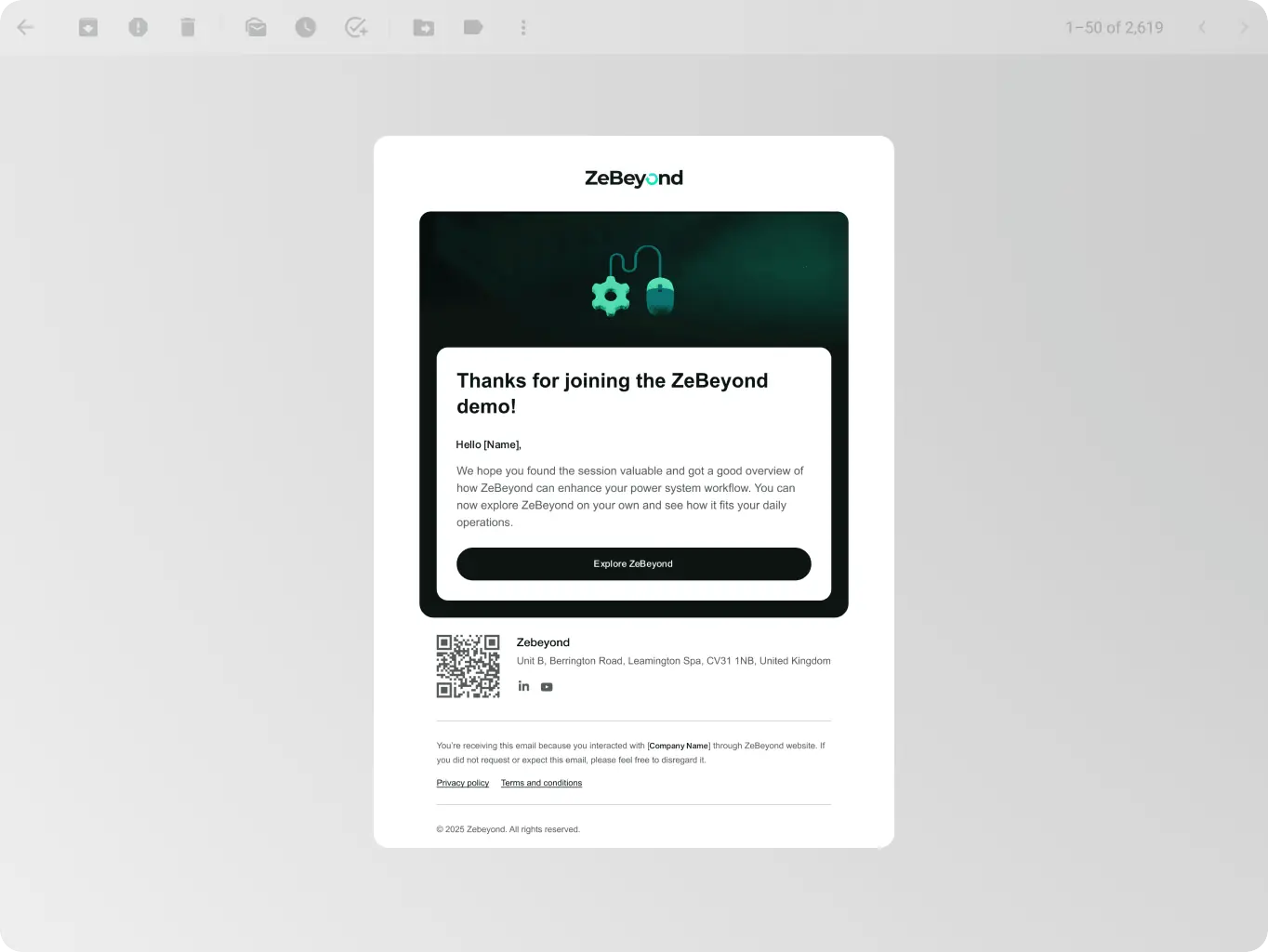
ZeBeyond’s sales team was spending a meaningful share of their time on administrative work that had nothing to do with selling. Every new customer who finished a free trial still needed a sales rep to send documents, chase signatures, and manually process the order before the account could go live.
The manual handoff made sense when ePOP was sold on-premise with custom contracts. As a B2B SaaS, it was slowing down activation and pulling sales attention away from demos and technical conversations. ZeBeyond needed the upgrade path to work without them in the middle of it — a self-serve flow that handled legal acceptance, payment, and account activation in one go, with no off-platform steps.
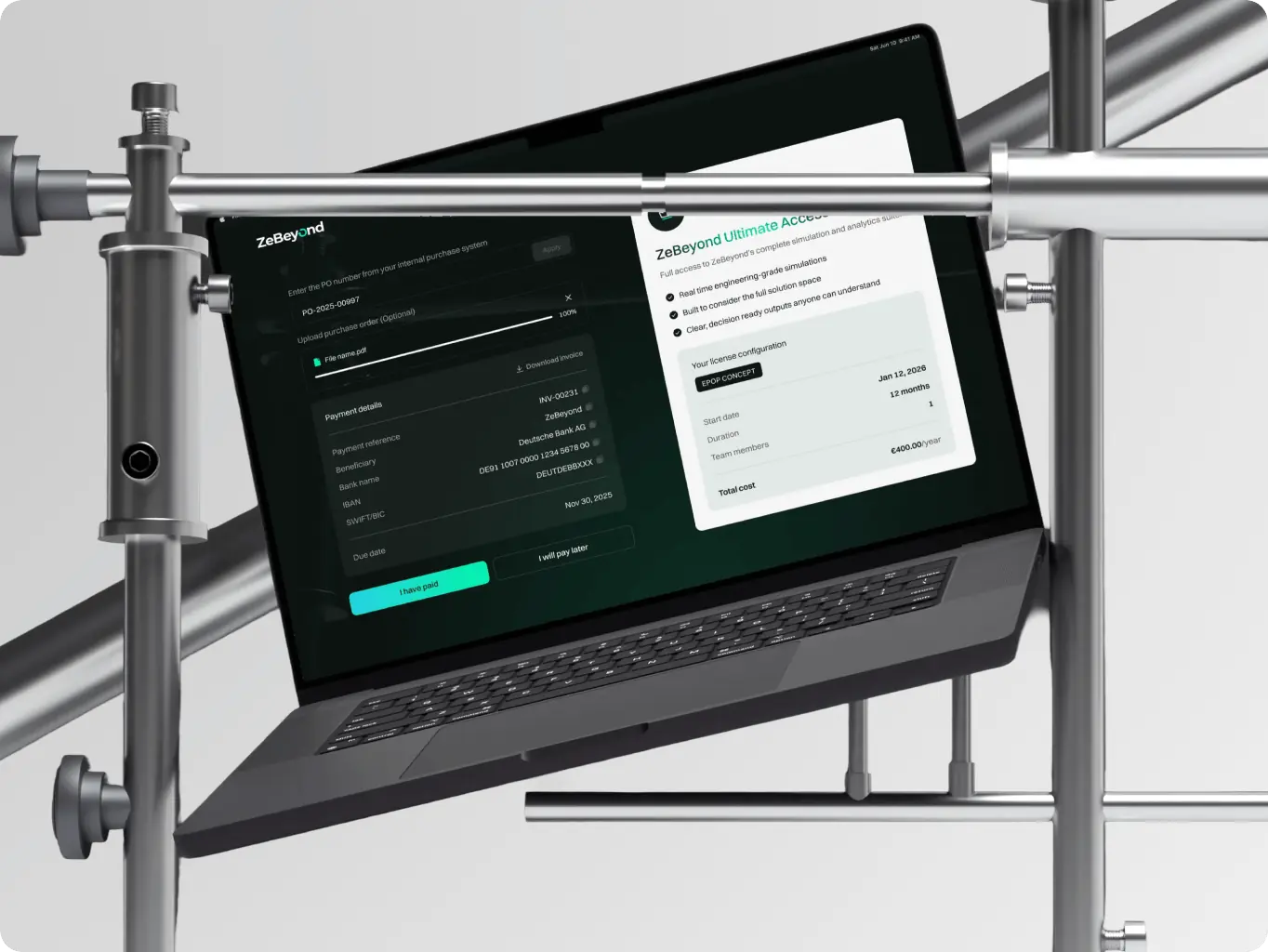
ZeBeyond’s upgrade path had been built for a world where every deal needed a rep to close it. Moving to SaaS didn’t change the process – it just made the friction more visible.
We redesigned the onboarding flow end to end, replacing the document exchange and manual activation with a self-serve model where engineers go from free trial to paid account in a single session.
Stages
- research
- wireflows
- design direction
- Mockups design
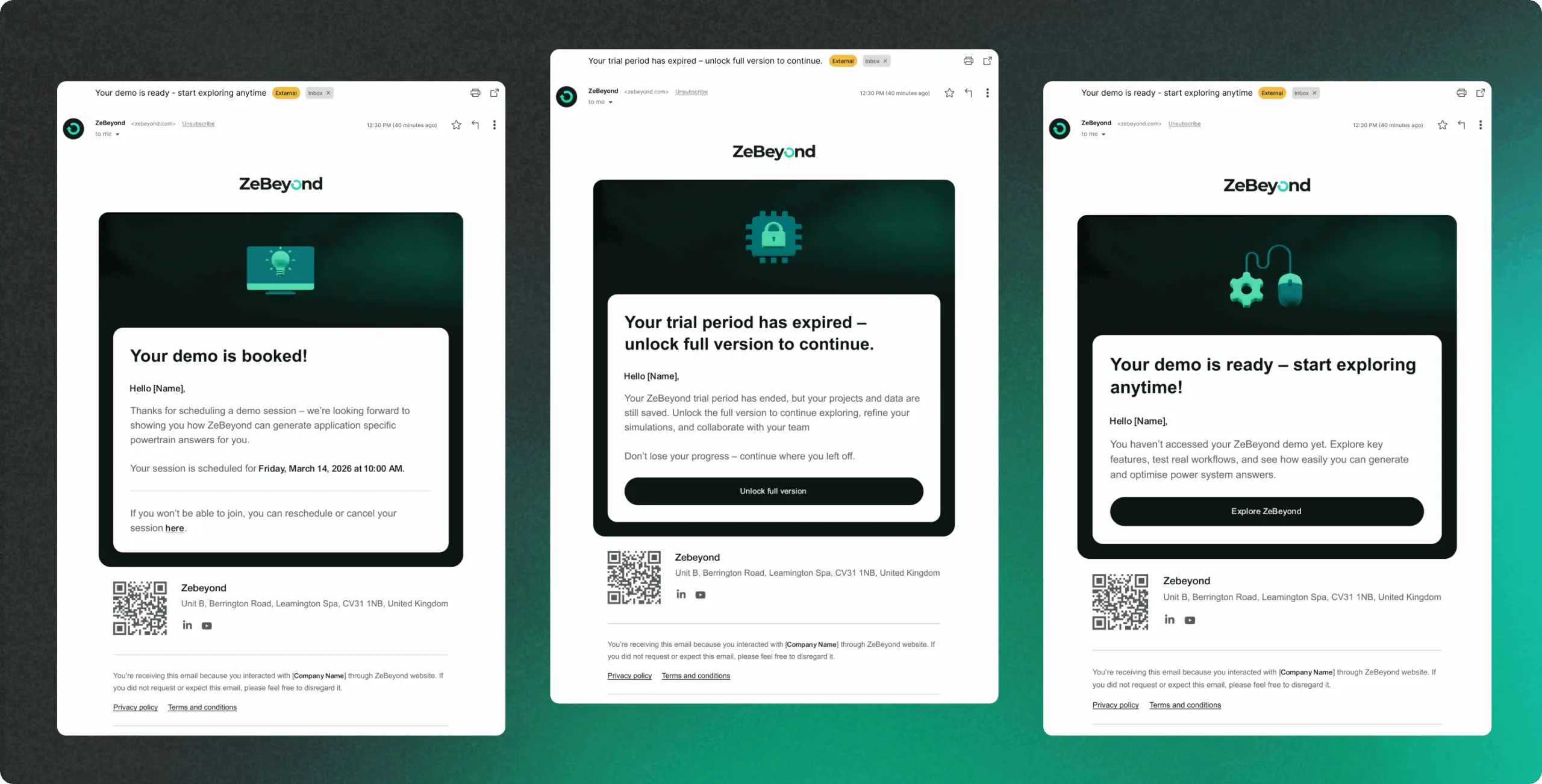
ZeBeyond’s commercial process had grown out of an on-premise sales model – and several steps had never been re-examined after the product moved to SaaS.
We mapped the existing flow end to end, from trial sign-up to paid activation, to identify every point where the process stalled or required a sales rep to intervene. That baseline shaped every design decision that followed.
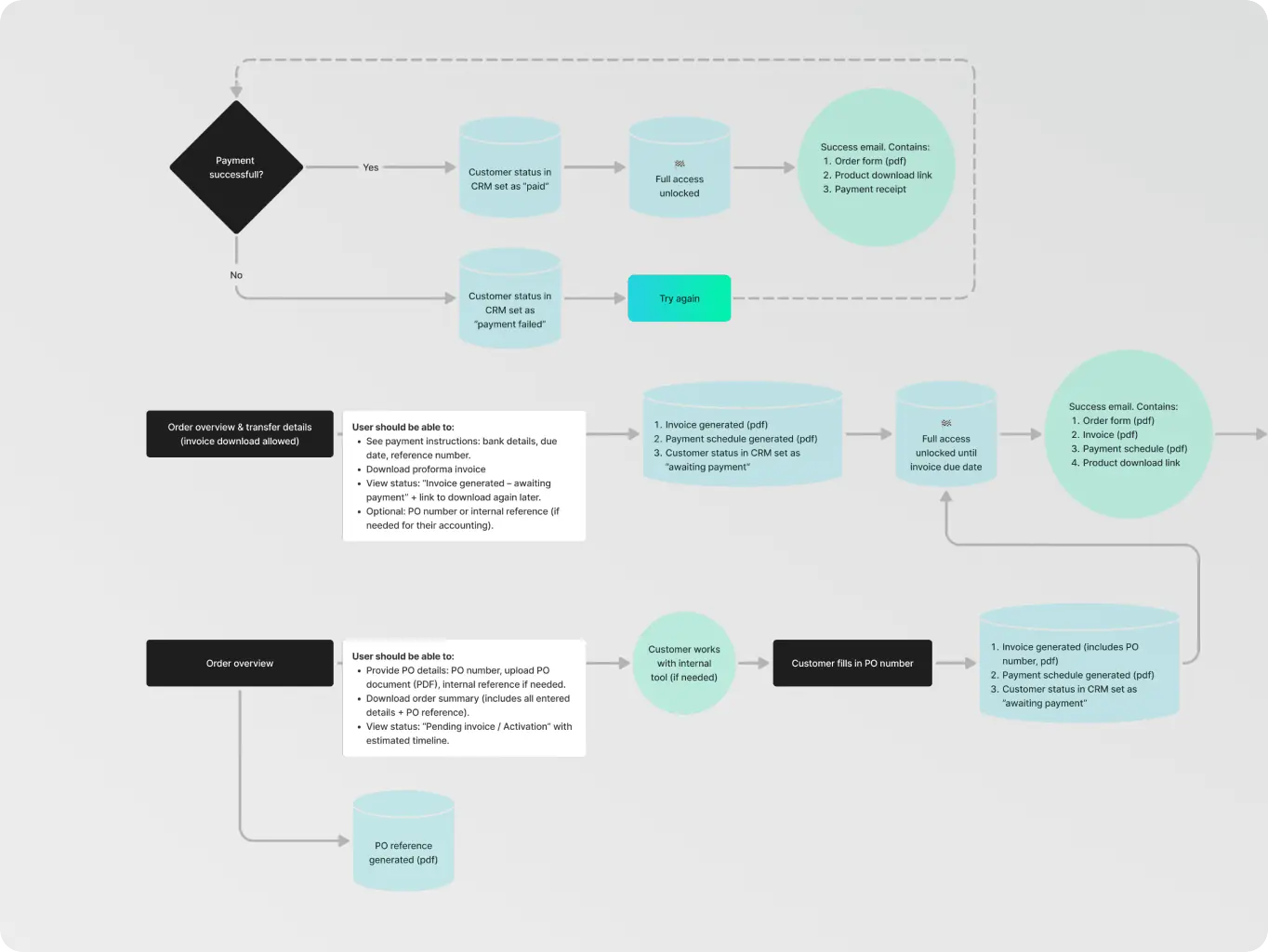
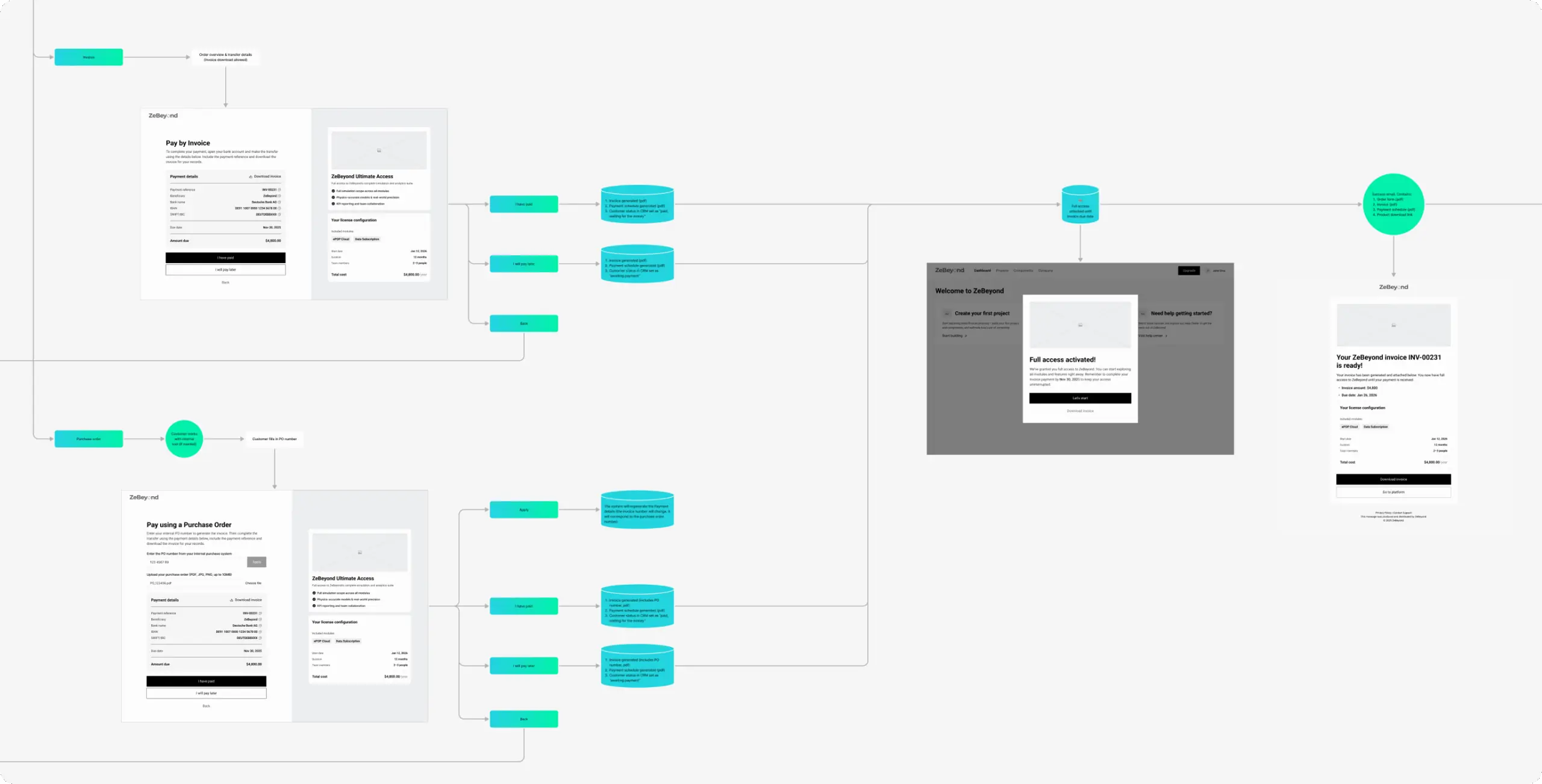
We built detailed wireflows covering the full activation journey — from sign-up through trial, license acceptance, and payment. This stage was about making the logic of the system explicit: identifying every branch, every potential drop-off point, and every moment where a user might need reassurance or clarification before moving forward.
ZeBeyond had recently relaunched their website with a updated visual direction. Rather than treating the new platform modules as isolated work, we aligned the onboarding and catalog components with that updated design language — establishing a shared foundation the team can use to bring the rest of the platform in line over time, one section at a time.
The component decisions maintained the precision and restraint of the existing platform while introducing clearer hierarchy, more purposeful use of space, and interaction patterns calibrated for a B2B decision-making context.
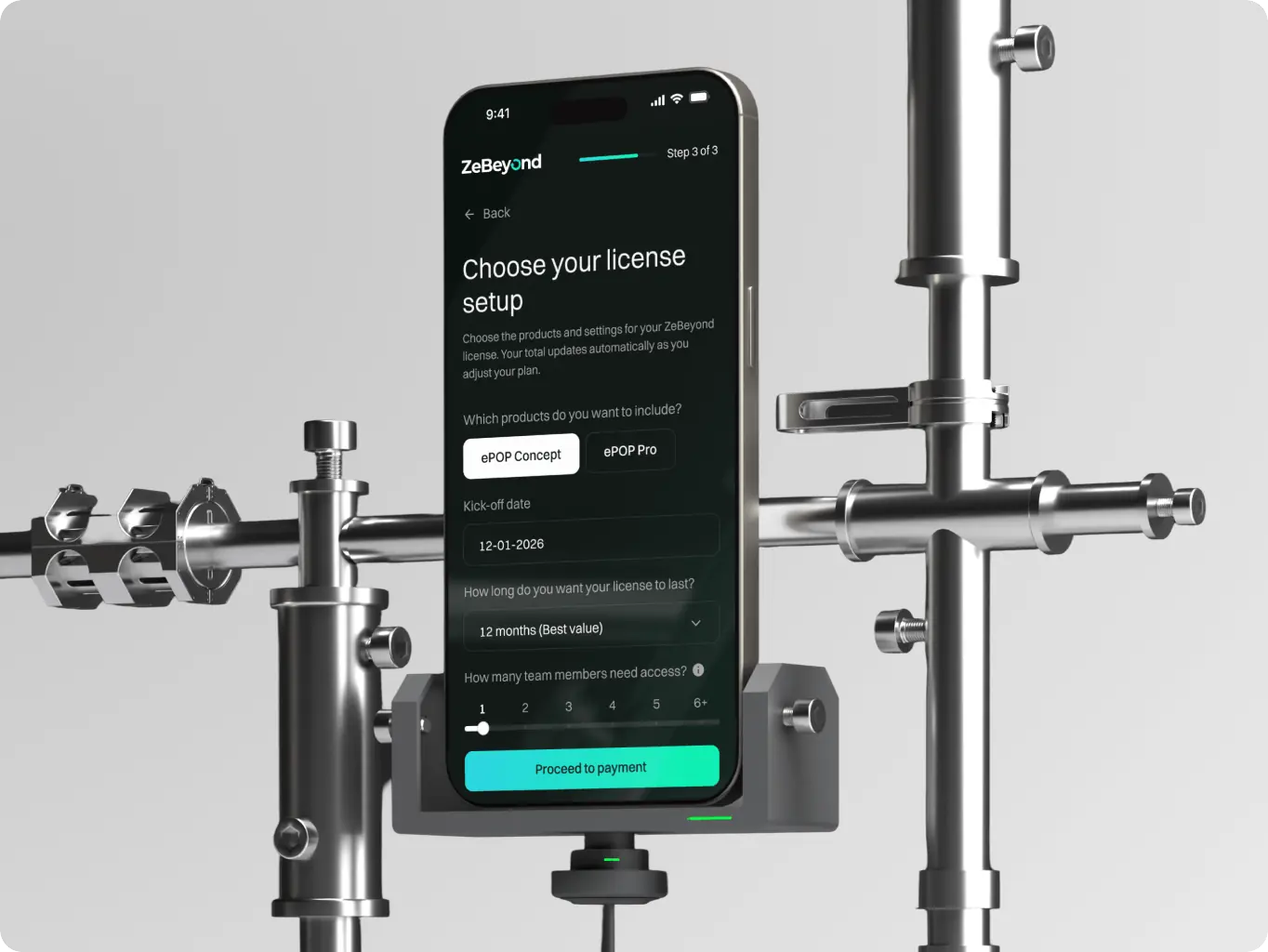
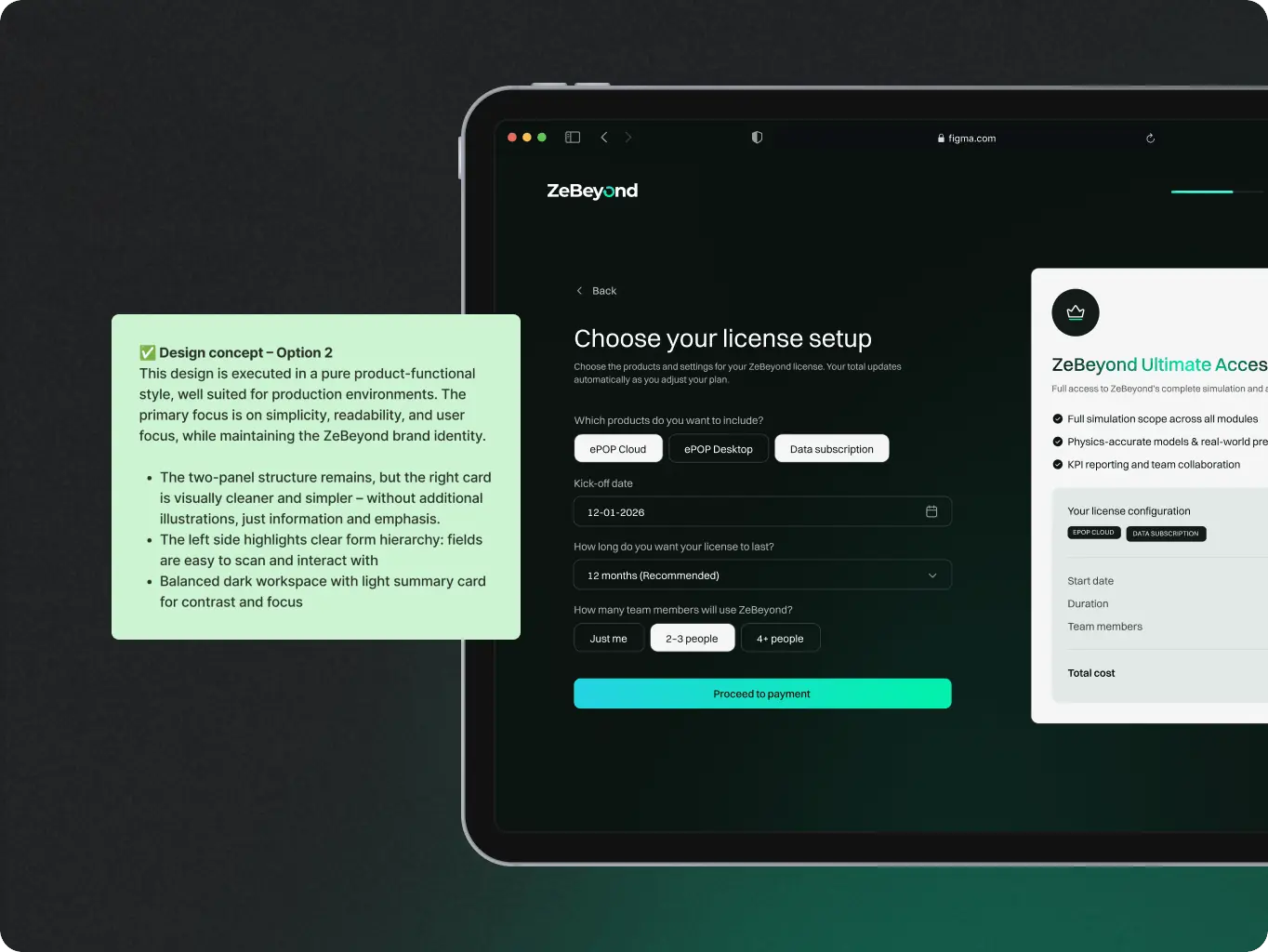
The final UI brought together every upstream decision into a clean, functional experience.
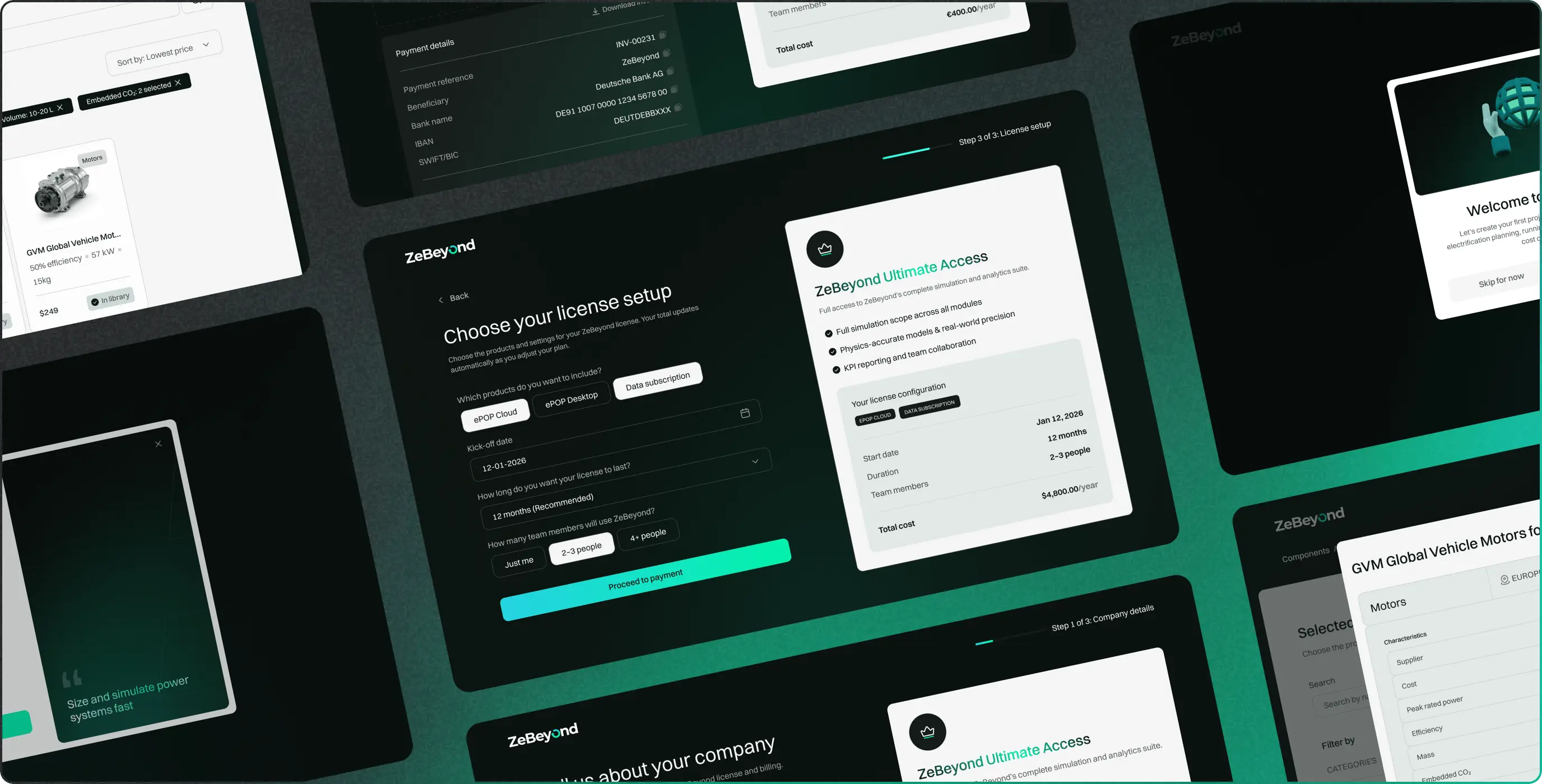
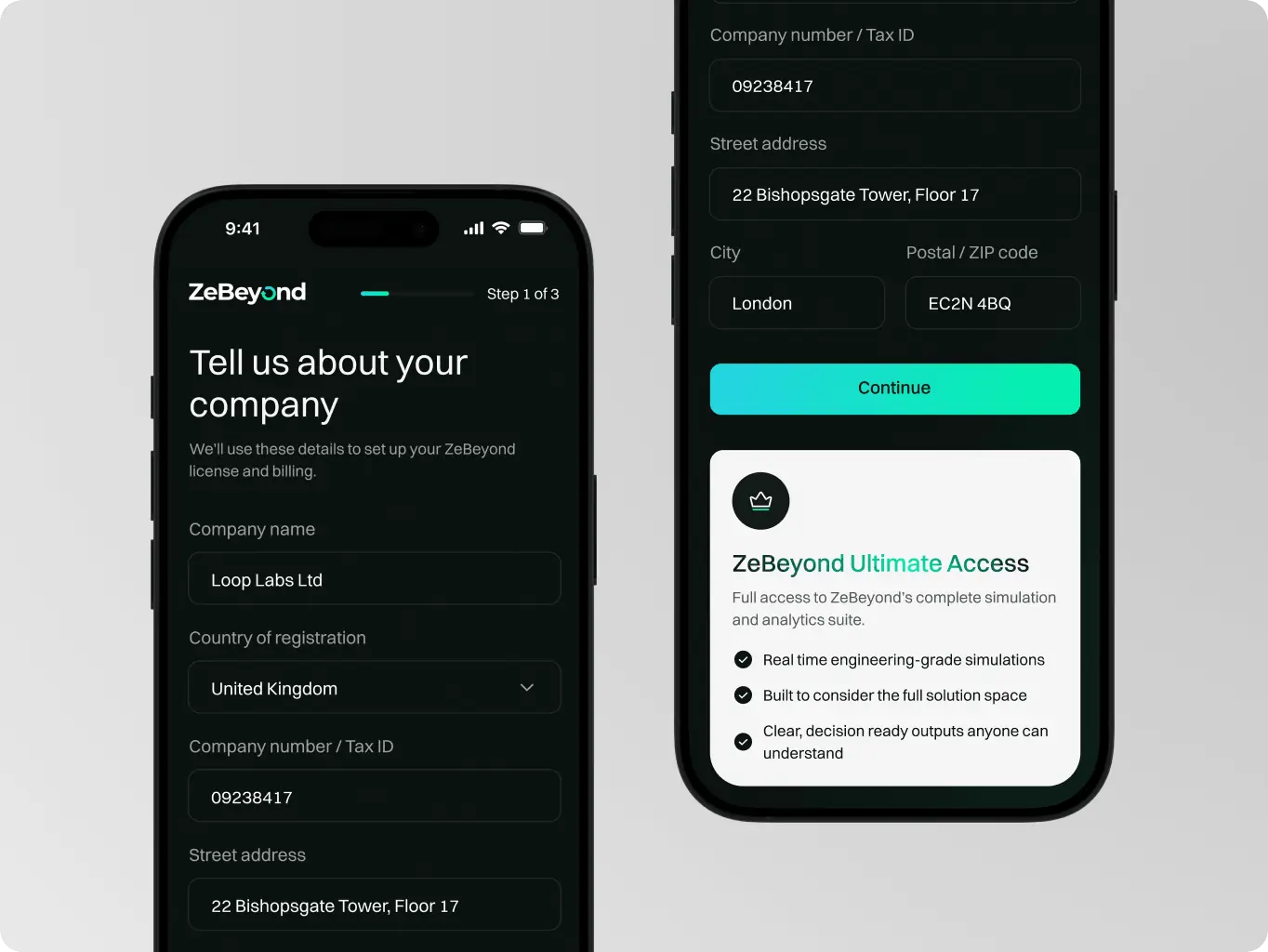
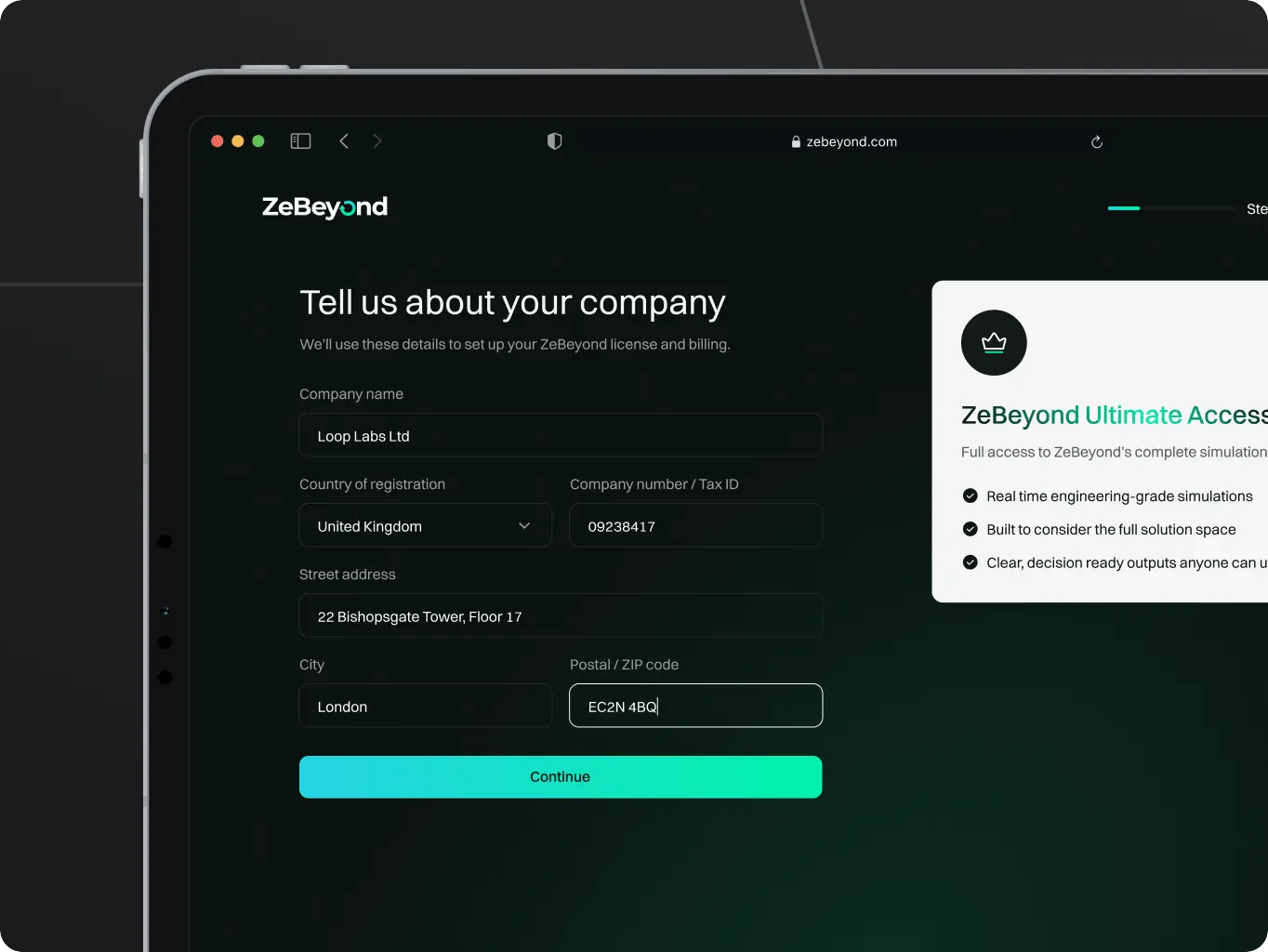
The onboarding flow guides users step by step – from trial to agreement to payment – with inline guidance, clear progress indicators, and zero reliance on off-platform communication.
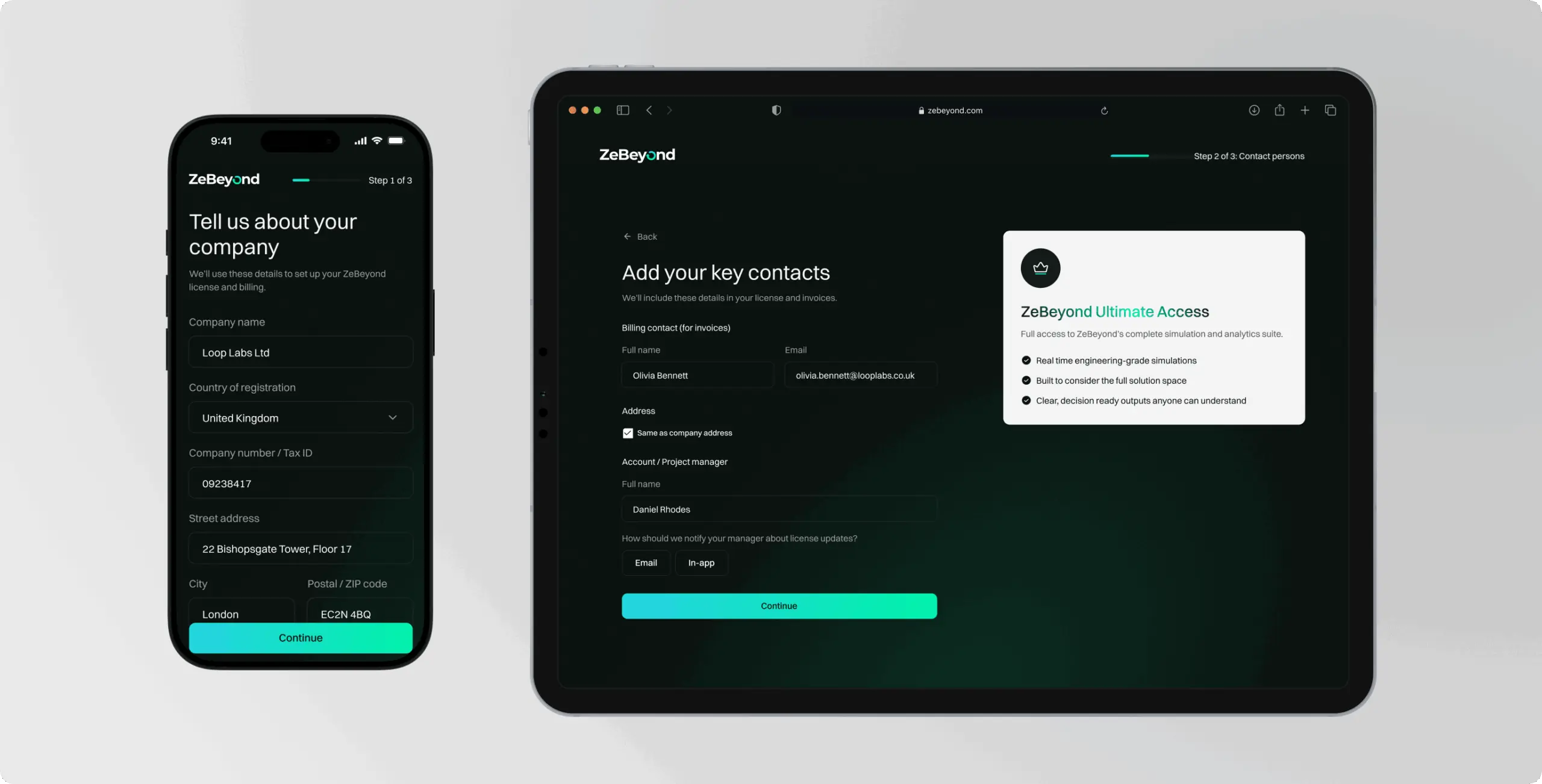
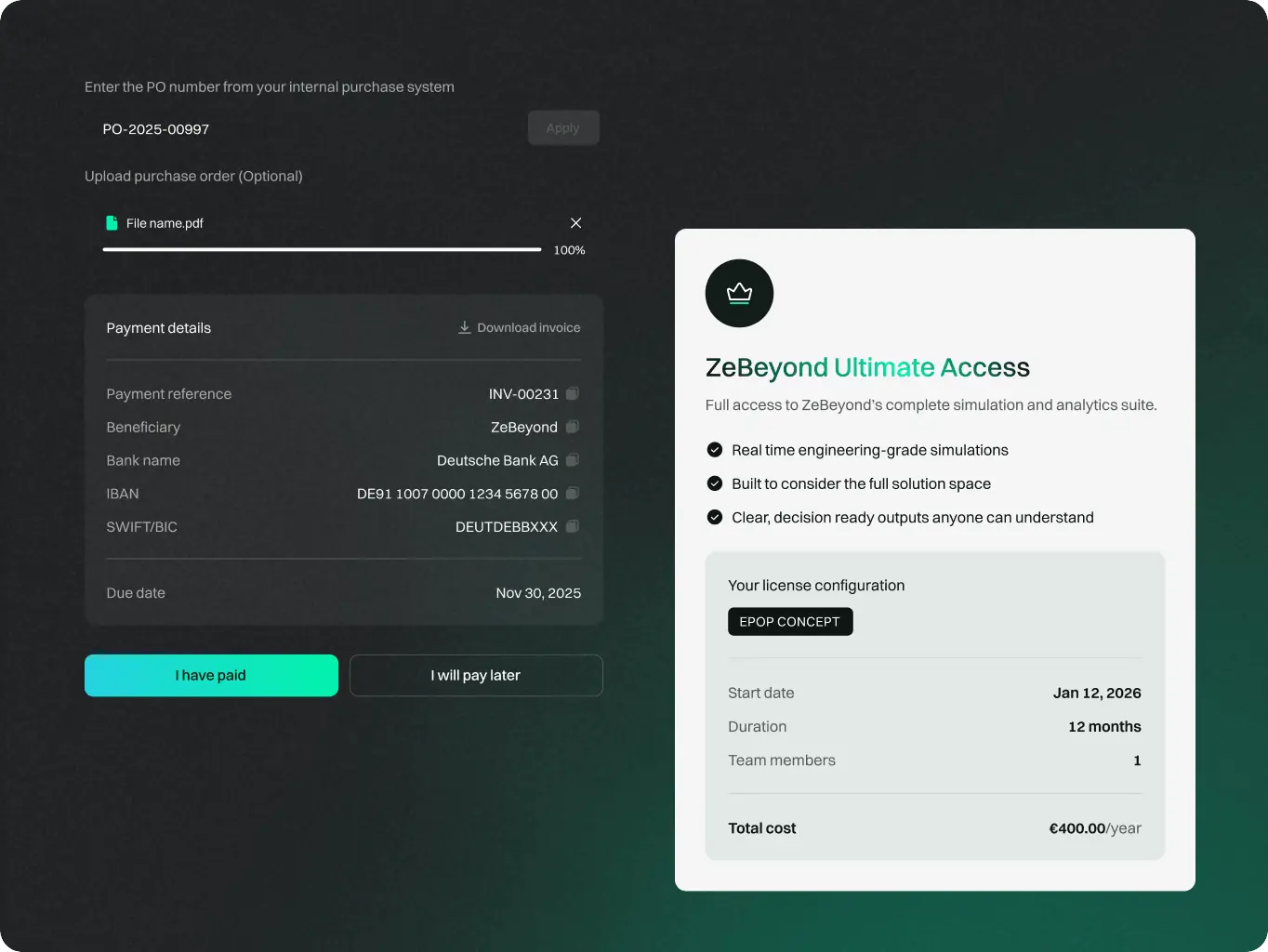
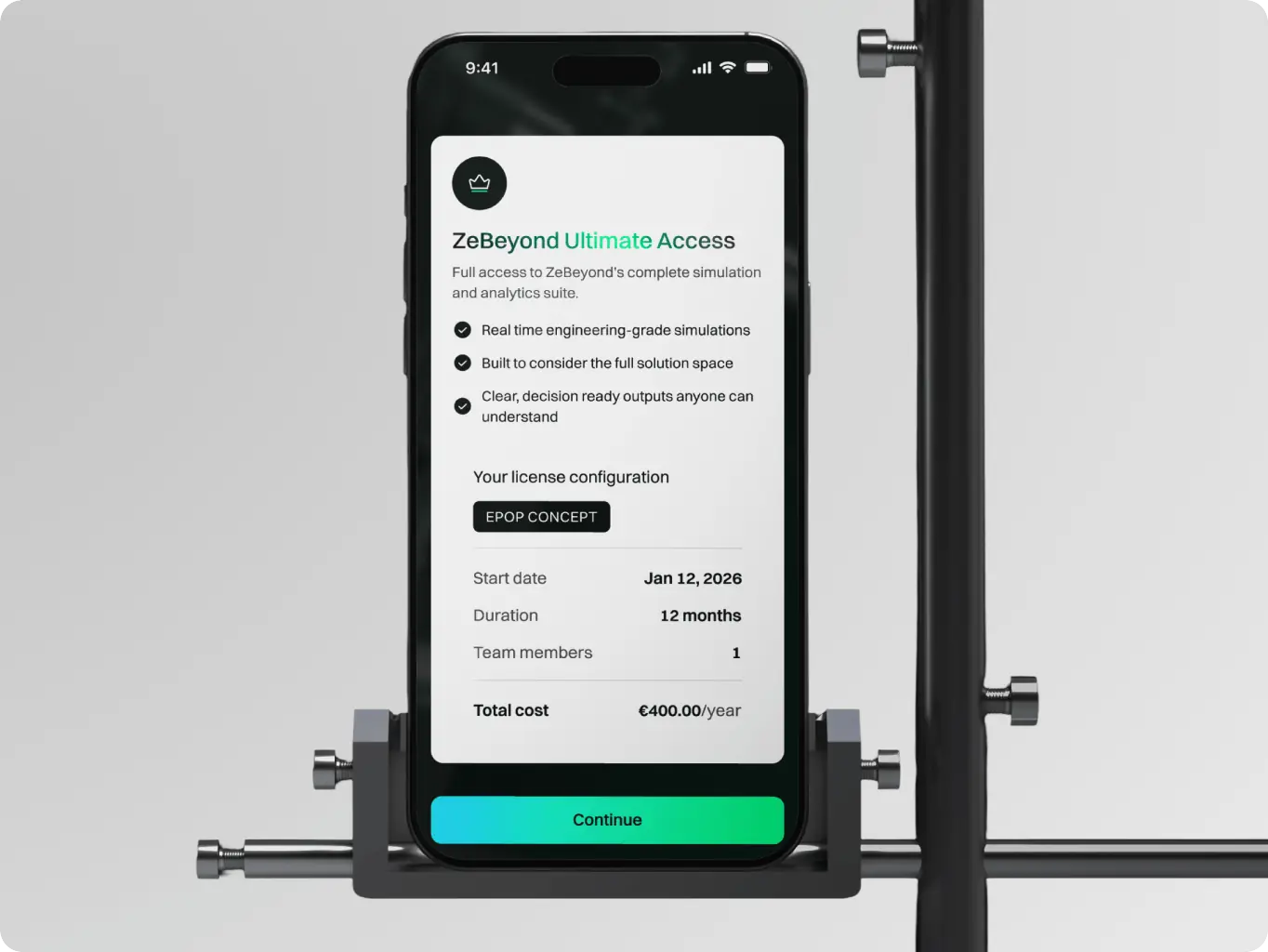
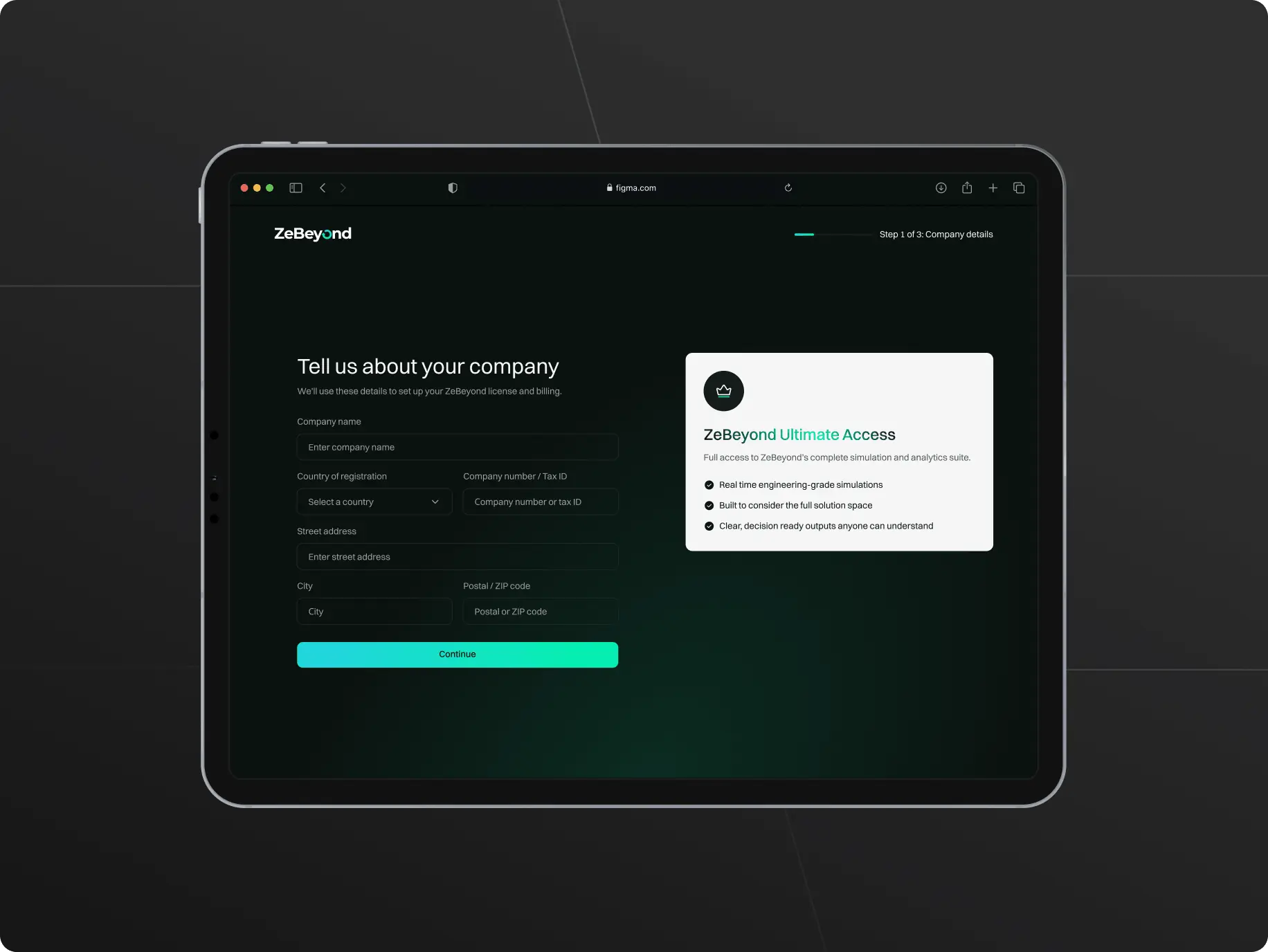
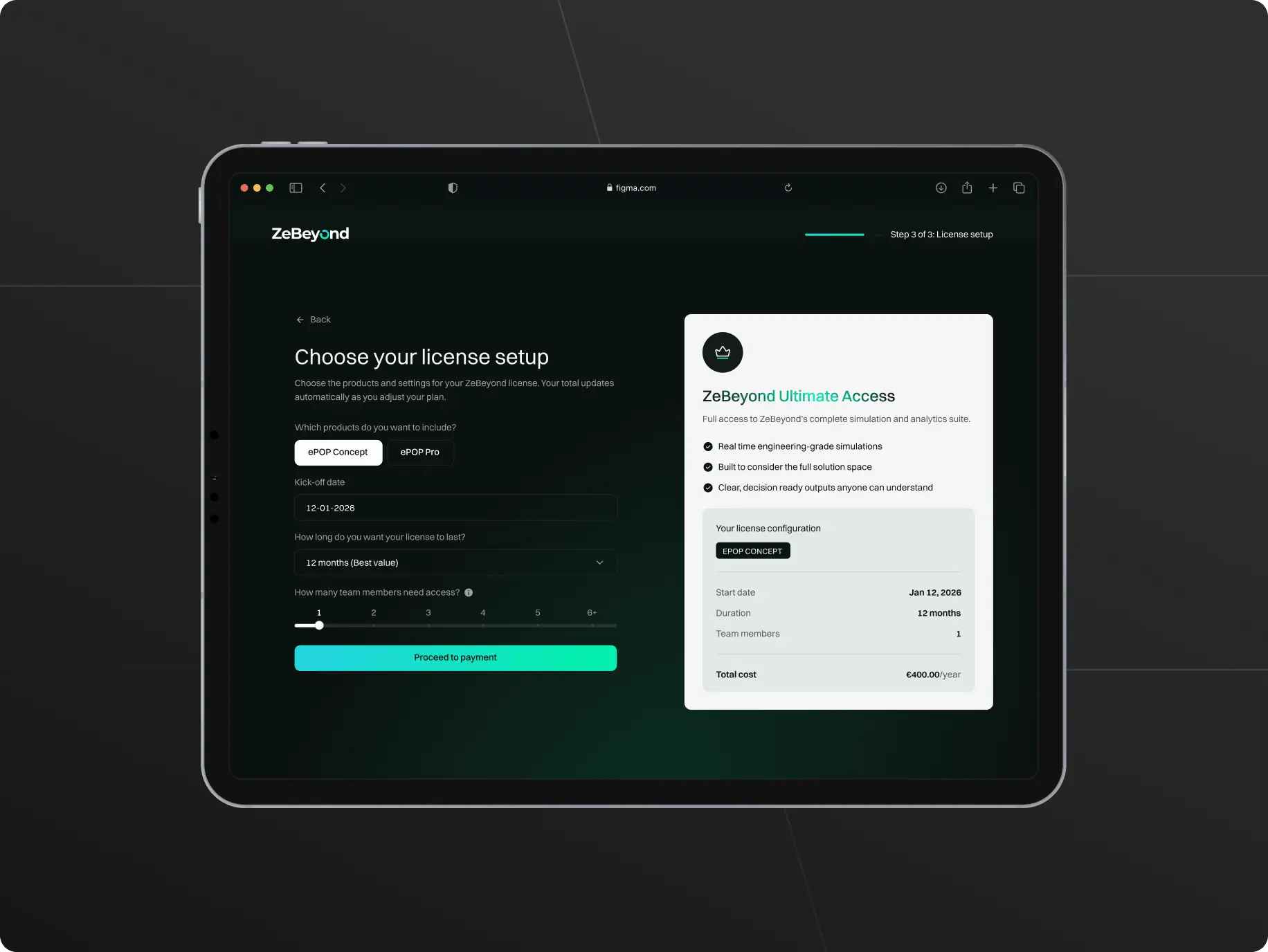
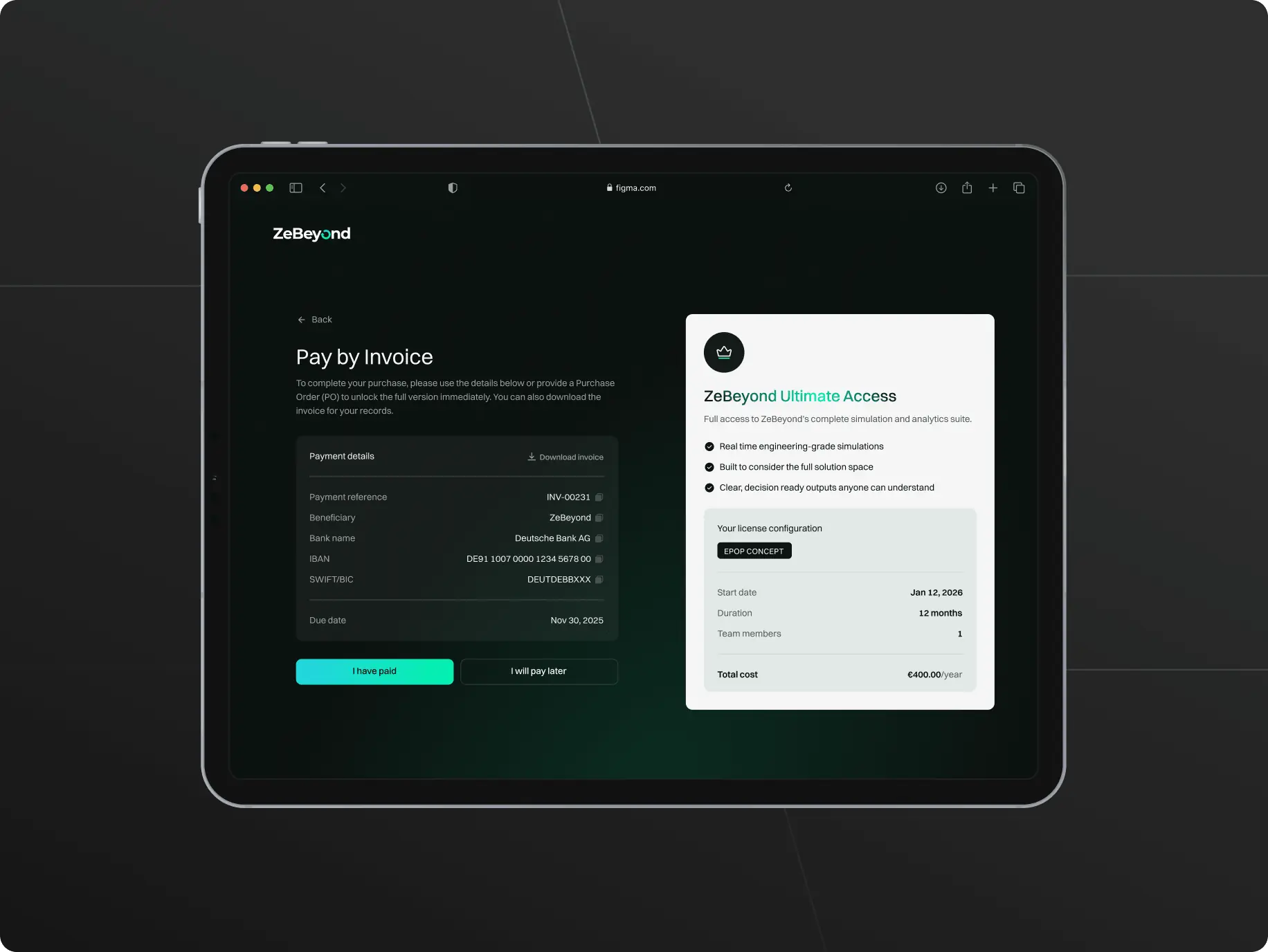
In-platform upgrade flow
Engineers sign up and book a demo directly within the product, without going through a sales rep. The trial starts immediately after booking, with no manual setup required on the team's side.
Mini calculator
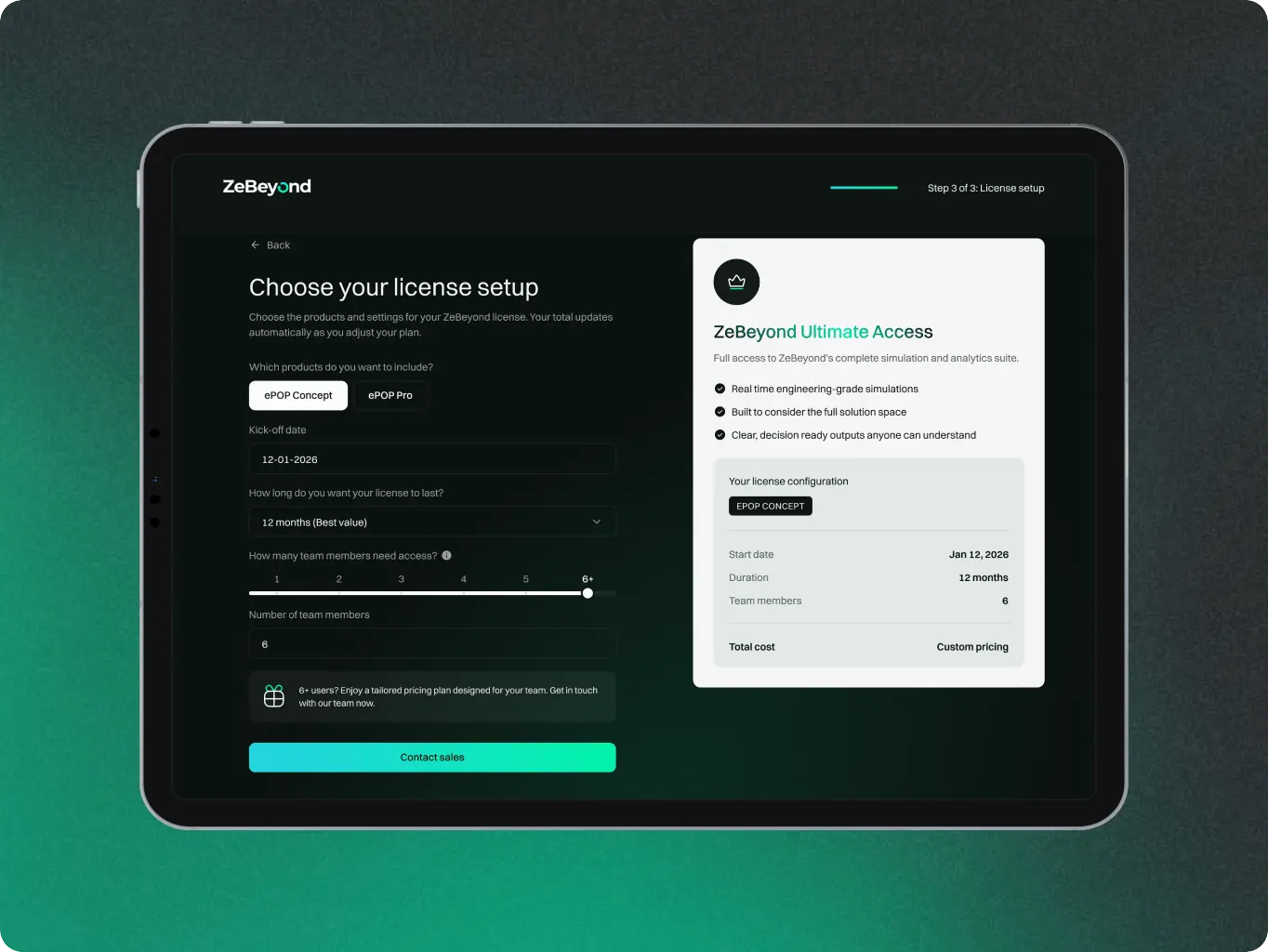
Before committing to a plan, users get an instant estimate based on their actual usage parameters. It removes the "contact us for pricing" step that typically stalls B2B purchases at the decision point.
Payment system
Customers complete the purchase inside the platform — plan selection, license acceptance, and payment in one flow. No invoice exchange, no order form sent over email, no waiting for activation.
The existing product lacked a dedicated space to present the Spare Parts Library as a working feature before the full release.
We designed a separate catalog flow where engineers select components using filters, add them to a personal library, and compare them side by side within a simulation — giving the sales team a concrete, interactive artifact to show during demos rather than slides.
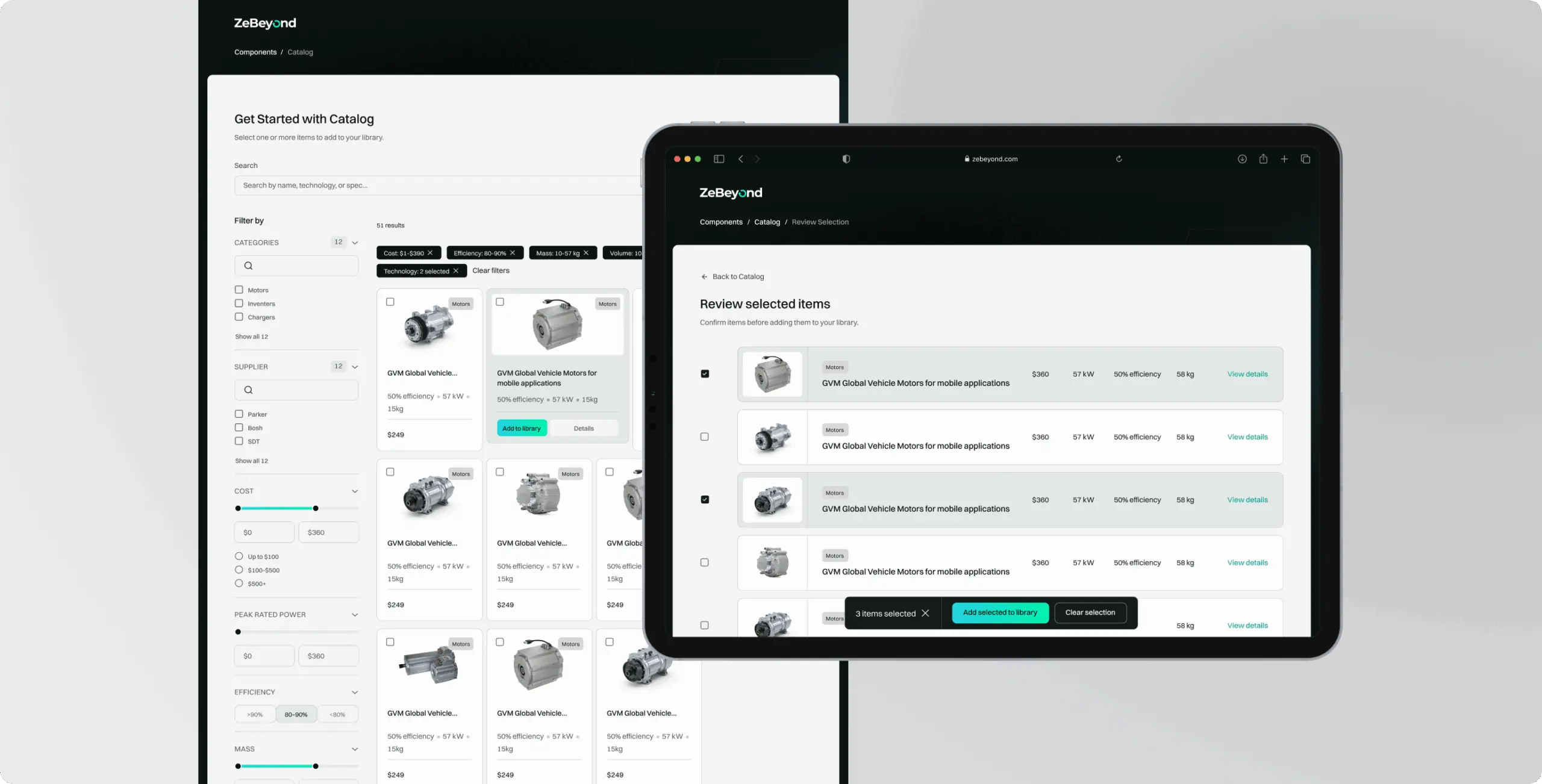
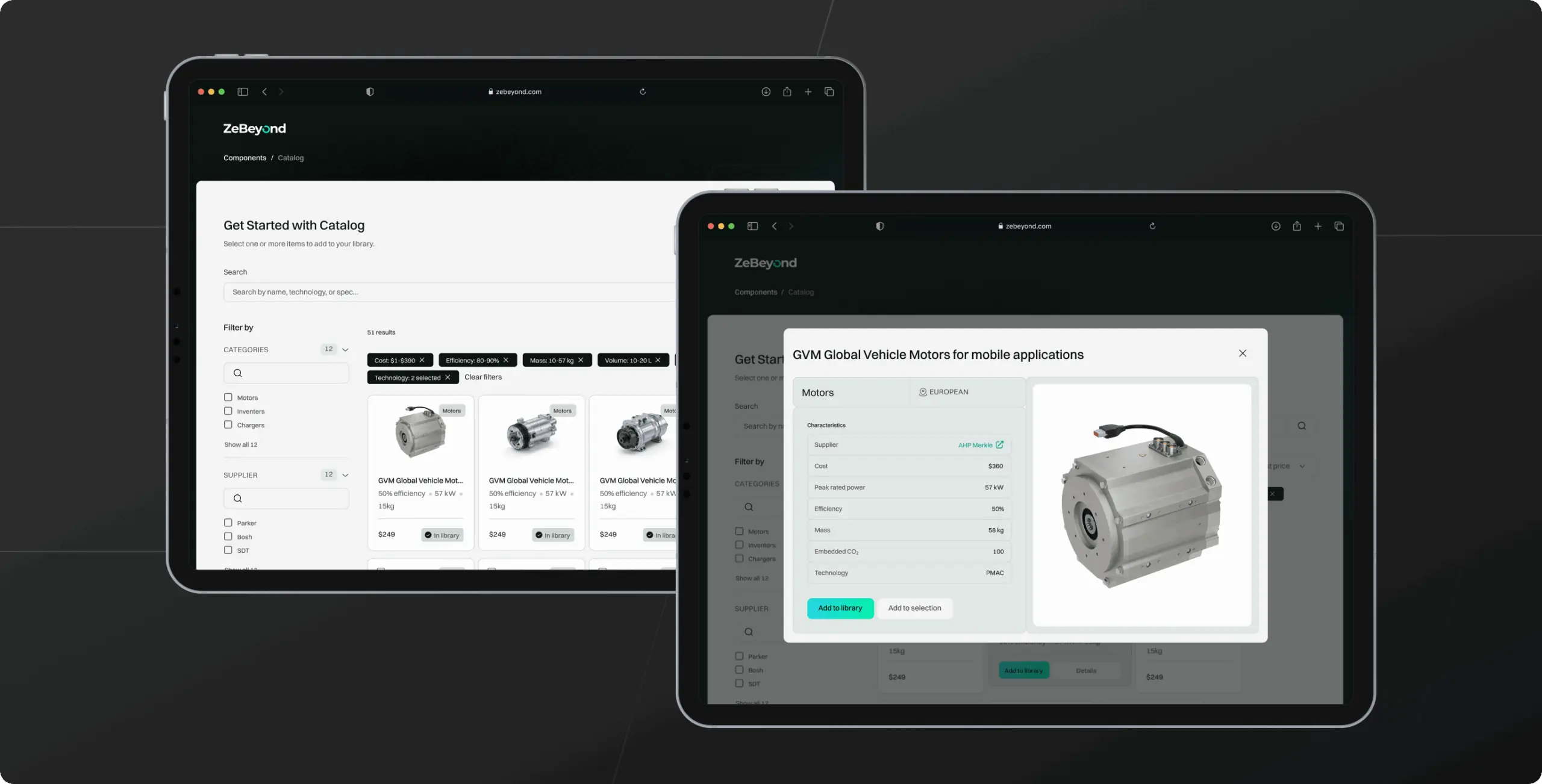
ZeBeyond’s platform was already in active use – new flows had to fit into the existing architecture without breaking what engineers relied on daily.
We worked within the constraints of the live product, integrating the onboarding and catalog flows as self-contained additions rather than rebuilding from scratch, and validating each step against the existing system before release.

Node.js

Nest.js

React
#Website design #website development
vita travels
 USA
USA
USA

#Website design #Website development
Lucas Keller
USA
USA
#branding
veridian
USA
USA
