


SuperAntiSpyware – real-time protection for your PC security
 usa
usa Webflow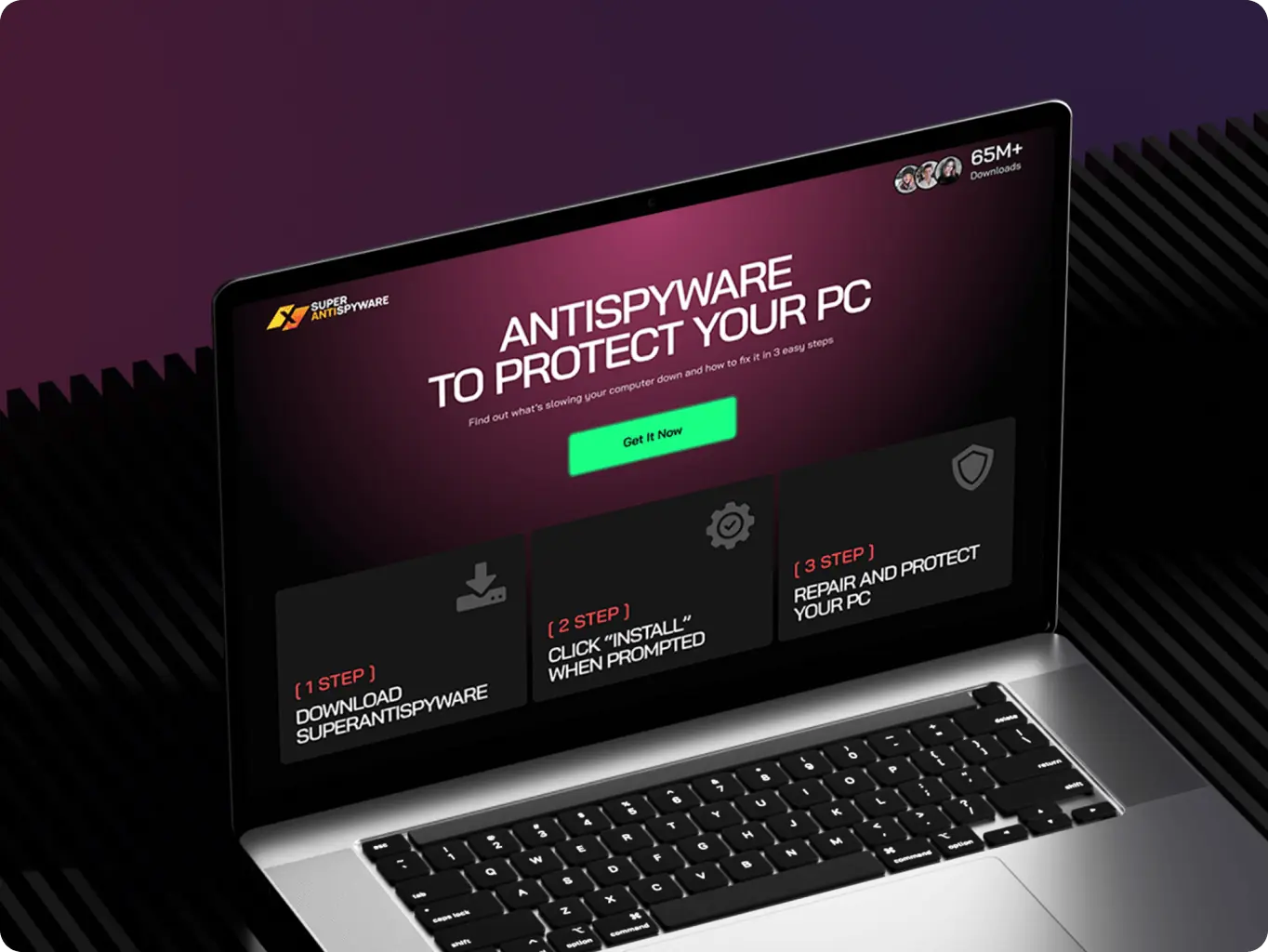
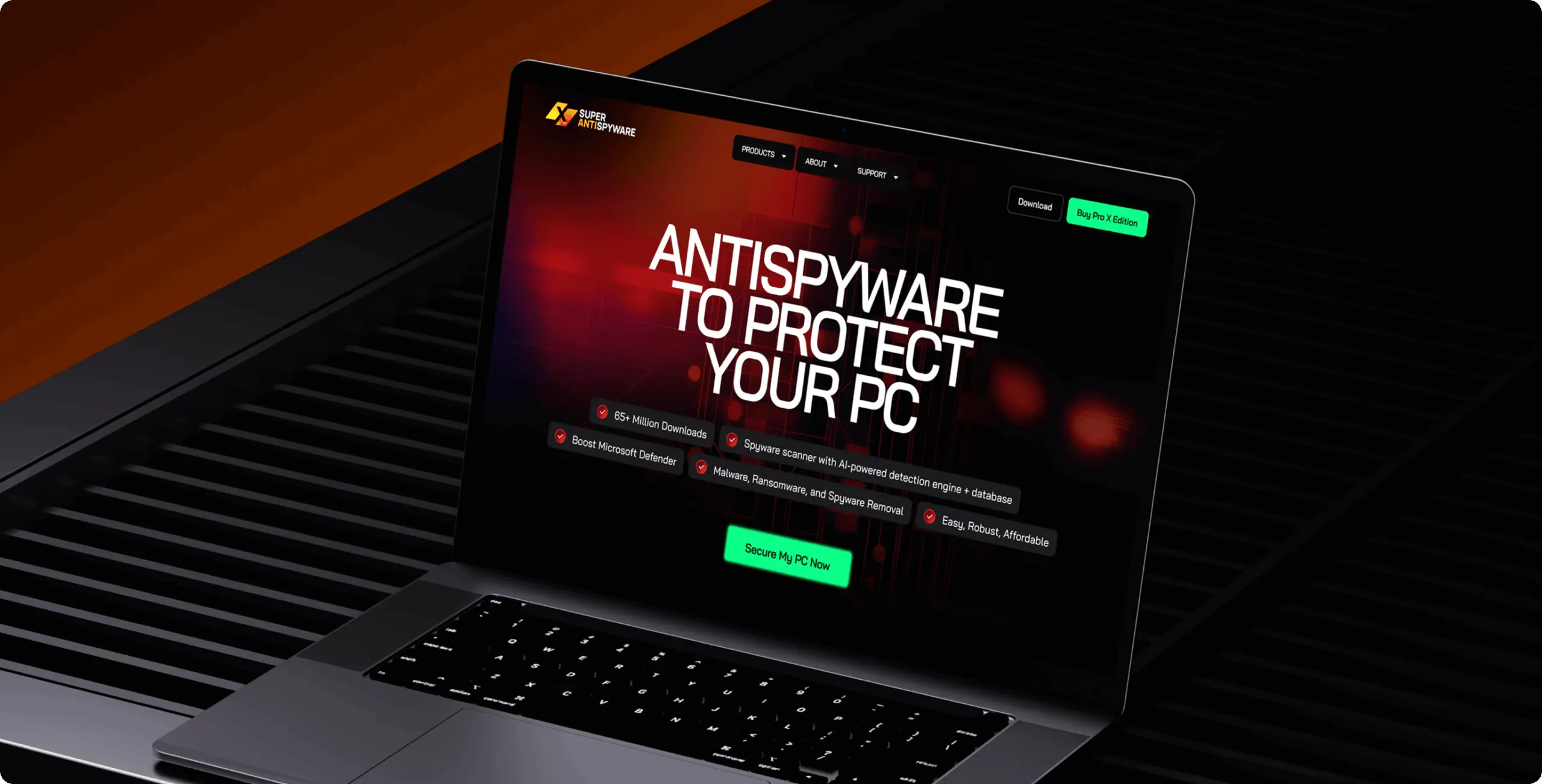
SuperAntiSpyware approached us to address a key business challenge: their website was underperforming as a user acquisition and conversion channel.
Despite strong product capabilities, the existing experience did not effectively communicate value or guide users toward key actions, resulting in low progression across critical conversion paths. For example, only 0.82% of users reached the final conversion stage, highlighting significant drop-off throughout the funnel.
The existing structure limited the efficiency of the overall acquisition flow, preventing a significant share of incoming traffic from converting into active users and customers.
The primary business goal was to improve the effectiveness of the website across all key user journeys, increasing progression through the funnel, supporting different conversion paths, and ensuring more users reach meaningful actions within the product.
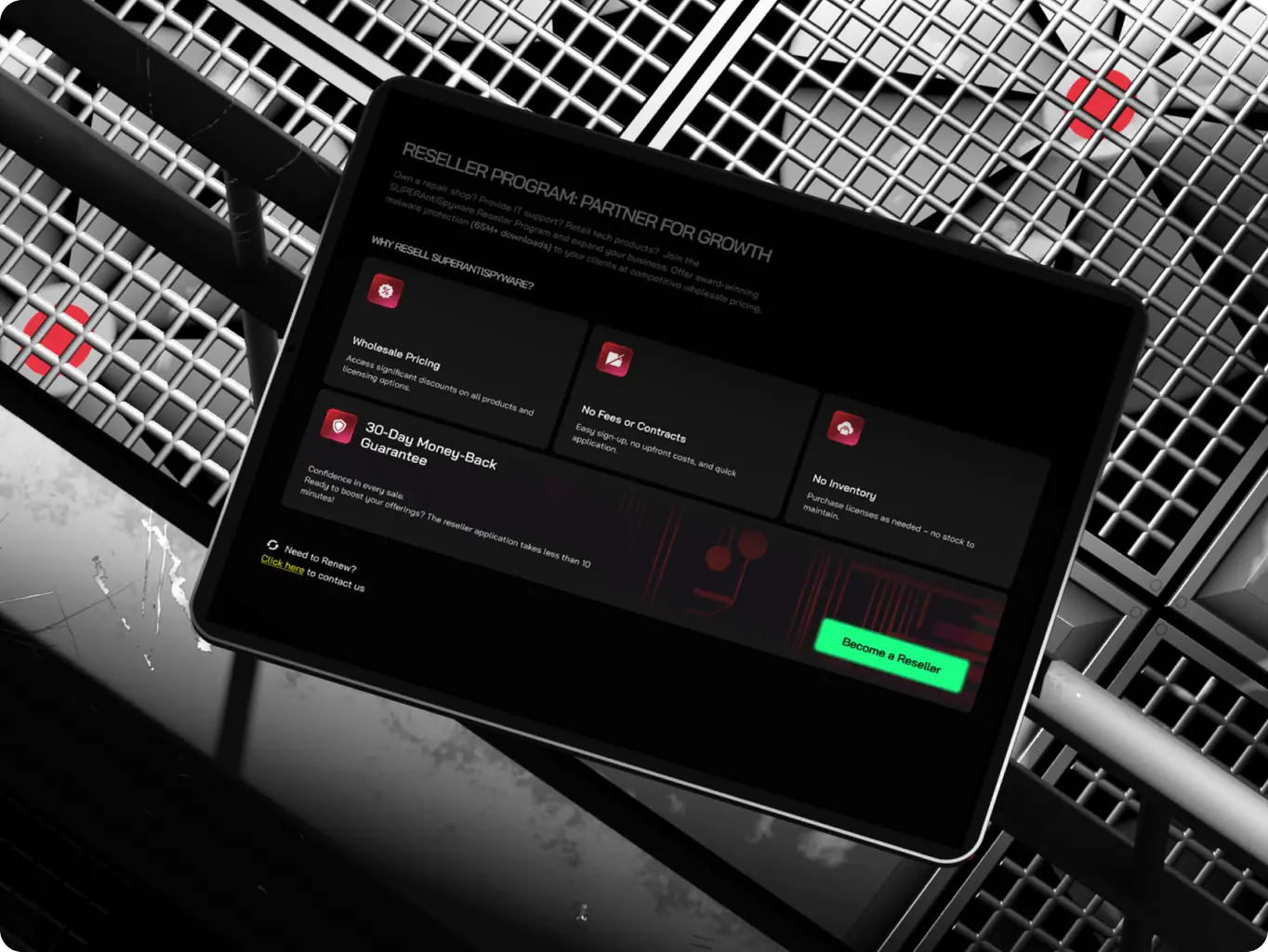
The redesign focused on improving how users understand the product, evaluate its value, and move toward action without hesitation.
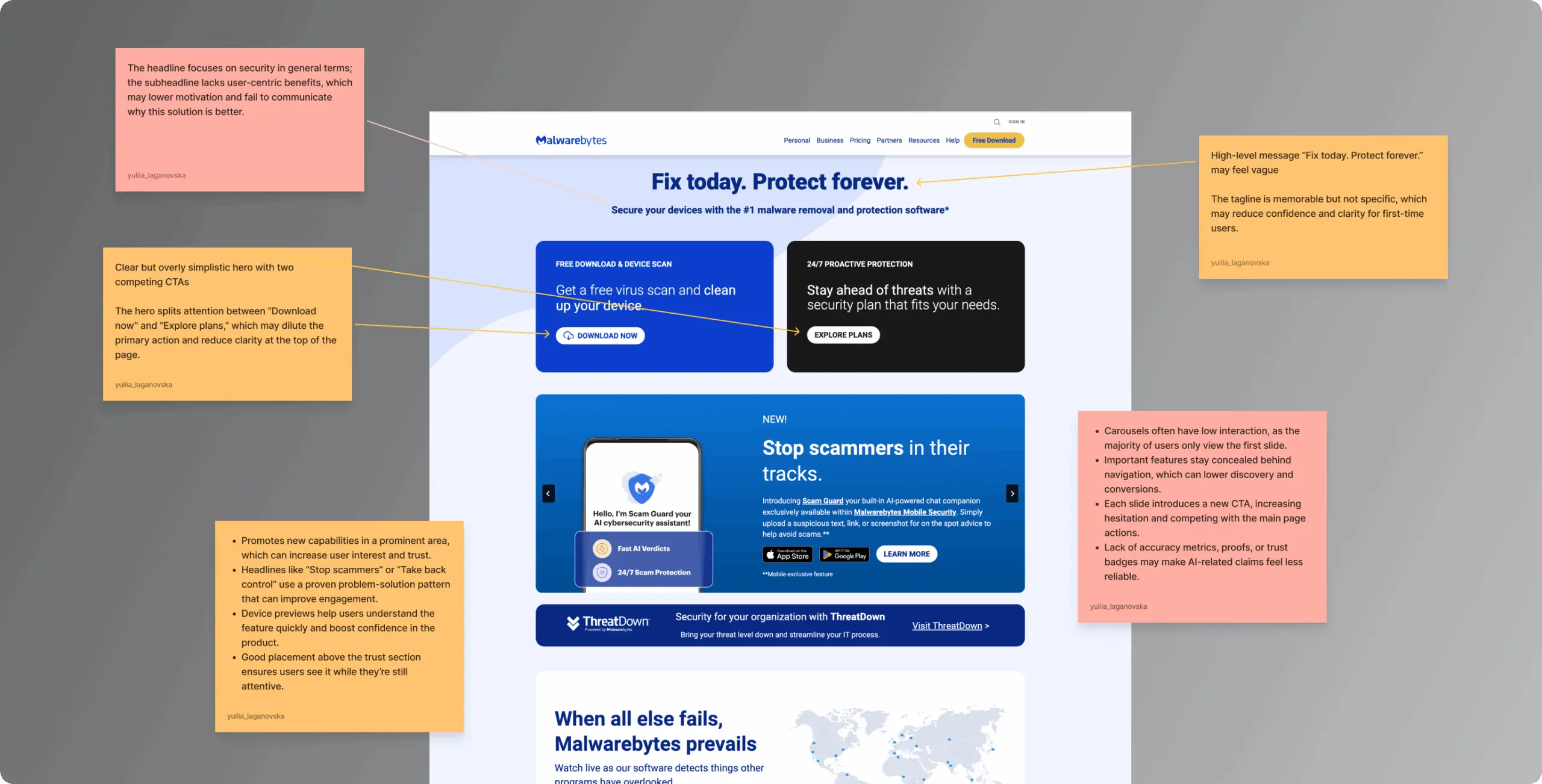
Competitor analysis revealed that unclear messaging and overloaded layouts often prevent users from quickly grasping value, leading to hesitation and drop-off at key decision points.
In response, the experience was simplified and restructured to communicate value more clearly and create direct paths to action, supported by visible trust signals at critical moments.
As a result, users can evaluate the product faster and move through the journey with less friction, supporting stronger and more consistent progression toward key actions.
Stages
- Competitors analysis
- Structure & UX Refinement
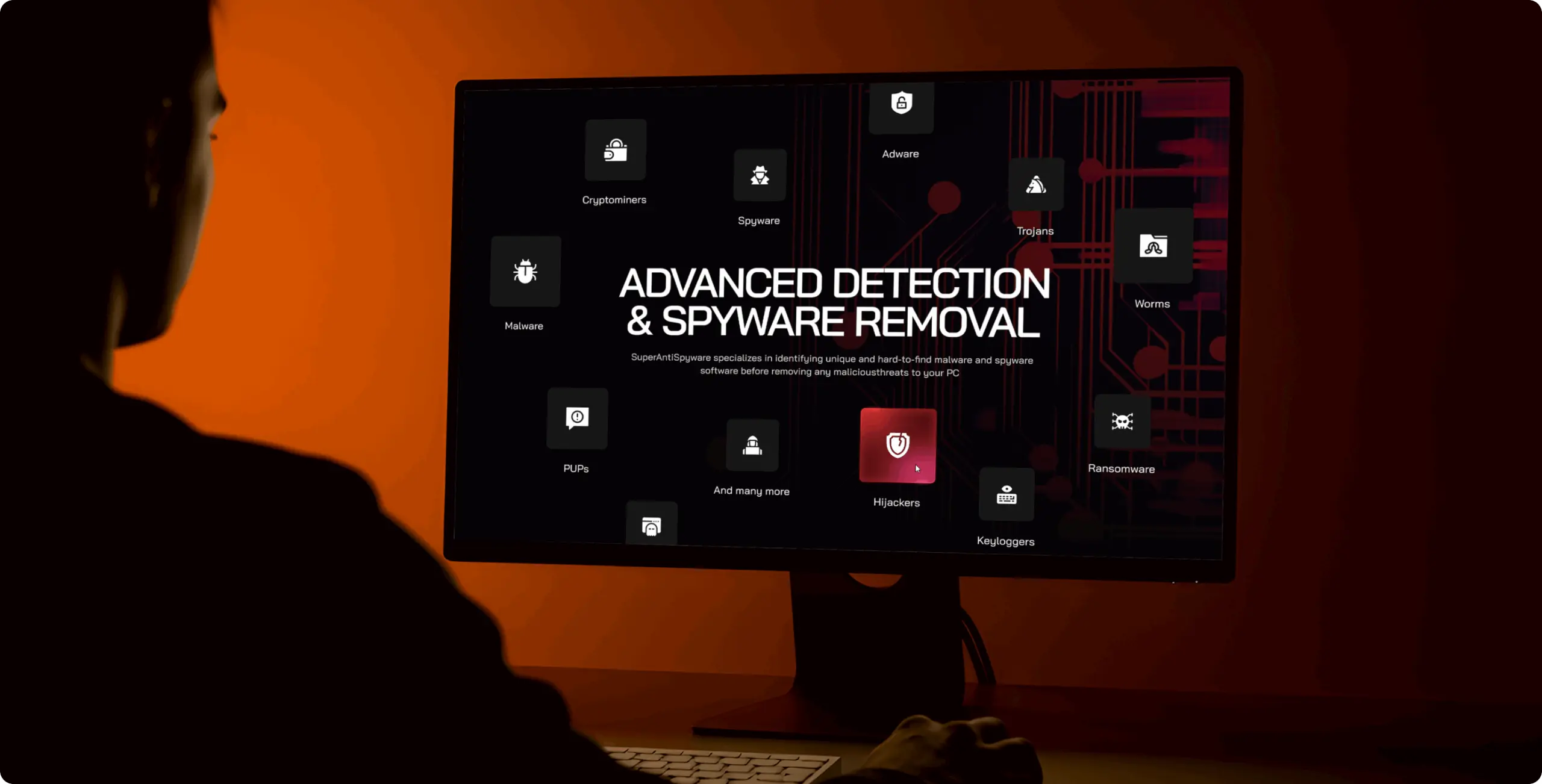
We analyzed leading cybersecurity websites to understand how they communicate value and guide users toward action. Most competitors rely on generic messaging, competing calls to action, and content-heavy layouts, making it difficult to quickly grasp the product’s unique benefits or identify a clear next step.
As a result, users hesitate at the moment of decision or drop off before reaching key actions such as download, trial, or purchase, directly limiting conversion.
The updated structure makes it easier for users to quickly understand what the product offers and what to do next, reducing confusion at key decision points.
Clearer messaging and more direct paths to action allow users to move through the funnel more efficiently, without unnecessary steps or competing choices.
As a result, key conversion steps improved — for example, download page visits increased from 14.85% to 16.39% (+10.63%), indicating stronger progression and improved conversion flow.
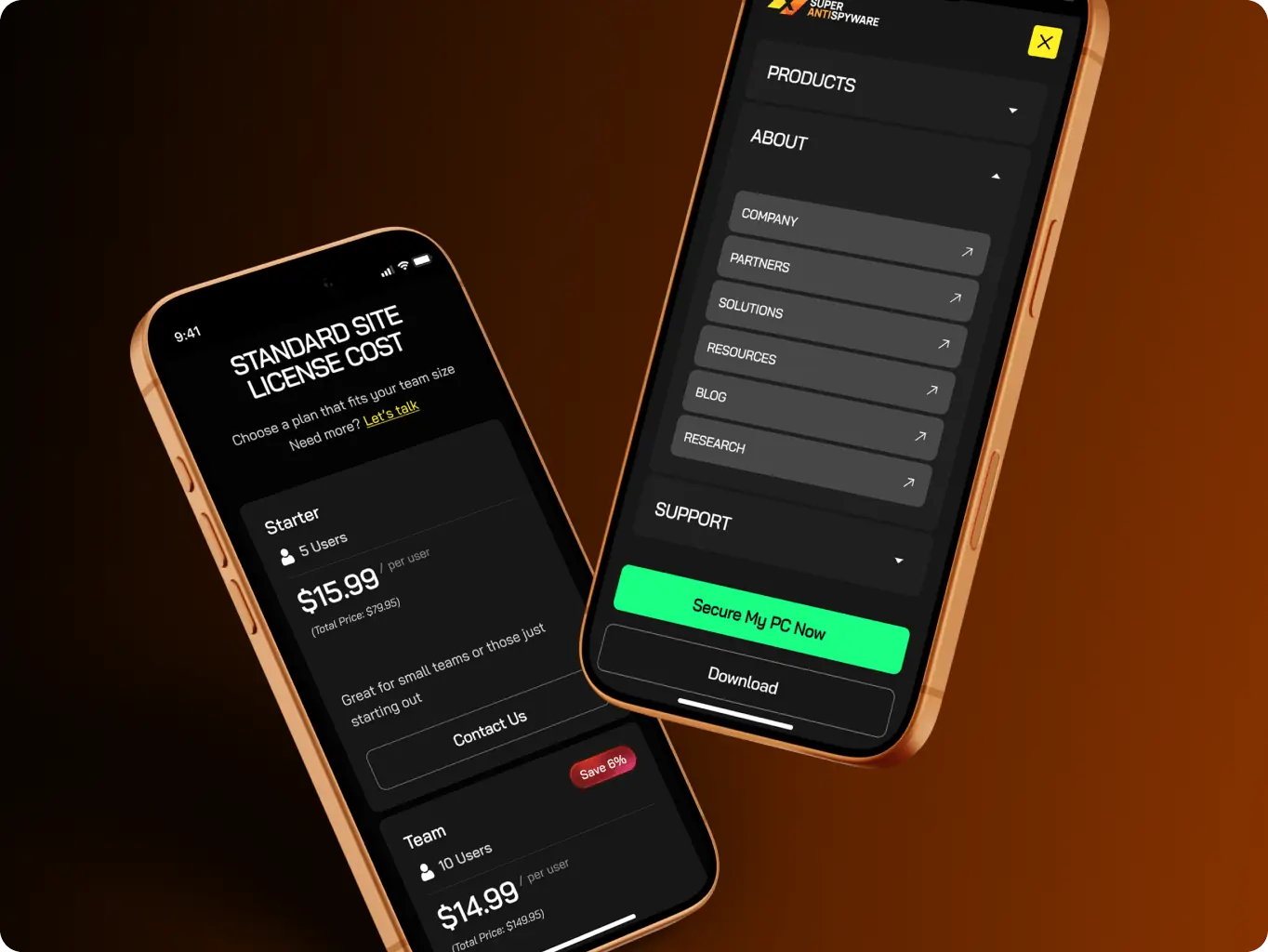
The design phase addressed key barriers to conversion: unclear value communication, low differentiation, user friction, and a visual perception that weakened trust.
The updated experience makes the product easier to understand, communicates its value more clearly, and guides users toward action with less friction. A more modern and consistent visual direction reinforces credibility from the first interaction.
Users can now evaluate the product faster, feel more confident in their decisions, and move through the journey more smoothly — resulting in stronger progression toward key conversion points.
Stages
- Design direction
- UI Design
- A/B testing
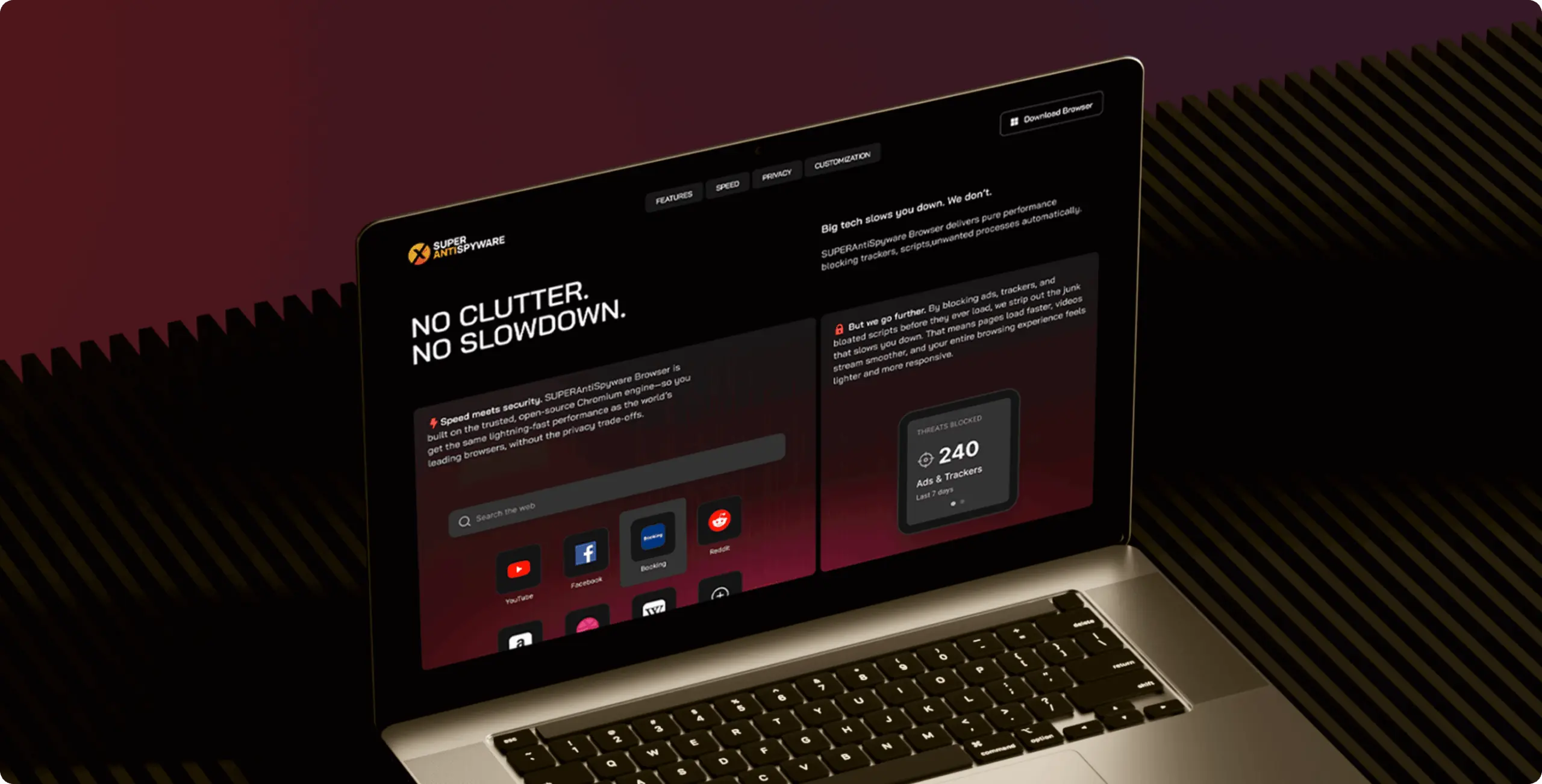
Multiple design directions were explored to identify the most effective way to communicate value and build trust.
The strongest concepts were tested with users against the existing solution, with one direction clearly outperforming others in terms of engagement and conversion potential compared to the original experience.
The chosen design establishes a stronger visual presence, makes key benefits immediately clear, and supports confident decision-making. It balances credibility with clarity, ensuring the product feels both reliable and easy to engage with.
This shift improves first impressions, reduces uncertainty, and helps users more quickly recognize the product’s relevance.
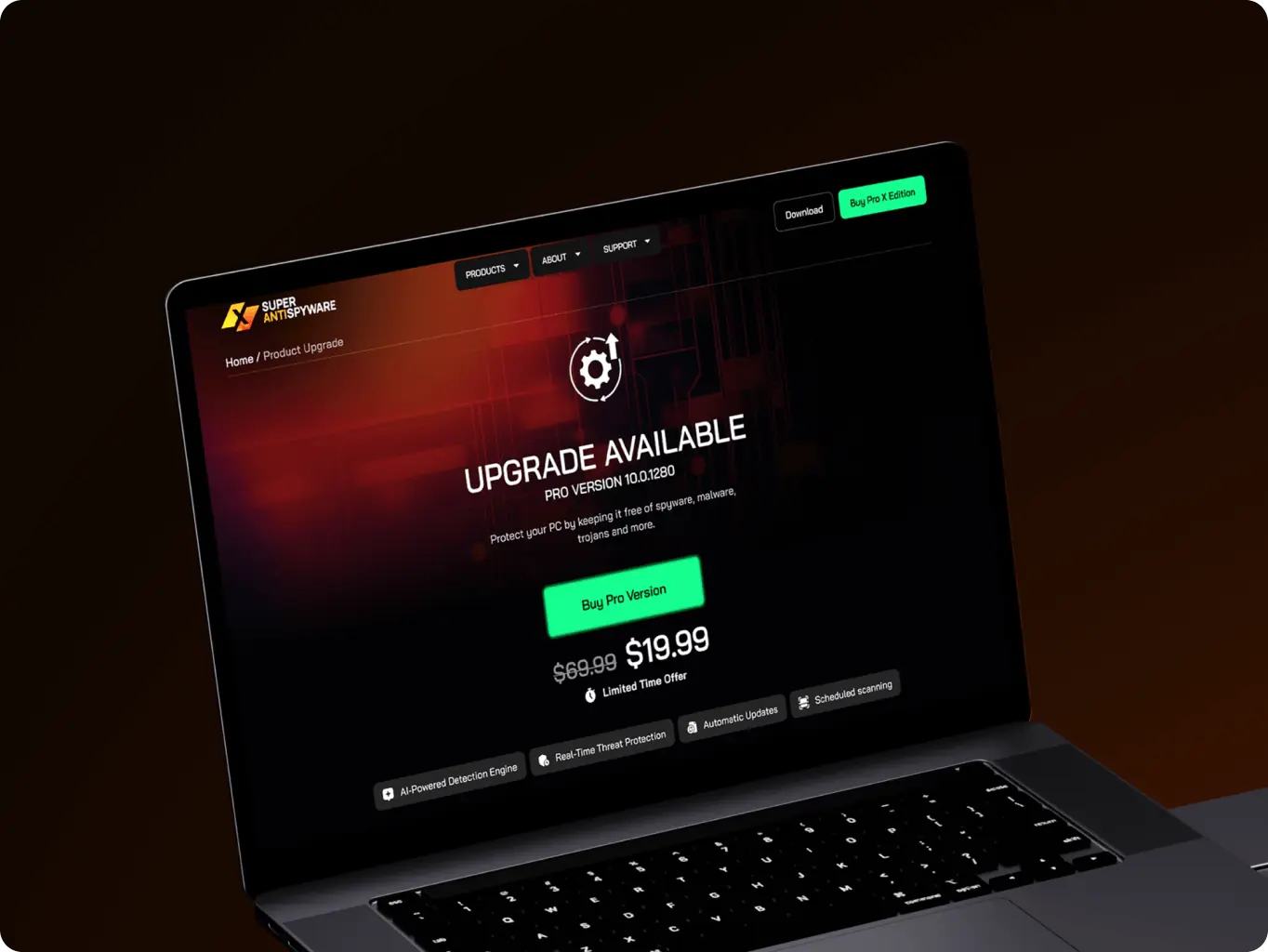
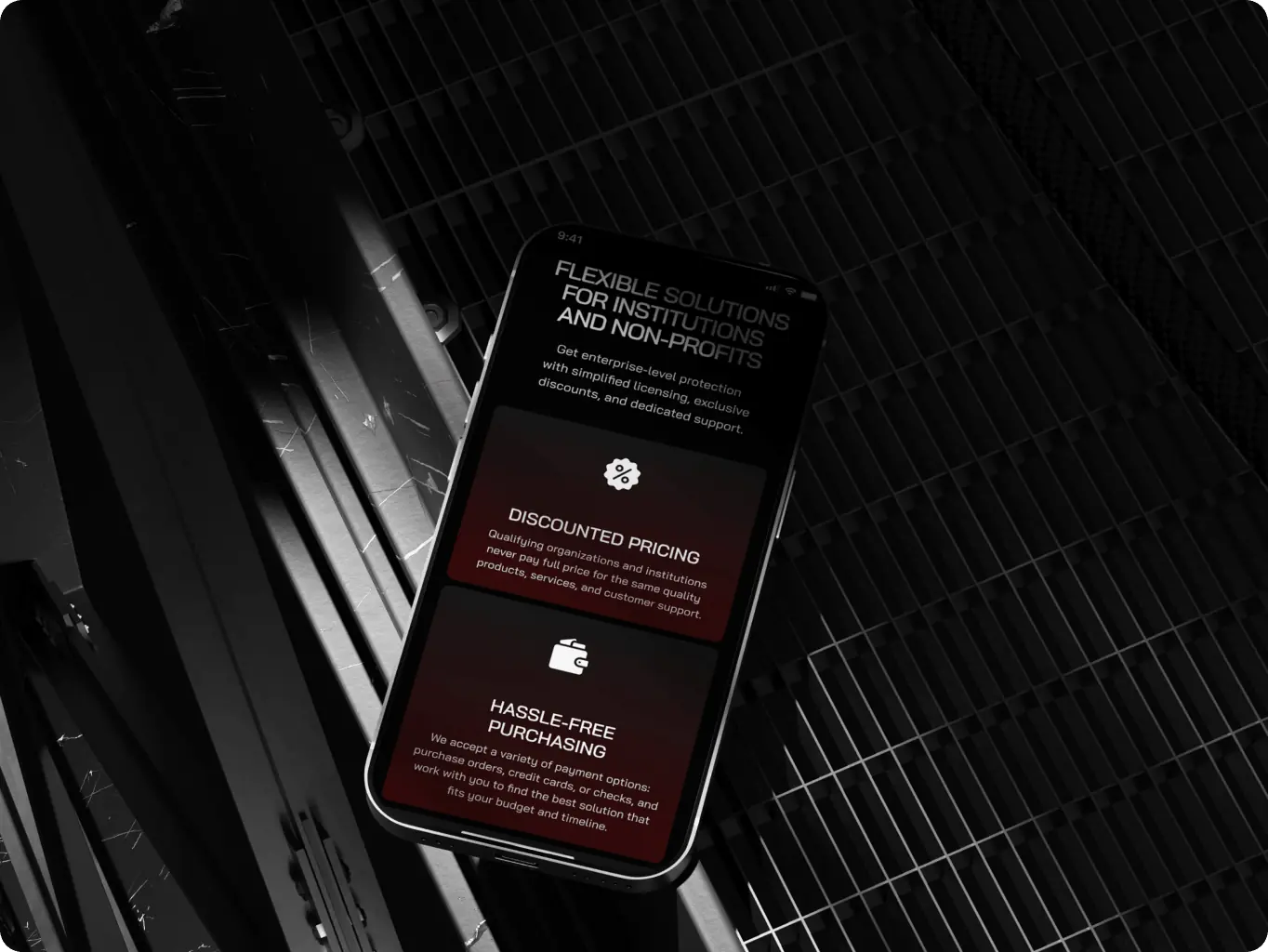
The interface translates the design direction into a clear and structured experience where each screen communicates value instantly and supports decision-making.
Stronger hierarchy, simplified content, and consistent interaction patterns reduce cognitive load and remove unnecessary friction. Key actions are easier to identify and complete, while the overall experience feels more intuitive and predictable.
This leads to more efficient navigation, faster progression through the funnel, and improved overall conversion performance.
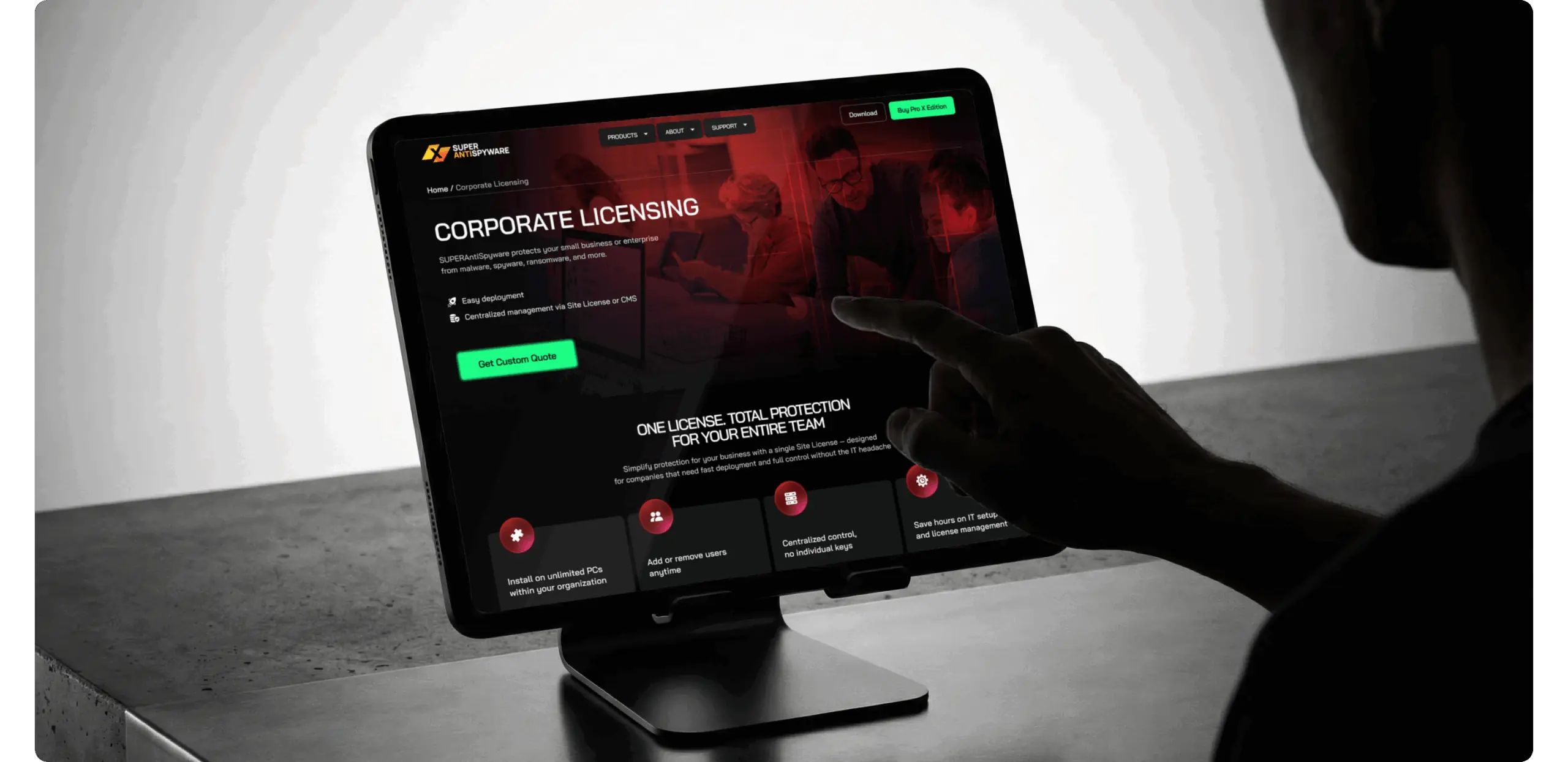
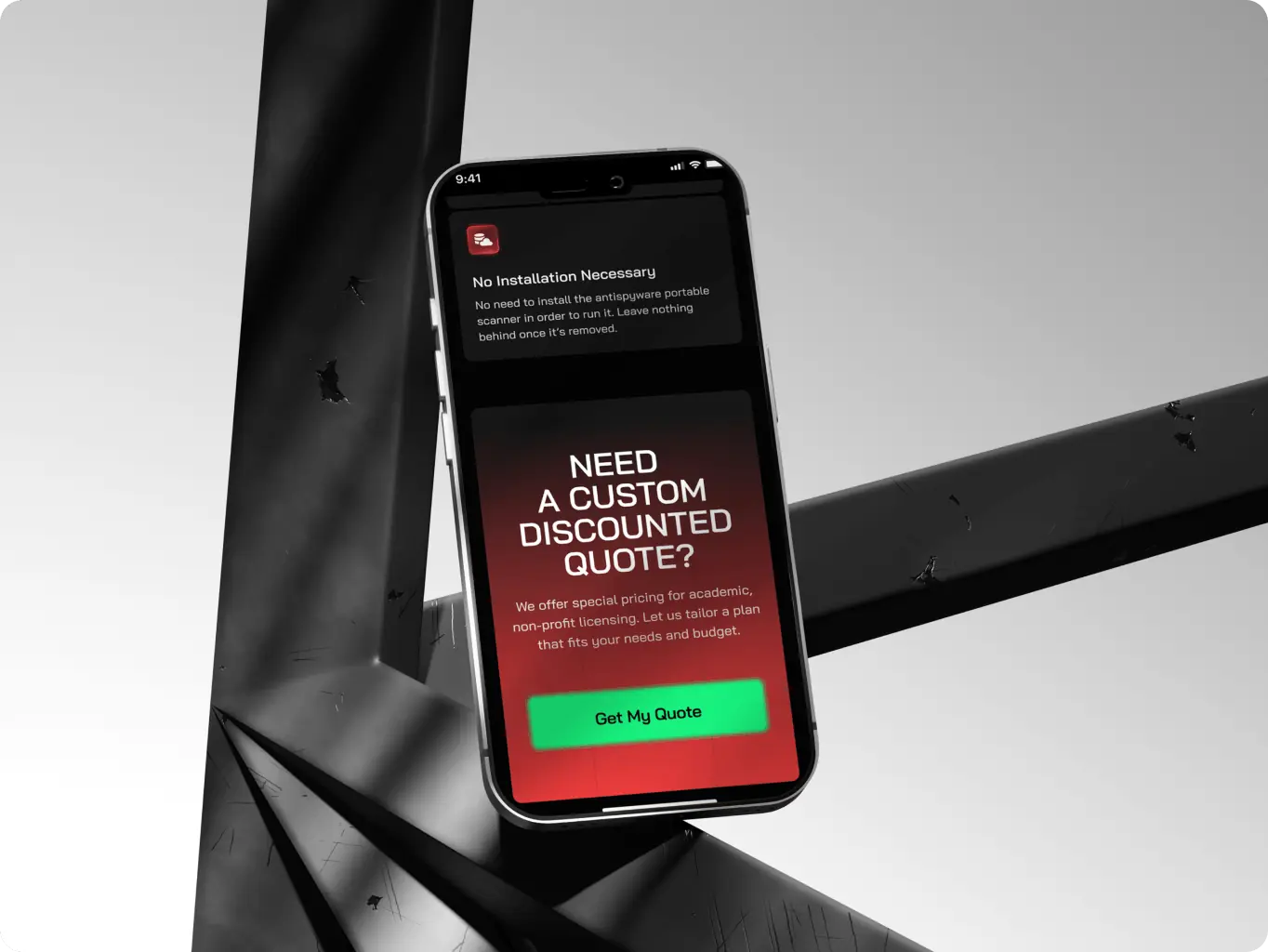
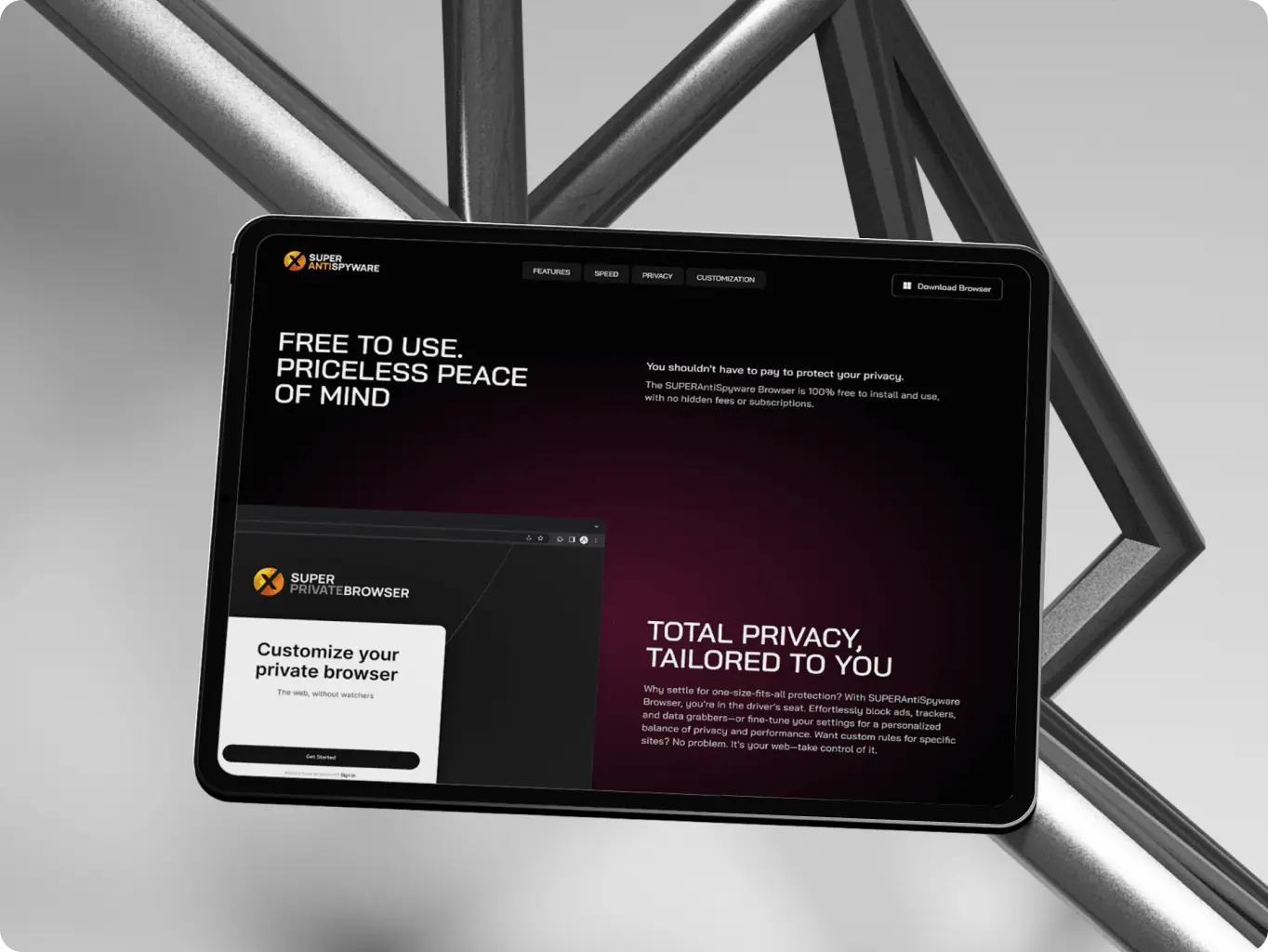
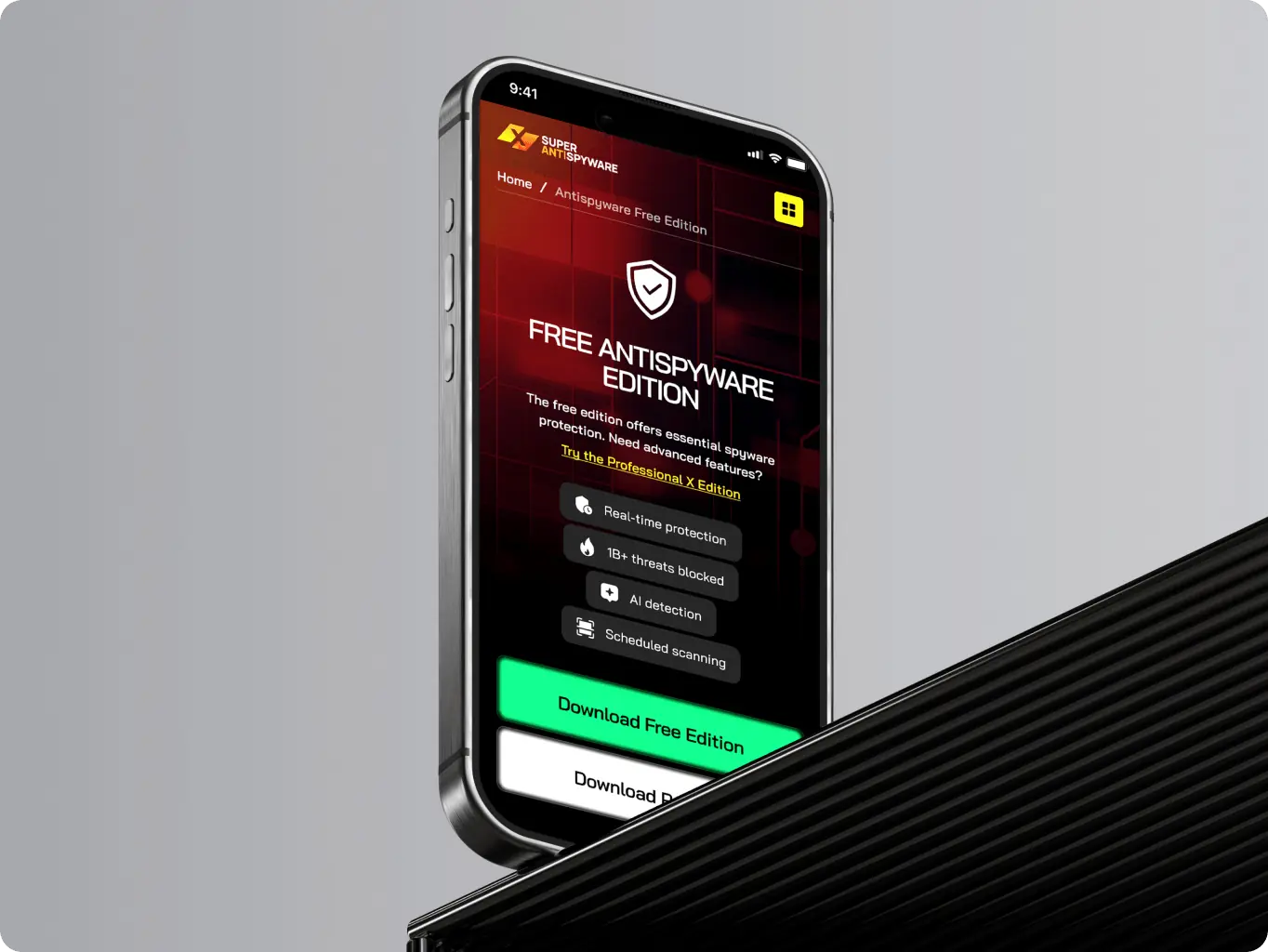
The redesigned experience was tested across key pages, including the homepage, Free Edition, and Pro X Edition, to measure its impact on user behavior and conversion.
Results showed a clear uplift across multiple metrics. The redesigned homepage alone delivered a 76% increase in sales conversions, confirming the effectiveness of the new direction.
Additional experiments, such as updating the header CTA color to green, consistently improved performance across key KPIs.
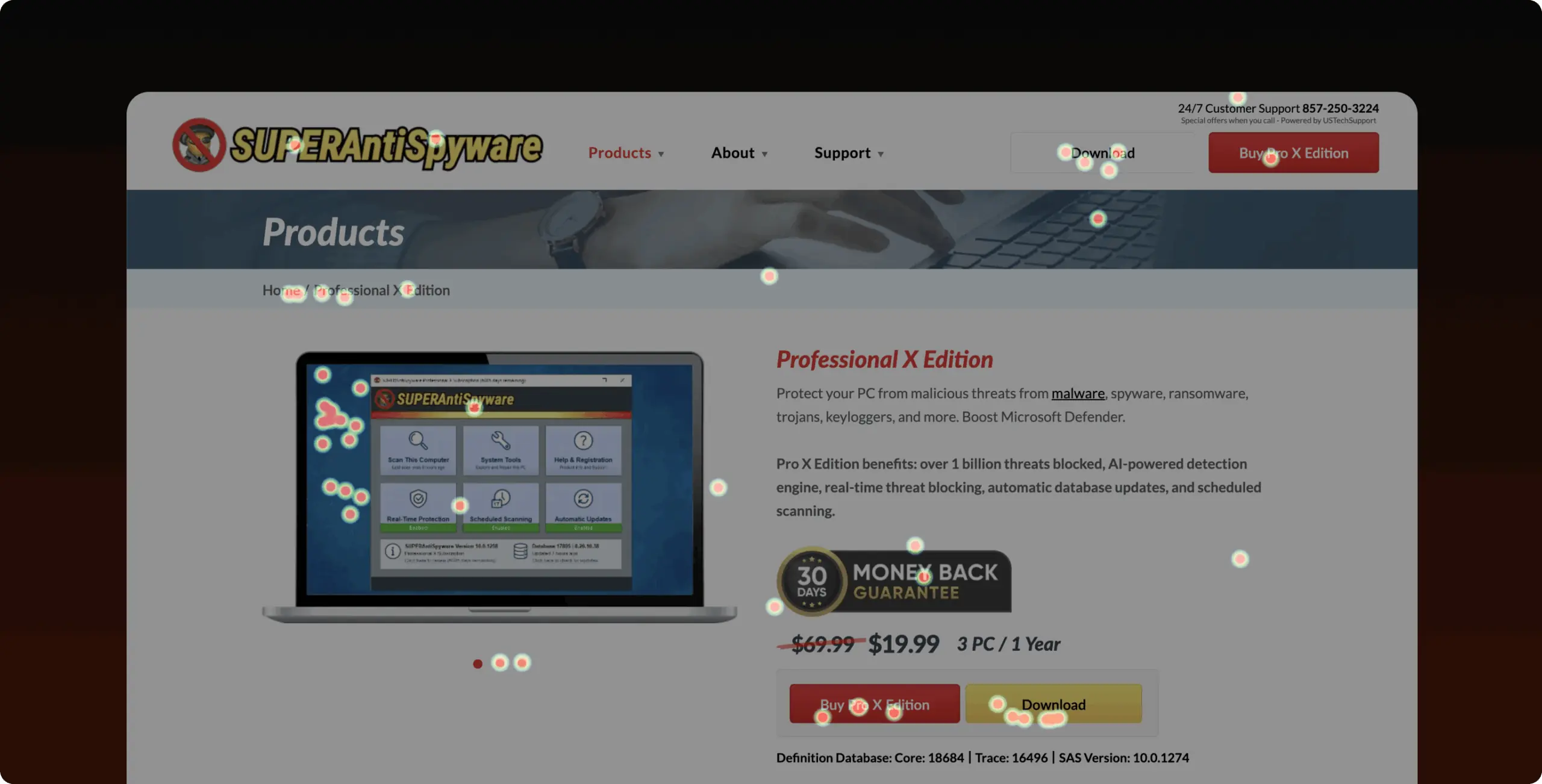
Heatmap analysis revealed fragmented attention across navigation and competing elements, exposing friction in the decision-making process. Refining content placement, reducing competing CTAs, and strengthening focus on the primary action created a more direct and focused path to conversion.
CTA experiments further reinforced this: replacing “Buy” with “Secure My PC Now” increased conversion rate from 0.49% to 1.24% (+150.27%), outperforming the alternative “Protect My PC” (0.76%, +53.47%).
The final experience is data-validated and demonstrates clear, data-backed improvements in conversion performance.
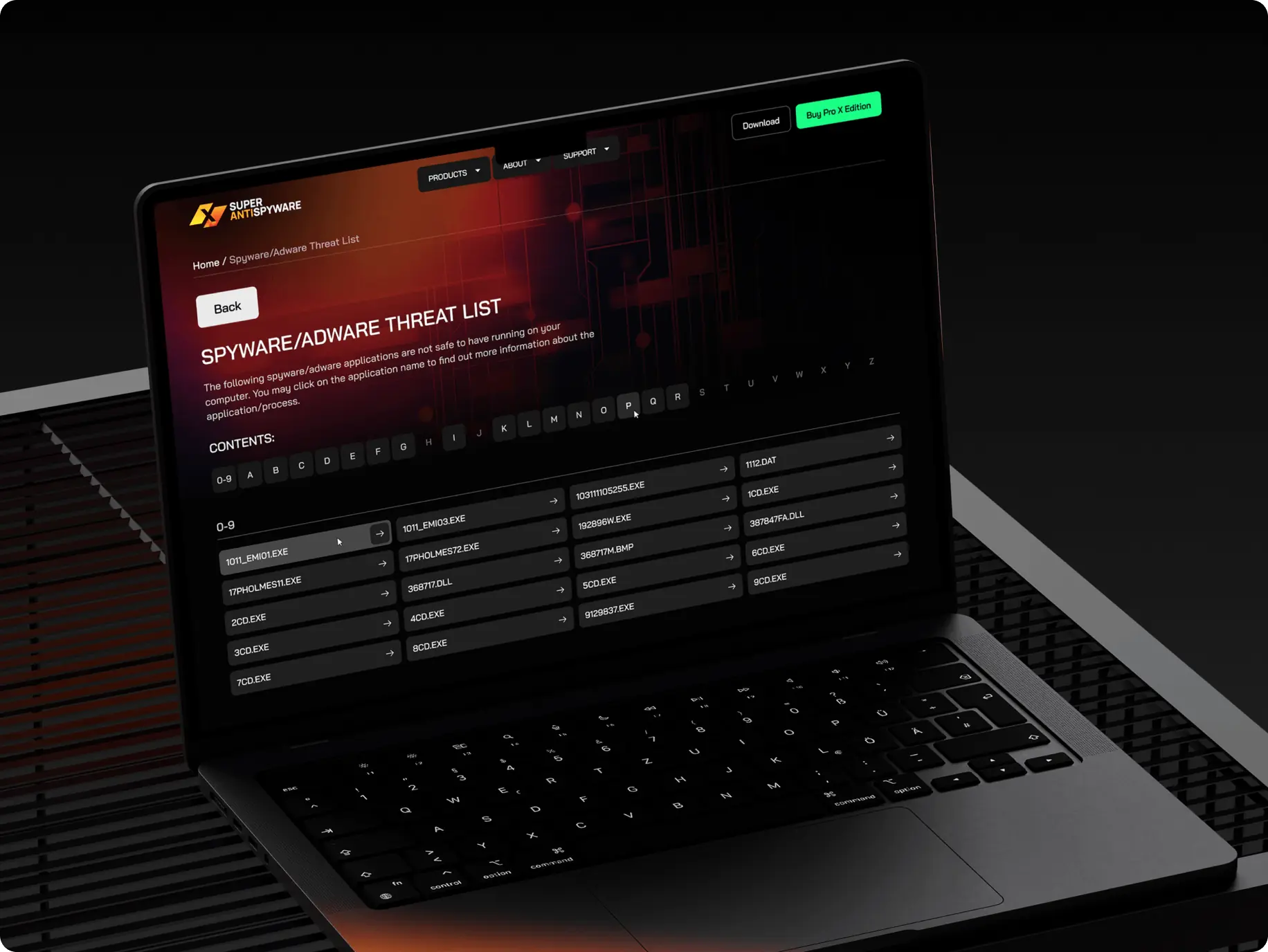
Content restructuring for faster comprehension
Content was reorganized to make key information easier to scan and compare, bringing core value points into focus. Users can now understand what the product offers at a glance, reducing hesitation early in the journey. This leads to faster decision-making and increases the number of users moving forward to actions such as download, trial, or purchase.
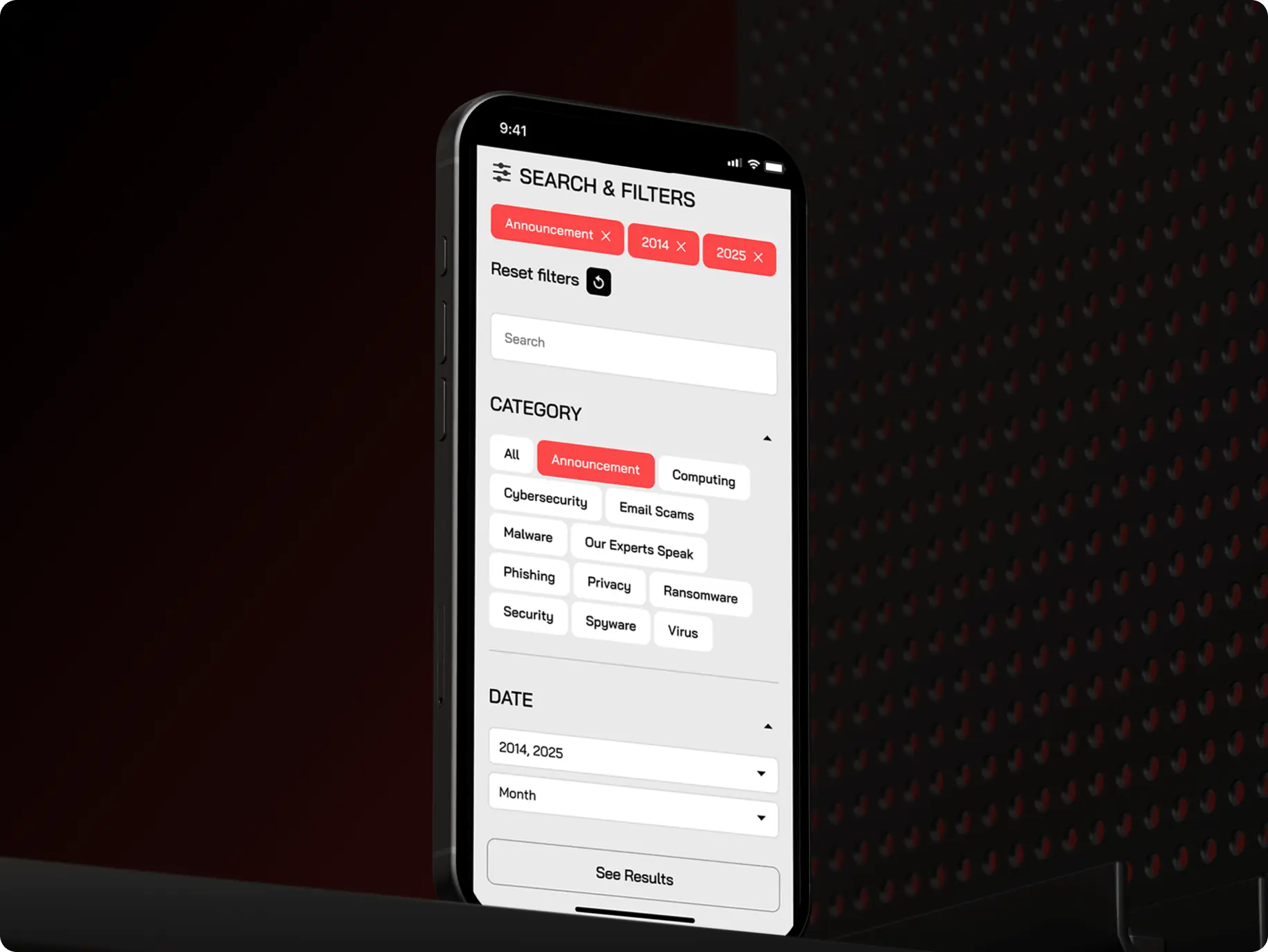
Improved content discovery
and navigation
Clear structure and categorization make it easier to find and explore relevant content without friction. Users spend less time searching and more time engaging with meaningful information, improving content depth and exploration. This strengthens engagement and reduces early drop-offs, supporting a more consistent path toward conversion.
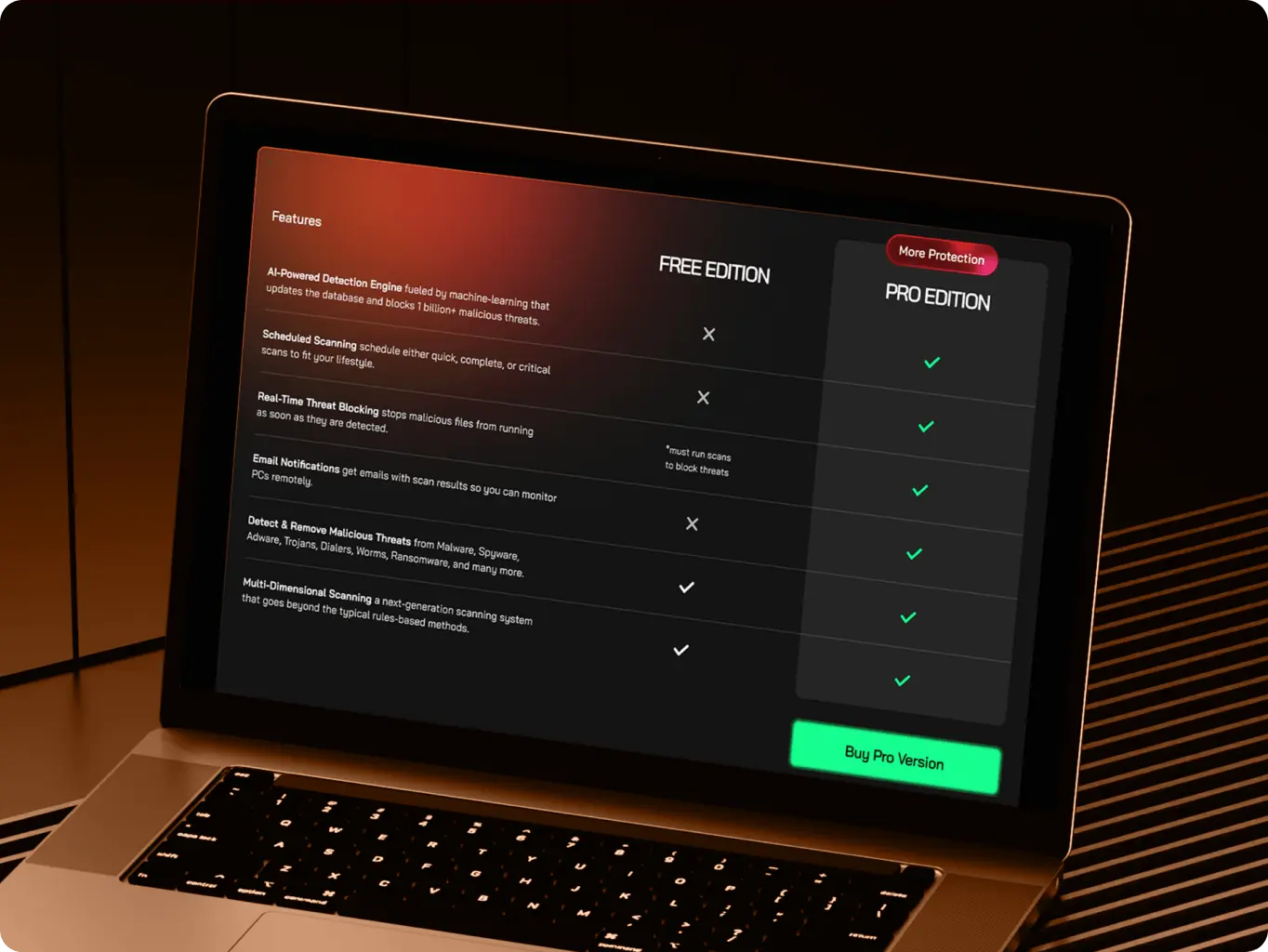
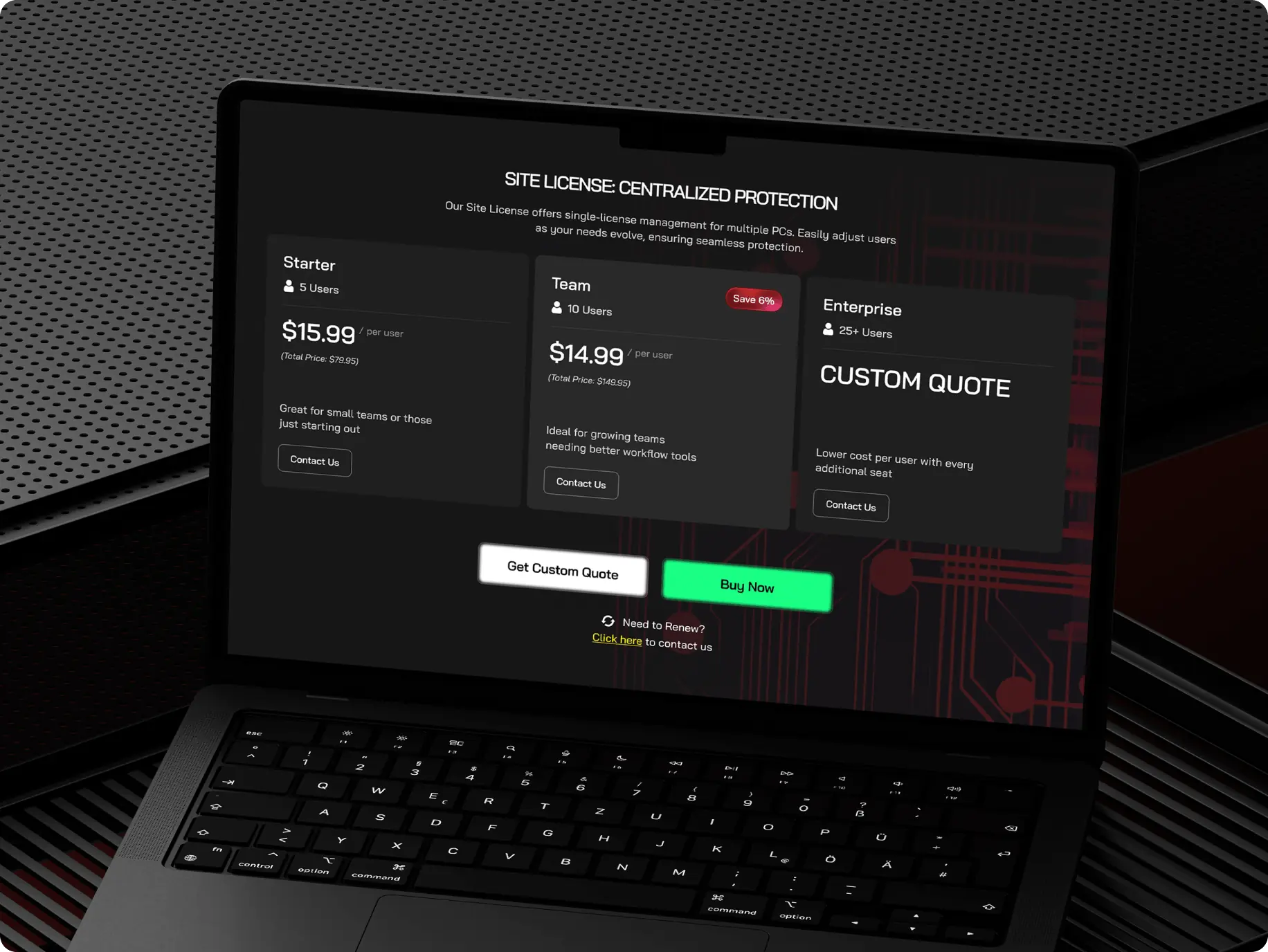
Conversion-focused pricing redesign
Pricing was restructured to make plan differences clear and easy to evaluate at a glance. Users can quickly compare options and identify the right plan without confusion or second-guessing. This leads to faster decisions at the point of purchase and increases purchase completion.
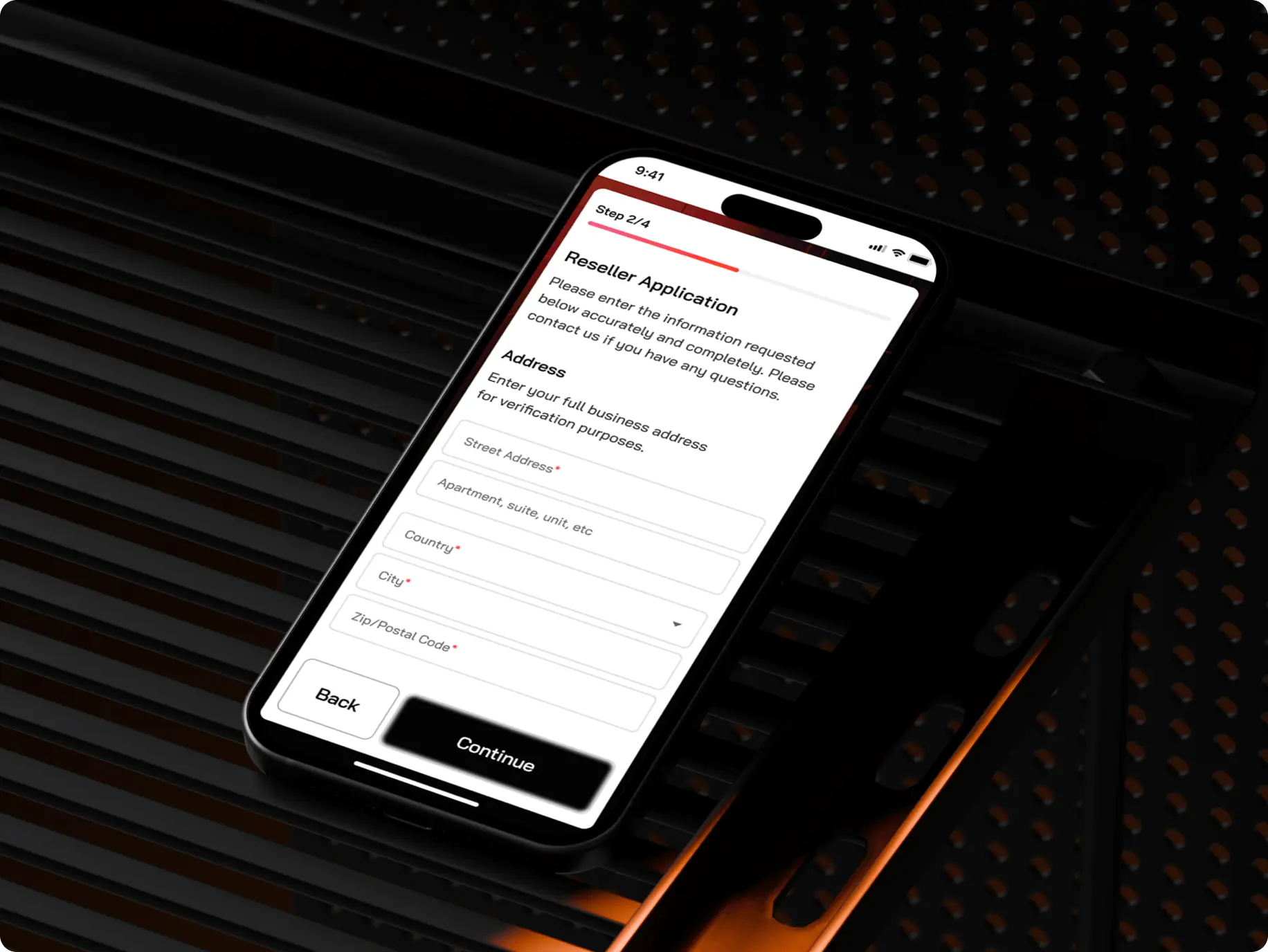
Simplified multi-step form
The form was redesigned into a structured, step-by-step flow that reduces cognitive load and makes completion feel manageable. Users can move through the process with less effort and fewer drop-off points. Higher completion rates translate into more qualified leads entering the funnel, strengthening lead generation.
The website was developed in Webflow using a structured design system and a reusable UI kit, ensuring visual consistency and scalable implementation across all pages.
A component-based approach enabled faster development and simplified future updates, reducing maintenance effort and improving flexibility.
CMS collections were implemented to support seamless content management, allowing the team to update key sections without developer involvement.
Performance was optimized through lightweight interactions, optimized assets, and a clean structure, resulting in fast load times and smooth user flows.
This approach reduced friction, improved engagement, and supported higher conversion rates across the website.

Webflow
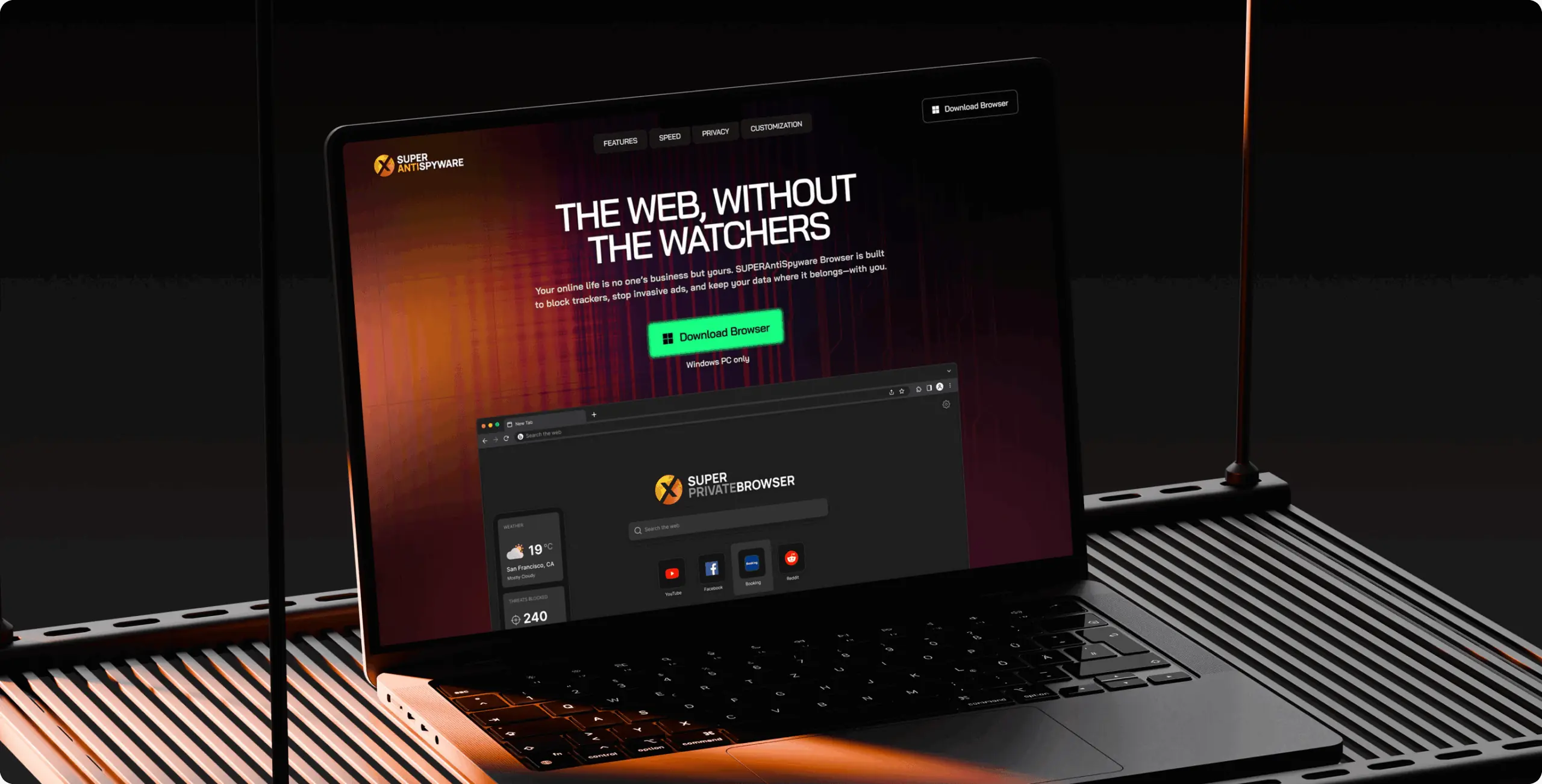
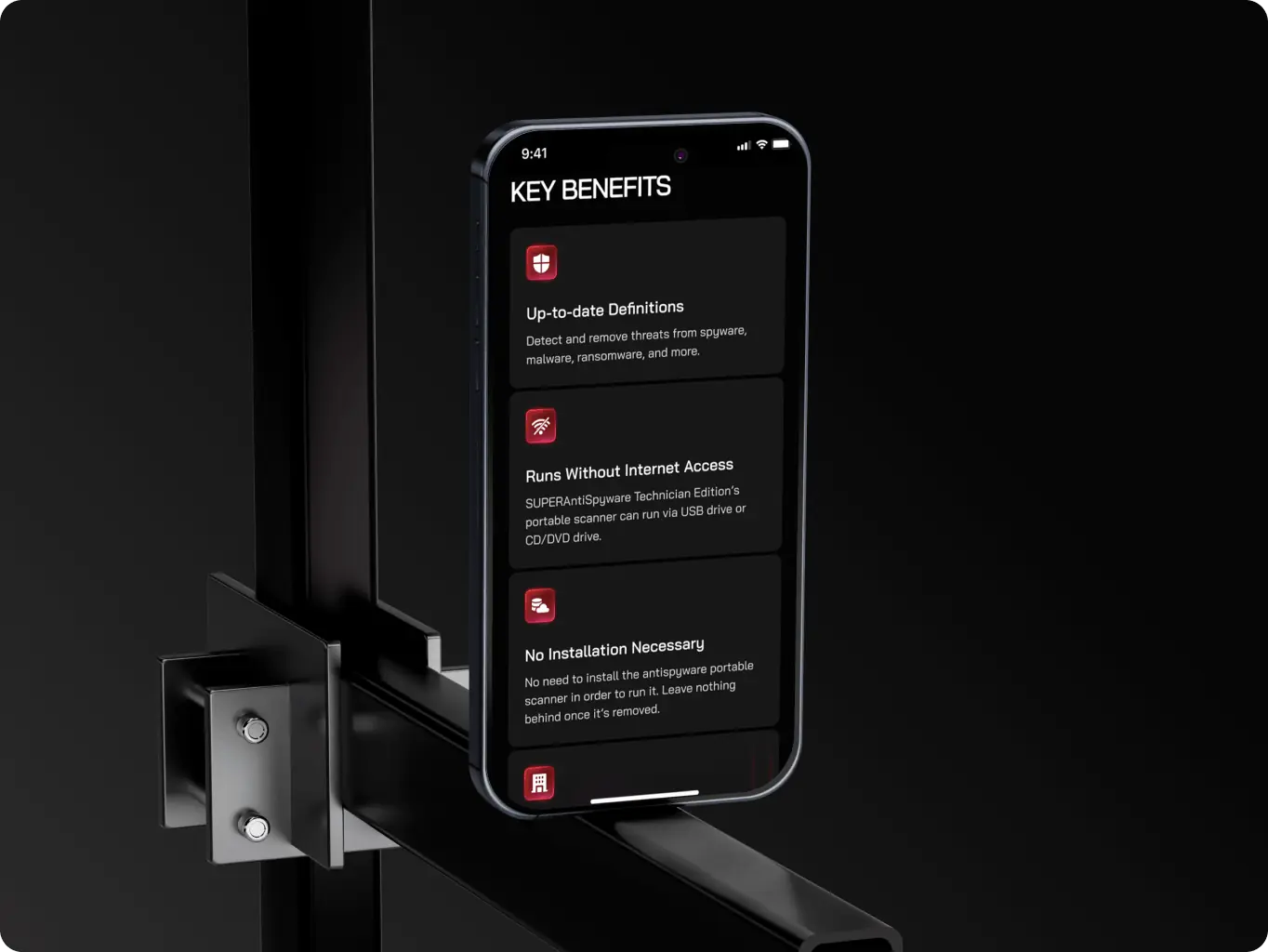
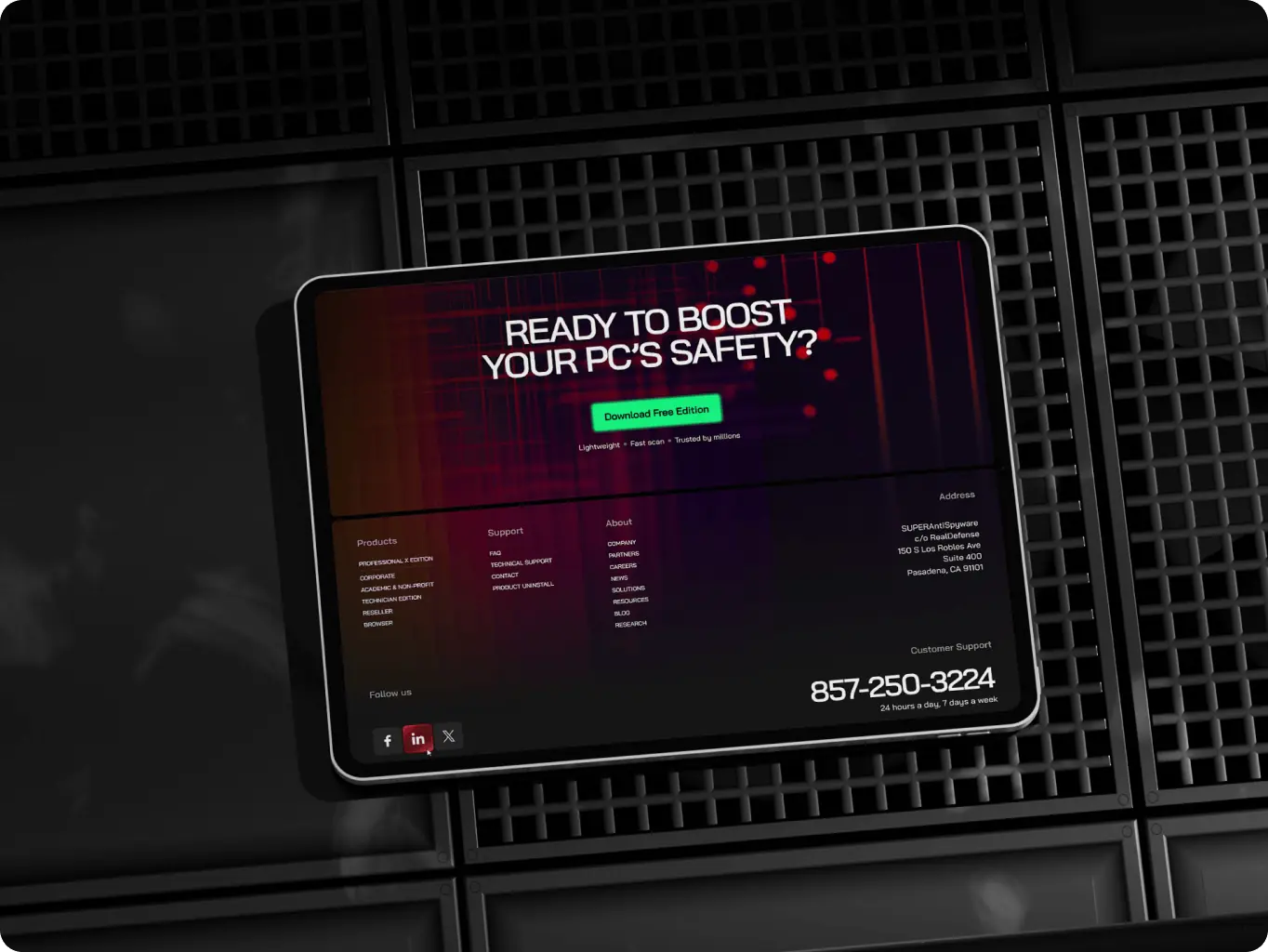
After the website redesign showed strong results, the collaboration naturally moved beyond the marketing layer. With improved conversion performance, clearer positioning, and validated business impact, the next step was to extend the same product thinking into the core desktop application.
We continued working on the product itself — a desktop security app designed to help users monitor, manage, and protect their devices with more confidence. The focus shifted from acquisition to the in-product experience: simplifying complex flows, improving clarity, and making the interface feel more modern, trustworthy, and easy to use.
#Website design #website development
vita travels
 USA
USA
USA
#Website design #Website development
Lucas Keller
USA
USA
#branding
veridian
USA
USA
