
HIPAA-CERTIFIED CUSTOM HEALTHCARE SOFTWARE DEVELOPMENT COMPANY

EHR systems, RPM platforms, hospital operations, and telehealth infrastructure for clinical scale
We start every custom software development for healthcare project with a compliance-aware workshop - PHI flows, HL7 and FHIR integrations, audit logic - to deliver platforms with 82% user satisfaction and Samsung-tier hardware partnerships.
Your next growth stage starts with the right custom healthcare solutions provider — at launch, or at scale

DESIGNING PRODUCTS FOR STARTUPS BACKED BY

phenomenon studio IN NUMBERS
500M+

investments raised by our clients

x2

avg projects per client — most come back

5.0

on clutch — 40+ reviews

35%

conversion lift — klickex case

PROVEN HEALTHCARE EXPERTISE
HIPAA-CERTIFIED CUSTOM HEALTHCARE SOFTWARE DEVELOPMENT COMPANY

KEY CUSTOM HEALTHCARE SOFTWARE DEVELOPMENT CHALLENGES

The recurring problems healthcare leaders bring to calls, and how Phenomenon resolves them
Healthcare clients reach out after a compliance deadline slips, a platform stalls in pilot, or a fragmented toolset slows clinic operations to a halt. These are the patterns our healthcare software development agency AMs hear most often from founders, hospital operators, and HealthTech leaders. And here’s what we respond.

Our previous vendor said FHIR was handled. Then the integration broke during the first 200-provider pilot. Lab results were dropping into a queue and never resurfacing.

FHIR resources implemented as one-off API calls always fail under clinical load. We architect FHIR R4 resource servers with versioned endpoints, retry queues, and circuit breakers at the integration layer. Phenomenon Studio’s

custom healthcare software development services

include load-tested HL7 and FHIR pipelines that hold up when EHR vendor APIs throttle, time out, or change schema mid-quarter.

We passed our first HIPAA review on paper. The auditor came back and asked for PHI access logs by user role. Half the access events weren't captured because logging sat in the application code.

Audit logging at the application layer misses events whenever code is refactored. At Phenomenon Studio, we capture PHI access at the data layer using database triggers, middleware, and async event streams. Our

custom healthcare software development solutions

generate HIPAA-grade audit trails for every read, write, export, and consent change, so compliance reviews pass on the first audit instead of the third.

Our clinic runs on five disconnected tools. Scheduling, billing, inventory, staffing, reporting. Staff lose 90 minutes a day switching contexts. Integrations break every time a vendor updates their API.

Stitching five SaaS tools together creates five points of failure (and five vendor relationships to manage). With Phenomenon’s healthcare software product development approach, you get a unified operations backend with a shared data model. Scheduling, finance, workforce, and inventory run on the same backend. Role-aware dashboards surface what admins, clinicians, and operators each need, without context-switching.

OUR CUSTOM HEALTHCARE SOFTWARE DEVELOPMENT SERVICES

Full-cycle delivery for enterprise healthcare platforms, from discovery to clinical rollout
At Phenomenon, we work with healthcare organizations where systems are already mission-critical. Migrations happen alongside live patient care, and compliance reviews happen quarterly. Our full-cycle healthcare custom software development is built around that reality: secure workflows, reliable integrations, and delivery that respects healthcare’s operational pace.
Compliance scope and integration depth confirmed by our

healthcare software development agency

Product discovery
Mapping clinical workflows, PHI flows, and integration scope into compliance-ready requirements documents.
UX audit & roadmapping
Reviewing existing platforms for HIPAA gaps, audit trail coverage, accessibility blockers, and EHR risks.
Technical workshop
Locking architecture, EHR integration patterns, and compliance posture with a solution architect upfront.
Healthcare interface design as a core part of our healthcare app development services
Design prototype
Clickable healthcare prototypes that test EHR flows, telehealth UX, and clinical decision support paths.
Website design
Healthcare brand websites and HealthTech marketing sites with HIPAA-aware forms and consent flows.
Web app design
EHR dashboards, RPM consoles, and clinic operations panels with role-aware navigation for every team.
Mobile app design
Patient companion apps with HIPAA-grade data flows, consent management, and clinician handoff in the UX.
Product redesign
Restructuring underperforming healthcare platforms through audits, integration fixes, and UX revisions.
Branding
HealthTech identity systems that earn clinical trust and pass regulatory clarity reviews on first pass.
HL7, FHIR R4, and AWS-native engineering to build cutting-edge healthcare software development solutions
Custom MVP development
Healthcare MVPs delivered in 8–12 weeks on architecture that holds up to enterprise pilot volumes.
Website development
Healthcare brand websites and patient-facing sites built on Webflow, Next.js, or WordPress with audit logs.
Web app development
EHR platforms, telehealth backends, and hospital systems on Java, Spring Boot, Python, and PostgreSQL.
Mobile app development
HIPAA-compliant healthcare mobile development on Flutter and React Native, with EHR integration native.
No-code development
Quick-launch healthcare app development solutions on Webflow or FlutterFlow for pilots and validations.
Blockchain development
Blockchain-secured medical records, consent ledgers, and supply chain traceability for healthcare data.

CUSTOM SOFTWARE DEVELOPMENT FOR HEALTHCARE: WHAT WE DELIVER

Six platform categories that define how we engineer for enterprise healthcare
Enterprise healthcare runs on integrated platforms, not single apps. Each category below carries its own compliance posture, integration scope, and clinical workflow logic. All six are delivered through Phenomenon Studio’s healthcare software development services.
01

EHR/EMR systems

Custom electronic health record platforms with role-aware access, clinical documentation, audit trails, and HL7 v2 plus FHIR R4 integration with Epic, Cerner, and Allscripts.

EHR/EMR systems

Best for hospital systems and clinic networks moving off legacy EHR vendors toward custom healthcare software.

Let’s discuss

Best for hospital systems and clinic networks moving off legacy EHR vendors toward custom healthcare software.

Let’s discuss
02

Remote patient monitoring platforms

RPM with home medical devices, real-time vitals streaming, automated escalation logic, and care team alert workflows powered by our healthcare app development services.

Remote patient monitoring platforms

Ideal for cardiac, diabetic, and post-acute care programs needing 24/7 patient monitoring at a hospital scale.

Let’s discuss

Ideal for cardiac, diabetic, and post-acute care programs needing 24/7 patient monitoring at a hospital scale.

Let’s discuss
03

Hospital management tools

Unified clinic operations covering scheduling, billing, staffing, inventory, financial reporting, and KPI dashboards via end-to-end hospital management software development.

Hospital management tools

Works well for multi-site clinic groups consolidating five fragmented SaaS tools into one operations platform.

Let’s discuss

Works well for multi-site clinic groups consolidating five fragmented SaaS tools into one operations platform.

Let’s discuss
04

Telehealth infrastructures

Video consultation backends, AI symptom triage, prescription routing, HIPAA-secure messaging, and EHR-connected workflows from our healthcare platform development company.

Telehealth infrastructures

Perfect for HealthTech enterprises launching nationwide telehealth services.

Let’s discuss

Perfect for HealthTech enterprises launching nationwide telehealth services.

Let’s discuss
05

Healthcare CRM and analytics

Healthcare CRM development with clinical KPI dashboards, population health analytics, and insurance reimbursement reports across hospitals and HealthTech firms.

Healthcare CRM and analytics

Ideal for hospital marketing, clinical ops, and revenue cycle teams using custom healthcare solutions.

Let’s discuss

Ideal for hospital marketing, clinical ops, and revenue cycle teams using custom healthcare solutions.

Let’s discuss
06

Medical device management tools

Device fleet dashboards with status monitoring, doctor-to-device assignments, remote shutoff, configuration sync, and integrated healthcare application development.

Medical device management tools

Best for hospital biomedical teams managing connected medical equipment across departments.

Let’s discuss

Best for hospital biomedical teams managing connected medical equipment across departments.

Let’s discuss

KEY COMPONENTS OF CUSTOM HEALTHCARE SOLUTIONS WE BUILD

The architectural layers that determine healthcare platform performance in production
You want a healthcare platform that handles peak clinical load, passes audits cleanly, and stays reliable. We at Phenomenon deliver that kind of solid architecture, which is why our clients call us their

best healthcare app development company

.
Resilient EHR integration layers from a healthcare platform development company with deep clinical experience.
Where development breaks:
  • FHIR built as one-off API calls
  • Epic, Cerner, Allscripts schema drift
  • No retry logic when EHRs throttle
  • Lab results queue without confirmation
How we fix it:
  • FHIR R4 servers, versioned endpoints
  • Adapter layer for EHR schema drift
  • Retry queues and circuit breakers
  • Delivery acknowledgments, full traceability
Data-layer PHI audit trails delivered through our custom healthcare software development solutions.
Where development breaks:
  • App-layer logging misses events
  • Access metadata incomplete (no role, no IP)
  • Logs lost during code refactors
  • Compliance reports built manually each audit
How we fix it:
  • DB triggers capturing every read and write
  • Async event streams with full PHI metadata
  • Append-only audit storage, refactor-proof
  • Automated HIPAA, HITECH, SOC 2 reporting
Multi-tenant isolation engineered through our healthcare software development company expertise.
Where development breaks:
  • Single-tenant code stretched to networks
  • RLS missing or inconsistent
  • Cross-tenant leakage during reporting
  • One tenant scales, others slow down
How we fix it:
  • Schema-per-tenant or RLS-enforced shared schema
  • Tenant-scoped query layers
  • Tenant-aware caching and pooling
  • Independent scaling per facility
Healthcare SSO and role architecture from our custom healthcare software development services.
Where development breaks:
  • Clinician roles fracture as departments grow
  • SAML breaks on legacy hospital IdPs
  • Permission scopes drift between releases
  • No model for locums, residents, on-call
How we fix it:
  • Hierarchical roles, 50 to 50,000 users
  • SSO via SAML 2.0, OIDC, Epic SSO, Entra ID
  • Permission contracts versioned with code
  • Time-bounded access for rotating staff
Real-time vitals and event streaming for RPM platforms and healthcare mobile development
Where development breaks:
  • RPM streams drop under concurrent load
  • Vitals buffer without backpressure
  • Alert events stuck in queues
  • No replay for missed clinical events
How we fix it:
  • Kafka or Kinesis with partitioned topics
  • Backpressure-aware bounded queues
  • Priority routing for cardiac and critical
  • Event replay for alerts and audits
HIPAA-eligible cloud architecture powering Phenomenon Studio’s healthcare development services.
Where development breaks:
  • Non-BAA AWS services in PHI paths
  • Encryption keys shared across environments
  • Backups unencrypted or outside the HIPAA scope
  • No tested DR for PHI workloads
How we fix it:
  • BAA-signed AWS only (RDS, S3, Lambda, ECS)
  • Per-environment KMS keys with rotation
  • Encrypted backups, cross-region replication
HIPAA-CERTIFIED CUSTOM HEALTHCARE SOFTWARE DEVELOPMENT COMPANY
Need to build one of these?
Book a call with Kseniia Shalia, our account executive, to discuss the architectural scope of your next custom healthcare app development project.
FEATURES WE BUILD FOR MODERN HEALTHCARE SOFTWARE
15 key components delivered faster with AI-assisted code and senior review
Phenomenon's custom healthcare software development company covers the capabilities unique to your clinical context. Every feature is built on our React, NestJS, and PostgreSQL stack, reviewed twice (AI-assisted plus by senior developer sign-off), without PHI exposure to AI tooling.
HIPAA-CERTIFIED CUSTOM HEALTHCARE SOFTWARE DEVELOPMENT COMPANY
Role-based access
RBAC scaling from 50-person clinics to 50,000-staff hospital networks across departments.

HIPAA-CERTIFIED CUSTOM HEALTHCARE SOFTWARE DEVELOPMENT COMPANY
Multi-tenant isolation
Schema-per-tenant or RLS-enforced segregation across hospital networks, no data leakage.

HIPAA-CERTIFIED CUSTOM HEALTHCARE SOFTWARE DEVELOPMENT COMPANY
AI decision support
Evidence-based recommendations surfaced during charting, prescribing, and care planning flows.
HIPAA-CERTIFIED CUSTOM HEALTHCARE SOFTWARE DEVELOPMENT COMPANY
EHR workflow sync
Bidirectional Epic, Cerner, and Allscripts integration via FHIR R4 with no manual data entry.

HIPAA-CERTIFIED CUSTOM HEALTHCARE SOFTWARE DEVELOPMENT COMPANY
HL7 and FHIR pipelines
Versioned resource servers, retry queues, and circuit breakers for clinical-load interoperability.

HIPAA-CERTIFIED CUSTOM HEALTHCARE SOFTWARE DEVELOPMENT COMPANY
Audit-grade logging
Database-layer PHI access trails for HIPAA, HITECH, and SOC 2, generated at every query.
HIPAA-CERTIFIED CUSTOM HEALTHCARE SOFTWARE DEVELOPMENT COMPANY
Predictive analytics
Readmission risk, no-show prediction, and sepsis early warning trained on hospital data
HIPAA-CERTIFIED CUSTOM HEALTHCARE SOFTWARE DEVELOPMENT COMPANY
NLP for clinical notes
Auto-summary of physician dictation with ICD-10 and CPT code suggestions for billing.
HIPAA-CERTIFIED CUSTOM HEALTHCARE SOFTWARE DEVELOPMENT COMPANY
API gateway controls
Rate limiting, version routing, and throttling for healthcare partner APIs and EHR connections.
HIPAA-CERTIFIED CUSTOM HEALTHCARE SOFTWARE DEVELOPMENT COMPANY
E-prescribing
DEA-compliant, EPCS-certified prescription routing connected to pharmacy and NCPDP networks.
HIPAA-CERTIFIED CUSTOM HEALTHCARE SOFTWARE DEVELOPMENT COMPANY
Anomaly detection
Real-time models flagging fraud patterns, billing outliers, and clinical abuse signals.
HIPAA-CERTIFIED CUSTOM HEALTHCARE SOFTWARE DEVELOPMENT COMPANY
Disaster recovery
Multi-region failover, encrypted backups, and quarterly DR drills with RTO and RPO targets.
HIPAA-CERTIFIED CUSTOM HEALTHCARE SOFTWARE DEVELOPMENT COMPANY
Real-time streaming
Kafka and Kinesis pipelines transporting RPM device vitals, lab results, and IoT signals reliably.
HIPAA-CERTIFIED CUSTOM HEALTHCARE SOFTWARE DEVELOPMENT COMPANY
Identity federation
SSO via SAML, OIDC, Epic SSO, and Microsoft Entra ID for hospital and HealthTech enterprise users.
HIPAA-CERTIFIED CUSTOM HEALTHCARE SOFTWARE DEVELOPMENT COMPANY
Patient identity matching
MPI engines linking records across EHRs, labs, and pharmacies via deterministic logic.

Technology stack

Frameworks &
technologies we use
HIPAA-CERTIFIED CUSTOM HEALTHCARE SOFTWARE DEVELOPMENT COMPANY
React

HIPAA-CERTIFIED CUSTOM HEALTHCARE SOFTWARE DEVELOPMENT COMPANY
Next.js

HIPAA-CERTIFIED CUSTOM HEALTHCARE SOFTWARE DEVELOPMENT COMPANY
Solid.js

HIPAA-CERTIFIED CUSTOM HEALTHCARE SOFTWARE DEVELOPMENT COMPANY
Astro

HIPAA-CERTIFIED CUSTOM HEALTHCARE SOFTWARE DEVELOPMENT COMPANY
TypeScript

HIPAA-CERTIFIED CUSTOM HEALTHCARE SOFTWARE DEVELOPMENT COMPANY
Node.js

HIPAA-CERTIFIED CUSTOM HEALTHCARE SOFTWARE DEVELOPMENT COMPANY
Express.js

HIPAA-CERTIFIED CUSTOM HEALTHCARE SOFTWARE DEVELOPMENT COMPANY
Nest.js

HIPAA-CERTIFIED CUSTOM HEALTHCARE SOFTWARE DEVELOPMENT COMPANY
PHP

HIPAA-CERTIFIED CUSTOM HEALTHCARE SOFTWARE DEVELOPMENT COMPANY
Laravel

HIPAA-CERTIFIED CUSTOM HEALTHCARE SOFTWARE DEVELOPMENT COMPANY
TypeScript

HIPAA-CERTIFIED CUSTOM HEALTHCARE SOFTWARE DEVELOPMENT COMPANY
WordPress

HIPAA-CERTIFIED CUSTOM HEALTHCARE SOFTWARE DEVELOPMENT COMPANY
Webflow

HIPAA-CERTIFIED CUSTOM HEALTHCARE SOFTWARE DEVELOPMENT COMPANY
Amazon web services

HIPAA-CERTIFIED CUSTOM HEALTHCARE SOFTWARE DEVELOPMENT COMPANY
Digital Ocean

HIPAA-CERTIFIED CUSTOM HEALTHCARE SOFTWARE DEVELOPMENT COMPANY
Cloudflare

HIPAA-CERTIFIED CUSTOM HEALTHCARE SOFTWARE DEVELOPMENT COMPANY
Docker

HIPAA-CERTIFIED CUSTOM HEALTHCARE SOFTWARE DEVELOPMENT COMPANY
Gitlab / Github CI / CD

HIPAA-CERTIFIED CUSTOM HEALTHCARE SOFTWARE DEVELOPMENT COMPANY
Kubernetes

HIPAA-CERTIFIED CUSTOM HEALTHCARE SOFTWARE DEVELOPMENT COMPANY
Shadcn

HIPAA-CERTIFIED CUSTOM HEALTHCARE SOFTWARE DEVELOPMENT COMPANY
Radix

HIPAA-CERTIFIED CUSTOM HEALTHCARE SOFTWARE DEVELOPMENT COMPANY
MUI

HIPAA-CERTIFIED CUSTOM HEALTHCARE SOFTWARE DEVELOPMENT COMPANY
Ant design

HIPAA-CERTIFIED CUSTOM HEALTHCARE SOFTWARE DEVELOPMENT COMPANY
PrimeReact

HIPAA-CERTIFIED CUSTOM HEALTHCARE SOFTWARE DEVELOPMENT COMPANY
Carbon Design System

HIPAA-CERTIFIED CUSTOM HEALTHCARE SOFTWARE DEVELOPMENT COMPANY
Chakra UI

INSIDE OUR HEALTHCARE SOFTWARE DEVELOPMENT SERVICES PROCESS
From compliance workshop to clinical rollout: the steps our healthcare clients pass through
You have a healthcare platform in mind, and here is how Phenomenon's healthcare custom software development team turns it into reality.

Product discovery

01

Mapping workflows, PHI flows, and integration scope by our custom healthcare software development company

We interview clinical leads, compliance officers, and IT teams to define platform scope, regulatory boundaries, and integration map. This separates HIPAA must-haves from nice-to-haves and locks audit requirements before architecture.

Key steps

  • Clinical workflow interviews and stakeholder mapping
  • PHI flow inventory and data classification
  • HIPAA, HITECH, and SOC 2 scope definition
  • EHR integration audit (Epic, Cerner, Allscripts)

Deliverables

Compliance scope document integration map requirements brief technical workshop summary

Solution architecture

02

Designing system architecture and multi-tenant logic for custom healthcare solutions

Our Solution Architects produce the system design before sprints begin, covering data layer, API patterns, identity, audit logging, and AI-decomposition plans for downstream development. The documentation serves both the client and our AI agents.

Key steps

  • System architecture and data model design
  • Multi-tenant isolation strategy (RLS or schema-per-tenant)
  • HL7/FHIR integration patterns
  • AI-decomposition Markdown plans for Cursor agents

Deliverables

Architecture document API contracts integration spec AI agent rule set

Design & prototyping

03

Crafting role-aware interfaces in line with healthcare application development standards

Our designers create Figma files structured for AI-assisted development: named components, design tokens, and MCP-ready frames. Clinician, admin, and patient flows are prototyped and tested before development begins.

Key steps

  • Role-aware information architecture
  • Healthcare design system (clinician/admin/patient)
  • WCAG 2.1 AA accessibility planning
  • Clickable Figma prototypes with MCP integration

Deliverables

Design system MCP-ready Figma file interactive prototypes usability test results

Backend architecture & devOps

04

Provisioning platform foundation, BAA-eligible services, and HIPAA-boundary CI/CD pipelines

We provision the backend on NestJS, PostgreSQL, and AWS BAA-signed services for healthcare apps development. CI/CD pipelines operate within HIPAA boundaries: no PHI in logs, encryption at rest and in transit, and separate environments per data class.

Key steps

  • NestJS backend scaffolding with TypeScript
  • PostgreSQL schema and tenant isolation
  • AWS BAA-eligible service provisioning (RDS, S3, Lambda, ECS, KMS)
  • CI/CD pipelines with PHI-safe logging

Deliverables

Provisioned environments deployment automation BAA documentation infrastructure runbook

Development

05

Building features sprint by sprint with Claude and Cursor as part of our healthcare apps development

Engineers direct AI agents (Claude for system-level work, Cursor for in-IDE generation) using structured plans from architecture. Every line of AI-generated code passes automated PR review plus senior developer sign-off.

Key steps

  • AI agent code generation against decomposition plans
  • Sprint-based feature delivery with two-week cycles
  • Two-layer PR review (Claude + senior developer)
  • Continuous integration with automated test suites

Deliverables

Working code in two-week sprints PR review logs, sprint demos test coverage reports

QA & testing

06

Validating HIPAA Technical Safeguards, EHR integrations, and clinician usability

QA specialists test HIPAA Technical Safeguards, run load tests on FHIR endpoints, and conduct clinician usability sessions through our healthcare mobile app development services. AI-generated test suites cover regression; humans cover edge cases.


Key steps

  • HIPAA Technical Safeguards validation
  • FHIR/HL7 endpoint load testing under clinical volume
  • Clinician usability sessions on critical workflows
  • Security testing aligned with OWASP Top 10

Deliverables

QA sign-off report security audit clinician feedback summary performance benchmarks

Post-launch MVP support

07

Rolling platforms into production with the discipline of a senior healthcare app development company

We coordinate phased rollouts (pilot → multi-site → full network), package audit evidence for compliance reviews, and configure monitoring before go-live. Post-launch, our team owns iteration and platform evolution.

Key steps

  • Phased clinical rollout (pilot → multi-site → enterprise)
  • Audit evidence packaging for HIPAA, HITECH, SOC 2
  • Production monitoring with PHI-safe alerting
  • Post-launch iteration and platform evolution

Deliverables

Rollout plan audit evidence pack monitoring dashboards post-launch backlog
HIPAA-CERTIFIED CUSTOM HEALTHCARE SOFTWARE DEVELOPMENT COMPANY
See what it’s like to work with us
One week. Fixed price. Run a technical workshop with us where we map HIPAA scope, EHR integrations, PHI flows, architecture, and budget before any engagement with our custom healthcare software development company begins.

FEATURED CASES

Three healthcare clients, three different platforms, one Phenomenon team
Samsung firmware integration. UX Design Award 2026 nomination. End-to-end telehealth from assessment to prescription delivery. Those are some of the recent results our healthcare application development company has delivered for US, EU, and Australian clients.
#Product redesign #Mobile app development
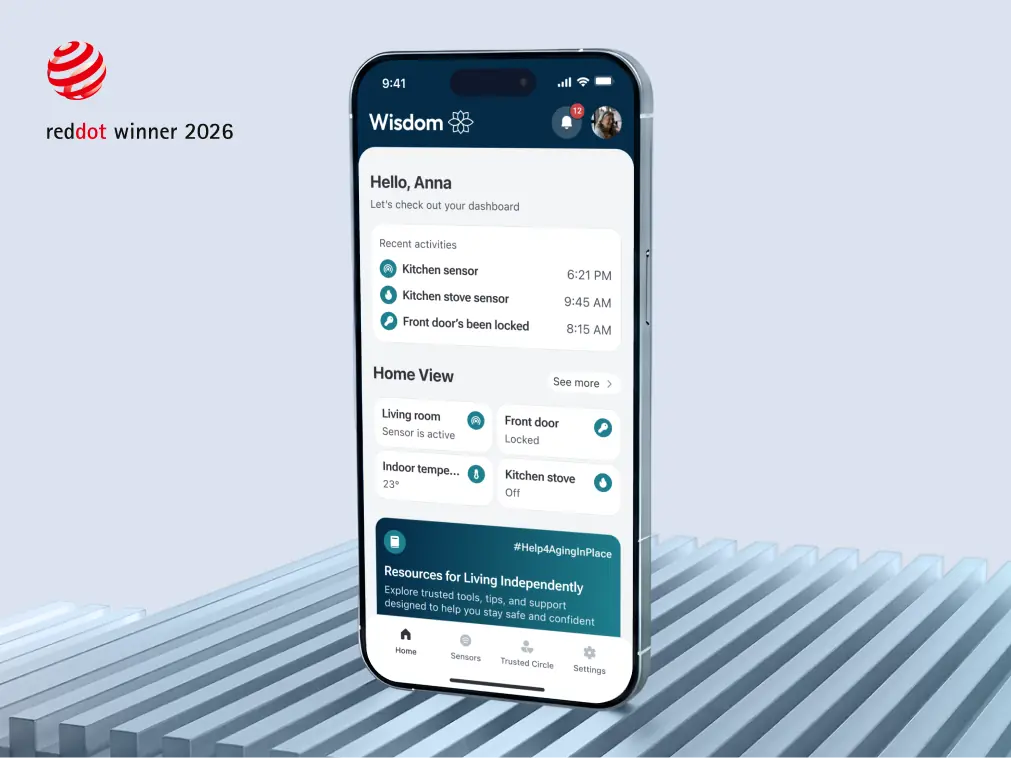
MyWisdom a digital platform for safer, more connected aging
MyWisdom HIPAA-CERTIFIED CUSTOM HEALTHCARE SOFTWARE DEVELOPMENT COMPANYUSA
Tech Stack

Flutter, Java, Spring Boot, Python, WebSocket, Computer Vision, AWS, PostgreSQL, Redis, Docker, Swagger, Liquibase

Timeline

5 month

Results

$1.3M raised in pre-seed funding

Strategic partnership with Samsung

UX Design Award nomination

#Website redesign #website development
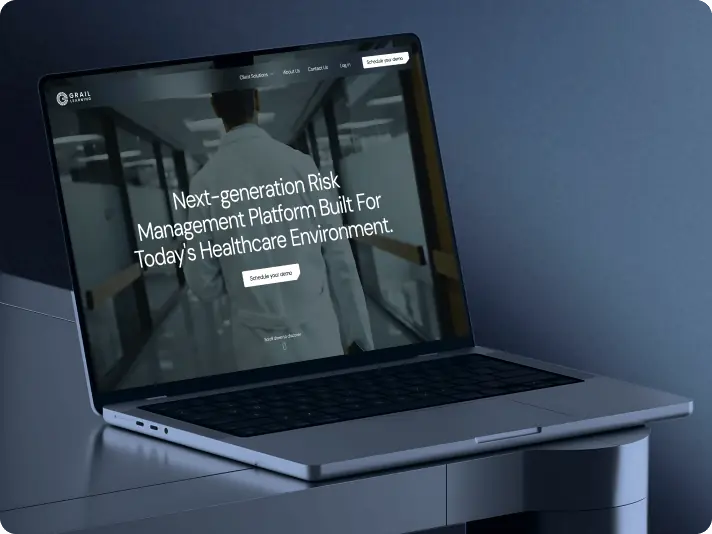
Grail Learning risk management platform for modern healthcare teams
grail learning HIPAA-CERTIFIED CUSTOM HEALTHCARE SOFTWARE DEVELOPMENT COMPANYUSA
Tech Stack

Webflow

Timeline

4 month

Results

Clear product positioning for healthcare decision-makers

Improved user experience through structured navigation

Stronger trust and conversion readiness

#Website design #Website development
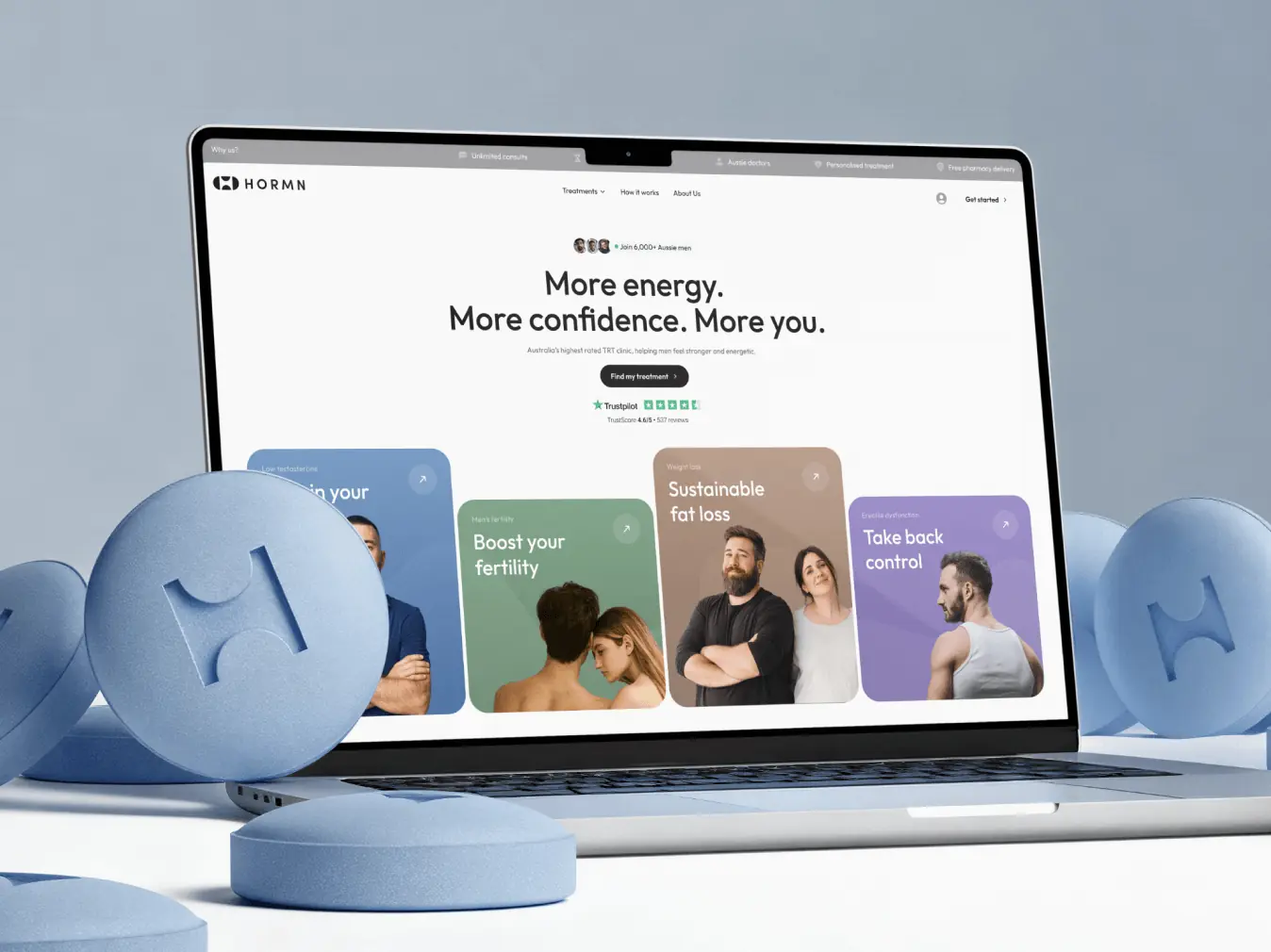
Hormn: Australia’s highest rated TRT Clinic
Hormn HIPAA-CERTIFIED CUSTOM HEALTHCARE SOFTWARE DEVELOPMENT COMPANYAustralia
Tech Stack

Webflow

Timeline

2 month

Results

Clear service positioning

Improved сonversion opportunities

Platform-ready foundation

HIPAA-CERTIFIED CUSTOM HEALTHCARE SOFTWARE DEVELOPMENT COMPANY

Ash Bryant

CEO & Founder

The design team is truly world-class, excelling in both user interface design and creating solutions optimized for conversion.

What Our Clients Say

About our approach to digital product design and development
HIPAA-CERTIFIED CUSTOM HEALTHCARE SOFTWARE DEVELOPMENT COMPANY

Craig Tortolani

CPO at Dekryption Labs
HIPAA-CERTIFIED CUSTOM HEALTHCARE SOFTWARE DEVELOPMENT COMPANY

Ash Bryant

Founder of Hormn

The design team is truly world-class, excelling in both user interface design and creating solutions optimized for conversion.

HIPAA-CERTIFIED CUSTOM HEALTHCARE SOFTWARE DEVELOPMENT COMPANY

KlickEx Team

HIPAA-CERTIFIED CUSTOM HEALTHCARE SOFTWARE DEVELOPMENT COMPANY

George Fry

Founder at Neap

The quality of the designs is fantastic. Phenomenon Studio works at speed and is extremely punctual with timelines. They deliver top-notch outcomes with exceptional designs.

HIPAA-CERTIFIED CUSTOM HEALTHCARE SOFTWARE DEVELOPMENT COMPANY

Andre Guerra

Co-Owner at RADCAT Design

HIPAA-CERTIFIED CUSTOM HEALTHCARE SOFTWARE DEVELOPMENT COMPANY

Kevin Alvarez

Founder & General Partner, Predictive

Phenomenon Studio's ability to translate concepts and rough design mock-ups into high-fidelity assets, designs, and visuals was very impressive. The goal was to maintain simple elegance in the design aesthetic, and they did it very well.

HEALTHCARE SOFTWARE DEVELOPMENT SOLUTIONS: COST FACTORS

Why the cost of an enterprise healthcare platform is driven by architecture more than feature counts
Generic estimators count features without weighing architectural decisions. Multi-tenant logic, audit-layer depth, EHR integration breadth, and compliance scope drive costs far more than UI surface area. Here's what determines the budget for enterprise-scale custom healthcare software solutions.

What drives custom software development services USA costs up?

01
Feature complexity
Advanced workflows, multi-role access, and real-time dashboards add build time.
02
Platform scope
Web apps, mobile apps, and admin panels each add development and design effort.
03
Industry compliance
HIPAA, SOC 2, PCI-DSS, and GDPR require architectural work.
04
Third-party integrations
Payments, EHR, CRM, identity providers, and analytics add hours and maintenance.
05
Team composition
Senior-led teams with AI coding agents price differently from junior hand-coded builds.
06
Timeline pressure
Compressed schedules mean parallel workstreams, more people, and higher cost per feature.
07
Post-launch support
Budget 15–25% of development cost per year for performance, security, and new features.

HIPAA-CERTIFIED CUSTOM HEALTHCARE SOFTWARE DEVELOPMENT COMPANY

Get a tailored healthcare platform estimate

Schedule a consultation to walk through your platform scope, EHR integration map, compliance posture, and timeline. We'll deliver a tailored estimate within 48 hours.

How to work with us

Three collaboration models to work with our custom healthcare software development company
Partner with a full-cycle product design company
We work as your long-term product design and development partner, owning strategy, discovery, design, dev, QA, and scaling iterations. This is not a “project”— it’s your full product team.
Best for
  • Founders who want a senior team thinking beyond sprints
  • Startups scaling beyond MVP and needing deep product ownership
What you get
  • Expert team aligned with your roadmap, KPIs, and business goals
  • Strategic discovery, UX systems
Hire a full-stack dedicated team
We deliver your product from idea to launch—fast and lean. You get execution-ready design and development support with a clear project scope and delivery timeline.
Best for
  • MVPs or feature builds with a defined goal and launch window
  • Pre-seed and seed startups that need to ship without building an in-house team
What you get
  • UI/UX, development, QA, and PM in one dedicated team
  • Clear scope, fixed timeline, efficient delivery
Augment your existing team
We provide developers, designers, and QA engineers to integrate with your team, helping you scale fast while keeping full control over execution.
Best for
  • Startups needing specialized expertise without long-term hiring
  • Seed & Series A+ startups looking to accelerate development
What you get
  • Embedded designers, developers, or product managers to fill skill gaps
  • Faster product delivery without the hiring delays & overhead costs

Why choose us among other healthcare development companies?

Your success is our priority
Design that meets regulation
HIPAA- and GDPR-certified expertise for Healthcare and beyond.

Since 2019, we’ve gained HIPAA and GDPR certifications and industry recognition, delivering hundreds of products in Healthcare, SaaS, FinTech, and EdTech — where compliance and UX go hand in hand.

Design that lasts beyond trends
We don’t chase fads. We build digital products that stay relevant.

Our work looks sharp today and stays usable tomorrow — designed around long-term value, not short-term gimmicks. Scalable systems, brand consistency, and smart UX that grows with your product.

Design that’s developer-ready
We design for implementation, not handoff.

Every component is built with devs in mind: design tokens, accessibility, reusability, and real-world constraints. We collaborate with your team, reuse existing elements, and stay involved until everything’s live.

Local presence. Global delivery
Work directly with the doers — not a chain of account managers.

Collaborate with UX strategists in North America, while our senior design and development teams in Europe deliver fast, consistent results. We integrate into your tools and workflow, working as part of your team — from a single embedded designer to a full product squad.

AWARD-WINNING PRODUCT DESIGN, RECOGNIZED WORLDWIDE

Wins that inspire us forward
HIPAA-CERTIFIED CUSTOM HEALTHCARE SOFTWARE DEVELOPMENT COMPANY

Top product design company 2024

HIPAA-CERTIFIED CUSTOM HEALTHCARE SOFTWARE DEVELOPMENT COMPANY

One of Dribbble’s top rated design agencies

HIPAA-CERTIFIED CUSTOM HEALTHCARE SOFTWARE DEVELOPMENT COMPANY

Professional partner by Webflow

HIPAA-CERTIFIED CUSTOM HEALTHCARE SOFTWARE DEVELOPMENT COMPANY

Nominations for several projecs accross different categories

HIPAA-CERTIFIED CUSTOM HEALTHCARE SOFTWARE DEVELOPMENT COMPANY

Site of the Day & honorable mentions

32+
others

Related Services

Services that pair well with your enterprise healthcare platform project
Custom MVP development

Expand your prototype into a fully functional, production-ready product.

Web development

Custom web solutions, from complex platforms to interactive dashboards and scalable SaaS products, designed to boost functionality and drive growth.

Rapid MVP development

Get your MVP 50% faster with lean sprints and pre-built frameworks.

Frequently Asked Questions

Questions already
answered
01
What is the average cost of custom healthcare app development?

Custom healthcare app development costs depend less on the number of features and more on the architectural decisions. A patient-facing companion app with basic appointment booking and provider messaging typically costs between $30K and $50K, while a clinician-facing app with EHR sync, e-prescribing flows, and real-time vitals integration runs $70K to $150K. Enterprise mobile platforms with multi-tenant logic and FHIR-grade interoperability often exceed $200K.

The biggest cost drivers in healthcare are compliance posture and integration depth. HIPAA-grade audit logging at the data layer takes more engineering time than the same feature implemented at the application layer. Bidirectional Epic or Cerner integration costs more than a one-way data push. Multi-state regulatory coverage with DEA-certified e-prescribing adds weeks to delivery.

For a more accurate estimate, Phenomenon Studio’s healthcare mobile app development services start with a technical workshop where our Solution Architect maps the integration scope, compliance requirements, and architecture before quoting. We typically deliver a fixed-price proposal within 48 hours of the workshop, covering the full project lifecycle.

Two practical insights for budget planning:

1) Do not budget for “feature parity with Epic” — that approach burns budget without delivering value. Instead, identify the three or four clinical workflows that actually need new tooling, and scope around those.

2) Account for compliance certifications. SOC 2 Type II audit prep, HIPAA Technical Safeguards documentation, and BAA negotiation with cloud vendors are real costs that get missed in feature-based estimates.

We pair our pricing with proven case studies. The Hormn telehealth platform delivered end-to-end app development for healthcare with prescription delivery across Australia. The MyWisdom aging-in-place platform demonstrates how Samsung-tier hardware partnerships can be delivered through a senior-led healthcare mobile app development company’s work at production scale, with first-pass HIPAA approval.

For custom healthcare technology software development projects running 4-9 months, the budget picture often shifts during the project. New stakeholder priorities, regulatory updates, or a clinical feature that grows in scope after user testing — these are normal. 

Phenomenon’s custom healthcare software approach makes those shifts visible at sprint planning, with the cost impact and the rationale on the table together. You decide whether to absorb the change or rescope before it lands in code.

02
How much time does medical app implementation take?

Medical app implementation timelines depend on the platform type, integration scope, and compliance posture. A patient-facing iOS or Android healthcare app typically takes 8 to 12 weeks for an MVP and 16 to 24 weeks for a production-grade version with EHR integration. Enterprise platforms with multi-tenant architecture, FHIR pipelines, and audit-grade logging often take 6 to 9 months end-to-end.

The fastest path to launch is front-loading architecture decisions. Our process starts with a one-week compliance workshop, followed by 2-3 weeks of solution architecture, then sprint-based development with two-week release cycles.

For mobile-specific projects,  Android healthcare app development on Flutter or native Kotlin tracks similar timelines to iOS work, though some platform-specific testing — especially around device sensor APIs for RPM apps — can add a sprint.

Phenomenon’s delivery model uses AI-assisted development with a two-layer review. Senior developers direct AI agents (Claude for system-level work, Cursor for in-IDE generation) against decomposition plans produced during architecture. Every line of code passes an automated PR review followed by a senior developer’s sign-off before merge. This typically delivers MVP scope in roughly 65-70% of the hours a traditional team would require, while maintaining the same review discipline.

For perspective, here is what timelines look like across project types in the app development healthcare niche:

  • Proof of concept: 2-3 weeks (vs 6-10 weeks traditional)
  • MVP: 6-10 weeks (vs 4-6 months traditional)
  • Full enterprise version: 4-6 months to v1 (vs 12-18 months traditional)

The MyWisdom platform delivered an aging-in-place mobile experience integrated with Samsung smartwatch firmware in roughly 6 months, including Samsung’s firmware adaptation cycle. Hormn’s TRT telehealth platform reached production with full prescription delivery flows in a comparable timeframe.

For projects requiring Android healthcare app development alongside iOS, our cross-platform approach with Flutter cuts mobile delivery time roughly in half compared to building two native apps in parallel.

A practical insight worth knowing before signing a contract: clinical pilot windows often constrain rollout dates more than development timelines. If your hospital network can only run pilots quarterly, that becomes the binding constraint. Working with a healthcare mobile app development company that understands these external windows lets you plan releases around them rather than fighting against them.

Implementation timelines are predictable when the scope is locked upfront, but they shift when clinical leadership changes priorities, when regulators add requirements mid-project, or when a feature reveals more architectural depth than expected. Our team flags those shifts at sprint planning so you can adjust the timeline, expand the budget, or rescope the feature with full visibility into the trade-off.

03
How much does healthcare software development cost?

Healthcare software development costs vary widely based on platform scope, integration breadth, and regulatory coverage. A single-clinic deployment typically falls between $60K and $120K, a multi-site clinic network ranges $150K to $350K, and enterprise hospital systems with multi-EHR integration and full compliance certification run $400K and up.

The cost factors that move the needle most are architectural rather than visual. Multi-tenant logic decisions early in the project compound across the codebase. EHR integration breadth (single Epic vs Epic + Cerner + Allscripts) adds engineering scope. Compliance posture (HIPAA basics vs HIPAA + HITECH + SOC 2 Type II) affects timeline and documentation overhead.

Phenomenon’s custom software development for healthcare pricing is anchored in real architectural depth, locked during the technical workshop. The workshop produces a starting estimate with documented assumptions on every line item, so you understand what the number includes and where it could shift if scope changes mid-project.

A few practical insights you can use to budget more accurately:

  1. Separate one-time delivery costs from ongoing operational costs. A platform that costs $300K to deliver may carry $40K-80K annually in cloud infrastructure, BAA-eligible service costs, and security audits. Underestimating operational costs is the most common budgeting error in healthcare software.
  2. Budget for clinical validation work. Usability testing with actual clinicians, security testing aligned with HIPAA Technical Safeguards, and audit-evidence packaging are not optional line items. They are why platforms pass the first-round compliance review instead of failing it.
  3. Consider phased delivery. Most enterprise buyers do not need to deliver everything in one engagement. A first phase covering core clinical workflows can launch in 6-10 weeks at $100K-200K, with subsequent phases adding integration breadth or AI capabilities.

Phenomenon’s healthcare software solutions development approach combines AI-assisted code generation with senior developer review. This pattern delivers consistent code quality at roughly one-third the engineering hours of traditional teams. For an MVP scope quoted at 1,400-2,000 hours by traditional agencies, our team delivers in 400-500 hours at the same hourly rate.

For organizations evaluating multiple vendors, the hidden cost differentiator is rework risk. Platforms that fail compliance audits on the first round require expensive late-stage refactoring. Platforms with audit logic at the data layer pass the first audit. The MyWisdom aging-in-place platform passed FDA and HIPAA reviews on its first submission, saving the client an estimated 8-12 weeks of compliance rework.

For tailored healthcare scope assessments, our technical workshop walks through the architectural realities of your clinical context. The same workshop scopes follow-on phases under our healthcare solution development services, so your roadmap is mapped before the first sprint — and updated transparently when external factors change it.

04
How long does it take to start the healthcare project?

From signed contract to first development sprint, healthcare projects with our team typically start within 1-2 weeks. The actual development work begins after the technical workshop, which runs for one week and locks the architecture, integration scope, and compliance requirements.

This is faster than most agencies because Phenomenon’s AI agents (Claude and Cursor) are pre-trained on our internal repositories, coding standards, and architectural patterns. The agents do not need weeks of onboarding to learn our conventions. From the moment the architecture document is signed off, code generation begins immediately.

The full kickoff sequence looks like this:

  • Week 0: Discovery call, NDA, project scoping conversation
  • Week 1: Technical workshop with our Solution Architect and BA
  • Week 2: Architecture document, decomposition plans, sprint planning
  • Week 3: Sprint 1 begins; first working features within two weeks

For larger enterprise custom software development for healthcare engagements with hospital systems, the kickoff may extend to 3-4 weeks because of internal procurement processes: BAA execution, security questionnaires, and vendor onboarding.

Phenomenon Studio’s healthcare development services team can also work in extension mode, where 1-5 senior developers join your existing engineering organization rather than running standalone projects. This pattern is common with HealthTech enterprises that already have in-house teams but need senior healthcare specialists for specific workstreams, such as FHIR integration, multi-tenant migration, and AI feature delivery.

A practical insight for hospital systems and HealthTech CTOs: the slowest part of the healthcare project kickoff is often not the development team’s readiness but the BAA negotiation cycle with cloud providers. AWS BAAs typically execute in 2-3 weeks, but negotiation with smaller infrastructure vendors can run 6-8 weeks. Starting BAA conversations during the workshop phase rather than after architecture sign-off saves significant time.

For organizations evaluating Phenomenon’s healthcare software solutions development approach against traditional agencies, the AI-assisted methodology means roughly 65-70% time savings on PoC and MVP work, without sacrificing review discipline. For example, the PoC that takes a traditional team 6-10 weeks lands in 2-3 weeks with our team.

The fastest path to a project start is the technical workshop. Schedule one with our Solution Architect, walk through your clinical context, and walk away with a documented scope and a kickoff date within two weeks. If procurement or BAA negotiation extends that timeline, we surface those dependencies upfront so you can plan around them.

05
I want to outsource my healthcare software development project. How do I get started?

To outsource healthcare software development projects, our clients go through these three steps: 1) a 30-minute discovery call, 2) an NDA execution, and 3) a scoping conversation that determines whether a technical workshop is the right next step.

Most enterprise healthcare clients work with us through one of three models:

  1. Project-based delivery — full delivery from architecture to clinical rollout. Best for organizations launching new platforms or replacing legacy systems. Typical projects run 4-9 months end-to-end.
  2. Team extension — 1-5 senior developers, designers, or Solution Architects plug into your existing engineering organization. Common with HealthTech enterprises that have in-house teams needing specific senior expertise: FHIR architects, multi-tenant migration specialists, and AI engineers.
  3. Workshop-only — for organizations that need architecture and scope clarity before committing to a full project. The one-week workshop produces a starting estimate, integration map, and compliance scope document. Many clients use this output to compare vendors before selecting one.

For offshore healthcare software development specifically, our team operates across European time zones with significant overlap to North American business hours. Daily standups, sprint demos, and sprint retros run during shared working hours. Slack, Linear, GitHub, and Figma are our default collaboration stack, and we adapt to client tools as needed.

A practical insight worth knowing before signing any vendor: ask for a sample BAA, a sample SOC 2 vendor questionnaire response, and a sample HIPAA Technical Safeguards documentation pack. Vendors who can produce these in days have done healthcare work before.

Phenomenon’s custom software development for healthcare approach is designed for transparency. You receive the architecture document, the decomposition plans, the AI agent rule sets, and the audit-ready evidence packages as project deliverables. Nothing is held back as a vendor lock-in mechanism.

For organizations new to outsourcing healthcare work specifically, start with the workshop. The output gives you the basis for vendor comparison, the basis for internal stakeholder alignment, and the basis for procurement sign-off. From the workshop, the path to either a project-based delivery or team extension takes days.

06
How does your team handle HIPAA compliance and BAA requirements?

HIPAA compliance is built into our architecture from the workshop forward, not retrofitted near launch. Every healthcare project starts with a compliance scoping session that maps PHI flows, defines audit requirements, and documents the Technical Safeguards we will implement.

For BAA-eligible cloud services, we provision exclusively on AWS BAA-signed services (RDS, S3, Lambda, ECS, KMS) for projects handling PHI. Our infrastructure runbook documents which services are BAA-covered, which encryption keys rotate on what schedule, and which audit logs feed into HIPAA-grade trails.

Phenomenon’s custom healthcare software development solutions capture PHI access at the data layer using database triggers, middleware, and async event streams. This approach catches every read, write, export, and consent change, including events that application-layer logging would miss during code refactors. HITECH and SOC 2 Type II audits typically pass on the first round because the audit evidence comes from the data layer rather than from application code.

A practical insight for buyers: ask vendors how they handle PHI logging during code refactors. Most vendors implement HIPAA logging at the application layer, which means logs disappear when application code changes. Data-layer logging through database triggers survives refactors, migrations, and even framework upgrades.

For BAA negotiation, we handle cloud vendor BAAs as part of our scoping work. AWS BAA execution typically runs 2-3 weeks. For smaller vendors (specialized analytics tools, niche compliance services), BAA negotiation can extend 4-8 weeks. We surface these dependencies during the workshop so they do not become blockers.

Our team is HIPAA-certified with a structured training program for every developer touching healthcare projects. We do not expose PHI to AI tooling under any circumstances. Code that handles PHI is abstracted before AI agents see it. Production data never enters AI context windows.

For projects requiring SOC 2 vendor assessment, we provide our Data Processing Agreement, our AI tooling stack disclosure, and our subcontractor list as standard deliverables. These materials are typically requested by your security or compliance team during vendor review, and we provide them within 48 hours of request.

For broader regulatory coverage, our custom healthcare software solutions approach supports HIPAA, HITECH, SOC 2 Type II, GDPR, and state-level regulations like California CMIA and Texas HB 300. Phenomenon’s healthcare management software development work includes audit-evidence packaging that holds up to first-round regulatory review.

The MyWisdom aging-in-place platform passed FDA and HIPAA reviews on its first submission. The Grail Learning healthcare risk management platform integrates audit-grade evidence reporting that supports CME credentialing audits.

A note on compliance change: regulators add requirements without warning. State legislatures pass new patient privacy laws. Federal agencies issue new technical guidance. As your healthcare solution development company, we surface the impact at the next sprint planning with three options on the table: absorb the change, extend the timeline, or rescope the workstream. 

07
What experience does your team have with Epic, Cerner, and Allscripts integration?

Phenomenon has delivered FHIR R4 integrations with Epic, Cerner, and Allscripts across multiple healthcare clients. Our integration layer uses versioned FHIR resource servers with retry queues, circuit breakers, and dead-letter routing. The patterns hold up when EHR vendor APIs throttle, time out, or change schema mid-quarter.

The most common failure pattern in EHR integration is implementing FHIR resources as one-off API calls. Under clinical load (200+ concurrent providers, real-time lab result delivery), one-off implementations break first. Our integration layer uses adapter patterns that absorb EHR vendor schema drift without breaking downstream consumers.

For Epic, we work across SMART on FHIR, FHIR R4, and HL7 v2 patterns. Cerner integration typically uses Code Bridge and FHIR APIs. As a healthcare application development company, Phenomenon Studio’s work includes Cerner-integrated platforms with bidirectional clinical note sync. Allscripts’ work most often involves Unity, FollowMyHealth, and Practice Fusion APIs.

Our healthcare software product development approach treats EHR integration as a standalone architectural concern with its own scope, testing, and audit requirements. Integration patterns are documented separately from feature work, so EHR vendor changes can be absorbed without touching application code.

Phenomenon Studio’s healthcare CRM development also covers patient lifecycle, referral management, and clinical KPI dashboards layered on EHR data.

Once your platform is live, EHR integrations need ongoing care. We offer post-launch support packages covering integration monitoring, schema-update handling for Epic and Cerner releases, version migration when EHR vendors deprecate endpoints, and on-call response for integration failures during clinical hours. We document the entire integration architecture in a runbook that travels with your team, so internal developers can pick up maintenance whenever you decide to bring it in-house.

08
How do you use AI in healthcare software development without exposing PHI?

Phenomenon uses AI agents (Claude and Cursor) at every layer of our app development healthcare process, but never on PHI. Our policy is absolute: no PHI, no PII, no production credentials enter AI tooling at any stage. Code that handles PHI is abstracted to schema, types, and structure before AI agents see it. Production data never enters AI context windows.

As a reputable healthcare product development company, we use the following practice:
AI handles system-level analysis (Claude reads abstracted architecture documents and generates implementation plans), code generation (Cursor generates feature code from decomposition plans), PR review (Claude flags bugs, edge cases, and architectural risks), and test generation (automated test suites from documented patterns). AI does not see, log, or process PHI. AI does not touch production data. AI does not make final architectural decisions or replace senior developer review.

Every line of AI-generated code passes two layers of review: AI-assisted PR review followed by senior developer sign-off. This discipline is part of why clients call us the best healthcare app development company – nothing merges without both.

For HIPAA-sensitive projects requiring BAAs, our best healthcare app development company developers evaluate AI tooling on a project-by-project basis. Standard consumer AI tools (Claude.ai, ChatGPT consumer tier) cannot sign BAAs and are therefore not used where PHI could enter the context window. For projects requiring AI assistance on PHI-adjacent workflows, we use enterprise-tier AI providers with BAA capability or restrict AI usage to non-PHI code paths.

09
Can you migrate or modernize an existing healthcare platform built by another team?

Yes. Healthcare platform migrations and legacy modernization are a substantial part of our portfolio. Common projects include migrating from outdated EHR platforms, modernizing monolithic backends into modular services, upgrading frameworks (Angular to React, monolith to microservices), and transitioning between cloud providers.

Every migration starts with a structured codebase audit. Our AI agents (Claude) read the entire existing codebase and produce a structured analysis: architectural patterns and anti-patterns, areas of high complexity, duplicated logic, security concerns, outdated dependencies, and a prioritized map of what needs attention. What would take a senior developer 2-3 weeks to produce manually, our audit produces in hours.

For the migration itself, our custom healthcare software development company follows an incremental approach. We identify the highest-impact changes, generate the refactored code, flag every dependency the change touches, and validate every step before merging. The result is a cleaner codebase delivered without disrupting the live platform.

Common migration patterns we have delivered: 

  • legacy EHR replacement (clients moving off Epic or Cerner toward custom platforms)
  • backend modernization (converting monolithic backends to NestJS-based modular services) 
  • multi-tenant retrofitting (adding row-level security to single-tenant codebases stretched to networks)

The quality of AI-assisted work on existing codebases depends on the quality of the existing code. Well-structured, documented codebases convert cleanly. Disorganized codebases require more upfront analysis before AI-assisted generation becomes reliable.

When evaluating healthcare development companies for migration work, the differentiator is whether the vendor can read existing code and understand it before changing it. Our codebase audit demonstrates that capability before any code is written.

At Phenomenon Studio, our approach to custom software development for healthcare migration is one of the few patterns where AI-assisted work delivers compounding advantages. By month 3-6 of a migration, our agents handle 60-70% of implementation autonomously, with senior developers reviewing rather than writing.

Contact us

Have a project in mind?
Let's chat

Your Name

Enter your name *

Your Email

Enter your email *

Message

Tell us about your project

You can upload maximum 5 files
Some of your file not loaded, because maximum file size - 5 mb
Your budget for this project?

By clicking this button you accept Terms of Service and
Privacy Policy

HIPAA-CERTIFIED CUSTOM HEALTHCARE SOFTWARE DEVELOPMENT COMPANY
Thanks for taking time to reachout!
Stay connected with us by subscribing to our LinkedIn account. By following, you’l be the first to hear about our latest updates, news, and exciting development. We look forward to sharing our journey with you!
HIPAA-CERTIFIED CUSTOM HEALTHCARE SOFTWARE DEVELOPMENT COMPANY
Thanks for taking time to reachout!
We’d love to hear more about your project! Feel free to schedule a call using the link provided. This will help us better understand your vision and ensure we’re aligned on all the details.
Have a project to
discuss?
HIPAA-CERTIFIED CUSTOM HEALTHCARE SOFTWARE DEVELOPMENT COMPANY
Kseniia Shalia
Account Executive
Have a partnership in
mind?
HIPAA-CERTIFIED CUSTOM HEALTHCARE SOFTWARE DEVELOPMENT COMPANY
Polina Chebanova
Co-Founder & CPO