



Apr 20, 2026
7 min read
summary
Learn the foundational principles of enterprise software design. Discover how to improve productivity, avoid common UX mistakes, and reduce operational costs.
Insights
- Enterprise UX focuses on clarity, efficiency, and error reduction rather than just visual appeal.
- Designing for multiple user roles requires deep research and role-based access control.
- Data tables and navigation must scale to handle high density without overwhelming the user.
- Investing in UX yields massive returns by reducing training costs and support tickets.
By Anastasiia Morozova Product UI/UX Designer | April 2026
Enterprise software is no longer just about raw functional utility. High data density, fragmented workflows, and diverse user roles require a design philosophy that prioritizes clarity, performance, and scalability. Every dollar invested in user experience can yield a 9,900% ROI. This return comes from mitigating productivity loss, reducing support ticket volumes, and eliminating expensive retraining cycles.
In our projects, we see that modern employees demand intuitive interactions in their professional lives. The buyer of the system is frequently not the end-user. This creates a disconnect where software is selected based on regulatory compliance, while the actual task flows for operators remain cumbersome. Designing for the enterprise requires reconciling these conflicting priorities.
UX Design Services: How Consumer UX Differs from Enterprise UX
Why do enterprise applications require a completely different approach compared to consumer apps? The answer lies in the usage dynamics and the scale of impact. Consumer apps compete for attention. Enterprise UX optimizes for operational performance and error reduction, often dealing with complex workflows and user flows that must be carefully designed to ensure usability and minimize mistakes.
| Attribute | Consumer UX | Enterprise UX |
| Usage Type | Optional use | Mandatory use |
| Primary Goal | Engagement and delight | Productivity and efficiency |
| User Scope | Single persona | Diverse roles and permissions |
| Session Pattern | Short, irregular bursts | Long, repetitive workflows |
Enterprise UX must address complex challenges and complex ideas, such as managing diverse roles, permissions, and intricate data-heavy processes. Scalable design systems are essential for supporting the long-term sustainability and consistency of enterprise applications.
Introduction to UX Design
UX design is at the heart of creating seamless digital experiences that delight users and drive measurable business growth. At its core, UX design is about understanding user needs, behaviors, and motivations to craft user-friendly interfaces that not only meet but exceed user expectations. Through a combination of user research, usability testing, and iterative design, UX professionals ensure that digital products are intuitive, efficient, and enjoyable to use.
A robust UX design process begins with in-depth user research to uncover pain points and opportunities, followed by the creation of wireframes and prototypes that bring ideas to life. Usability testing is then employed to validate design decisions and refine interfaces based on real-world insights. This user-centered approach leads to higher user satisfaction, increased conversion rates, and ultimately helps businesses drive growth by delivering digital products that resonate with their target audience. By prioritizing user needs at every stage, organizations can create user friendly interfaces that foster loyalty and support long-term business objectives.
Foundational Design Principles for Complex Challenges
The complexity of enterprise software necessitates a set of foundational principles that guide design decisions. A strong design strategy, supported by strategic thinking, is essential for managing complexity and aligning business goals with user needs. These principles act as a strategic framework to manage high information density, with interface design and interaction design serving as foundational elements that help reduce cognitive load and improve usability. Data driven insights inform the selection and application of these foundational principles, ensuring that design decisions are both user-centered and effective.
Task Clarity, User Research, and Progressive Disclosure
Each screen in a business application must communicate its purpose immediately. Reducing hesitation at the interface level directly correlates with faster task execution. One of the most effective strategies for managing complexity is progressive disclosure. This technique involves showing only the information relevant to the user’s current task. Mapping user flows and creating wireframes are key steps in ensuring each screen communicates its purpose clearly and efficiently. Understanding the user persona helps determine which information should be disclosed at each step, tailoring the experience to user needs and behaviors.
Consistency as a Cognitive Shortcut
Consistency is the most critical principle in reducing the learning curve. Design must adhere to internal consistency and external platform conventions. In user interface design, consistent patterns help users build muscle memory. Maintaining consistency across web app design and mobile UI design ensures a seamless experience for users. When interfaces behave predictably, users can focus on their professional objectives rather than the tool itself.
UX Research and Design
UX research forms the backbone of any successful design process. By conducting thorough user research, designers gain a deep understanding of user needs, preferences, and behaviors. This research is translated into user personas and user scenarios, which serve as guiding tools throughout the design journey. These personas and scenarios help teams empathize with real users and anticipate their interactions with digital products.
Armed with these insights, UX designers develop interactive prototypes and explore innovative design concepts that address specific user expectations. High-fidelity prototypes allow for detailed usability testing, ensuring that the final product is both functional and delightful. The iterative nature of UX research and design means that feedback is continuously gathered and incorporated, resulting in digital products that are not only easy to use but also tailored to the unique needs of their audience. This research-driven approach ensures that every design decision is grounded in real-world insights, leading to more effective and engaging digital experiences.
Technical Requirements
Delivering seamless digital experiences requires UX designers to possess a blend of creative and technical expertise. Mastery of design thinking and a deep understanding of ui design services are essential for translating complex requirements into intuitive user interfaces. Technical proficiency in areas such as responsive design and information architecture ensures that digital products perform flawlessly across devices and platforms.
Collaboration with development teams is a critical aspect of the design process. UX designers must communicate design concepts clearly and work closely with developers to ensure that every detail is implemented as intended. This partnership bridges the gap between design and technology, resulting in digital products that are both visually appealing and technically robust. By leveraging their technical expertise and maintaining open lines of communication, UX professionals can deliver user friendly interfaces that meet business goals and exceed user expectations.
Practical Use Cases for Isora
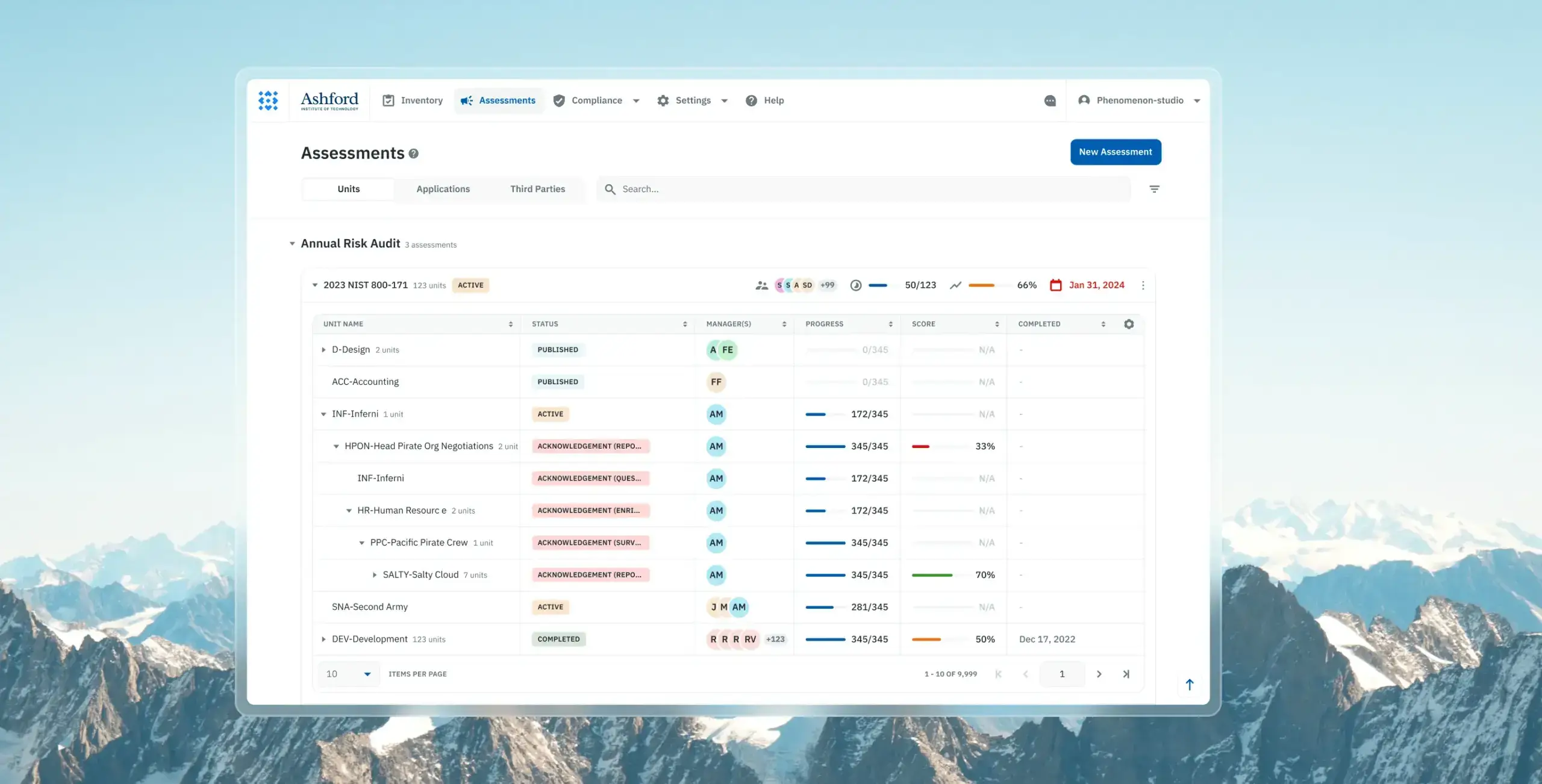
Instead of listing features, we focus on how specific functions resolve real business bottlenecks.
Problem: In the Isora GRC platform, outdated design, lack of intuitive navigation, and poorly structured workflows made it difficult for users to manage assessments, interpret information, and complete survey processes efficiently. The interface, originally built by developers, lacked user-centered UX principles, creating friction, especially for non-technical users, and slowing down complex risk and compliance operations.
Feature: Comprehensive product redesign based on a UX audit, where we conducted user research and user testing to identify pain points and validate solutions. The process included reworked information architecture, intuitive assessment management, step-by-step survey workflows, visual progress indicators, contextual guidance, and a reusable atomic design system implemented with Storybook. Creating a high fidelity prototype allowed the team to explore ideas faster and implement targeted UX improvements throughout the redesign.
Result: Optimized workflows and improved usability doubled user efficiency in assessment completion, reduced friction across complex processes, and enabled faster, more consistent product development, cutting time-to-market by over 50%.
Branding and Visual Identity
A strong brand strategy is integral to effective UX design, shaping how users perceive and interact with digital products. Consistent branding and visual identity not only enhance user engagement but also drive business growth by building trust and recognition. UX designers must thoughtfully integrate brand identity, logo design, and graphic design elements into every aspect of the user interface, ensuring a cohesive experience across all digital interfaces.
From web and mobile app design to social media touchpoints, maintaining visual consistency reinforces the brand’s message and values. This attention to detail helps create memorable digital experiences that resonate with users and support long-term business objectives. By aligning design solutions with brand strategy, UX designers play a pivotal role in driving business growth and fostering lasting customer relationships.
Timelines, Teams, and Pricing
How long does it take to redesign a core enterprise module? In our project experience, an initial redesign phase for a core module takes approximately 1 to 2 months.
To execute this, we assemble a multidisciplinary UX team of 4 to 5 specialists, emphasizing collaborative work and diverse skill sets. This team typically includes a UX Researcher, a Lead UI Designer, a Frontend Developer, and a QA Specialist. Our UX team leverages research methods such as market research and service design to inform planning and execution. Effective project management, supported by tools like Jira, ensures streamlined workflows and transparent communication throughout the project. The tech stack is carefully selected to best support the specific needs of each project.
If you want to order a project or need to estimate the cost of services, see our basic pricing tiers below.
| Service Package | Team Size | Timeline | Estimated Price |
| UX Audit & Strategy | 2 Specialists | 2 Weeks | From $5,000 |
| Core Module Redesign | 4 Specialists | 1-2 Months | From $15,000 |
| Full Enterprise System | 6+ Specialists | 4-6 Months | From $45,000 |
Common Usability Testing Mistakes to Avoid
Despite the established ROI of good design, many enterprise projects continue to fail due to recurring strategic mistakes. Partnering with a design agency that offers comprehensive UX services and deep expertise can help avoid these pitfalls and ensure your project is set up for success.
- Designing in a Vacuum: Teams that skip user research build software that is practically useless. We use contextual inquiry and workflow mapping to observe users in their actual work environment.
- Decoration over Problem-Solving: Attempting to fix a failing product by changing its fonts and colors will not solve underlying issues. Design must solve functional problems first. A skilled UX designer brings innovative solutions and ensures the project delivers measurable business results.
- Database-Centric Design: Software is often designed to mirror the structure of backend database tables. Effective design consolidates data into a single, logical workflow based on the user’s task.
- Neglecting the Power User: In an attempt to make software simple, designers sometimes hide essential expert-level features. Enterprise software must support a learning curve that leads to mastery.
Focusing on customer engagement and business outcomes is essential, and a company excels when it prioritizes these factors.
We pride ourselves on delivering top-tier services, recognized by award-winning platforms like Clutch, where Phenomenon Studio is ranked among the top design and development companies. With over $500M+ raised by our clients and up to 35% growth in conversion rates, our work consistently drives measurable business impact. Backed by a team of 70+ mid-to-senior in-house experts, we combine strategic UX thinking with high-quality execution to deliver scalable enterprise solutions. From local UX leadership in North America to efficient delivery by our European teams, we ensure speed, consistency, and direct collaboration through tools like Slack, Jira, and Figma. Our approach focuses on long-term product value, leveraging user research, analytics, and testing to create solutions that perform — helping companies achieve outcomes like faster workflows, higher engagement, and reduced time-to-market.
Case Study: Streamlining Simulation Workflows
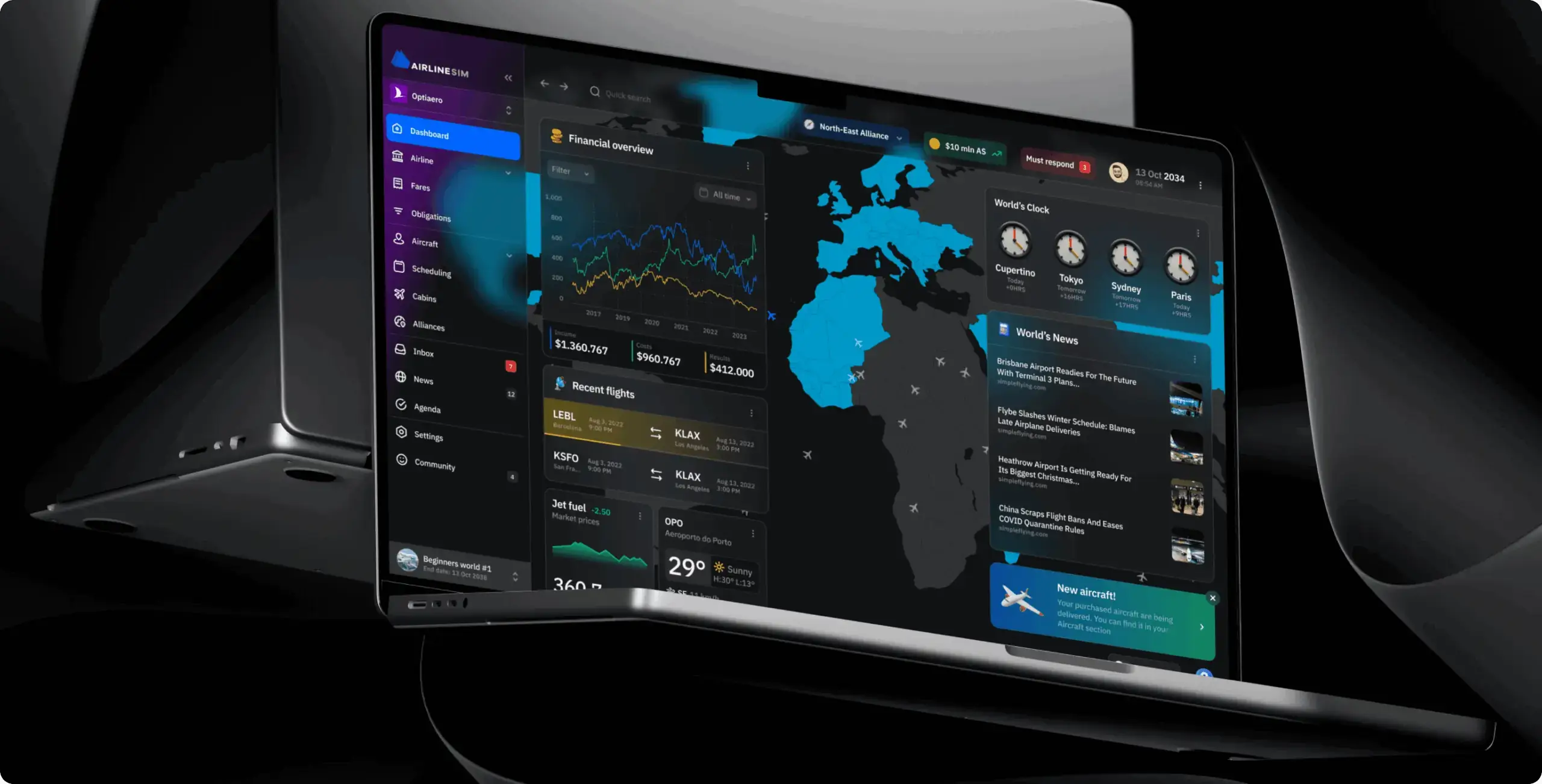
Task: AirlineSim, a complex online airline management simulation, struggled with a cluttered interface and data-heavy, complex workflows. Users found it difficult to quickly access key information, while the experience felt more like a spreadsheet than an engaging simulation, reducing usability and player motivation.
Solution: Leveraging comprehensive UI UX design services and web design expertise, we conducted a UX audit and restructured the experience with a widget-based dashboard, clear navigation, prioritized notification system, and contextual use of maps and visual elements. Data driven insights were used to inform design decisions and optimize the user experience. The interface was redesigned to group data into meaningful blocks, integrate real-time insights, and introduce customizable dashboards for a more intuitive and immersive experience.
Result: The new MVP was delivered quickly, enabling faster time-to-market, while the modular architecture ensured scalability. Enhanced visuals, maps, and personalization features significantly increased user engagement, transforming the platform into a more intuitive and emotionally engaging simulation.
Elevate Your Enterprise Software for Better Business Outcomes
Enterprise UI/UX design is a rigorous, data-driven discipline central to modern business operations. It is a strategic program aimed at maximizing human productivity. Our agency specializes in UX UI design and product design, leveraging innovative ideas to deliver user-centered digital experiences. By incorporating user testing as a core part of our process and adhering to principles like task clarity and robust governance, organizations can overcome the inherent challenges of scale. Contact our team today to order an audit and see how we can transform your complex legacy systems into intuitive, high-performing tools.
Share this article with friends



Sep 29, 2026
6 min read
B2B website redesign without losing traffic: A complete b2b website redesign guide covering UX audits, 301 redirect mapping, and metadata preservation. Partner with a top b2b website redesign agency that boosts conversions while protecting your organic rankings.

Sep 29, 2026
8 min read
Small business web design services that fit your budget. Get affordable small business website design from one of the best website design companies for small business — with transparent pricing and no hidden fees.
