



Aug 31, 2026
7 min read
summary
Compare the top UX design agencies for fintech in 2026 by specialization, pricing, client fit, compliance expertise, and proven financial product outcomes.
If you’re evaluating a ux design agency for a banking app, a lending platform, or a crypto product, you’re not shopping for the same thing as a company redesigning a marketing site. Financial interfaces carry compliance rules, verification steps, and trust requirements that a generalist studio rarely gets right on the first try. Below is a practical shortlist of the top ux design agencies working in fintech today, what separates a genuinely specialized ux design agency from a generalist with a finance logo on their portfolio page, and how to recognize a best ux design agency fit before you sign a contract.
This guide is written for founders, product leads, and marketing or growth executives — not for designers comparing tools. You won’t need to know what a design token is to use it.
By Yuliia Apanasenko | CEO of Phenomenon Studio, August 2026
What a UX Design Agency Does for Fintech — Agency UX Basics
A fintech-focused ux design agency does more than make screens look clean. It builds the parts of your product that carry the most business risk: account opening, identity verification, payments, and anywhere money or personal data changes hands. Get those wrong and you don’t just lose a sale — you lose the customer’s trust in your platform’s safety, which is much harder to win back.
That’s the core of agency ux work in financial products: every screen has to answer an unspoken question from the user — “is this safe, and do I understand what’s happening to my money?” General digital agencies are trained to reduce friction and maximize engagement. A specialized agency ux team is trained to reduce friction while proving legitimacy, which is a very different design problem.
Fintech UX vs. General Product Design
Fintech ux design differs from typical SaaS or e-commerce design in three concrete ways:
- Regulatory constraints shape the layout. KYC (identity verification) and AML (anti-money-laundering) rules dictate what information has to be collected and when — a designer can’t just remove a field because it “adds friction.”
- Every screen is a trust signal. Visual polish, clear security messaging, and transparent status updates directly affect whether a user completes onboarding or abandons it.
- Mistakes are expensive. A confusing verification flow doesn’t just hurt conversion — it can cause real financial loss and regulatory exposure for the client.
This is why picking the right partner matters more in fintech than almost any other vertical.
What Makes the Best UX Company for Financial Products
The best ux company for a financial product isn’t necessarily the one with the flashiest portfolio. Look for three things: proven case studies in regulated or trust-sensitive products, a process that treats research and compliance mapping as a first step (not an afterthought), and evidence that past clients saw real business outcomes — more completed sign-ups, fewer support tickets, more transactions — rather than just a nicer-looking interface.
Top UX Agencies for Fintech in 2026
Here’s how the leading firms differ in focus, pricing, and the type of fintech company they’re built to serve
| Agency | Dominant Service Tier | Pricing Model | Core Target Client Segment | Strategic Differentiators |
| Phenomenon Studio | Boutique Fintech & Web3 Studio | Custom / Project-Based | Early-Stage DeFi, Crypto Platforms, Fintech Startups | Specializes in making unfamiliar financial mechanics (token swaps, DEX flows, fiat-to-crypto conversion) feel simple and trustworthy to first-time users; proven case study with GlobalX. |
| UXDA | Pure-Play Financial UX Boutique | $200–$300/hr | Tier-1 Banks, Neobanks, WealthTech | 100% exclusive focus on digital banking and finance; proprietary Digital Experience Governance and Value Pyramid frameworks; clients include HSBC, GCash, Bank of Jordan. |
| Thoughtbot | Paired Design & Engineering Consultancy | Custom / Sprint-Based Retainers | Early-to-Growth Stage Fintechs, Modernizing Engineering Teams | Pairs UX designers directly with full-stack engineers from day one, resolving regulatory, security, and API constraints during wireframing rather than after handoff. |
| Momentum Design Lab | Enterprise B2B Systems Consultancy | $150–$199/hr | Institutional Trading, Treasury Platforms | Specializes in data-dense, multi-persona trading tools and legacy software modernization; clients include Nasdaq Private Market, Bitstamp. |
| Qubstudio | Legacy System Modernization Consultancy | $25–$49/hr | Mid-Market Banks, Lending Platforms | Rearchitects aging core banking software while preserving institutional business logic, at accessible rates. |
| Bricx Labs | Conversion-Focused SaaS Studio | ~$10k/month retainer | B2B Fintech Startups, Financial SaaS Platforms | Converts complex, data-dense flows into high-trust UI, applying proprietary visual design standards specifically to lift sign-up conversion rates. |
| UX Studio | Research-First Discovery Agency | $50–$99/hr ($10k project min) | Mid-Market & Enterprise B2B SaaS | Prioritizes extensive qualitative research and workflow mapping before any visual design begins. |
Phenomenon Studio
Best for: Startups and DeFi/crypto platforms that need to earn user trust fast, without an enterprise-scale budget.
Phenomenon Studio builds product and marketing sites for fintech and Web3 companies, with a particular strength in translating complex, unfamiliar financial mechanics — token swaps, decentralized exchanges, fiat-to-crypto conversion — into interfaces a first-time user can actually follow. Their process runs through product analysis, competitor benchmarking, wireframing, and a final UI pass built around clarity and security cues, which matters most for products where users are naturally skeptical going in.
Case study: Their work for GlobalX, a decentralized exchange platform, is a good example of what a best ux design agency looks like in practice for an early-stage crypto product — detailed below.
UXDA (User Experience Design Agency)
Best for: Tier-1 banks, neobanks, and core banking providers.
UXDA works exclusively in digital banking and finance, at rates around $200–$300/hr. The firm built its own internal frameworks — Digital Experience Governance and a “Value Pyramid” model — to align an entire bank’s engineering organization around consistent, trust-first design standards. Clients include HSBC, GCash, and Bank of Jordan. This is an enterprise ux design partner, not a fit for an early-stage startup budget.
Thoughtbot
Best for: Early-to-growth-stage fintechs that want design and engineering solved together, not handed off in sequence.
Thoughtbot pairs a UX designer with a full-stack engineer from day one of a project, on custom or sprint-based retainers. The pitch is straightforward: regulatory, security, and API constraints get resolved during wireframing instead of surfacing as expensive surprises once development starts. This suits teams that are modernizing an engineering org alongside the product itself, where design decisions and technical feasibility need to stay tightly coupled.
Momentum Design Lab
Best for: Institutional trading platforms and enterprise treasury tools.
Now part of HTEC Group, Momentum Design Lab specializes in dense, multi-persona financial software — trading terminals, treasury dashboards, and legacy banking systems that need modernizing without breaking existing business logic. Rates run $150–$199/hr, with typical scopes in the tens of thousands. This is the pick for complex back-office or institutional products rather than consumer apps.
Qubstudio
Best for: Mid-market banks and lending platforms modernizing legacy systems.
Qubstudio operates at a more accessible $25–$49/hr, focused on untangling aging core banking software for mid-tier institutions and credit unions. It’s a strong best ux design agency choice for organizations that need a full brand-and-UX overhaul without an enterprise-size budget or scope.
Bricx Labs
Best for: B2B fintech startups whose product works but whose sign-up flow doesn’t convert.
Bricx Labs runs on a monthly retainer, roughly $10k, and focuses specifically on turning data-dense, hard-to-parse financial flows into interfaces built to convert. Rather than a broad brand-and-product mandate, the firm applies a proprietary set of visual design standards aimed squarely at sign-up and activation rates — a narrower, more measurable scope than most general SaaS studios offer.
UX Studio
Best for: Complex B2B fintech and SaaS platforms with multiple user roles.
UX Studio runs a research-first process, front-loading extensive user interviews and workflow mapping before any screens are drawn. At $50–$99/hr with a roughly $10k minimum, it’s a solid mid-market option, and one of the more research-rigorous best ux agencies for platforms where getting the underlying workflow wrong is costlier than a rough visual pass.
Case Study: Building Trust Into a DeFi Platform (GlobalX)
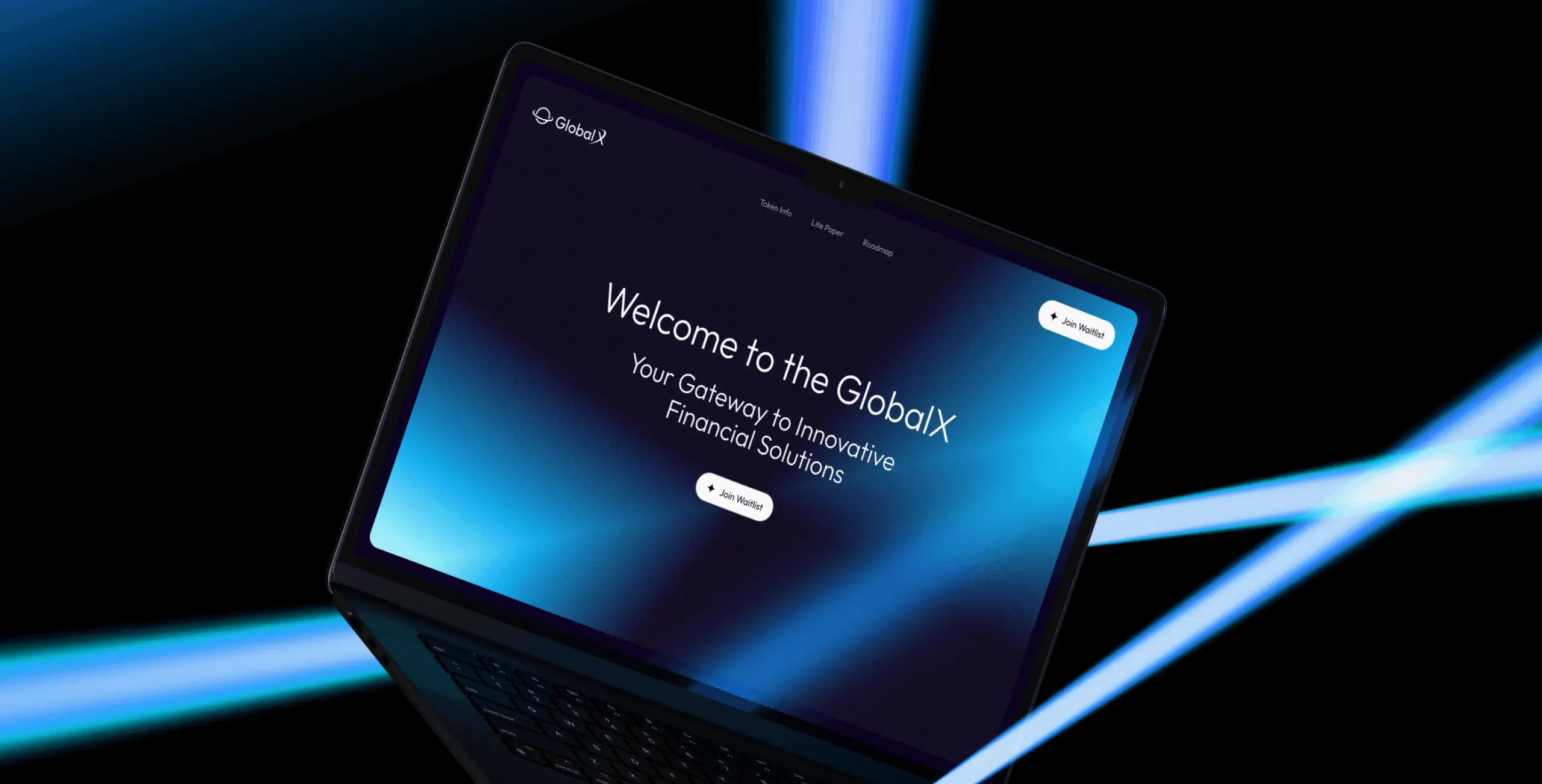
To see what fintech-specific ux design agency work actually looks like in practice, it’s worth walking through one real project in detail: Phenomenon Studio’s work for GlobalX, a decentralized exchange (DEX) aiming to combine the ease of traditional finance apps with blockchain-level transparency.
Task GlobalX needed a landing page that could introduce a decentralized exchange to a broad, often skeptical audience — explaining multi-currency support, instant token swaps, and its own stablecoin — while overcoming the specific hesitation that comes with asking users to trust a DeFi platform with their money.
Solution The team addressed three specific problems with targeted fixes rather than a generic redesign:
- Users doubted the platform’s security, so the design surfaced security measures and trust signals directly on the page instead of burying them in fine print.
- The breadth of technical services risked overwhelming newcomers, so the interface was simplified around a small set of key features with plain-language explanations.
- The fiat-to-crypto conversion process was unclear, so it was broken into a step-by-step visual flow that made the “how” of moving between currencies obvious at a glance.
Result According to the client, the redesign increased user confidence in the platform’s security, simplified the onboarding experience enough to reduce confusion for newcomers, and improved engagement with the platform’s core conversion features. The client’s own feedback described the collaboration as productive from the outset, with the team demonstrating clear understanding of the project’s goals from day one.
This is the pattern worth noticing: none of the three fixes were purely cosmetic. Each one targeted a specific point where a DeFi user was likely to hesitate or drop off.
How to Choose the Best UX Design Agency for Your Fintech Product
| Your situation | Recommended agency type | What to check before signing |
| Early-stage DeFi or crypto startup | Boutique fintech-focused studio (e.g., Phenomenon Studio) | Case studies in crypto/DeFi specifically, not just general fintech |
| Incumbent bank modernizing legacy systems | Enterprise ux design consultancy (e.g., UXDA, Qubstudio) | Track record with core banking integrations and compliance frameworks |
| Early-to-growth fintech modernizing its engineering org | Paired design-and-engineering consultancy (e.g., Thoughtbot) | Evidence that design and technical feasibility are actually solved together, not sequentially |
| Institutional trading or treasury software | Enterprise workflow specialist (e.g., Momentum Design Lab) | Experience with multi-role permissions and dense data interfaces |
| B2B fintech startup with a weak sign-up conversion rate | Conversion-focused SaaS studio (e.g., Bricx Labs) | Clear before/after conversion data, not just a visual refresh |
A few practical filters that apply regardless of company stage:
- Ask for outcomes, not just before/after screenshots. Among the best ux agencies, a track record looks like a specific problem (drop-off, confusion, mistrust) paired with a specific fix, the way the GlobalX case study does above.
- Match agency size to your budget realistically. Among the best ux design companies, the enterprise-tier ones charging $200+/hr are rarely the right fit for a pre-seed startup, and a $10k/month embedded designer may be overkill for a single landing page.
- Verify fintech-specific experience, not just “we’ve done SaaS.” Among the best ux design companies, the ones that consistently perform well in finance are the ones that treat compliance and trust-building as design inputs from day one — not the ones bolting a finance case study onto a generalist portfolio.
Share this article with friends


Sep 29, 2026
6 min read
B2B website redesign without losing traffic: A complete b2b website redesign guide covering UX audits, 301 redirect mapping, and metadata preservation. Partner with a top b2b website redesign agency that boosts conversions while protecting your organic rankings.

Sep 29, 2026
8 min read
Small business web design services that fit your budget. Get affordable small business website design from one of the best website design companies for small business — with transparent pricing and no hidden fees.
