HEALTHCARE AI SOFTWARE

Your existing systems, extended through AI healthcare software development, the right way
HIPAA-monitored by Compliancy Group. Zero PHI in our AI tools. When planning where to add AI, healthcare companies like yours need proof that patient data stays protected. Our team documents each safeguard for your auditors.
Your next growth stage starts with the right provider of AI healthcare software development services — at launch, or at scale

DESIGNING PRODUCTS FOR STARTUPS BACKED BY

phenomenon studio IN NUMBERS
$500M+

raised by clients backed by YC, Techstars, a16z, and others

2x

projects per client on average, most come back for more

5.0

on Clutch, based on 52 reviews

80%

senior specialists, no juniors on client work

PROVEN HEALTHCARE EXPERTISE
HEALTHCARE AI SOFTWARE

KEY HEALTHCARE AI SOFTWARE CHALLENGES

Trust, PHI safety, and live systems make or break AI solutions in healthcare
From pilots clinicians ignore to stalled vendor reviews, these are the blockers between your team and the advantages of artificial intelligence in healthcare.

Our AI summaries look great in demos. Clinicians still re-check every line, so the pilot saves nobody any time.

When clinicians re-verify every AI summary, the tool adds work to their shift. The cause sits in the interface: output arrives with no source, no confidence level, and no fast way to correct it. Our designers put review, override, and escalation into each

AI software for healthcare

flow. Your staff checks what matters and moves on.

Our security review will ask how your developers use AI tools. We need proof that PHI never reaches a model.

Procurement teams now question AI in delivery as closely as AI in the product. Our rule: no PHI enters any AI tool, code that touches PHI is abstracted first, and when you need a Business Associate Agreement (BAA), we use AI providers that sign one. Our team lists each rule in the

AI healthcare software development

documents for vendor review.

Our platform runs in three hospitals. We need AI features added without a rewrite or retraining every nurse.

Adding AI to a live hospital product is a change-management job as much as a development one. Staff rely on familiar screens during every shift. We start with an AI-assisted audit of your codebase, then add features that follow its existing patterns and design language. Each new medical AI feature lands in screens your teams already know.

OUR AI HEALTHCARE SOFTWARE DEVELOPMENT SERVICES

Research, design, and development scoped around modern healthcare AI solutions
Projects open with technical workshops on architecture, security protocols, EHR integration, and AI agents to build from scratch. Before release, code in your AI solutions for healthcare passes AI review, QA, and our senior engineers.
Research that shows you where AI and machine learning in healthcare fit best
Product discovery
Mapping clinical workflows, data sources, and intended use before any AI feature enters the roadmap.
UX audit & roadmapping
Finding where clinicians stop trusting AI output, then ranking each fix by its patient-safety impact.
Technical workshop
Aligning EHR access, PHI boundaries, and AI model providers with your HIPAA and GDPR requirements.
Interfaces and brand systems that make AI features clear to clinicians and patients
Design prototype
Producing clickable AI flows your clinical advisors test, with review, override, and escalation.
Website design
Designing patient websites where AI intake and symptom checkers route each visitor to the right care.
Web app design
Designing clinician dashboards that rank AI findings by urgency, role, and patient in a single view.
Mobile app design
Designing patient apps where AI alerts and recommendations turn into clear steps for every age group.
Website redesign
Reworking live healthcare products so new AI features fit the habits your staff already relies on.
Branding & identity
Creating brand identities that present your AI medical services clearly to patients and clinicians.
Development that keeps PHI safe while adding medical AI to your products
Custom MVP development
Validating a new AI feature in 6–10 weeks on architecture that supports years of product growth.
Web development
Developing clinic and telehealth websites with secure booking, AI chat, and forms linked to your EHR.
Website development
Developing role-based portals with EHR integration, audit trails, and sign-off on every AI output.
Mobile app development
Developing Flutter and React Native patient apps that read data from wearables and home sensors.
No-code development
Adding AI features to products another vendor wrote, after a full AI-assisted audit of the codebase.
Blockchain development
Integrating language models, predictive alerts, and assistants into AI powered healthcare software.

AI HEALTHCARE SOLUTIONS WE DEVELOP

From ambient scribing to analytics, six key healthcare AI solutions for care teams
Most teams searching for the best AI software for healthcare need one of the six types below. Each uses different data, links to your EHR differently, and raises its own compliance questions. We answer those before any estimate.
01
Clinical documentation AI
Ambient scribing and dictation that turn each visit into a structured note clinicians approve before it enters the EHR.
Clinical documentation AI

Suited to busy specialty clinics weighing the best AI dictation software healthcare vendors offer.

Let's discuss

Suited to busy specialty clinics weighing the best AI dictation software healthcare vendors offer.

Let's discuss
02
Clinical decision support
Risk scores and diagnostic suggestions from AI and machine learning in healthcare, shown beside the record with sources.
Clinical decision support

Ideal for cardiology and oncology teams reviewing the best AI diagnostic software for healthcare.

Let's discuss

Ideal for cardiology and oncology teams reviewing the best AI diagnostic software for healthcare.

Let's discuss
03
Remote monitoring & alerts
Wearable, sensor, and camera data processed by medical AI into alerts that escalate to caregivers when nobody responds.
Remote monitoring & alerts

Best for home care agencies, senior living, and chronic care programs monitoring patients remotely.

Let's discuss

Best for home care agencies, senior living, and chronic care programs monitoring patients remotely.

Let's discuss
04
AI agents for operations
Agents that take intake, scheduling, referral, and prior authorization steps off your staff, who approve every action.
AI agents for operations

Works well for operations teams comparing the best AI agent software healthcare organizations use.

Let's discuss

Works well for operations teams comparing the best AI agent software healthcare organizations use.

Let's discuss
05
Patient care assistants
In-app assistants that extend your AI medical services between visits through care plans, symptom logs, and hand-offs.
Patient care assistants

Ideal for mental health, chronic care, and digital therapeutics teams supporting patients daily.

Let's discuss

Ideal for mental health, chronic care, and digital therapeutics teams supporting patients daily.

Let's discuss
06
Healthcare analytics
Operational and clinical dashboards where AI highlights bottlenecks, readmission risk, and unit trends for leadership.
Healthcare analytics

Perfect for health systems comparing the best healthcare analytics software against a custom build.

Let's discuss

Perfect for health systems comparing the best healthcare analytics software against a custom build.

Let's discuss

OUR EXPERTISE IN AI FOR HEALTHCARE SOFTWARE

Six main product areas where we put AI in the healthcare industry to work
Picking a product type is step one. Each area below adds its own users and risks, from families answering fall alerts at night to nurses logging rounds between rooms. Here is how we keep medical AI useful in every one of them.
Health tracker apps that make artificial intelligence medical technology personal
Where healthcare AI breaks:
  • Patients stop logging after a few days
  • Advice that ignores personal data
  • Health data too complex to read
  • Readings with no clear next step
How we fix it:
  • Reminders matched to each routine
  • Recommendations from entered health data
  • Widgets that summarize key metrics
  • Out-of-range alerts with clear actions
Home monitoring for older adults and chronic patients, powered by medical AI software
Where healthcare AI breaks:
  • Alerts nobody sees or answers
  • False alarms people learn to ignore
  • Cameras that feel like surveillance
  • Settings older users can't find
How we fix it:
  • Escalation to emergency services
  • Clear alert states and next steps
  • Room-by-room sensor and camera control
  • Accessibility modes for older adults
EHR tools and portals where every medical AI summary is confirmed before saving
Where healthcare AI breaks:
  • AI notes saved without review
  • Summaries with no link to source data
  • Overloaded screens during visits
  • No record of what the AI changed
How we fix it:
  • Review step before EHR write-back
  • Source links on every AI summary
  • Role-based views for each clinician
  • Audit logs for every AI action
Hospital operations tools that bring AI solutions in healthcare to rounds and tasks
Where healthcare AI breaks:
  • AI suggestions buried in long checklists
  • One interface for six different roles
  • Desktop-first tools used on the move
  • New features that break staff habits
How we fix it:
  • Role-based views and permissions
  • Mobile-first flows for rounds
  • Follow-ups ranked by urgency
  • Features added to the live system
Virtual care platforms that deliver AI medical services from intake to follow-up
Where healthcare AI breaks:
  • Symptom checkers that confuse patients
  • Intake details retyped by staff
  • Booking drop-offs before the visit
  • Chat data exposed to outside AI tools
How we fix it:
  • Guided symptom quizzes for triage
  • Intake that writes to the EHR
  • Booking tied to clinician calendars
  • PHI-safe AI chat and messaging
Mental health apps in which medical AI supports therapy and hands off to a human when needed
Where healthcare AI breaks:
  • Chatbots that answer without empathy
  • No hand-off when risk rises
  • Cold, clinical interfaces
  • Private entries at risk of exposure
How we fix it:
  • Exercises from proven therapy methods
  • Escalation to a live therapist
  • Calm, inclusive visual language
  • Private journals stored securely
Build what keeps users coming back
Strategy, design, and development, all working together
under one roof.
HEALTHCARE AI SOFTWARE

CORE FEATURES OF OUR AI HEALTHCARE SOFTWARE

Model, data, and compliance features from our AI healthcare software development company
Every feature below runs on a stack our engineers know in depth: React, Next.js, NestJS, PostgreSQL, Redis, Docker, and AWS or GCP. Model providers are chosen per project, so your AI for medicine meets HIPAA and GDPR from launch.
HEALTHCARE AI SOFTWARE
LLM integration
Language models from HIPAA-eligible providers, wired into your clinical flows.
HEALTHCARE AI SOFTWARE
Grounded answers (RAG)
Answers built on your protocols and records, with sources clinicians can open.
HEALTHCARE AI SOFTWARE
AI agents
Agents that act inside your systems only within the permissions you approve.
HEALTHCARE AI SOFTWARE
Human review gates
Approve, edit, or reject steps before any AI output reaches a patient record.
HEALTHCARE AI SOFTWARE
Model monitoring
Accuracy and drift tracking in medical AI software, with alerts after launch.
HEALTHCARE AI SOFTWARE
Inference cost control
Usage caps, caching, and model routing that keep inference costs predictable.
HEALTHCARE AI SOFTWARE
PHI de-identification
Names, dates, and IDs are masked whenever a model can do its job without them.
HEALTHCARE AI SOFTWARE
AI audit logs
Every prompt, AI output, and user action logged for your compliance reviews.
HEALTHCARE AI SOFTWARE
Role-based access
Granular permissions for clinicians, admins, and patients, plus every AI agent.
HEALTHCARE AI SOFTWARE
Consent management
Patient consent captured and checked before AI features touch their records.
HEALTHCARE AI SOFTWARE
Encryption and security
Encryption at rest and in transit, managed secrets, and hardened cloud setup.
HEALTHCARE AI SOFTWARE
EHR integration
FHIR and HL7 interfaces that read from and write back to your existing EHR.
HEALTHCARE AI SOFTWARE
Device data streaming
Live data from wearables, cameras, and home sensors over secure WebSockets.
HEALTHCARE AI SOFTWARE
Alerts and escalation
Priority routing that escalates AI alerts to staff or to emergency services.
HEALTHCARE AI SOFTWARE
Accessibility modes
Larger text, high-contrast modes, and screen-reader support on every AI screen.

Technology stack

Frameworks &
technologies we use
HEALTHCARE AI SOFTWARE
React

HEALTHCARE AI SOFTWARE
Next.js

HEALTHCARE AI SOFTWARE
Solid.js

HEALTHCARE AI SOFTWARE
Astro

HEALTHCARE AI SOFTWARE
TypeScript

HEALTHCARE AI SOFTWARE
Node.js

HEALTHCARE AI SOFTWARE
Express.js

HEALTHCARE AI SOFTWARE
Nest.js

HEALTHCARE AI SOFTWARE
PHP

HEALTHCARE AI SOFTWARE
Laravel

HEALTHCARE AI SOFTWARE
TypeScript

HEALTHCARE AI SOFTWARE
WordPress

HEALTHCARE AI SOFTWARE
Webflow

HEALTHCARE AI SOFTWARE
Amazon web services

HEALTHCARE AI SOFTWARE
Digital Ocean

HEALTHCARE AI SOFTWARE
Cloudflare

HEALTHCARE AI SOFTWARE
Docker

HEALTHCARE AI SOFTWARE
Gitlab / Github CI / CD

HEALTHCARE AI SOFTWARE
Kubernetes

HEALTHCARE AI SOFTWARE
Shadcn

HEALTHCARE AI SOFTWARE
Radix

HEALTHCARE AI SOFTWARE
MUI

HEALTHCARE AI SOFTWARE
Ant design

HEALTHCARE AI SOFTWARE
PrimeReact

HEALTHCARE AI SOFTWARE
Carbon Design System

HEALTHCARE AI SOFTWARE
Chakra UI

OUR AI HEALTHCARE SOFTWARE DEVELOPMENT PROCESS

From the first workshop to long-term support, here’s how we deliver AI healthcare solutions
Business analysts (BAs) write the specs, architects design the system, engineers direct and rewrite AI output, and QA signs off. Each step pairs AI-assisted delivery with human judgment to keep your AI solutions for healthcare stable.

Product discovery

01

Defining what your AI feature must do, for whom, and why

Our BAs interview your clinicians, admins, and compliance leads, then write the specs for your AI healthcare software. The same documents give our AI agent precise context.

Key steps

  • Stakeholder interviews and workflow maps
  • Intended use and clinical risk review
  • Data source and PHI inventory check
  • Prioritized feature scope and roadmap

Deliverables

Product brief specifications user flow diagrams scope

Technical workshop

02

Choosing architecture, security, and AI providers before code

Architects plan the system around your EHR, data, and security protocols. Together we decide which AI agents to build from scratch and which providers sign a BAA.

Key steps

  • Architecture and data flow design
  • EHR and FHIR integration planning
  • Model and AI provider selection
  • Security and HIPAA control mapping

Deliverables

architecture plan API contracts compliance map

Design & prototyping

03

Testing every AI screen with clinicians before development

Designers prototype every AI touchpoint: how results appear, how staff confirm or correct them, and where alerts escalate. Your clinical advisors test the flows before any code is written.

Key steps

  • Review, override, and escalation flows
  • Interactive prototypes for user testing
  • ADA and WCAG accessibility planning
  • Design system with coded design tokens

Deliverables

tested prototype UI kit finalized screen set tokens

AI-assisted development

04

Two-week sprints where engineers direct the AI agent

Engineers break each feature into step-by-step plans, then direct Claude and Cursor to write code to our standards. PHI never enters AI context; code that handles it is abstracted first.

Key steps

  • Step-by-step plans for each feature
  • Frontend, backend, and API development
  • EHR, device, and model integrations
  • Sprint demos for you every two weeks

Deliverables

working features in staging API documentation

Code review & QA

05

Two review passes and QA sign-off on every code change

Claude reviews each pull request for bugs, edge cases, and risks. Senior engineers then edit or rewrite the code before merge, and QA tests it against clinical scenarios and HIPAA checks.

Key steps

  • AI review of every pull request
  • Engineer review, edits, and rewrites
  • Manual and AI-generated test suites
  • HIPAA and accessibility testing

Deliverables

QA reports test coverage summary issue log

Launch & DevOps

06

Releasing to production with monitoring already in place

DevOps engineers set up CI/CD pipelines, separate environments, and AWS or GCP hosting. Model accuracy, uptime, and usage costs of your healthcare AI software are tracked from release.

Key steps

  • CI/CD pipelines and Docker environments
  • AWS or GCP infrastructure setup
  • Model accuracy and uptime monitoring
  • Release checklist and rollback plan

Deliverables

production release monitoring dashboards runbooks

Long-term support

07

Growing your product with a team that already knows it

After launch, the same team plans new features, fixes model drift, and applies compliance updates as rules for AI in the healthcare industry change. New work follows your existing patterns.

Key steps

  • New feature planning and rollouts
  • Model updates and drift corrections
  • Compliance and security updates
  • Regression checks across the codebase

Deliverables

Support roadmap prioritized backlog reports
Build what keeps users coming back
Strategy, design, and development, all working together
under one roof.
HEALTHCARE AI SOFTWARE

FEATURED CASES

Healthcare platforms we redesigned, developed, and extended for patients and staff
The clients below range from AI health tech companies to hospital operations teams. Their results include a $1.3M funding round, a Red Dot 2026 award, and 82% user satisfaction with a smart assistant.
#Product redesign #Mobile app development
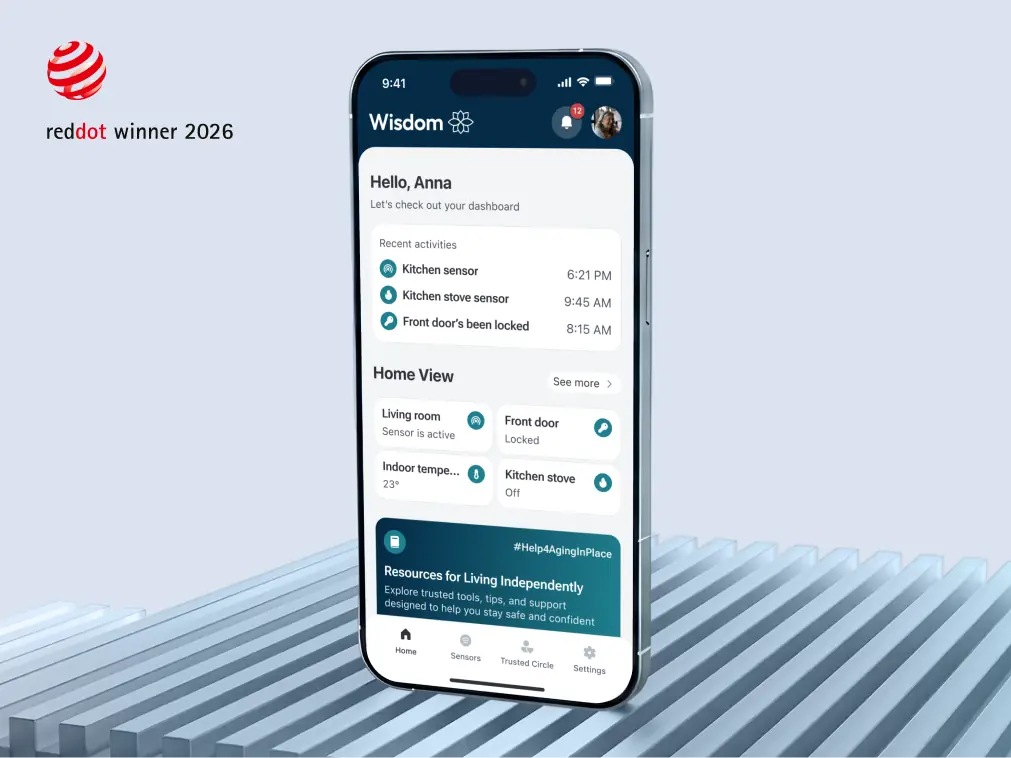
Wisdom — a digital platform for safer, more connected aging
Wisdom HEALTHCARE AI SOFTWAREUSA
Tech Stack

Flutter, Java, Spring Boot, Python, WebSocket, Computer Vision, AWS, PostgreSQL, Redis, Docker, Swagger, Liquibase

Timeline

5 months

Results

$1.3M raised in pre-seed funding

Strategic partnership with Samsung

Recognized with Red Dot and a UX Design Award nomination

HEALTHCARE AI SOFTWARE

Dawn Newsome

Co-Founder

Phenomenon Studio has really talented designers and QA engineers. We’ve received positive feedback from our customers regarding Phenomenon Studio’s work on our mobile app’s usability and design.
#Product discovery #MVP building
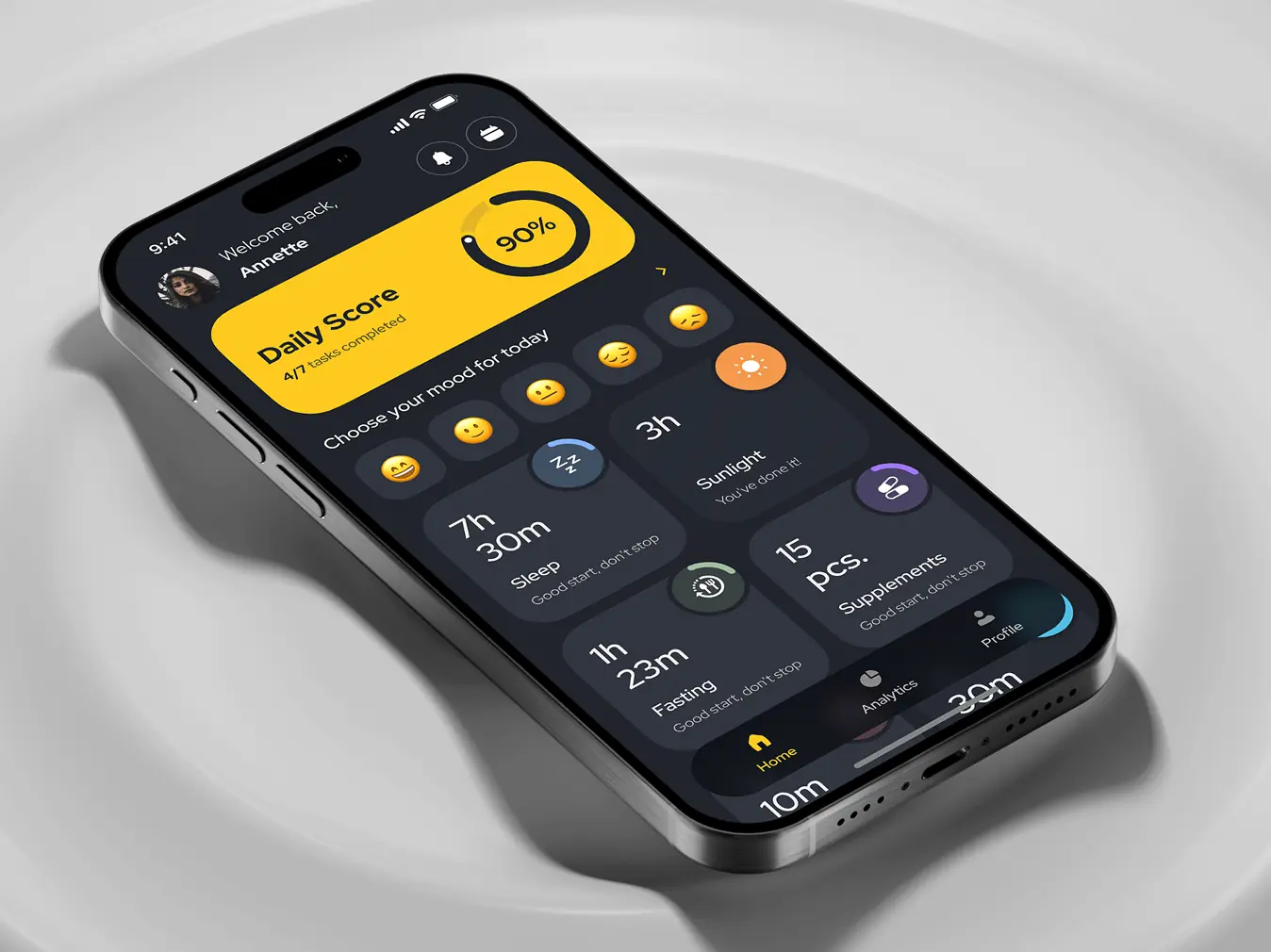
Zest — unleashing a healthier you
Zest HEALTHCARE AI SOFTWAREUSA
Results

Faster 
time-to-market

Reduced 
development costs

Simplification of complex health concepts

HEALTHCARE AI SOFTWARE

Julia Cooney

CEO of Zest

The client expressed high satisfaction with the team’s proficiency, facilitating the prompt and timely completion of the design within the initially estimated timeframes.
#Mobile app design #Mobile development
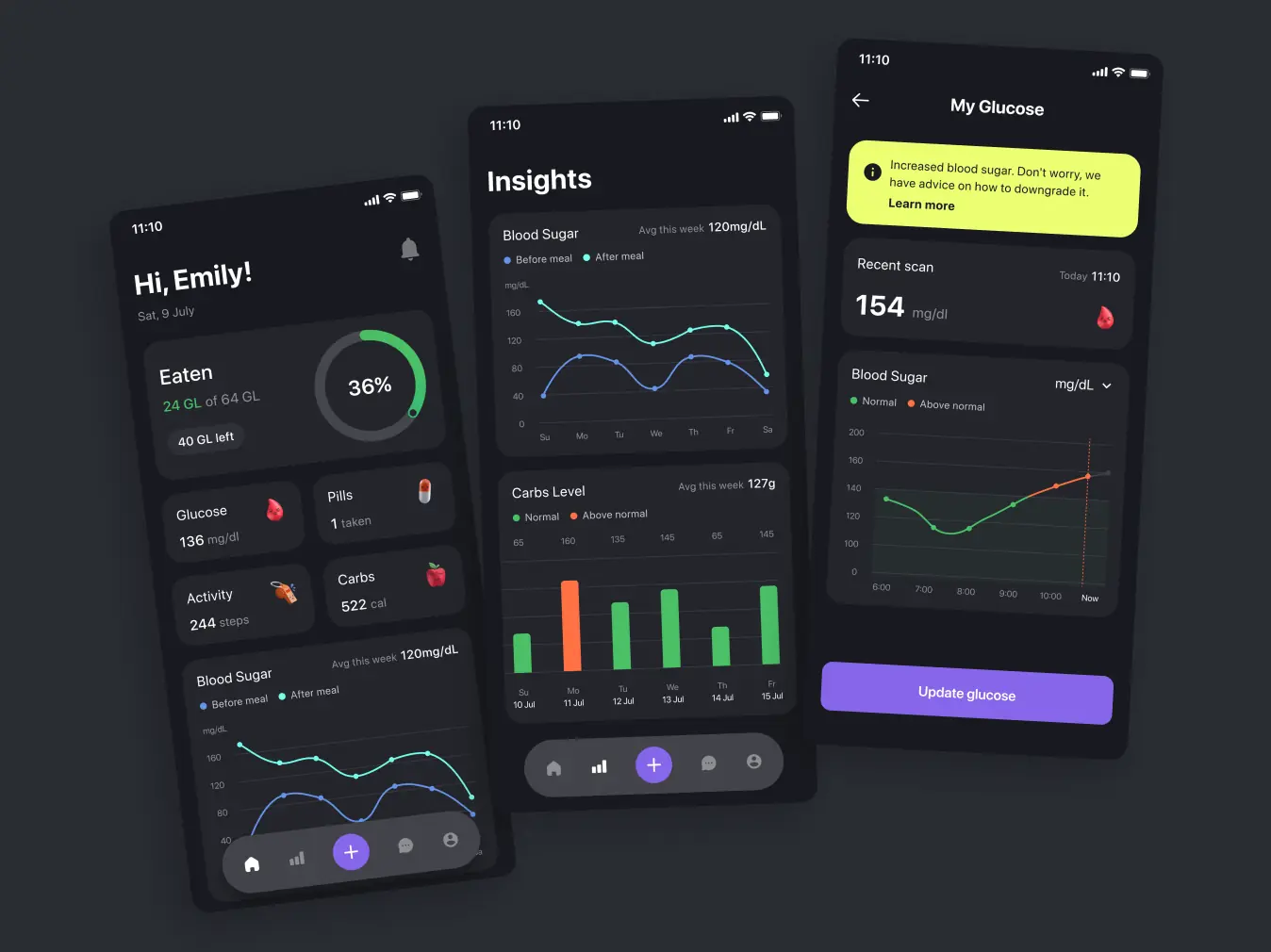
Glume – healthcare mobile app for diabetics
Glume LLC HEALTHCARE AI SOFTWAREGermany
Results

15.3% average retention rate after launch

High satisfaction with redesigned smart assistant

Tailored user experience from onboarding to recommendations

WHAT OUR CLIENTS SAY
About our approach to digital product design and development
HEALTHCARE AI SOFTWARE

Craig Tortolani

CPO at Dekryption Labs

HEALTHCARE AI SOFTWARE

Ash Bryant

Founder of Hormn

The design team is truly world-class, excelling in both user interface design and creating solutions optimized for conversion.

HEALTHCARE AI SOFTWARE

KlickEx Team

HEALTHCARE AI SOFTWARE

George Fry

Founder at Neap

The quality of the designs is fantastic. Phenomenon Studio works at speed and is extremely punctual with timelines. They deliver top-notch outcomes with exceptional designs.

HEALTHCARE AI SOFTWARE

Andre Guerra

Co-Owner at RADCAT Design

HEALTHCARE AI SOFTWARE

Kevin Alvarez

Founder & General Partner, Predictive

Phenomenon Studio's ability to translate concepts and rough design mock-ups into high-fidelity assets, designs, and visuals was very impressive. The goal was to maintain simple elegance in the design aesthetic, and they did it very well.

BUY AI HEALTHCARE SOFTWARE OR BUILD IT? COST FACTORS

Off-the-shelf or custom: how to tell which is the best AI software for healthcare
Ready-made tools cover generic tasks like scheduling, intake, or basic scribing well. Building your own pays off when AI healthcare solutions need your specialty data, deep EHR write-back, or have to set your product apart.

What drives the cost of custom AI solutions in healthcare?

01
Clinical risk of the use case
Clinical decision tools need more validation and review than admin automation
02
Data readiness and quality
Scattered or unlabeled data needs cleanup before any model can use it well
03
EHR integration depth
Read-only access costs less than write-back into clinical records with audits
04
Model usage and volume
Inference volume, model choice, and caching set your monthly running costs
05
Compliance requirements
HIPAA, GDPR, and Business Associate Agreements add controls and paperwork
06
Platforms, roles, and agents
Each extra platform, user role, and AI agent adds design and testing work
Build what keeps users coming back
Strategy, design, and development, all working together
under one roof.
HEALTHCARE AI SOFTWARE

HOW TO WORK WITH US

Three ways to partner with our AI healthcare software development company
Partner with a full-cycle product design company
We work as your long-term product design and development partner, owning strategy, discovery, design, dev, QA, and scaling iterations. This is not a “project”— it’s your full product team.
Best for
  • Founders who want a senior team thinking beyond sprints
  • Startups scaling beyond MVP and needing deep product ownership
What you get
  • Expert team aligned with your roadmap, KPIs, and business goals
  • Strategic discovery, UX systems
Hire a full-stack dedicated team
We deliver your product from idea to launch—fast and lean. You get execution-ready design and development support with a clear project scope and delivery timeline.
Best for
  • MVPs or feature builds with a defined goal and launch window
  • Pre-seed and seed startups that need to ship without building an in-house team
What you get
  • UI/UX, development, QA, and PM in one dedicated team
  • Clear scope, fixed timeline, efficient delivery
Augment your existing team
We provide developers, designers, and QA engineers to integrate with your team, helping you scale fast while keeping full control over execution.
Best for
  • Startups needing specialized expertise without long-term hiring
  • Seed & Series A+ startups looking to accelerate development
What you get
  • Embedded designers, developers, or product managers to fill skill gaps
  • Faster product delivery without the hiring delays & overhead costs

WHY TEAMS COMPARING TOP AI HEALTHCARE COMPANIES PICK US?

Your success is our priority
Design that meets regulation
HIPAA-compliant and GDPR-aligned expertise for Healthcare and beyond.

Since 2019, we’ve built HIPAA-compliant and GDPR-aligned delivery practices and earned industry recognition, delivering hundreds of products in Healthcare, SaaS, FinTech, and EdTech — where compliance and UX go hand in hand.

Design that lasts beyond trends
We don’t chase fads. We build digital products that stay relevant.

Our work looks sharp today and stays usable tomorrow — designed around long-term value, not short-term gimmicks. Scalable systems, brand consistency, and smart UX that grows with your product.

Design that’s developer-ready
We design for implementation, not handoff.

Every component is built with devs in mind: design tokens, accessibility, reusability, and real-world constraints. We collaborate with your team, reuse existing elements, and stay involved until everything’s live.

Local presence. Global delivery
Work directly with the doers — not a chain of account managers.

Collaborate with UX strategists in North America, while our senior design and development teams in Europe deliver fast, consistent results. We integrate into your tools and workflow, working as part of your team — from a single embedded designer to a full product squad.

AWARD-WINNING PRODUCT DESIGN, RECOGNIZED WORLDWIDE

Wins that inspire us forward
HEALTHCARE AI SOFTWARE

Top product design company 2024

HEALTHCARE AI SOFTWARE

One of Dribbble’s top rated design agencies

HEALTHCARE AI SOFTWARE

Red Dot Award winner in app design category

HEALTHCARE AI SOFTWARE

Nominations for several projects across different categories

HEALTHCARE AI SOFTWARE

Site of the Day & honorable mentions

40+
others

Related Services

Services that pair well with the advantages of artificial intelligence in healthcare
Website design services

Custom website layouts and UX/UI strategies to improve engagement and conversions.

UX audit

Identify usability bottlenecks, improve engagement, and optimize for conversions.

Web app design

Design responsive, user-focused web platforms with strong UX/UI logic.

FREQUENTLY ASKED QUESTIONS

Questions already
answered
01
How I evaluated these AI healthcare tools

Test every AI healthcare tool against your own workflows, data, and compliance rules before you trust the demo. A tool that impresses in a sales call can still stall on your wards if clinicians can’t check its output or your security team can’t approve its data flows.

Start with four questions. Where does patient data go, and will the vendor sign a BAA? Can clinicians see the source behind every output? Does the tool write back to your EHR or only read from it? What happens when the AI is wrong? Sales pitches from even the top AI healthcare companies rarely answer all four, so ask for written documentation.

Next, run a short pilot on your own data with a small clinical group and one clear success metric, such as minutes saved per note or alerts handled within an hour. Compare results across two or three <h2>AI healthcare companies<h/2> before you sign anything.

Finally, check how the tool fits the systems you already run. Even what a review site calls the best AI software for healthcare may need custom work to reach your EHR, match your user roles, and meet your audit requirements.

If the gaps are small, buy and configure. If they sit at the center of your workflow, price a custom build alongside the license.

.

02
What are AI tools in healthcare?

AI tools in healthcare are software features that read clinical or operational data and produce something staff or patients act on: a draft note, a risk score, an alert, an answer, or a completed task. Most of them live inside systems your team already uses.

The main categories are ambient scribing and dictation, clinical decision support, remote patient monitoring with predictive alerts, patient assistants, AI agents for scheduling and intake, and analytics dashboards. The data behind each type of AI software for healthcare differs, and so do the risks it carries.

What sits under the hood of AI for medicine is usually a mix of language models, predictive models trained on structured records, and computer vision for images or video. In the Wisdom platform, for example, sensors and cameras detect falls or long inactivity, and alerts go to trusted family members before escalating to emergency services.

Most of the value in AI healthcare solutions comes from the workflow around the model: who reviews the output, where it is stored, and how staff correct it. Intake assistants inside telemedicine platforms show this well, since they help only when their answers land in the right clinician’s queue.

When you compare tools, look at the workflow first and the model second.

03
Are AI tools in healthcare accurate and reliable?

They can be, within the task they were designed and tested for. Accuracy depends on the quality of the training data, how closely your patients match that data, and whether a person checks the output before it reaches a record.

Keep in mind that the output of AI algorithms in healthcare is a probability, and it needs a threshold and a human check. A model that performs well on one hospital’s population can drift on another, and performance can change as documentation habits, devices, or patient mix change over time.

Reliability comes from the product around the model. Source links let clinicians verify a summary in seconds. Confidence levels show when to slow down. Review gates stop unconfirmed output from entering the chart, and monitoring after launch flags drift before it harms care. User testing matters too: in the Glume diabetes app, the first version of the smart assistant failed in testing, and the reworked version reached 82% user satisfaction.

Be careful with validation claims from many AI healthcare companies, since results often come from their own test sets. Ask for evidence on populations like yours. Tools that suggest diagnoses may also count as medical devices under FDA rules, which adds validation and documentation work.

Treat accuracy as something you keep measuring for as long as the tool runs.

04
How do AI tools integrate with existing hospital systems?

Through APIs and interoperability standards, mainly HL7 FHIR for clinical data, plus the interfaces your EHR vendor provides. The AI reads from the record, processes data in a HIPAA-eligible environment, and returns results as notes, flags, or tasks that clinicians approve.

Integration depth drives most of the effort. Read-only access, such as pulling vitals into a risk model, is simpler. Write-back into clinical records needs review steps, audit trails, and agreement from your EHR team. Scheduling, billing, pharmacy systems, and connected devices each add their own integration work.

Every integration project at our AI healthcare software development company starts with a technical workshop on architecture, data flows, security protocols, and the EHR touchpoints your team uses. For live products, we add an AI-assisted audit of the existing codebase first. On Beterra, a hospital operations platform, new features went into a system already used across hospitals, for six staff roles, without disrupting daily work.

Beyond clinical records, any piece of AI software for healthcare also has to connect to identity, permissions, and logging. Patient-facing healthcare apps add device data from wearables and home sensors.

Start by listing every system the AI must read from or write to. That list sets most of your scope.

05
What is the biggest benefit of using AI in healthcare?

Time returned to clinicians and staff. The most consistent gains come from taking documentation, intake, triage, and follow-up work off people whose hours are better spent with patients.

Other benefits build on that. Remote monitoring spots problems earlier, between visits. Personalized plans keep patients on track at home. Operations dashboards show bottlenecks before they turn into missed follow-ups or longer stays.

The Wisdom platform shows the monitoring side. Sensors and cameras detect a fall or a long silence at home, alerts reach trusted contacts, and the system escalates to emergency services if nobody responds. For families, that is peace of mind. For care teams, it means fewer situations discovered too late.

Much of the advantage of AI for medicine depends on adoption. If clinicians don’t trust the output, they re-check every line, and the time savings vanish. It also explains why many AI healthcare companies start with administrative workflows, where errors carry lower clinical risk and results show up quickly.

Pick the workflow where your staff lose the most hours each week, and measure the benefit there first.

06
Which AI tool should I choose for my healthcare practice?

Choose based on the problem costing your practice the most time or risk, then check whether an existing product covers it. Common tasks usually have good ready-made options. Workflows specific to your specialty often need custom work.

For a small practice, it usually makes sense to buy AI healthcare software when the task is common, such as scheduling, reminders, or basic scribing, and your EHR vendor or a trusted partner already offers it with a signed BAA.

Agents need extra care, because they act on their own. Anyone shortlisting options from the best AI agent software healthcare organizations use should check which actions the agent can take without approval, how it logs each step, and how easily staff can reverse a mistake.

Custom healthcare software development pays off when you own specialty data, need deep write-back into clinical records, or want AI to set your product apart. Most tools sold by even the top AI healthcare companies target the broadest market, so they rarely match a niche workflow or a multi-site setup out of the box.

List your three most time-consuming workflows. Test an off-the-shelf tool on the most common one, and price a custom build for the workflow no product covers.

07
How is patient data protected when AI is part of healthcare software?

Through the same HIPAA safeguards as any system that handles PHI, plus controls on how data reaches AI models: signed BAAs with every provider that touches PHI, de-identification wherever a model can work without identifiers, encryption, role-based access, and audit logs of prompts and outputs.

The gap many teams miss is the development process. Engineers who use AI coding tools can paste patient data into a prompt without thinking. Our rule is fixed: no PHI enters any AI tool, and code that handles PHI is abstracted before AI touches it. On projects under a BAA, we either use enterprise providers that sign one or limit AI to code paths with no PHI.

It is worth asking all the AI healthcare software development companies on your shortlist how their engineers use AI tools and where that policy is written down. Phenomenon is HIPAA-monitored by Compliancy Group and discloses its AI tooling and data handling during SOC 2 vendor assessments.

Keep in mind that vendor chains at many AI healthcare companies include model APIs, logging tools, and analytics services, and each one that touches PHI needs its own agreement and retention terms. Confirm that no provider can train public models on your data.

Ask every vendor for its data flow diagram and the list of subprocessors before any pilot starts.