REMOTE PATIENT MONITORING SOFTWARE DEVELOPMENT

Create custom remote patient monitoring solutions that pass clinical pilots and win enterprise contracts
Our patient monitoring UI/UX design services have delivered 56% monthly active users, 82% satisfaction with AI-driven health assistants, and 15.3% retention rates for our clients — and we're here to exceed these results for you.
Your next growth stage starts with the right partner for remote patient monitoring companies — at launch, or at scale

OUR HEALTHCARE CREATIVE AGENCY IN NUMBERS

phenomenon studio IN NUMBERS
98%

customer satisfaction rate

35%+

boost in conversions after redesign

60+

top-tier designers and developers on board

500M+

investments raised by our clients

PROVEN HEALTHCARE EXPERTISE
Image - hero

KEY CHALLENGES FOR REMOTE PATIENT MONITORING SOLUTIONS

Building RPM software that patients use and clinicians trust requires more than basic app development
From clinical workflow disruption to regulatory roadblocks, here's what healthcare founders tell us most often, and how we solve it. These challenges often emerge during the transition from prototype to pilot deployment, when the requirements of remote patient monitoring software development meet the realities of the healthcare environment.

Our RPM prototype looks impressive to investors, but when we pilot with real clinicians, they say it creates more work, not less. Alert fatigue is killing adoption.

Our UX design in remote patient monitoring software focuses on clinical workflow integration, not flashy visuals. We build intelligent alert systems with customizable thresholds, batch notifications, and dashboards that surface only actionable insights. This way, clinicians spend less time managing alerts and more time delivering care.

We raised seed funding for our RPM idea, but now realize the regulatory pathway is way more complex than we thought. FDA, state medical boards, clinical evidence requirements… we're drowning.

As an experienced custom remote patient monitoring software development company, we’ve supported FDA submissions and other regulatory approvals from the architecture phase. Our process includes clinical evidence frameworks and regulatory documentation, giving you a clear path to approval instead of costly surprises.

Our technical team built a solid app, but we're losing enterprise deals because hospital IT departments won't approve our security architecture.

Every project is treated as an enterprise build. As a remote patient monitoring software development company, we implement SOC 2 Type II compliance, multi-tenant data isolation, and hospital-grade audit trails during development. This security foundation makes your platform ready for enterprise contracts without expensive retrofits later.

REMOTE PATIENT MONITORING SOFTWARE DEVELOPMENT SERVICES

Design and development tailored for your

remote patient monitoring software

success
Each of our services addresses the three pillars of successful custom remote patient monitoring software development: clinical adoption, regulatory approval, and patient retention. We've structured our approach around what gets RPM systems deployed and used in healthcare settings:
Strategic analysis for AI chatbot solutions users adopt and teams rely on
Product discovery
Define patient personas and clinical requirements for custom RPM software that scales.
UX audit & roadmapping
Analyze RPM workflows, identify compliance gaps, create optimization strategies.
Technical workshop
Align device connectivity, data standards, integration for long-term clinical success.
Patient monitoring UI/UX design services focused on clinical outcomes
Design prototype
Build testable RPM prototypes with clinical validation for faster stakeholder approval.
Website design
Develop a credible digital presence for RPM companies targeting health systems and payers.
Web app design
Design clinical dashboards for RPM use cases requiring real-time insights and collaboration.
Mobile app design
Patient-focused RPM mobile interfaces optimized for engagement and clinical data collection.
Website redesign
Transform RPM company websites to communicate value and accelerate enterprise sales.
Branding & identity
Create visual identity systems that establish trust and credibility in healthcare markets.
Technical execution for remote patient monitoring software development that scales
Custom MVP development
Launch-ready RPM prototypes with regulatory compliance and investor-quality design.
Web development
Clinical-grade RPM platforms supporting provider workflows and enterprise security.
Website development
Complete digital platforms for RPM companies with healthcare SEO and buyer journey design.
Mobile app development
End-to-end RPM software including device integration, alerts, and care team communication.
No-code development
Rapid RPM solution validation using advanced platforms for market testing and pilots.
Blockchain development
Secure patient data management for RPM use cases requiring immutable records and sharing.

REMOTE PATIENT MONITORING USE CASES

Patient monitoring platforms designed to support diverse care contexts
The right RPM solution reflects how your team delivers care, supports compliance, and engages patients in ways that stick. Below are the remote patient monitoring use cases we’ve seen make the biggest difference in practice:
01
Chronic disease RPM platforms
Continuous monitoring for diabetes, hypertension, heart failure, and COPD with automated data capture and alerts that support long-term care plans.
Chronic disease RPM platforms

Best for integrated care teams and specialty practices managing patients with high-risk chronic conditions.

Let's discuss

Best for integrated care teams and specialty practices managing patients with high-risk chronic conditions.

Let's discuss
02
Post-acute care monitoring apps
Recovery tracking for surgical patients, rehab progress dashboards, and discharge transition support with complication prevention built into the workflow.
Post-acute care monitoring apps

Best for hospitals aiming to lower readmissions and surgical practices needing structured post-operative oversight.

Let's discuss

Best for hospitals aiming to lower readmissions and surgical practices needing structured post-operative oversight.

Let's discuss
03
Wearable-connected RPM systems
Integration with smartwatches, fitness trackers, and medical-grade wearables for continuous vital sign capture and predictive early warning systems.
Wearable-connected RPM systems

Perfect for providers and research groups running preventive care programs and continuous clinical monitoring studies.

Let's discuss

Perfect for providers and research groups running preventive care programs and continuous clinical monitoring studies.

Let's discuss
04
Medication management apps
Smart pill reminders, dosage adherence tracking, side effect reporting, and direct pharmacy integration for patients with complex drug regimens.
Medication management apps

Works well for specialty pharmacies and practices supporting patients with multiple medications and chronic conditions.

Let's discuss

Works well for specialty pharmacies and practices supporting patients with multiple medications and chronic conditions.

Let's discuss
05
Clinical trial & research RPM apps
Patient-reported outcomes, clinical data collection, and real-world evidence tracking with regulatory-grade security for decentralized trial setups.
Clinical trial & research RPM apps

Ideal for pharmaceutical companies and academic centers conducting decentralized trials or longitudinal studies.

Let's discuss

Ideal for pharmaceutical companies and academic centers conducting decentralized trials or longitudinal studies.

Let's discuss
06
Hospital-based RPM platforms
Inpatient monitoring tools for ICUs and wards, combining telemetry, wireless sensors, and EHR integration for continuous clinical decision support.
Hospital-based RPM platforms

Best for hospitals expanding continuous monitoring capacity and strengthening patient safety inside facilities.

Let's discuss

Best for hospitals expanding continuous monitoring capacity and strengthening patient safety inside facilities.

Let's discuss

OUR PATIENT MONITORING UI/UX DESIGN SERVICES

Clinical-grade interfaces designed around patient behaviours, workflow realities, and compliance needs
Delivering effective custom remote patient monitoring software development requires more than connecting devices to dashboards. Our

UX design in remote patient monitoring

addresses the specific friction points that cause RPM apps to fail in real clinical environments - and here’s how:
Image - 6b6e63d294c02fa0eedab1e242be21ef
Real-time vital signs with trend visualization for a comprehensive health overview.
Where healthcare UX breaks:
  • Overload of unfiltered health data
  • Critical alerts buried in noise
  • Confusing navigation between metrics
  • Weak mobile usability for patients
How we fix it:
  • Clear, prioritized alert hierarchy
  • Actionable insights over raw numbers
  • Streamlined, mobile-first interface design
  • Personalized dashboards by condition
Image - d4579a07551a51e24e70d782aa5d68b4
Automated notifications and escalation protocols for abnormal readings and patient non-compliance.
Where healthcare UX breaks:
  • Alert fatigue from constant notifications
  • Unclear urgency levels for care teams
  • Delayed responses from weak prioritization
  • No context to guide clinical decisions
How we fix it:
  • Smart filtering with flexible thresholds
  • Color-coded urgency and response protocols
  • Batch notifications for routine updates
  • Clinical context attached to each alert
Connectivity management for glucometers, BP cuffs, oximeters, and wearable devices.
Where healthcare UX breaks:
  • Complicated pairing frustrates patients
  • Inconsistent syncing creates dangerous gaps
  • Technical errors lack clear resolution
  • Multiple apps needed for different devices
How we fix it:
  • One-tap pairing with visual confirmation
  • Auto sync validation and error recovery
  • Simple troubleshooting with live support
  • Universal device management in one interface
Secure messaging, video visits, and coordinated care planning between patients and providers.
Where healthcare UX breaks:
  • Fragmented tools across platforms
  • Unclear priorities and slow responses
  • No link to clinical workflows
  • Poor video quality in sessions
How we fix it:
  • Unified hub with role-based access
  • Threaded messaging with context
  • EHR integration for continuity
  • Reliable, high-quality video calls
Image - original-8022df701bc51c3eef8c0bed977e3615
Prescription tracking, adherence monitoring, and side effect reporting with pharmacy integration.
Where healthcare UX breaks:
  • Complex schedules overwhelm patients
  • Missed doses untracked by clinicians
  • Side effects logged in separate tools
  • No pharmacy link for refills
How we fix it:
  • Visual calendar with smart reminders
  • Automated adherence reports to care teams
  • Integrated side effect tracking with severity
  • Direct pharmacy link for prescriptions
Population insights, outcome tracking, and regulatory reporting for healthcare administrators.
Where healthcare UX breaks:
  • Data silos block complete analysis
  • Reports too complex for non-experts
  • No actionable insights for improvement
  • Compliance reporting takes hours
How we fix it:
  • Unified dashboards across populations
  • Automated reports with key insights
  • Predictive analytics for interventions
  • One-click tools for compliance reporting
Image - IMG_7877
Need to build one of these?
Book a call with Anastasiia Danylenko, our Sales Lead, to discuss your

custom remote patient monitoring software development

project.

RPM SYSTEM FEATURES

Technical components that turn patient data into clinical decisions and enterprise contracts
What separates RPM platforms that land hospital contracts from those stuck in pilots? Strong feature architecture. In our remote patient monitoring software development services, we focus on the capabilities that solve daily clinical problems, avoid budget waste, and help you validate faster for the next funding round.
Icon - desktop-computer-svgrepo-com 2
Multi-device orchestration

Hub for glucometers, BP cuffs, scales, and wearables with conflict resolution and data flow.

Icon - asterisk-svgrepo-com 2-9
Clinical intelligence engine

Algorithms spot early deterioration and trigger intervention before emergencies occur.

Icon - asterisk-svgrepo-com 2-3
Adaptive patient interfaces

Dashboards adjust to age, literacy, and engagement for clearer patient use.

Icon - link-svgrepo-com 2
Medication synchronization

Tracks adherence, links pharmacies, verifies insurance, and automates refills.

Icon - asterisk-svgrepo-com 2-9
Care coordination hub

Platform connecting patients, families, and providers with shared care plans.

Icon - asterisk-svgrepo-com 2-9
Healthcare system integration

EMR connectors with read/write support and auto clinical documentation.

Icon - diagram-sankey-svgrepo-com 2
Data integrity protocols

Validation checks, duplicate detection, and patient confirmations ensure accuracy.

Icon - filter-svgrepo-com 2
Population analytics engine

Cohort tools flag high-risk groups and measure intervention outcomes.

Icon - asterisk-svgrepo-com 2-11
Virtual care triggers

Anomalies auto-schedule visits with summaries and provider actions.

Icon - asterisk-svgrepo-com 2-4
Regulatory framework

Compliance layer covering HIPAA, FDA rules, and telemedicine laws.

Icon - microphone-alt-1-svgrepo-com 2
Inclusive design standards

Voice commands, cognitive aids, and multilingual options for access.

Icon - asterisk-svgrepo-com 2-8
Clinical workflow automation

Protocol tasks, documentation, and care updates reduce admin load.

Icon - asterisk-svgrepo-com 2
Patient engagement portal

Self-service dashboard for metrics, messaging, and scheduling.

Icon - asterisk-svgrepo-com 2-8
Research-grade reporting

Outcome metrics, quality data, and anonymized research exports.

Icon - asterisk-svgrepo-com 2-14
Threshold management system

Clinician-set alerts with escalation rules and auto notifications.

Technology stack

Frameworks &
technologies we use
Icon - React
React

Icon - NextJS
Next.js

Icon - asterisk-svgrepo-com 2-2
Solid.js

Icon - asterisk-svgrepo-com 2-3
Astro

Icon - asterisk-svgrepo-com 2-4
TypeScript

Icon - asterisk-svgrepo-com 2-5
Node.js

Icon - asterisk-svgrepo-com 2-6
Express.js

Icon - asterisk-svgrepo-com 2-7
Nest.js

Icon - asterisk-svgrepo-com 2-8
PHP

Icon - asterisk-svgrepo-com 2-9
Laravel

Icon - asterisk-svgrepo-com 2-4
TypeScript

Icon - asterisk-svgrepo-com 2-1
WordPress

Icon - asterisk-svgrepo-com 2
Webflow

Icon - asterisk-svgrepo-com 2-10
Amazon web services

Icon - asterisk-svgrepo-com 2-11
Digital Ocean

Icon - asterisk-svgrepo-com 2-12
Cloudflare

Icon - asterisk-svgrepo-com 2-13
Docker

Icon - asterisk-svgrepo-com 2-14
Gitlab / Github CI / CD

Icon - asterisk-svgrepo-com 2-15
Kubernetes

Icon - asterisk-svgrepo-com 2-21
Shadcn

Icon - asterisk-svgrepo-com 2-22
Radix

Icon - miui
MUI

Icon - asterisk-svgrepo-com 2
Ant design

Icon - asterisk-svgrepo-com 2-1
PrimeReact

Icon - asterisk-svgrepo-com 2-2
Carbon Design System

Icon - asterisk-svgrepo-com 2-3
Chakra UI

OUR REMOTE PATIENT MONITORING SOFTWARE DEVELOPMENT PROCESS

Phenomenal collaborative approach: turning your clinical vision into deployable RPM systems
In RPM software development, skipping critical steps can derail enterprise deals, while early validations prevent costly rebuilds. Our remote patient monitoring software development company has refined this process through tens of successful healthcare product launches:

Product discovery

01

Most healthcare founders underestimate clinical complexity

We start by understanding how your RPM solution fits into care protocols, who must approve it, and what integrations drive contracts.

Key steps

  • Care workflow mapping and bottleneck review
  • Hospital IT and security requirement analysis
  • Device landscape review for target conditions
  • Regulatory pathway assessment

Deliverables

Workflow blueprint buyer analysis integration roadmap compliance strategy

Idea validation

02

Testing assumptions with the people who’ll use your RPM platform

We validate your RPM concept with patients and clinicians before code is written to avoid “demo-ready but pilot-failed” products.

Key steps

  • Patient persona validation at clinical sites
  • Clinician interviews in target organizations
  • Competitive RPM solution benchmarking
  • Tech stack feasibility validation

Deliverables

Validation report feedback analysis feasibility summary

Design & prototyping

03

Designing interfaces that work in high-pressure healthcare environments

Effective <h2>UX design in RPM</h2> systems must reduce cognitive load and support diverse patients. Our RPM UI/UX design services prioritize clarity when seconds matter.

Key steps

  • Clinical decision-support and alert hierarchy
  • Patient engagement flow for chronic care
  • Accessibility for elderly and diverse users
  • EMR integration UX planning

Deliverables

Clinical prototypes engagement wireframes accessibility docs integration specs

Backend architecture & devOps

04

Building technical foundations that pass hospital IT audits

Healthcare IT is unforgiving. We architect remote patient monitoring software to pass SOC 2 audits, support multi-tenant deployments, and handle complex integrations.

Key steps

  • HIPAA-compliant cloud architecture
  • Multi-tenant database design
  • HL7/FHIR API architecture for EMRs
  • Disaster recovery planning

Deliverables

Architecture docs security framework API spec deployment plan

Development

05

Building features that survive contact with actual healthcare workflows

We run two-week sprints with clinical stakeholder reviews, catching workflow mismatches early so your RPM platform improves care instead of adding admin burden.

Key steps

  • Feature builds with stakeholder review
  • Device connectivity testing across vendors
  • Workflow integration checks at milestones
  • Network performance optimization

Deliverables

Functional RPM platform integration test results device validation performance benchmarks

QA & testing

06

Validating RPM platforms under real clinical pressure

We test remote patient monitoring software development in simulated hospital environments with care teams, covering emergencies and edge cases that reveal weak platforms before launch.

Key steps

  • Workflow stress testing with simulations
  • Multi-device integration checks
  • HIPAA, SOC 2, FDA compliance validation
  • Clinical user acceptance testing

Deliverables

Validation report compliance docs UAT results readiness assessment

Post-launch support

07

Supporting successful RPM platform adoption in healthcare organizations

Our agency provides hands-on deployment support, clinical staff training, and ongoing optimization based on usage patterns to your RPM solution improves care and proves its value.

Key steps

  • Clinical staff training programs
  • Patient enrollment optimization
  • Outcome tracking and ROI reporting
  • Usage-driven platform improvements

Deliverables

Training docs engagement plan outcome dashboard support roadmap
Icon - process-1
See what it’s like to work with us
One week. Reduced rate. Test our remote patient monitoring software development services with a pilot sprint before committing to full-scale development.

FEATURED CASES

Check out some remote patient monitoring software platforms we’ve designed and built
From aging-in-place platforms to wearable-connected health apps, our work demonstrates how strong UI/UX design in RPM, compliance, and engineering translates into adoption and engagement.
#Product redesign #Mobile app development
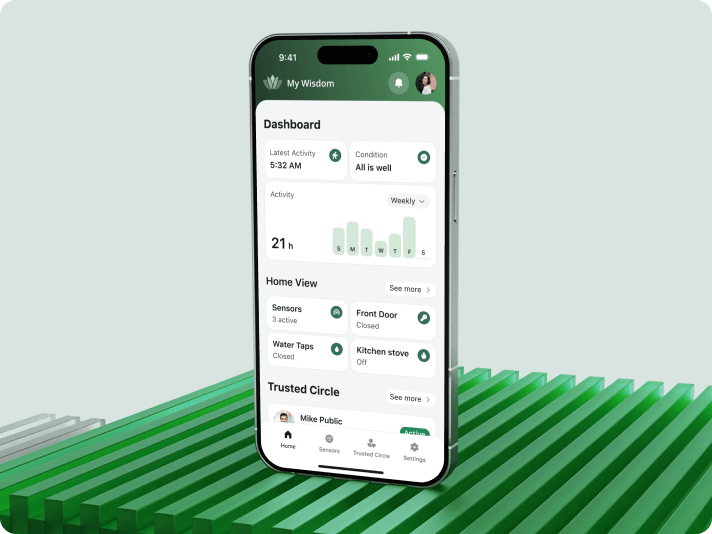
MyWisdom — a digital platform for safer, more connected aging
MyWisdom Icon - fi_4628635USA
Tech Stack

Flutter, Java, Spring Boot, Python, WebSocket, Computer Vision, AWS, PostgreSQL, Redis, Docker, Swagger, Liquibase

Timeline

5 month

Results

Clearer focus and smoother user flows

Better accessibility for diverse user needs

Consistent and scalable design system

#Mobile app design #Mobile app development
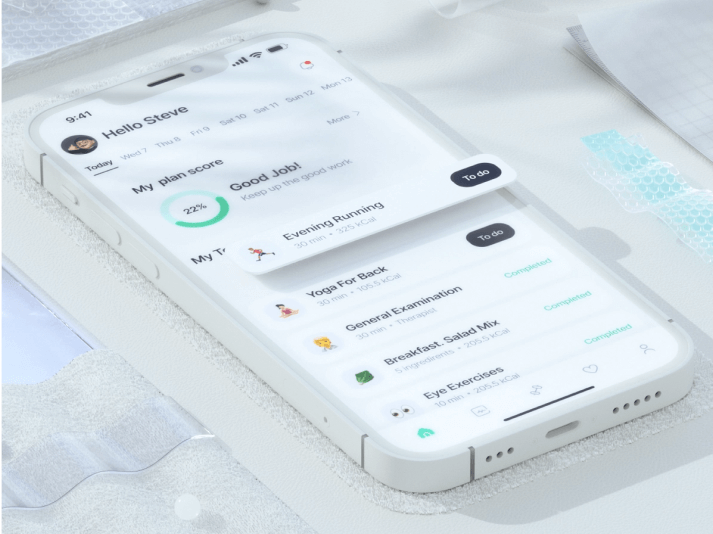
Healher – an app with personalized health plans
Healher Icon - fi_4628635USA
Results

56% active users in the last 30 days

Personalized health plans based on smart wristband data

Comprehensive and user-friendly design

#Mobile app design #Mobile development
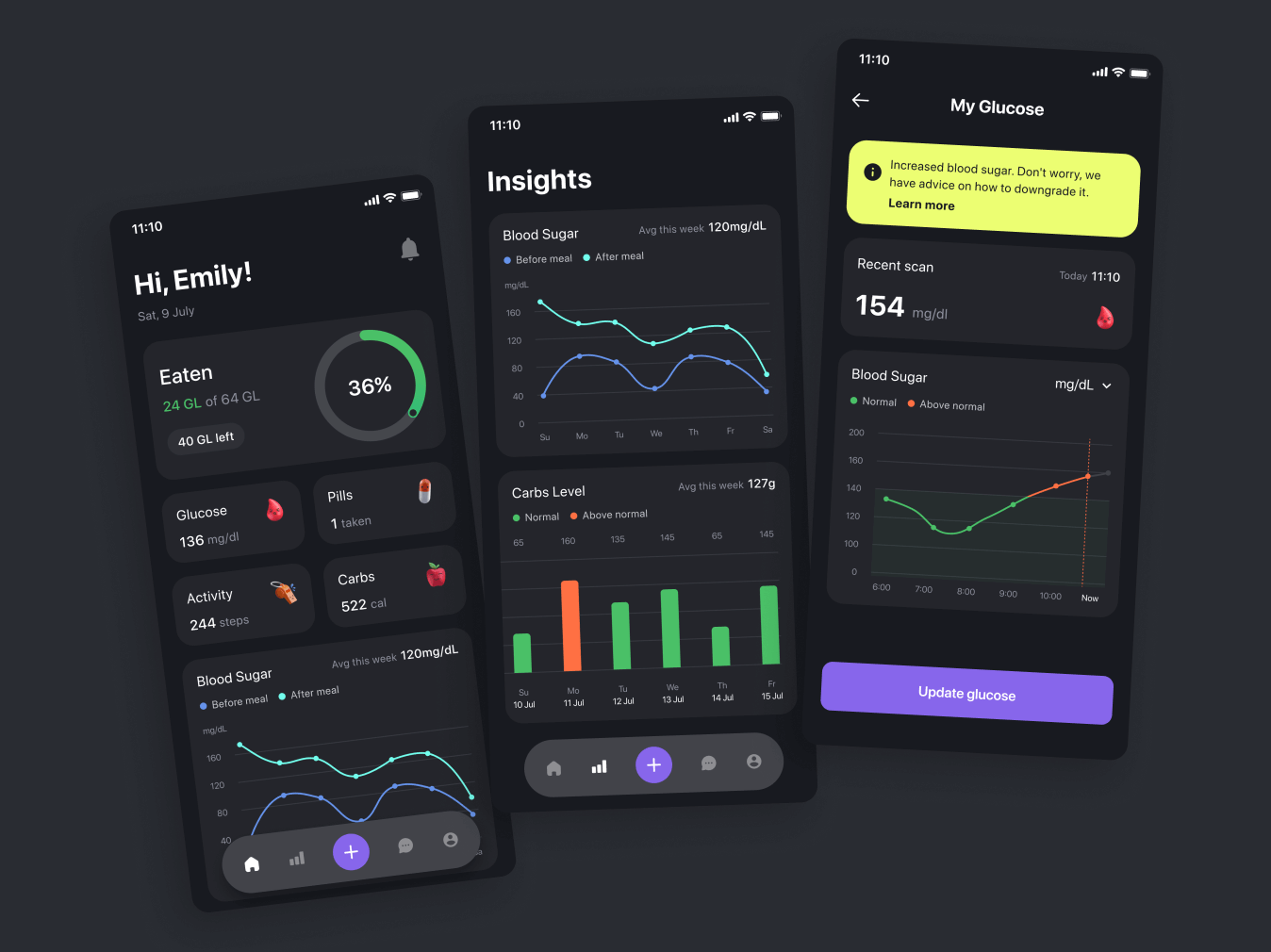
Glume – healthcare mobile app for diabetics
Glume LLC Image - de-circle-01Germany
Results

15.3% average retention rate after launch

High satisfaction with redesigned smart assistant

Tailored user experience from onboarding to recommendations

what our clients say

5.0 is our average
on clutch & designrush

Image - Craig Tortolani

Craig Tortolani

CPO at Dekryption Labs
Image - Alex Friedman

Alex Friedman

CEO at Open Path

Not only is the team extremely communicative, their work is exceptional. I have never worked with a team so talented while also being competitively priced and communicative.

Image - KlickEx

KlickEx Team

Image - George Fry

George Fry

Founder at Neap

The quality of the designs is fantastic. Phenomenon Studio works at speed and is extremely punctual with timelines. They deliver top-notch outcomes with exceptional designs.

Image - Andre Guerra

Andre Guerra

Co-Owner at RADCAT Design

Image - Kevin Alvarez

Kevin Alvarez

Founder & General Partner, Predictive

Phenomenon Studio's ability to translate concepts and rough design mock-ups into high-fidelity assets, designs, and visuals was very impressive. The goal was to maintain simple elegance in the design aesthetic, and they did it very well.

REMOTE PATIENT MONITORING SOFTWARE DEVELOPMENT COST

Key factors that form the timeline, effort, and budget for building RPM apps

Building effective remote patient monitoring software development cost planning requires understanding the hidden complexity behind “connecting devices to dashboards.” Most healthcare startups budget for basic app development but hit unexpected expenses in clinical workflow integration, regulatory compliance, and enterprise security requirements.

What drives your remote patient monitoring software development costs up?
01
Clinical protocol depth

Basic diabetes tracking versus complex multi-condition management with predictive analytics

02
Healthcare system integration

Simple data sharing versus deep EMR workflow integration with Epic, Cerner, or AllScripts

03
Medical device ecosystem

Connecting 3 device types versus supporting dozens of manufacturers across multiple protocols

04
Regulatory pathway complexity

HIPAA baseline versus FDA device regulations, SOC 2 certification, and clinical evidence collection

05
Enterprise deployment architecture

Single-site pilots versus multi-tenant health system rollouts with role-based access controls

06
Patient population scale

Supporting hundreds of patients versus optimizing for thousands of concurrent users
Icon - process-1

Get a tailored project estimate

Want precise investment planning based on your clinical requirements, integration scope, and growth timeline? Schedule a consultation to receive a detailed price analysis before committing to full-cycle RPM software development services.

HOW TO WORK WITH US

Choose the right way to work with our custom remote patient monitoring software development company
Partner with a full-cycle product design company
We work as your long-term product design and development partner, owning strategy, discovery, design, dev, QA, and scaling iterations. This is not a “project”— it’s your full product team.
Best for
  • Founders who want a senior team thinking beyond sprints
  • Startups scaling beyond MVP and needing deep product ownership
What you get
  • Expert team aligned with your roadmap, KPIs, and business goals
  • Strategic discovery, UX systems
Hire a full-stack dedicated team
We deliver your product from idea to launch—fast and lean. You get execution-ready design and development support with a clear project scope and delivery timeline.
Best for
  • MVPs or feature builds with a defined goal and launch window
  • Pre-seed and seed startups that need to ship without building an in-house team
What you get
  • UI/UX, development, QA, and PM in one dedicated team
  • Clear scope, fixed timeline, efficient delivery
Augment your existing team
We provide developers, designers, and QA engineers to integrate with your team, helping you scale fast while keeping full control over execution.
Best for
  • Startups needing specialized expertise without long-term hiring
  • Seed & Series A+ startups looking to accelerate development
What you get
  • Embedded designers, developers, or product managers to fill skill gaps
  • Faster product delivery without the hiring delays & overhead costs

WHY CHOOSE US AMONG OTHER RPM SOLUTIONS DEVELOPERS?

Your success is our priority
Design that meets regulation
HIPAA- and GDPR-certified expertise for Healthcare and beyond.

Since 2019, we’ve gained HIPAA and GDPR certifications and industry recognition, delivering hundreds of products in Healthcare, SaaS, FinTech, and EdTech — where compliance and UX go hand in hand.

Design that lasts beyond trends
We don’t chase fads. We build digital products that stay relevant.

Our work looks sharp today and stays usable tomorrow — designed around long-term value, not short-term gimmicks. Scalable systems, brand consistency, and smart UX that grows with your product.

Design that’s developer-ready
We design for implementation, not handoff.

Every component is built with devs in mind: design tokens, accessibility, reusability, and real-world constraints. We collaborate with your team, reuse existing elements, and stay involved until everything’s live.

Local presence. Global delivery
Work directly with the doers — not a chain of account managers.

Collaborate with UX strategists in North America, while our senior design and development teams in Europe deliver fast, consistent results. We integrate into your tools and workflow, working as part of your team — from a single embedded designer to a full product squad.

AWARD-WINNING PRODUCT DESIGN, RECOGNIZED WORLDWIDE

Wins that inspire us forward
Icon - clutch

Top product design company 2024

Icon - upwork

Top rated plus agency by Upwork

Icon - webflow

Professional partner by Webflow

Icon - design

Nominee 2024
Isora - GRC Platform

Icon - Awwwards

Site of the Day & honorable mentions

32+
others

Related Services

Services that pair well with your RPM software development project
Branding

Develop a brand that resonates — visually, emotionally, and strategically.

Custom MVP development

Expand your prototype into a fully functional, production-ready product.

Web app design

Design responsive, user-focused web platforms with strong UX/UI logic.

FREQUENTLY ASKED QUESTIONS

Questions already
answered
01
What is patient monitoring system?

A patient monitoring system is a technology that collects, transmits, and displays health data so clinicians can make informed decisions. These systems typically track vital signs such as heart rate, blood pressure, oxygen saturation, and glucose levels, either in real time or at scheduled intervals. Originally confined to hospital ICUs, modern monitoring systems now extend into homes and outpatient settings thanks to wireless devices, wearables, and cloud integration.

For providers, the benefit is early detection of complications and better management of chronic diseases. For patients, it means continuous oversight without being tethered to a hospital bed. However, collecting data is only half the story.

Many remote patient monitoring use cases reveal that adoption often fails when the interface is poorly designed. If information is confusing, alerts overwhelming, or dashboards cluttered, clinicians may not use the system effectively. That’s why UX design in remote patient monitoring has become central to product success. Thoughtful UX decisions reduce alert fatigue, prioritize the right information, and make platforms accessible to diverse patient groups, including elderly users.

Modern systems also integrate with EHRs, pharmacy systems, and care coordination tools, ensuring that monitoring is not an isolated feature but part of a larger healthcare workflow. In short, patient monitoring systems are no longer just about capturing data — they’re about presenting it in a way that supports real-world care delivery and outcomes.

02
What is remote patient monitoring in healthcare?

Remote patient monitoring (RPM) in healthcare refers to technologies that track patient health outside traditional clinical settings. With RPM, devices like glucometers, pulse oximeters, and smart wearables collect data and transmit it to healthcare teams through secure platforms. This continuous data stream allows clinicians to intervene earlier, adjust care plans in real time, and reduce unnecessary hospital visits.

The value of RPM extends across chronic disease management, post-surgical recovery, preventive health, and even clinical research. For hospitals, RPM helps reduce readmissions and supports reimbursement models tied to outcomes. For startups, RPM creates opportunities to deliver scalable, patient-centered care models backed by strong data.

Yet RPM adoption often fails when software design doesn’t reflect clinical workflows. Poorly structured interfaces can overwhelm clinicians and confuse patients, leading to low compliance. Addressing these challenges requires deliberate ux design in RPM, where alert systems, dashboards, and mobile experiences are carefully built to align with how care teams actually work.

From a development standpoint, RPM platforms must also pass strict security and regulatory standards such as HIPAA, SOC 2, and FDA requirements. That’s why healthcare organizations and founders typically partner with a custom remote patient monitoring software development company. Such teams bring expertise in architecture, compliance, and integration, ensuring that RPM platforms are not only innovative but also enterprise-ready.

03
What regulatory requirements apply to remote patient monitoring software?

Regulatory compliance is one of the biggest hurdles in turning an RPM concept into a market-ready product. Unlike consumer health apps, remote patient monitoring platforms must meet strict standards to safeguard patient data, validate device accuracy, and earn clinical trust.

In the U.S., HIPAA establishes requirements for data privacy and security, demanding encrypted transmission, access controls, and audit trails. If the platform integrates medical devices or algorithms, FDA oversight may apply. For teams planning to scale globally, regulations such as GDPR in Europe or PIPEDA in Canada also need to be addressed.

Hospitals and enterprise buyers often require SOC 2 Type II certification, disaster recovery planning, and compliance with HL7 FHIR standards for interoperability. Missing these checkpoints can stall procurement or kill enterprise deals.

It’s also important to recognize that different remote patient monitoring use cases – such as chronic disease management, post-acute recovery, or clinical trial data collection – come with unique regulatory expectations. Building compliance into the architecture from the start helps ensure smoother approvals, faster adoption, and reduced risk of costly rework down the line.

Contact us

Have a project in mind?
Let's chat

Your Name

Enter your name *

Your Email

Enter your email *

Message

Tell us about your project

You can upload maximum 5 files
Some of your file not loaded, because maximum file size - 5 mb
Your budget for this project?

By clicking this button you accept Terms of Service and
Privacy Policy

Icon - circle-check-svgrepo-com 1
Thanks for taking time to reachout!
Stay connected with us by subscribing to our LinkedIn account. By following, you’l be the first to hear about our latest updates, news, and exciting development. We look forward to sharing our journey with you!
Icon - circle-check-svgrepo-com 1
Thanks for taking time to reachout!
We’d love to hear more about your project! Feel free to schedule a call using the link provided. This will help us better understand your vision and ensure we’re aligned on all the details.
Have a project to
discuss?
Image - ksenia
Kseniia Shalia
Account Executive
Have a partnership in
mind?
Image - polina
Polina Chebanova
Co-Founder & CPO