CUSTOM MOBILE APP DEVELOPMENT SERVICES

We've helped clients raise $500M+. Their mobile apps, which we built, had a lot to do with it.
Whether you're launching an MVP or rebuilding an app that outgrew its codebase, our mobile app development company helps you go from concept to live App Store product 50% faster and with 60% fewer post-launch bugs.
Your next growth stage starts with the right mobile app development agency — at launch, or at scale

DESIGNING PRODUCTS FOR STARTUPS BACKED BY

phenomenon studio IN NUMBERS
98%

customer satisfaction rate

35%+

boost in conversions after redesign

70+

top-tier designers and developers on board

500M+

investments raised by our clients

KEY MOBILE APP DEVELOPMENT CHALLENGES

Three patterns we see in every stalled mobile app project - and how we get ahead of them
Every mobile app development project carries risk, but most failures follow predictable patterns. Across hundreds of products we've built, the same three breakdowns account for the majority of wasted time and budget. Here's how our mobile app development agency in USA handles each one:

We launched on both iOS and Android with separate teams. Now every feature takes twice the budget, and the experiences don't match.

We assess whether your product needs native or

cross platform mobile app development

based on performance requirements, device API access, and your roadmap. For most apps, our mobile app development team builds a single React Native or Flutter codebase, then optimizes platform-specific interactions so each OS feels native. For projects requiring hardware integration, our

iOS mobile app development agency

and Android specialists build separate native layers.

Our app made it through development, but it was rejected by the App Store three times. We lost six weeks and our launch window.

Submission failures are architecture problems, not paperwork problems. Our mobile app development agency USA team bakes Apple and Google compliance into the project from sprint one, covering metadata, privacy manifests, permission usage strings, and human interface guidelines. We've maintained a 94% first-submission approval rate across App Store and Google Play launches.

The agency we hired built us a pretty prototype, but the app crashes when more than 200 users are on it at once.

Visual design without load testing is a demo, not a product. Through our high-end mobile app development services USA, we run concurrent user simulations during QA, stress-test API response times, WebSocket connections, memory leaks, and background task handling. Our target across every project: <200ms API response at 10x your projected user load.

OUR CUSTOM MOBILE APP DEVELOPMENT SERVICES

Research, design, and development under one roof - from first wireframe to App Store launch
Rebuilding an MVP that works at launch but cracks at 10,000 users costs more to fix than building right from the start. The

best mobile app development company

plans for where your product is going - and that's exactly what we at Phenomenon do through the following services:
Ground every mobile app development decision in user data
Product discovery
Define your audience, success metrics, and the feature set that earns traction with early adopters.
UX audit & roadmapping
Evaluate existing flows, spot drop-offs, and translate findings into a phased build plan.
Technical workshop
Lock in tech stack, third-party dependencies, and system architecture to prevent mid-build pivots.
Turn validated research into mobile app development interfaces that people navigate without thinking
Design prototype
Build clickable prototypes that test critical user paths and interactions before development starts.
Mobile app design
Craft platform-specific UI with gesture patterns, navigation hierarchies, and interaction states per OS.
Web app design
Responsive interfaces for mobile apps that need to perform across every device, browser, and screen.
Website design
Marketing sites and landing pages designed to promote your mobile app and convert visitors to users.
Product redesign
Rebuild underperforming mobile apps guided by usage analytics, user feedback, and market benchmarks.
Branding
Visual identity, UI kits, and design systems that keep your mobile product consistent at any scale.
Production-grade custom mobile app development services built to grow with your business
Custom MVP development
Scoped MVPs that validate your core hypothesis fast, including rapid builds delivered in 4–6 weeks.
IOS mobile app development
Swift-built native apps with deep Apple ecosystem integration and access to the latest device APIs.
Android mobile app development
Kotlin-first apps optimized for performance across the full range of Android device configurations.
Cross-platform development
Single React Native or Flutter codebase serving both iOS and Android without sacrificing native feel.
No-code development
Fast product validation with FlutterFlow or Adalo when speed to market outweighs writing custom code.
Blockchain development
Wallet integrations, token transactions, and decentralized app features built for mobile platforms.

SOLUTIONS OUR MOBILE APP DEVELOPMENT COMPANY BUILDS

Not every mobile app needs the same foundation. Here's how to pick yours
Your choice of app type locks in performance ceilings, maintenance costs, and iteration speed after launch. Each option below serves a different mix of budget, timeline, and technical needs. Which fits? Our mobile app development firm has built every type on this list and can help you decide.
01
Native iOS apps
Swift-powered apps with full access to Apple's latest APIs: ARKit, HealthKit, Core ML, and secure enclave. Our

iOS mobile app development services

tap deep into the ecosystem.
Native iOS apps

Best for performance-heavy apps, AR features, health device pairing, biometric fintech, and Apple Watch apps.

Let's discuss

Best for performance-heavy apps, AR features, health device pairing, biometric fintech, and Apple Watch apps.

Let's discuss
02
Native Android apps
Kotlin-first builds covering phones, tablets, wearables, and Android Auto. We test across 24,000+ device configurations so that fragmentation won't surprise you.
Native Android apps

Ideal for enterprise MDM distribution, IoT hardware integration, emerging market applications, and custom device interfaces.

Let's discuss

Ideal for enterprise MDM distribution, IoT hardware integration, emerging market applications, and custom device interfaces.

Let's discuss
03
Cross-platform apps
One React Native or Flutter codebase running on both platforms. Our cross platform mobile app development approach cuts costs by 30–40% while keeping a native feel.
Cross-platform apps

Works for MVPs, SaaS companion apps, ecommerce platforms, content apps, and startups testing product-market fit.

Let's discuss

Works for MVPs, SaaS companion apps, ecommerce platforms, content apps, and startups testing product-market fit.

Let's discuss
04
Progressive web apps (PWAs)
Installable from the browser with offline caching, push notifications, and home screen access, with no App Store review or submission required.
Progressive web apps (PWAs)

Ideal for content-driven apps, event platforms, catalog browsing, and field teams with spotty connectivity.

Let's discuss

Ideal for content-driven apps, event platforms, catalog browsing, and field teams with spotty connectivity.

Let's discuss
05
Hybrid mobile apps
Web technologies in a native shell via Capacitor or Ionic. Delivers faster than native when pixel-perfect behaviour isn't your top priority.
Hybrid mobile apps

Best for internal company tools, rapid prototypes, admin dashboards, and low-complexity apps on tight timelines.

Let's discuss

Best for internal company tools, rapid prototypes, admin dashboards, and low-complexity apps on tight timelines.

Let's discuss
06
Enterprise mobile apps
Role-based platforms with SSO, MDM compliance, offline sync, and full audit trails.

Enterprise mobile app development

for regulated scale.
Enterprise mobile apps

Works for healthcare systems, financial institutions, logistics operations, government, and field service teams.

Let's discuss

Works for healthcare systems, financial institutions, logistics operations, government, and field service teams.

Let's discuss

INDUSTRIES OUR MOBILE APP DEVELOPMENT AGENCY EXCELS IN

Your industry has rules that generic dev teams learn the hard way. We already know them
Industry requirements shape every architecture decision. Providing high-caliber mobile app development services USA, our team has built across six verticals below, knows where mobile projects in each one tend to stall, and how to fix them.
Multi-tenant mobile companions with subscription logic and role-based sync via enterprise mobile app development services.
What typically stalls:
  • Tenant data leaking via shared caches
  • StoreKit/Play billing state drift
  • Background fetch draining >5% battery/hr
  • Android cold-starts breaking links
How we do differently:
  • Tenant-scoped Keychain groups and token isolation
  • Server-side receipt validation with webhook sync
  • WorkManager scheduling with battery constraints
  • Verified App Links with assetlinks.json fallback
Encrypted, compliant apps for telehealth and patient monitoring via our

healthcare mobile app development company

.
What typically stalls:
  • PHI leaking through unencrypted local storage
  • WebRTC video dropping frames on 4G
  • HealthKit write permissions failing silently
  • Privacy manifest gaps blocking App Store review
How we do differently:
  • AES-256 encryption at rest with Keychain/Keystore
  • Adaptive bitrate with TURN server fallbacks
  • Per-OS health SDK regression testing
  • Pre-submission privacy manifest audit
Image - original-0f3f9f711cfa7954cea68cdc97f90833
Live video learning apps with offline access and progress sync built through React Native mobile app development services.
What typically stalls:
  • Video quality drops on mobile networks
  • Offline cache corruption after updates
  • Progress conflicts across devices
  • Notification fatigue among students
What we do differently:
  • Bandwidth-aware adaptive streaming
  • Versioned cache with delta sync
  • Last-write-wins conflict resolution
  • Behaviour-triggered send schedules
Image - original-b192cb984071cf246dfd93fb4cad942d
Secure mobile banking and investment apps with biometric auth and audit trails via our

fintech mobile app development services

.
What typically stalls:
  • BiometricPrompt quirks across OEMs
  • Race conditions in concurrent transactions
  • OAuth token refresh failures on backgrounded apps
  • Build-time Payment SDK version conflicts
How we do differently:
  • OEM-specific biometric fallback chains
  • Idempotent writes with optimistic locking
  • Silent token refresh via background fetch
  • Dependency pinning with automated SDK checks
Image - original-c3e8351049d2affe66179c23260e6205
Wallet-connected mobile apps with token transactions and NFT interfaces via our mobile app development firm's expertise.
What typically stalls:
  • WalletConnect sessions expiring between launches
  • Gas estimation underflows causing reverted txns
  • IPFS metadata timeouts for NFT rendering
  • App Store rejection for in-app crypto purchases
What we do differently:
  • Persist sessions + auto-reconnect
  • Real-time gas oracle + safety buffer
  • Multi-gateway IPFS fetch + local cache
  • Apple-compliant external purchase flow
Image - 9a21ee11b08224e54d87cc03d0656df4
Mobile storefronts with persistent carts and one-tap checkout via our ecommerce mobile app development services.
What typically stalls:
  • Catalog API >3s on older devices
  • Cart state lost after crash/force-quit
  • Apple Pay/Google Pay sheet dismiss errors
  • Attribution breaking across installs
How we do differently:
  • Paginated APIs + aggressive CDN image caching
  • Local-first cart + cloud reconciliation
  • Native pay sheets + graceful recovery
  • Deferred deep links + install attribution tracking
Image - ks
Need to launch your mobile app?
Book a call with Kseniia Shalia, our account executive, to discuss what our

mobile app development agency USA

can build for your platform.

TECH CAPABILITIES OF OUR MOBILE APP DEVELOPMENT AGENCY USA

15 production-grade features we build into every iOS, Android, and cross-platform app
Whether you need Flutter mobile app development services for a cross-platform MVP or iOS mobile app development company expertise for a native health app, the technical foundation matters. Every feature below has been built and maintained across mobile projects by our custom mobile app development agency:
Icon - asterisk-svgrepo-com 2-6
Offline-first architecture
Local persistence, background sync queues, and conflict resolution for low-connectivity environments.
Icon - asterisk-svgrepo-com 2
Biometric authentication
Face ID, Touch ID, and BiometricPrompt with secure enclave storage and device-specific fallbacks.
Icon - asterisk-svgrepo-com 2-6
Push notifications
FCM and APNs with topic-based routing, deep linking, silent push, and per-user rate limiting.
Icon - asterisk-svgrepo-com 2-3
Payment & subscriptions
StoreKit 2, Google Play Billing, and Stripe with server-side receipt validation and webhook sync.
Icon - asterisk-svgrepo-com 2-11
Real-time data layer
WebSocket and MQTT powering chat, live dashboards, collaborative features, and IoT device streams.
Icon - asterisk-svgrepo-com 2-3
Backend API layer
RESTful and GraphQL endpoints with caching, pagination, rate limiting, and token-based authorization.
Icon - asterisk-svgrepo-com 2-8
Security & compliance
AES-256 encryption, certificate pinning, jailbreak detection, and full OWASP Mobile Top 10 coverage.
Icon - asterisk-svgrepo-com 2-14
CI/CD pipelines
Automated build, test, and distribution via Fastlane, Bitrise, or GitHub Actions for faster releases.
Icon - asterisk-svgrepo-com 2-7
Hardware integration
Bluetooth, NFC, GPS, and health sensor access built by our IoT mobile app development company.
Icon - asterisk-svgrepo-com 2-8
Multi-tenant architecture
Tenant-scoped tokens, row-level data isolation, and role-based access control for SaaS mobile apps.
Icon - asterisk-svgrepo-com 2-9
Recommendation engine
Personalized content delivery powered by user behavior data, onboarding surveys, and health metrics.
Icon - asterisk-svgrepo-com 2-4
Analytics dashboards
Interactive data visualizations for finance, energy, portfolio tracking, and operational KPIs on mobile.
Icon - asterisk-svgrepo-com 2-9
Video & voice calls
WebRTC-based video calls and VoIP with adaptive bitrate, TURN server fallbacks, and call recording.
Icon - asterisk-svgrepo-com 2-2
In-app messaging
One-to-one and group messaging with read receipts, file sharing, typing indicators, and moderation.
Icon - asterisk-svgrepo-com 2-17
Geolocation & maps
Map-based search, real-time location tracking, geofencing triggers, and route optimization on the device.

Technology stack

Frameworks &
technologies we use
Icon - asterisk-svgrepo-com 2-16
Swift

Icon - asterisk-svgrepo-com 2-17
Kotlin

Icon - React-1
React Native

Icon - asterisk-svgrepo-com 2-18
Flutter

INSIDE OUR MOBILE APP DEVELOPMENT PROCESS

The six stages between your app idea and a live product that people keep on their home screen
A structured development process protects your budget and compresses your timeline. Every stage below produces a defined outcome that feeds the next, with the same transparency and hands-on collaboration you'd expect from a

mobile app development company near me

.

Product discovery

01

Understanding your users, market, and success KPIs via our custom mobile app development company expertise

Every app project starts with figuring out what you’re building and why. Our experienced mobile app development company team analyzes your product vision, user needs, and business goals to shape a strategy that guides design and development.

Key steps

  • Stakeholder interviews and requirement framing
  • User roles, permissions, and workflow mapping
  • Data entities and integration inventory
  • Scope, priorities, and release sequencing

Deliverables

Requirements document user stories technical spec project plan

Design & prototyping

02

Designing intuitive, on-brand mobile experiences with a custom mobile app development agency’s precision

We design mobile interfaces that balance usability, brand consistency, and performance across hybrid mobile app development and native platforms. Each screen supports a clear path from first tap to conversion or retention.

Key steps

  • Information architecture and user flows
  • Wireframes and visual direction
  • Mobile UI design for iOS and Android
  • Interactive prototype for testing and validation

Deliverables

Full app design package interactive prototype UI kit design handoff files

Backend architecture & DevOps

03

Laying the technical foundation for speed and scalability through enterprise mobile app development services

We map out how your app connects to data, third-party services, and internal systems – with architecture built by our mobile app development company in USA to support performance, growth, and security.

Key steps

  • System and data flow architecture
  • API documentation and integration planning
  • Cloud infrastructure setup (AWS, Firebase, Azure, etc.)
  • DevOps pipeline configuration

Deliverables

Architecture diagram API documentation environment setup CI/CD plan

App development

04

Building a fast, stable, and scalable mobile product through custom mobile app development

Our engineers bring your app to life using proven frameworks — from Flutter mobile app development services to native mobile app development services. We deliver iteratively, with working versions shipped every sprint.

Key steps

  • Front-end development (Swift, Kotlin, React Native, Flutter)
  • Backend logic and API integration
  • Feature implementation and performance optimization
  • Regular sprint demos and progress reviews

Deliverables

Functional app build sprint reports technical documentation

QA & testing

05

Making sure your app works on every device with the best mobile app development company testing protocols

Our iOS mobile app development testers and Android QA specialists test under different conditions – across devices, operating systems, and network environments – to catch issues before your users do.

Key steps

  • Manual and automated testing cycles
  • Usability and performance validation
  • Device and OS compatibility testing
  • Security and data protection checks

Deliverables

QA report bug fix log performance benchmarks security validation

Post-launch support

06

Deploying, monitoring, and evolving your mobile app with the best mobile app development agency standards

We handle App Store and Google Play submission, track how users interact with the app, and optimize based on what the data shows. Post-launch, our team supports updates and new features within days, not weeks.

Key steps

  • App Store and Google Play submission
  • Analytics and event tracking setup
  • Monitoring user feedback and performance data
  • Continuous updates and improvement cycles

Deliverables

Live app analytics dashboard maintenance plan feature iteration roadmap
Icon - Illustration
See what it’s like to work with us
Start with a one-week discovery sprint at a discounted rate. We'll map your app's core user flows, define the technical architecture, and deliver a clickable prototype, so you can evaluate our mobile app development agency before committing to a full build.

FEATURED CASES

Three standout mobile applications from our portfolio of hundreds
We've built mobile apps with different compliance requirements, user demographics, and technical constraints. These three projects, featured on our

mobile app development company website

, show best how we approach research, design, and development.
#Product redesign #Mobile app development
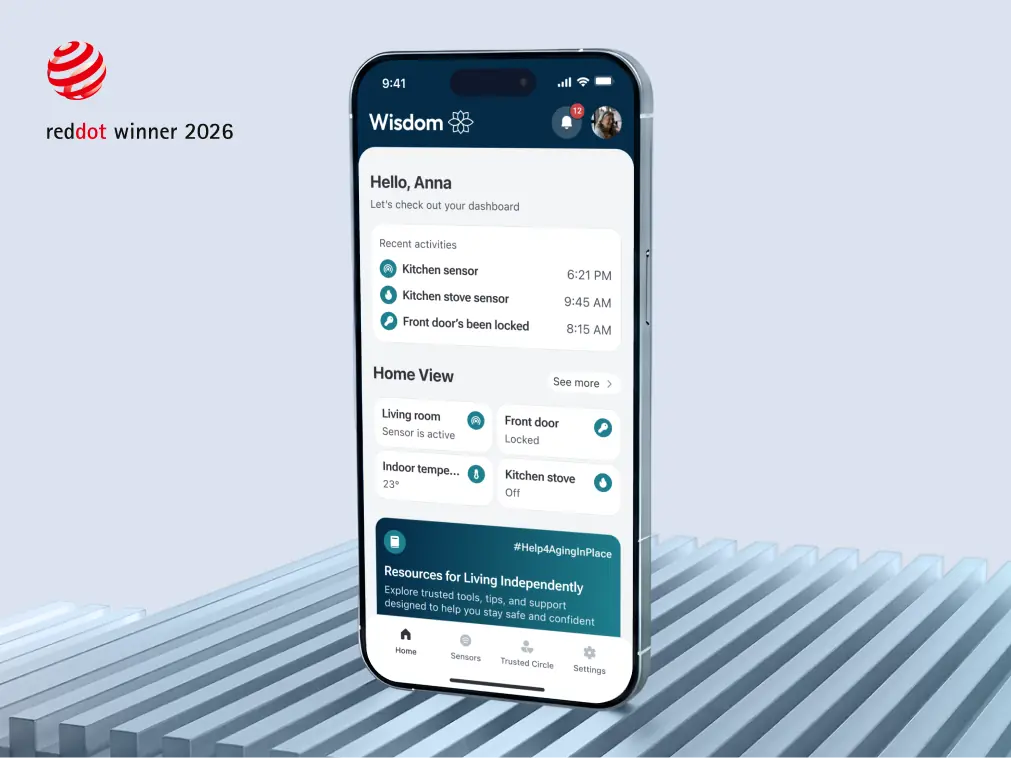
MyWisdom — a digital platform for safer, more connected aging
MyWisdom Icon - fi_4628635USA
Tech Stack

Flutter, Java, Spring Boot, Python, WebSocket, Computer Vision, AWS, PostgreSQL, Redis, Docker, Swagger, Liquibase

Timeline

5 month

Results

Clearer focus and smoother user flows

Better accessibility for diverse user needs

Raised $1.3M in pre-seed funding

#UX audit #Product redesign #web development
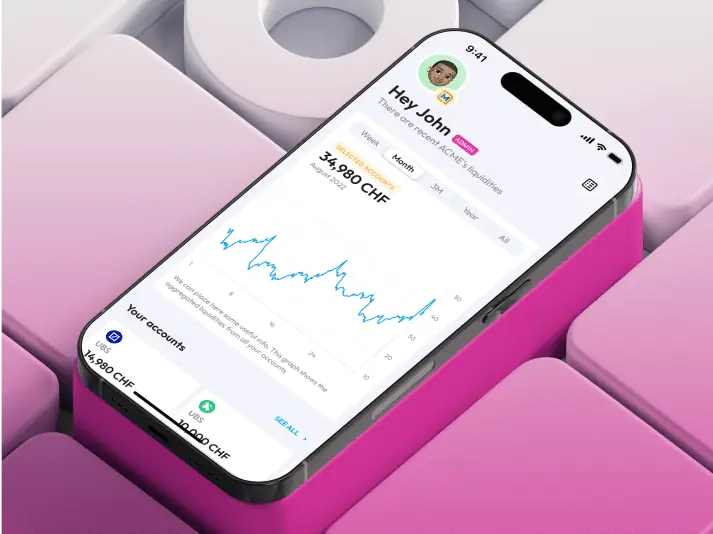
KlickEx – frictionless cross-border payments for the Pacific Island communities
Nomupay Icon - Clip path groupNew Zealand
Tech Stack

Next.js, TypeScript, React Redux

Timeline

6 months

Results

+35% "Add Money" conversion rate

+30% "Money Transfer" completion rate

Raised $1M in additional funding within 6 months

Image - Case preview

Izek Lal

Country manager

We have seen a significant improvement in terms of mobile friendliness and the general flow of the system. I believe this has contributed significantly to the growth of our business. Many thanks, Phenomenon.

#Mobile app design #Mobile app development
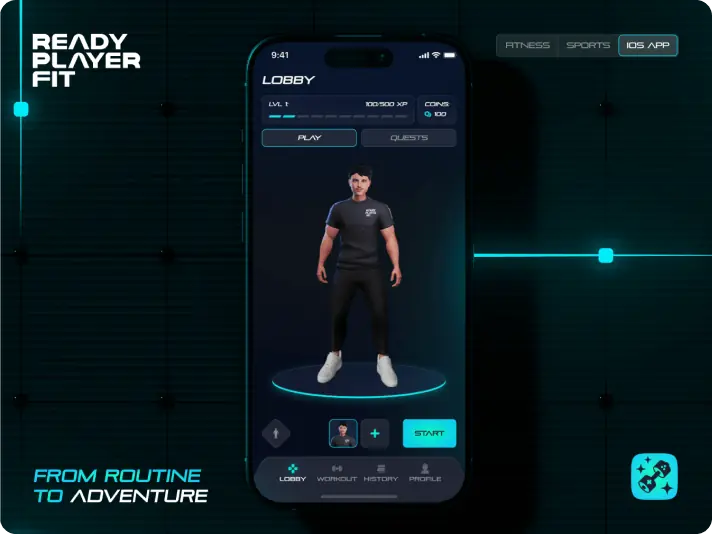
Keap – family budgeting mobile app
Keap, LLC Icon - fi_4628635USA
Results

$750K investment secured post-MVP

Clear financial control for families

Scalable foundation for future growth

What Our Clients Say

5.0 is our average on clutch & designrush
Image - Craig Tortolani

Craig Tortolani

CPO at Dekryption Labs

Image - Alex Friedman

Alex Friedman

CEO at Open Path

Not only is the team extremely communicative, their work is exceptional. I have never worked with a team so talented while also being competitively priced and communicative.

Image - KlickEx

KlickEx Team

Image - George Fry

George Fry

Founder at Neap

The quality of the designs is fantastic. Phenomenon Studio works at speed and is extremely punctual with timelines. They deliver top-notch outcomes with exceptional designs.

Image - Andre Guerra

Andre Guerra

Co-Owner at RADCAT Design

Image - Kevin Alvarez

Kevin Alvarez

Founder & General Partner, Predictive

Phenomenon Studio's ability to translate concepts and rough design mock-ups into high-fidelity assets, designs, and visuals was very impressive. The goal was to maintain simple elegance in the design aesthetic, and they did it very well.


MOBILE APP DEVELOPMENT COST: FACTORS TO CONSIDER

Why accurate estimates require understanding your app's architecture, not counting screens

Generic calculators can’t predict your mobile app development cost because they don’t account for platform strategy, compliance requirements, or backend complexity. Here’s what shapes pricing and timeline:

What drives your mobile app development costs higher?
01
Platform strategy
Single native iOS or Android ($40K–$80K) vs cross-platform Flutter or React Native ($50K–$120K) vs dual-native ($90K–$180K+).
02
App complexity
Utility app with 5–10 screens ($30K–$60K) vs marketplace with payments and admin panels ($100K–$250K) vs enterprise platform with offline sync ($150K–$400K+).
03
Backend requirements
Simple REST API vs real-time WebSocket architecture vs microservices with event queues and third-party integrations.
04
Compliance & security
Standard app security vs HIPAA, PCI-DSS, or SOC 2 compliance, adding 15–25% for audit trails, encryption, and documentation.
05
Integration depth
Standalone vs payment gateways, CRMs, ERPs, video SDKs, each adding 1–3 weeks depending on API quality.
06
Timeline pressure
Standard 12–16 weeks vs 8-week accelerated delivery with additional mobile app development team members.
Icon - process-1

Get a tailored mobile app development estimate

experienced mobile app development company, we'll break down costs by phase, role, and deliverable - and send you a detailed estimate we can discuss.

HOW TO WORK WITH US

Three ways to work with our mobile app development firm - pick your fit
Partner with a full-cycle product design company
We work as your long-term product design and development partner, owning strategy, discovery, design, dev, QA, and scaling iterations. This is not a “project”— it’s your full product team.
Best for
  • Founders who want a senior team thinking beyond sprints
  • Startups scaling beyond MVP and needing deep product ownership
What you get
  • Expert team aligned with your roadmap, KPIs, and business goals
  • Strategic discovery, UX systems
Hire a full-stack dedicated team
We deliver your product from idea to launch—fast and lean. You get execution-ready design and development support with a clear project scope and delivery timeline.
Best for
  • MVPs or feature builds with a defined goal and launch window
  • Pre-seed and seed startups that need to ship without building an in-house team
What you get
  • UI/UX, development, QA, and PM in one dedicated team
  • Clear scope, fixed timeline, efficient delivery
Augment your existing team
We provide developers, designers, and QA engineers to integrate with your team, helping you scale fast while keeping full control over execution.
Best for
  • Startups needing specialized expertise without long-term hiring
  • Seed & Series A+ startups looking to accelerate development
What you get
  • Embedded designers, developers, or product managers to fill skill gaps
  • Faster product delivery without the hiring delays & overhead costs

WHY CHOOSE OUR CUSTOM MOBILE APP DEVELOPMENT COMPANY IN USA?

Your success is our priority
Design that meets regulation
HIPAA- and GDPR-certified expertise for Healthcare and beyond.

Since 2019, we’ve gained HIPAA and GDPR certifications and industry recognition, delivering hundreds of products in Healthcare, SaaS, FinTech, and EdTech — where compliance and UX go hand in hand.

Design that lasts beyond trends
We don’t chase fads. We build digital products that stay relevant.

Our work looks sharp today and stays usable tomorrow — designed around long-term value, not short-term gimmicks. Scalable systems, brand consistency, and smart UX that grows with your product.

Design that’s developer-ready
We design for implementation, not handoff.

Every component is built with devs in mind: design tokens, accessibility, reusability, and real-world constraints. We collaborate with your team, reuse existing elements, and stay involved until everything’s live.

Local presence. Global delivery
Work directly with the doers — not a chain of account managers.

Collaborate with UX strategists in North America, while our senior design and development teams in Europe deliver fast, consistent results. We integrate into your tools and workflow, working as part of your team — from a single embedded designer to a full product squad.

Among award-winning product design firms

Wins that inspire us forward
Icon - clutch

Top product design company 2024

Icon - Dribbble

One of Dribbble’s top rated design agencies

Icon - webflow

Professional partner by Webflow

Icon - design

Nominee 2024
Isora - GRC Platform

Icon - Awwwards

Site of the Day & honorable mentions

32+
others

Related Services

Services that pair well with your mobile app development project
Mobile app design

Create intuitive, performance-optimized mobile apps for iOS and Android.

UX audit

Identify usability bottlenecks, improve engagement, and optimize for conversions.

Custom MVP development

Expand your prototype into a fully functional, production-ready product.

FAQs

Questions already
answered
01
What are mobile app development services?

Let’s break it down: Mobile app development services cover the full cycle of bringing an app from idea to a live product in the App Store or Google Play. They include research, UX/UI design, frontend and backend engineering, quality assurance, deployment, and post-launch support.

The process typically begins with product discovery, where the team defines user needs, maps features, and selects the right platform strategy (native iOS, native Android, or cross-platform). From there, designers build interactive prototypes and visual systems tailored to each platform’s guidelines, while engineers set up backend architecture, APIs, and infrastructure.

Development follows in iterative sprints – usually two weeks each – with testable builds delivered throughout. QA runs in parallel, covering device compatibility, performance, security, and accessibility. Once the app passes internal review, the team handles App Store and Google Play submission, including metadata, screenshots, and compliance checks.

Post-launch, the work continues: crash monitoring, OS update patches, user analytics review, and feature iteration based on live data.

What separates a strong mobile app development agency in USA from an average one is how tightly these phases connect. When research informs design, and design informs architecture, rework drops significantly. At Phenomenon, we’ve seen this firsthand: projects that skip discovery or rush design consistently cost 30–40% more in development due to mid-sprint scope changes and late-stage redesigns.

We apply this process across verticals. For example, our ecommerce mobile app development services for StyleScape involved full product discovery, platform-specific UI for iOS and Android, Shopify integration, and a personalized product recommendation engine – all delivered within 14 weeks. The structured process meant zero App Store rejections and a clean launch.

The scope of services varies by provider, but at minimum, a credible mobile app development partner should offer end-to-end delivery. Not just code, but the strategy, design, and infrastructure that make the code work in production.

02
I run a startup and need to launch a mobile app. What cost range can I expect?

For startups, mobile app development cost depends on three main factors: platform choice, feature complexity, and compliance requirements:

  • A single-platform native MVP with 5–8 screens and a basic backend typically runs $40K–$70K. 
  • A cross-platform MVP (iOS + Android from one codebase) with 10–15 screens, authentication, payments, and push notifications lands between $70K–$120K.
  • Enterprise-grade apps with offline sync, role-based access, and regulatory compliance start at $150K and can exceed $400K for complex systems.

What drives costs up fastest: custom animations, real-time features (chat, live tracking), third-party integrations with poor documentation, and compliance layers like HIPAA or PCI-DSS – which add 15–25% to any project.

What keeps costs in check: cross-platform development (saves 30–40% vs dual native), well-defined scope from a thorough discovery phase, and phased delivery – launch with core features, then iterate based on user data.

If you’re searching for a mobile app development company near me to discuss budgeting in person, that’s understandable – but the quality of the estimate matters more than proximity. A strong partner will break down costs by phase, role, and deliverable so you know exactly what each dollar covers.

At Phenomenon, our startup projects typically fall in the $50K–$90K range for initial release. We structured Keap – a family budgeting app – as a phased engagement: discovery, design, and MVP development. The client launched with a focused feature set, secured $750K in investment based on the MVP, and then expanded into additional features. That phased model kept the initial iOS mobile app development estimates within the seed budget while delivering a product strong enough to attract funding.

One thing we tell every founder: budget $5K–$10K per month for the first 90 days post-launch. Bug fixes, OS patches, and feature adjustments based on live user behaviour are where retention is won or lost.

03
What is the average duration of a mobile project? Are there any ways to speed up the development if I need to launch an app ASAP?

Average timelines vary by complexity. A custom MVP developement typically takes 8–12 weeks. A mid-complexity app with integrations and multi-role access runs 12–18 weeks. Enterprise platforms with compliance and offline capabilities span 18–26 weeks. All timelines include discovery, design, development, QA, and App Store submission.

The fastest way to compress your timeline is cross platform mobile app development. Building for iOS and Android from a single codebase – using Flutter or React Native – eliminates duplicate developing and typically saves 3–5 weeks compared to maintaining two native apps. Our cross platform mobile app development services have delivered MVPs in as few as 6 weeks for clients with well-defined requirements.

Three strategies we use to accelerate delivery:

  1. Parallel workstreams – design sprints running alongside backend architecture compress the overall schedule by 2–4 weeks. 
  2. Pre-built component libraries and design systems eliminate redundant UI work. 
  3. A dedicated product owner on the client side with decision-making authority. 

The single biggest bottleneck in mobile projects is feedback cycles, not engineering capacity.

When native performance is non-negotiable – apps relying on AR, health sensors, or Bluetooth peripherals – our Swift mobile app development track for iOS or Kotlin-first Android development runs in parallel with backend work, keeping the timeline competitive.

At Phenomenon, we launched UVER (a university aggregator app) within a 12-week window by running design and backend architecture simultaneously, then executing development in focused two-week sprints. The client had a single product owner approving designs within 24 hours, which eliminated the review bottleneck we see on slower projects.

The result: a dual-platform app that cut consultant workload by 38% and boosted application submissions by 40%.

We never recommend cutting QA to meet a deadline. An app that crashes after launch costs more in lost users and reputational damage than an extra two weeks of testing.

04
Do you help organize a smooth transfer of an app development project from a different vendor?

Yes. We’ve transitioned tens of mobile projects from other agencies, in-house teams, and freelancers. As a custom mobile app development company in USA, we’ve built a structured handover process that minimizes downtime and protects your existing users.

Our transition takes 4–8 weeks depending on codebase complexity and documentation quality.

Phase one is a full code and architecture audit (1–2 weeks). We review the repository, dependency versions, CI/CD setup, crash analytics, test coverage, and App Store / Play Console configurations. You receive a written report grading each area by severity.

Phase two is knowledge transfer (1 week). We interview anyone with context on the project: your outgoing team, product managers, stakeholders. We document every assumption, workaround, and dependency that wasn’t written down.

Phase three is stabilization (2–4 weeks). We fix critical bugs, update outdated dependencies, improve test coverage to our baseline (>70% for business logic), and establish our CI/CD pipeline. Feature development resumes once stability is confirmed.

The biggest risks in vendor transitions are undocumented backend services, hardcoded API keys, and missing source control history. Our mobile app developers have protocols for each scenario, including reverse-engineering undocumented APIs and reconstructing deployment pipelines from production environments.

Whether you’re searching for mobile app development near me or evaluating remote partners, ask one critical question during vendor transitions: Does the new team conduct a formal architecture audit before writing new code? Teams that skip this step inherit every problem from the previous vendor – and usually discover them in production.

05
Do you work with security-sensitive apps?

Extensively. Security is integrated into every sprint at Phenomenon, not bolted on before launch.

Our approach covers four layers: 1) architecture (threat modeling, secure design patterns), 2) development (code scanning, dependency auditing), 3) testing (penetration testing, OWASP Mobile Top 10 verification), and 4) operations (monitoring, incident response, patch management).

As a HIPAA-certified healthcare mobile app development company, we’ve delivered 8+ telehealth and patient engagement apps with full HIPAA compliance, including secure video consultations, e-prescription workflows, and EHR integration via HL7 FHIR APIs. Our work on Medicare required end-to-end encryption for video calls, PHI handling protocols, and audit logging that satisfied external compliance reviews.

For enterprise mobile app development projects, clients often require role-based access control (RBAC), MDM compatibility, and remote wipe capabilities. We architect these controls at the data layer so permission changes propagate across platforms without separate implementations.

Our IoT mobile app development services add device-level security: authenticated pairing, encrypted BLE/MQTT channels, and firmware update signing. The Ectopanel solar monitoring app required secure device pairing and encrypted energy data transmission between panels and the mobile interface.

On the technical side, mobile security has challenges web apps don’t face. We address each vector: code obfuscation, SSL certificate pinning, Secure Enclave / Android Keystore storage, and jailbreak/root detection at runtime.

06
How much do mobile application development services cost?

Mobile app pricing depends on platform, complexity, compliance, and engagement model. Our projects range from $40K for a focused single-platform MVP to $400K+ for enterprise multi-platform products with regulatory requirements.

A more precise framework based on our recent projects: 

  • Simple consumer app (5–8 screens, basic backend, one platform) costs $40K–$70K. 
  • Mid-complexity cross-platform app (10–20 screens, real-time features, integrations) costs $80K–$180K. 
  • Enterprise mobile platform (offline sync, SSO, compliance, admin dashboard) costs $150K–$400K+.

Platform choice has the biggest cost impact. Our iOS mobile app development services team can build a native Swift app, but if you need both platforms, cross platform mobile app development services cut total development investment by 30–40% compared to maintaining two separate codebases. We guide every client through this tradeoff during discovery.

Ongoing maintenance typically adds $5K–$15K per month depending on update frequency and scope. It covers OS patches, security updates, performance monitoring, and feature iteration based on user analytics.

One factor that consistently surprises first-time mobile product owners: integration complexity. Connecting to third-party services (payment gateways, CRMs, video SDKs, legacy ERPs) varies widely depending on API quality. A well-documented Stripe integration might take 3 days; a proprietary ERP connector with sparse documentation can take 3 weeks. We audit every integration during discovery and flag cost risks before you commit.

As a, award-winning mobile app development agency in USA, we break every estimate into phases so you can budget incrementally. Our proposal for Kollo – a fintech app for US residents and newcomers – separated discovery, design, and development into standalone milestones. The client approved each phase independently, controlling cash flow while maintaining momentum. That structure works well for funded startups and bootstrapped founders alike.

07
How much time does it take to build a custom mobile app?

For custom mobile app development, standard timelines break down as follows: MVP (8–12 weeks), mid-complexity app (12–18 weeks), enterprise platform (18–26 weeks). These include discovery, design, development, QA, and App Store submission.

Three factors affect timeline most: 1) scope definition quality (vague requirements add 3–6 weeks), 2) client feedback speed (48-hour turnaround vs weekly cycles creates a 2–4 week difference), and 3) compliance requirements (HIPAA or PCI-DSS audits add 2–4 weeks to QA).

Platform choice matters here too. Cross platform mobile app development with Flutter or React Native typically ships 3–5 weeks faster than dual-native builds because developers maintain one codebase. For apps that need native performance – those built around AR, health sensors, or Bluetooth peripherals – our iOS mobile app development and Android tracks run in parallel with backend work to compress the schedule.

We deliver in two-week sprints with installable builds after each one. You test features on your own device via TestFlight (iOS) or Firebase App Distribution (Android). If a sprint falls behind, you know within days, not months.

At Phenomenon, we built the Healher health platform – 40+ screens with wearable integration, recommendation engine, and onboarding survey – within a 14-week timeline. The client designated a single decision-maker who approved designs within 24 hours, which eliminated the review delays we see on longer projects. After launch, 56% of registered users remained active within the first 30 days.

For clients who need to launch fast (like in case with Zest, a healthcare app), we’ve compressed MVPs to 4 weeks using pre-built component libraries, parallel design and backend workstreams, and a dedicated product owner on the client side. In general, the single biggest accelerant is clear requirements paired with fast approvals.

08
How does a mobile app development company ensure security and compliance?

A responsible mobile app development partner integrates security at four levels: 1) architecture (threat modeling, data flow analysis), 2) development (code scanning, dependency auditing), 3) testing (penetration testing, OWASP Mobile Top 10 verification), and 4) operations (monitoring, incident response, patch management).

At Phenomenon, security practices are embedded in every sprint. For each release, we run automated vulnerability scans, review dependency versions against known CVE databases, and conduct manual code review of authentication and data-handling logic.

Our enterprise mobile app development company clients often operate in regulated industries. For healthcare, that means HIPAA compliance – encryption at rest and in transit, PHI handling protocols, and audit logging. For fintech, PCI-DSS requires transaction isolation, tokenized card handling, and multi-factor authentication flows.

On the technical side, iOS mobile app development services require platform-specific security: Secure Enclave for biometric data, App Transport Security enforcement, and Keychain Services for credential storage. Android equivalents include the Keystore, SafetyNet attestation, and encrypted SharedPreferences. We implement both natively rather than relying on cross-platform abstractions that can introduce vulnerabilities.

Our IoT mobile app development services add device-level security: authenticated pairing, encrypted BLE communication, and firmware update signing. The Ectopanel project required secure communication between solar panels and the mobile app, with energy data protected end-to-end.

Every project with a security mandate includes a dedicated security lead who reviews pull requests, manages compliance checklists, and coordinates penetration testing. This role is part of the project budget.

09
Can you help with deployment to app stores or enterprise distribution?

Yes. We handle the full App Store and Google Play submission process: account setup, metadata preparation, screenshot generation, privacy policy configuration, and review guideline compliance.

Our 94% first-submission approval rate comes from pre-submission auditing. We review every guideline checkpoint before submitting. For the 6% that get flagged, we typically resolve the issue and resubmit within 48 hours.

Common rejection reasons we prevent: missing privacy manifest declarations, incomplete App Tracking Transparency implementation, and screenshots that don’t match the live app.

For enterprise distribution, our enterprise mobile app development company supports Apple Business Manager, Google Managed Play, and custom MDM integrations. We’ve deployed enterprise apps to fleets of 10,000+ managed devices with staged rollouts and remote configuration. It covers build signing, certificate management, over-the-air updates, and version control across device pools.

We also handle ongoing App Store optimization post-launch: keyword refinement, A/B testing of screenshots and descriptions, review response management, and featured placement strategies. Visiting any mobile app development company website will show portfolio work, but the proof is in approval rates and time-to-live – metrics we track for every project.

Clients searching for an Austin mobile app development company often prioritize proximity, but App Store deployment is process-driven, not location-driven. Our team manages submissions remotely for clients across Texas and 15+ other US states, with the same pre-submission audit checklist and 48-hour turnaround on rejection resolutions.

One often-overlooked detail: App Store and Google Play have different review timelines and content policies. Apple reviews take 24–48 hours on average but can stretch to 7 days during peak periods. Google reviews are typically faster but stricter on permission justifications. We manage both timelines in parallel and coordinate release dates so your app goes live on both platforms simultaneously.

10
Do you sign a Non-Disclosure Agreement to protect my app idea?

Yes. We sign mutual NDAs before any detailed scoping conversation. Your idea, requirements, business model, and user data are protected from our very first interaction.

Beyond the NDA, all project source code is stored in your own repository (GitHub, GitLab, or Bitbucket), and you retain full IP ownership. We transfer all credentials, certificates, and signing keys at project completion – or at any point if you choose to change vendors.

We implement access controls within our team as well. Only developers assigned to your project have repository access, and we revoke permissions for any team member who rotates off. For clients in regulated industries, we provide named access logs showing who accessed your codebase and when.

Confidentiality extends beyond source code. Design files, product roadmaps, competitive analysis, and user research data are all covered. We store project assets in encrypted, access-controlled environments and purge them according to your retention requirements once the engagement ends.

If you’re evaluating a mobile app development near me partner, ask two questions about IP protection: does the agency retain any license to your code after the contract ends, and do they store your assets on shared infrastructure? At Phenomenon, the answers are no and no.

Many agencies – especially those found through mobile app development company near me searches – work with multiple clients in the same vertical. We disclose any potential conflicts of interest upfront. If we’re already working with a direct competitor, we’ll tell you before the NDA is signed.

As the best mobile app development agency handling sensitive IP across healthcare, fintech, and enterprise clients, we’re comfortable accommodating custom NDA clauses or security addendums your counsel requires.

11
How do I track the progress of my app?

Every project gets a dedicated project manager, a shared project board, and bi-weekly sprint demos with working builds you can install on your own device.

You’ll have access to daily async updates in Slack or Teams, weekly written progress reports with milestone tracking, and direct communication with your engineering team. TestFlight and Firebase App Distribution deliver installable builds after every sprint, so you test features on your phone, not in a slide deck.

What differentiates the best mobile app development company from average providers is transparency into decision-making, not just task completion. When our team makes an architectural choice – say, switching from REST to GraphQL for a complex data model – we document the rationale in Architecture Decision Records. As a mobile app development company in USA, we believe you should see the reasoning behind every technical call, not just the output.

We also run a mid-project health check at the halfway point of every engagement. This review covers scope, velocity, technical debt, and projected timeline versus original estimate. If the project needs course correction, the health check is where we flag it.

At project completion, you receive a full handoff package: source code, design files, architecture documentation, deployment guides, and a recorded walkthrough of the codebase.

12
Why should I hire Phenomenon Studio for my mobile app development project?

Because we’ve delivered tens of mobile aaplications across fintech, healthcare, edtech, ecommerce, and enterprise – and 92% of our clients return for additional phases.

We bring senior-led teams where every specialist has 5+ years of platform experience and full-stack ownership from backend infrastructure to App Store submission.

Our team is compact, senior, and accountable. You work with the same developers throughout your project, no mid-sprint rotations. The people who architect your app are the people who build, test, and support it after launch.

Our technical range covers the full spectrum. Whether you need native development from our iOS mobile app development company in Swift, React Native mobile app development services for cross-platform efficiency, or Flutter for custom UI rendering – we match the technology to your product.

Our fintech mobile app development services demonstrate this well. For Kollo, a financial app targeting US residents and newcomers, we ran UX research across two user personas, built full user flow architecture, and delivered an MVP with bank account linkage, analytics, and personalized savings strategies. The modular architecture supports the client’s roadmap for three more release cycles.

We operate on transparent, phase-based pricing. You know the cost of each milestone before it begins, and you can pause or pivot between phases without penalty.

13
How do you create AI-driven applications?

At Phenomenon, we build AI-powered mobile experiences in three ways:

  1. API-based AI integration. For most apps, connecting to third-party AI services (OpenAI, Google Cloud AI, AWS SageMaker) is the fastest approach. We handle prompt engineering, response parsing, caching, and fallback logic so the AI feature feels native to your app.
  2. On-device ML models. For apps requiring offline AI or real-time processing (image recognition, pose detection, voice commands), we deploy optimized models using Core ML (iOS) and TensorFlow Lite (Android). Our hybrid mobile app development expertise helps determine when on-device inference makes sense versus cloud-based processing.
  3. Custom AI pipelines. For products where AI is the core value – personalized recommendations, predictive analytics, natural language interfaces – we build the full pipeline: data collection, model training, API deployment, and mobile integration.

Our work on Healher, an app with personalized health plans, illustrates this. The recommendation engine analyzes wearable data (sleep, stress, blood oxygen, ECG) and generates personalized activity plans. After launch, 82% of users reported satisfaction with the AI assistant’s guidance.

For clients exploring AI features, our iOS mobile app development agency and cross-platform teams evaluate three criteria: latency requirements, data privacy constraints, and model complexity on mobile hardware.

Working with an IoT mobile app development company like Phenomenon adds another dimension – processing sensor data from connected devices. The Ectopanel app, for instance, required interpreting solar panel output and presenting predictive energy analytics on the mobile interface.

14
What are the different engagement models that Phenomenon Studio offers for project success?

We offer three engagement models, each designed for a different product stage and team setup.

Dedicated team. A full squad – developers, designers, QA, project manager – assigned to your product. The team works as an extension of your organization with shared tools, standups, and sprint cadence. Best for long-term products with multiple release cycles and evolving requirements. This model works well for <h4>restaurant mobile app development company</h4> projects needing ongoing iteration – order management updates, driver dispatch improvements, seasonal menu changes.

Project-based. Fixed-scope engagement with clear milestones, deliverables, and timeline. We own the execution; you review at defined checkpoints. Best for MVPs, redesigns, and well-defined feature sets. Our cross platform mobile app development services engagements often start here: clients come with a validated concept, we deliver a production-ready app within 12–16 weeks.

Staff augmentation. Individual specialists, such as Swift mobile app development pros, Flutter developers, QA leads, embedded in your existing team to fill specific gaps. Best for scaling capacity or adding platform expertise. We’ve placed mobile developers with restaurant mobile app development company clients who had strong backend teams but needed native expertise for customer-facing ordering apps.

How to choose: if you’re building new and don’t have an internal team, start with project-based or dedicated team. If you need specific skills – say, an Austin mobile app development company specialist for a local launch or a Flutter expert for cross-platform migration – staff augmentation fills the gap without full-time hiring overhead.

Contact us

Have a project in mind?
Let's chat

Your Name

Enter your name *

Your Email

Enter your email *

Message

Tell us about your project

You can upload maximum 5 files
Some of your file not loaded, because maximum file size - 5 mb
Your budget for this project?

By clicking this button you accept Terms of Service and
Privacy Policy

Icon - circle-check-svgrepo-com 1
Thanks for taking time to reachout!
Stay connected with us by subscribing to our LinkedIn account. By following, you’l be the first to hear about our latest updates, news, and exciting development. We look forward to sharing our journey with you!
Icon - circle-check-svgrepo-com 1
Thanks for taking time to reachout!
We’d love to hear more about your project! Feel free to schedule a call using the link provided. This will help us better understand your vision and ensure we’re aligned on all the details.
Have a project to
discuss?
Image - ksenia
Kseniia Shalia
Account Executive
Have a partnership in
mind?
Image - polina
Polina Chebanova
Co-Founder & CPO